
Guide to Apply 2026 Landscape and Garden Trends to Your NJ Home
Homeowners across Northern New Jersey are inspired by what they’re seeing in 2026 landscape and garden trends, but inspiration alone doesn’t create a successful outdoor space. The real challenge is knowing how to apply those trends in a way that fits your property, your lifestyle, and the realities of New Jersey’s climate. In towns like Morristown, Mendham, Madison, Harding, Morris Township, Hanover, and Basking Ridge, the most successful projects are not trend-chasers. They are carefully planned upgrades that balance design, function, and durability.
This guide explains how to apply 2026 landscape and garden trends to your New Jersey home the right way, using smart planning, masonry-first design, and region-specific considerations that protect your investment long after the season ends.
Understanding What “Applying” 2026 Landscape and Garden Trends Really Means
Many homeowners assume applying trends means copying what they see online. In reality, applying 2026 landscape and garden trends means adapting ideas to your specific property conditions. A design that works in a flat suburban yard may fail on a sloped Mendham property. A planting style that thrives in one part of Morris County may struggle elsewhere without proper soil preparation and drainage. Different style homes with pools will have different landscape styles.
To successfully apply 2026 landscape and garden trends, the design must account for lot size, grading, sun exposure, soil conditions, maintenance expectations, and how the space will actually be used day to day. This is where professional planning makes the difference between a landscape that looks good for one season and one that performs for decades.
Start With Structure Before Planting
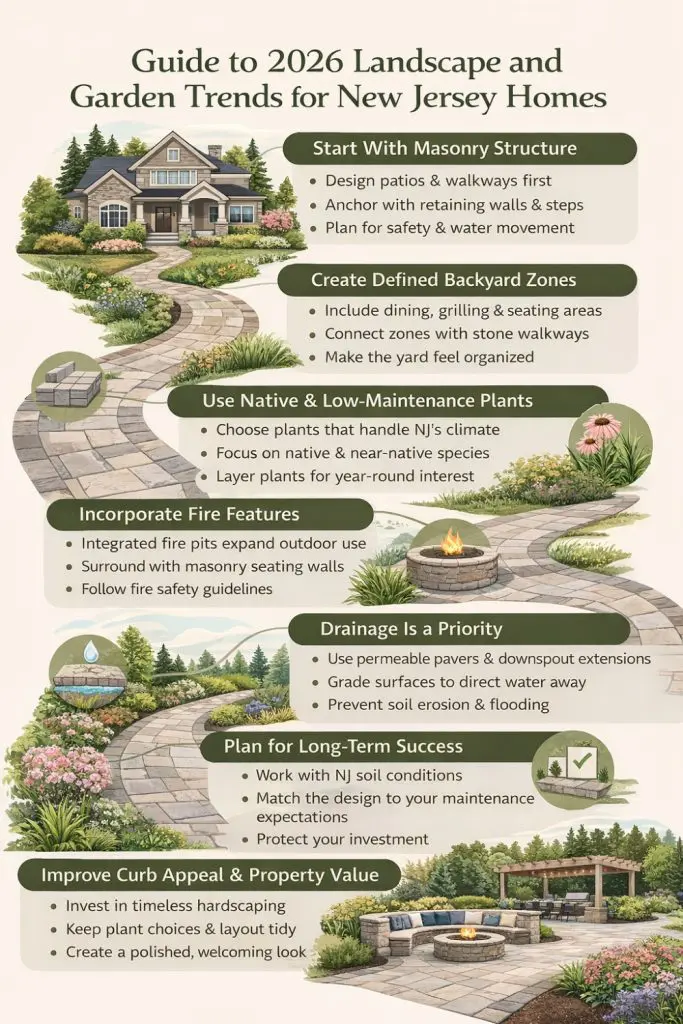
One of the most important principles when applying 2026 landscape and garden trends is starting with structure. In Northern New Jersey, masonry elements such as walkways, patios, retaining walls, and steps should be planned before any planting begins. These features define how the yard functions and how water moves across the property.
In Morristown, Madison, and Hanover, many homes benefit from widened front walkways that improve curb appeal and safety. In Mendham and Harding, retaining walls often play a critical role in stabilizing sloped terrain while creating usable garden tiers. Applying 2026 landscape and garden trends without addressing these structural elements first often leads to drainage issues, plant failure, and costly rework.
Applying 2026 Trends to Front Yard Landscapes
Front yards are where first impressions are made, especially in walkable communities throughout Morris County. Applying 2026 landscape and garden trends to the front yard typically focuses on clean lines, defined entry points, and low-maintenance planting.
Wide masonry walkways are replacing narrow concrete paths. These walkways are often paired with stone or paver borders that clearly separate the lawn from the planting beds. Structured foundation beds with layered shrubs provide year-round interest without overcrowding the home’s façade. In towns like Madison and Morristown, this approach enhances neighborhood appearance while increasing property value.
Lighting also plays a major role. Soft, low-voltage pathway lighting improves safety and highlights architectural features without overpowering the landscape. When homeowners apply 2026 landscape and garden trends thoughtfully, the front yard becomes both welcoming and functional.
Applying 2026 Trends to Backyard Living Spaces
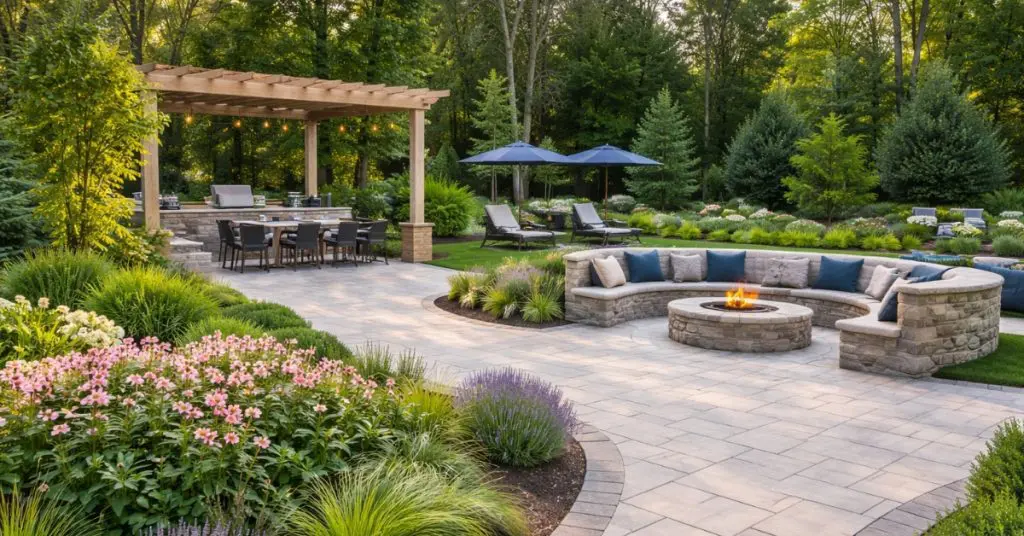
Backyards across Mendham, Harding, Morris Township, and Basking Ridge are being transformed into true outdoor living environments. Applying 2026 landscape and garden trends in the backyard starts with defining zones rather than treating the space as one open lawn.
Dining areas, grilling stations, fire features, and quiet seating nooks are connected by stone walkways that guide movement throughout the yard. Paver patios are designed large enough to support real furniture and gatherings, not just decorative placement. When these elements are planned together, the backyard feels cohesive rather than pieced together over time.
A key part of applying 2026 landscape and garden trends is ensuring each zone serves a purpose. A quiet seating nook should feel tucked away and peaceful, while dining and grilling areas should be easily accessible from the house. This intentional layout dramatically improves how often the space is used.
Using Masonry to Anchor 2026 Garden Designs
Masonry is the backbone of modern landscape design in New Jersey. When homeowners apply 2026 landscape and garden trends successfully, masonry elements are never an afterthought. Retaining walls create elevation changes that add visual interest while controlling erosion. Stone seating walls double as functional furniture. Steps and landings improve safety and flow across uneven terrain.
In Somerset County communities like Basking Ridge, masonry-first design is especially important due to soil conditions and drainage patterns. Proper base preparation, grading, and material selection protect against freeze-thaw damage that commonly affects poorly installed landscapes.
Choosing Plants That Support 2026 Trends and NJ Conditions
Plant selection is where many trend-inspired landscapes fail. Applying 2026 landscape and garden trends does not mean choosing the most exotic plants available. In Morris County and Somerset County, long-term success comes from selecting plants that thrive in local soil conditions, seasonal temperature swings, and variable moisture levels.
Native and near-native plants are central to 2026 trends because they require less water, resist common pests, and tolerate New Jersey’s weather extremes. Referencing guidance from the Rutgers Organic Land Care helps homeowners choose plant varieties proven to perform well in Northern New Jersey landscapes. Layering plants by height creates depth while maintaining visual order, with evergreen shrubs providing winter structure and perennials and ornamental grasses delivering seasonal color and movement.
In Mendham and Harding, larger properties benefit from mass plantings that create visual rhythm rather than scattered individual plants. This approach reduces maintenance demands while reinforcing the refined, high-end aesthetic that many New Jersey homeowners prefer.
Applying 2026 Trends to Sloped and Challenging Properties
Many Northern New Jersey properties are not flat, and applying 2026 landscape and garden trends to sloped yards requires expertise. Retaining walls, terraced gardens, and integrated steps allow homeowners to reclaim unusable space while improving drainage.
In Far Hills-adjacent areas of Mendham and parts of Morris Township, tiered garden designs are becoming one of the most effective ways to apply 2026 landscape and garden trends. These designs add dimension, control water flow, and create unique planting opportunities that flat yards cannot offer.
Outdoor Living Spaces and Fire Features as Functional Design Elements
Outdoor living areas are an important part of applying 2026 landscape and garden trends to New Jersey homes, especially across Morris County and Somerset County. Rather than treating patios, fire features, and seating areas as afterthoughts, these elements are now planned as part of the overall landscape structure so they function naturally with surrounding masonry and planting.
In towns like Mendham, Harding, and Basking Ridge, homeowners are designing backyards with clearly defined zones that support everyday use. Dining areas, grilling stations, and quiet seating nooks are connected by stone walkways that guide movement through the yard while protecting planting beds from foot traffic. This layout improves flow, usability, and long-term durability, particularly on larger or sloped properties.
Fire features are increasingly being used as focal points rather than standalone additions. Integrated fire pits surrounded by masonry seating walls create gathering spaces that extend outdoor use into cooler spring and fall evenings. Proper placement and material selection are critical, and following National Fire Protection Association outdoor fire safety guidelines helps ensure fire features are positioned safely away from structures, vegetation, and high-traffic areas.
When outdoor living spaces, fire features, and landscape design are planned together, they become long-term assets that enhance both function and visual balance. Thoughtful integration ensures these features complement the garden rather than overpower it, resulting in outdoor spaces that feel intentional, safe, and well-suited to New Jersey living.
Drainage Planning Is Not Optional in 2026 Designs
One of the defining aspects of modern landscape planning in New Jersey is prioritizing proper drainage. Heavy spring rains, summer storms, and snowmelt can quickly damage landscapes that are not correctly graded, especially in areas with clay-heavy soils and freeze–thaw cycles common throughout Morris County.
Drainage solutions such as permeable pavers, properly pitched patios, downspout extensions, and subsurface drainage systems protect both masonry installations and planting investments. Following New Jersey Department of Environmental Protection stormwater management guidelines helps reduce runoff, prevent soil erosion, and limit long-term property damage. In towns like Hanover and Morristown, addressing drainage early plays a critical role in preventing foundation issues and landscape failure.
Matching Trends to Maintenance Expectations
Applying 2026 landscape and garden trends successfully also means being honest about maintenance. Some homeowners enjoy gardening, while others want a landscape that looks polished with minimal effort.
Low-maintenance designs are a dominant trend in 2026. These include simplified plant palettes, defined borders, stone edging, and automated irrigation where appropriate. Fernandez & Sons Masonry & Landscaping helps homeowners align trend-driven designs with realistic maintenance expectations so the landscape continues to perform year after year.
How Applying Trends Improves Property Value in Morris and Somerset Counties
Well-executed landscapes add measurable value to homes in competitive markets like Morristown, Madison, Mendham, and Basking Ridge. Applying 2026 landscape and garden trends thoughtfully enhances curb appeal, expands usable living space, and signals that the property has been professionally maintained.
Buyers increasingly look for outdoor spaces that feel finished and functional. Masonry patios, structured gardens, and defined walkways are not just aesthetic upgrades; they are long-term investments.
Avoiding Common Mistakes When Applying 2026 Landscape and Garden Trends
The most common mistake homeowners make is rushing into planting without a plan. Another is choosing materials or designs unsuited for New Jersey’s climate. Applying 2026 landscape and garden trends correctly requires patience, proper sequencing, and experienced installation.
Working with a local masonry and landscaping contractor providing expert New Jersey landscaping services ensures trends are applied in a way that fits regional conditions, municipal requirements, and property-specific challenges.
Apply 2026 Landscape and Garden Trends With Fernandez & Sons Masonry & Landscaping
Homeowners across Morris County and Somerset County turn to Fernandez & Sons Masonry & Landscaping when they’re ready to move beyond ideas and apply 2026 landscape and garden trends the right way. From Morristown and Madison to Mendham, Harding, Morris Township, Hanover, Basking Ridge, and surrounding towns, every project is approached with a focus on structure, durability, and thoughtful design that fits both the property and New Jersey’s climate.
Applying trends is not about copying what’s popular. It’s about creating outdoor spaces that work for your home, your lifestyle, and how you actually use your yard. For example, landscapes with pools, the designs will vary depending on the different home styles.
With the right planning and craftsmanship, when you apply 2026 landscape and garden trends, they become long-term improvements that enhance curb appeal, outdoor living, and property value for years to come.