
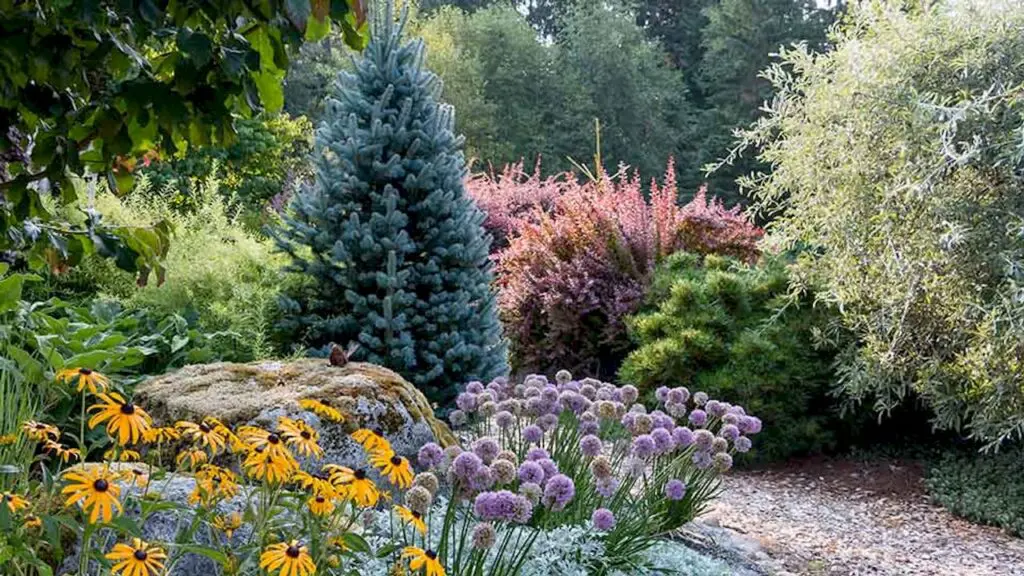
The quickest way to cut deer damage in your New Jersey yard is to build your plant palette around species deer rarely eat. American holly (Ilex opaca), northern bayberry (Myrica pensylvanica), bearberry (Arctostaphylos uva-ursi), blue false indigo (Baptisia australis), switchgrass (Panicum virgatum), and little bluestem (Schizachyrium scoparium) are among the most reliable choices for deer resistant plants in NJ, rated by Rutgers Cooperative Extension as “rarely browsed” under typical conditions.
Here are the highest-impact picks to start with, placed at your yard’s perimeter for the strongest deterrent effect:
-
American holly (Ilex opaca) — evergreen tree with spiny foliage deer avoid year-round
-
Northern bayberry (Myrica pensylvanica) — aromatic shrub, salt-tolerant, ideal for coastal NJ sites
-
Bearberry (Arctostaphylos uva-ursi) — low groundcover that spreads across slopes and edges
-
Blue false indigo (Baptisia australis) — tall perennial with deep roots and bitter foliage
-
Switchgrass (Panicum virgatum) — native grass that deer rarely touch and that provides year-round structure
-
Catmint (Nepeta spp.) — fragrant perennial that repels deer through scent
-
Pawpaw (Asimina triloba) — native understory tree with foliage deer consistently skip
Two honest caveats before you plant: no species is completely deer-proof, and results improve significantly when you combine resistant plants with layered design rather than scattering them randomly.
Main Points
Reliable deer resistance in New Jersey requires combining Rutgers-rated resistant species with layered planting design, physical protection for new transplants, and rotating repellents.
| Point | Details |
|---|---|
| Choose Rutgers-rated species | Start with plants rated “rarely browsed” by Rutgers Cooperative Extension for the most reliable results in NJ. |
| Layer your planting design | Combine aromatic perimeter shrubs, evergreen mid-layer screening, and ornamental grasses for compounding deterrent effect. |
| Protect new transplants | Wire cages and tree tubes are necessary for the first two winters; young plants face far higher browse risk than established ones. |
| Rotate repellents regularly | Alternate between scent types every three to four weeks and reapply after rain to prevent deer from habituating to a single product. |
| Fernandez & Sons | Handles full-scope deer-resistant landscape installation across Morris and Somerset Counties, NJ, including plant sourcing, hardscape, and maintenance. |
Table of Contents
-
The best deer-resistant plants for New Jersey, organized by type
-
What “deer-resistant” ratings actually mean for your NJ yard
-
How to design your yard and use deterrents to reduce deer damage
-
When to plant and how to maintain deer-resistant plants across NJ seasons
-
Where to buy deer-resistant plants in New Jersey and what to ask
-
Local pro tips from Fernandez & Sons: scent, layering, and hardscape placement
-
New Jersey deer population management: regulations and best practices
-
What experience in NJ landscapes actually teaches you about deer
-
Fernandez & Sons designs and installs deer-resistant landscapes in Morris and Somerset Counties
The best deer-resistant plants for New Jersey, organized by type
Rutgers Cooperative Extension assigns every plant one of four ratings: Rarely Damaged, Seldom Severely Damaged, Occasionally Severely Damaged, and Frequently Severely Damaged. The entries below draw on those ratings and are organized by plant type so you can match each pick to your specific planting spot.
Trees
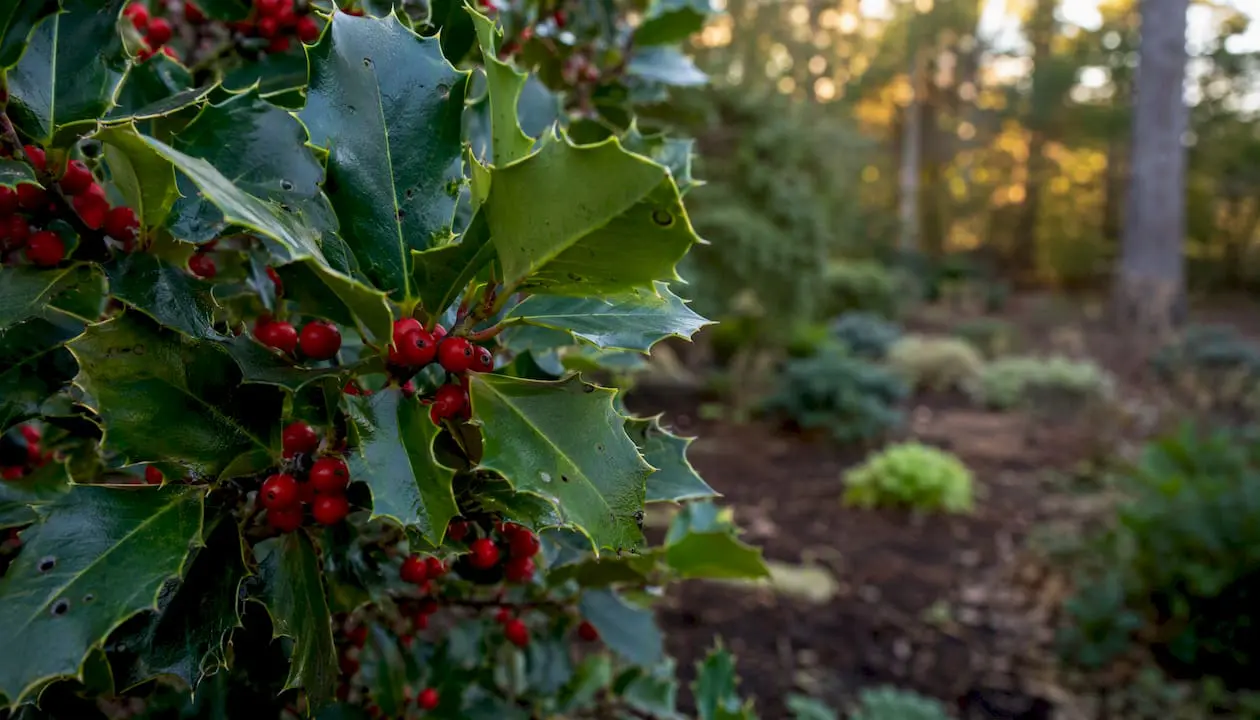
American holly (Ilex opaca) — Rarely browsed. Hardy in USDA zones 5–9, covering all of New Jersey. Tolerates part shade and average to moist soils. Plant as a screening hedge or specimen tree; the spiny leaves and evergreen canopy make it one of the most dependable deer-resistant trees in the state.
Pawpaw (Asimina triloba) — Rarely browsed. Zones 5–8. Prefers part shade and moist, well-drained soil. Works beautifully as a native understory planting beneath larger trees. Deer consistently avoid its foliage, likely due to compounds in the leaves.
Shrubs
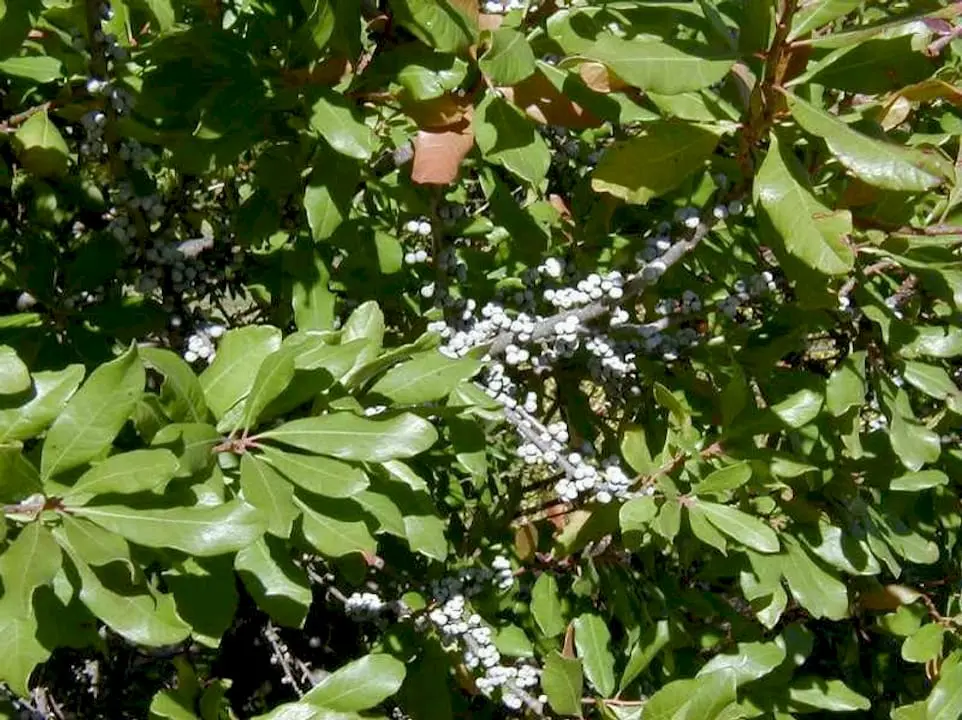
Northern bayberry (Myrica pensylvanica) — Rarely browsed. Zones 3–7. Thrives in full sun to part shade, tolerates poor, sandy, and salt-exposed soils. An excellent choice for coastal and Shore-area properties in New Jersey. Its waxy, aromatic foliage is a natural deterrent.
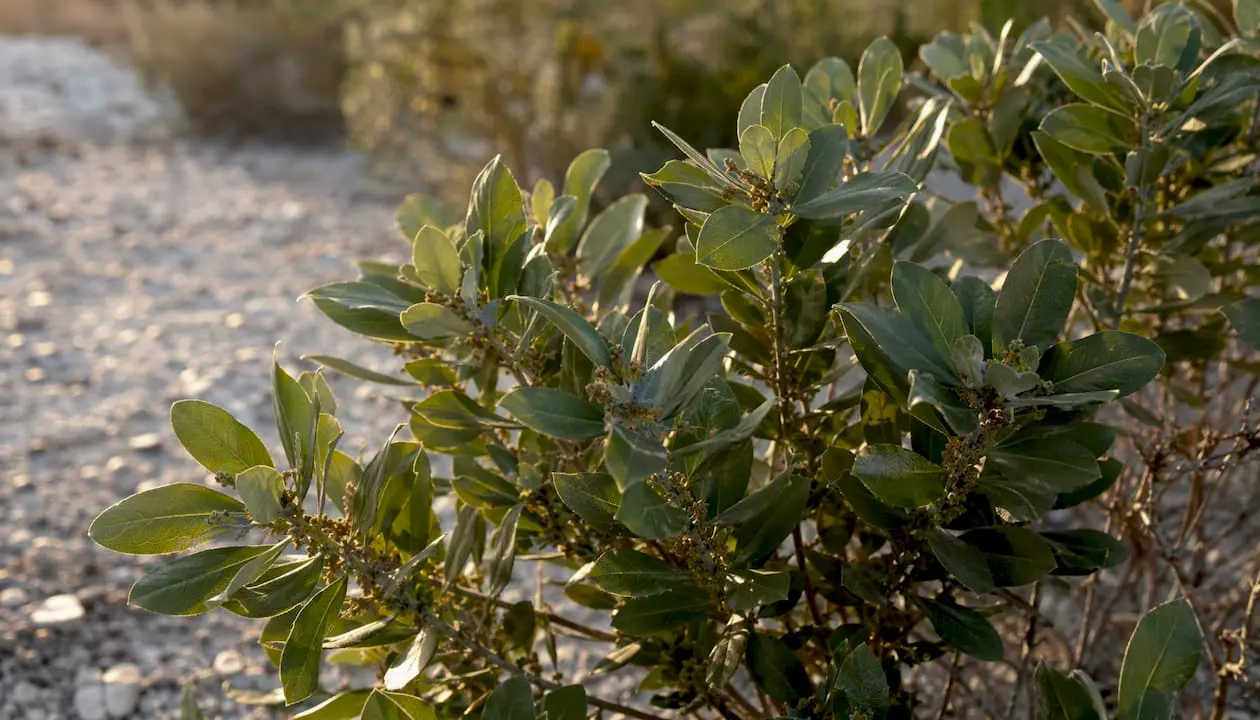
Mahonia (Mahonia spp.) — Rarely to seldom browsed. Zones 5–8. Shade-tolerant and drought-tolerant once established. The spiny, holly-like leaves discourage browsing. Use under tree canopies where other shrubs struggle.
Perennials
Blue false indigo (Baptisia australis) — Rarely browsed. Zones 3–9. Full sun, well-drained soil, drought-tolerant once established. Produces striking blue-purple flower spikes in late spring. A long-lived perennial that deer largely ignore because of its bitter taste.
Catmint (Nepeta spp.) — Rarely browsed. Zones 3–8. Full sun to part shade, well-drained soil. Blooms repeatedly through summer when cut back after the first flush. Its strong fragrance is one of the most effective natural deer deterrents among perennials.
Coreopsis / Tickseed (Coreopsis verticillata) — Seldom severely browsed. Zones 3–9. Full sun, dry to average soil. Cheerful yellow blooms from June through September. Low maintenance and drought-tolerant, making it a practical choice for sunny NJ borders.
Groundcovers
Bearberry (Arctostaphylos uva-ursi) — Rarely browsed. Zones 2–6. Full sun to part shade, acidic, well-drained soil. Spreads slowly to form a dense mat on slopes and edges. Particularly useful for stabilizing banks where deer pressure is high.
Ornamental grasses
Switchgrass (Panicum virgatum) — Rarely browsed. Zones 5–9. Full sun, adaptable to wet or dry soils. Native to NJ, provides four-season interest, and deer almost never browse it. Varieties like ‘Shenandoah’ add red fall color.
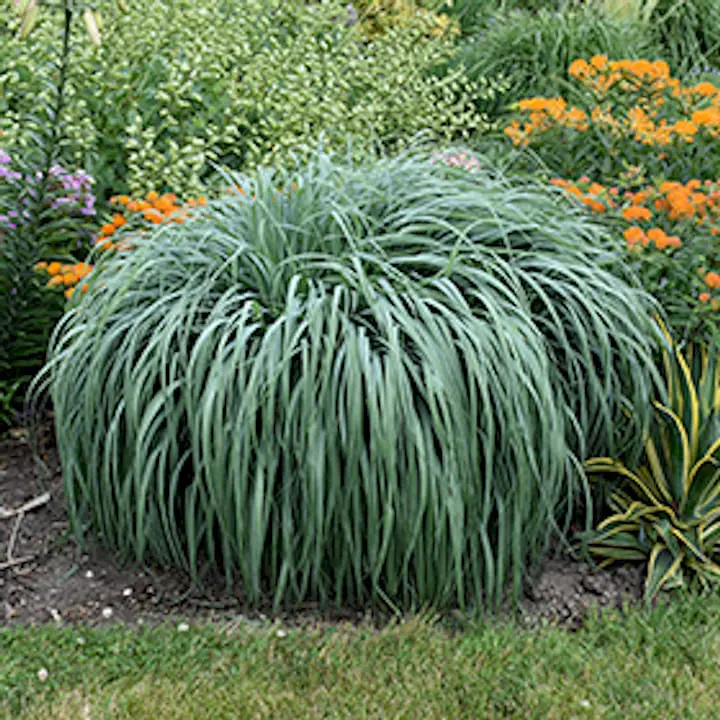
Little bluestem (Schizachyrium scoparium) — Rarely browsed. Zones 3–9. Full sun, dry to average, well-drained soil. Turns copper-orange in fall and holds its seed heads through winter, giving structure when most perennials have died back.
Quick comparison
What “deer-resistant” ratings actually mean for your NJ yard
The Rutgers ratings show the likelihood of browsing under typical conditions. They are not a guarantee. A plant rated “rarely browsed” can still be eaten when local conditions shift.
Several factors push even well-rated plants into the browsed column:
-
Deer density. Morris and Somerset Counties carry some of the highest deer populations in New Jersey. High pressure means deer exhaust preferred food sources faster and move on to less-favored plants.
-
Seasonal scarcity. Late winter is the most dangerous window. Snow cover eliminates ground-level food, and deer will browse woody shrubs and evergreens they normally skip.
-
New transplants. Young plants lack the mature foliage texture, toughness, and chemical compounds that make established specimens unappealing. Protect all new plantings for at least their first two winters.
-
Regional plant availability. If a deer-resistant species is the only green thing visible in a snow-covered yard, it will be eaten.
Realistic expectation: “Deer-resistant” means deer are less likely to browse a plant under normal conditions — not that they never will. A rarely browsed shrub planted in a yard with 20 deer per square mile, surrounded by snow, and freshly installed last fall is still at real risk. Ratings from Rutgers NJAES bulletin E271 are a starting point, not a finish line. Layer your plant choices with design tactics and physical deterrents for the most reliable results.
How to design your yard and use deterrents to reduce deer damage
The most reliable approach combines resistant species with layered planting and scent barriers, as local NJ coverage confirms. No single plant or product solves the problem on its own.
Here is a practical sequence to follow:
-
Plant a resistant perimeter. Use thorny or aromatic shrubs like northern bayberry, mahonia, and catmint along the yard’s edges. Deer prefer to browse from the outside in, so a scent-heavy perimeter slows entry.
-
Use sacrificial plantings strategically. Place a few plants deer find moderately appealing at the yard’s far edges to draw attention away from high-value beds closer to the house.
-
Protect every new transplant. Wrap young shrubs and trees with wire cages or tree tubes for the first two winters. Deer browse new transplants at a much higher rate than established plants.
-
Apply repellents on a rotation. Spray-based repellents work best when alternated between scent types (putrescent egg solids, capsaicin, predator urine) every three to four weeks. Deer habituate to a single product. Reapply after rain.
-
Install selective fencing for high-value areas. A 7–8 foot fence is the only physical barrier that reliably excludes deer. For smaller garden beds, a shorter double-fence system (two parallel fences 3 feet apart) can also work because deer avoid jumping into confined spaces.
Integrated deer-control programs that combine plant choice, repellents, screening, and placement consistently outperform any single tactic. Professional installation of fencing and screening is worth considering for large properties or high-value plantings.
Pro Tip: Plant aromatic species like catmint, lavender, and Russian sage in a continuous band rather than in isolated clumps. A broken scent line loses most of its deterrent effect. A solid ribbon of fragrant plants along a bed’s edge is far more effective.
When to plant and how to maintain deer-resistant plants across NJ seasons
New Jersey spans USDA hardiness zones 5b through 7b, with coastal areas running warmer and inland elevations in Morris and Somerset Counties running cooler. Planting timing and winter protection should reflect your specific zone.
Best planting windows by plant type:
-
Trees and shrubs: Early spring (late March through April) or early fall (September through mid-October). Fall planting gives roots time to establish before summer heat.
-
Perennials and groundcovers: Spring after the last frost (mid-April for zones 6–7, early May for zone 5b) or early fall.
-
Ornamental grasses: Spring is preferred. Grasses planted in fall can heave out of the ground during freeze-thaw cycles.
Seasonal maintenance by quarter:
Winter (December–February): This is peak browse risk. Deer are hungry and less selective. Keep wire cages on young shrubs and trees. Avoid pruning in late fall, which stimulates tender new growth that deer find irresistible. Check repellent coverage after snowfall and reapply as needed.
Spring (March–May): Remove winter protection gradually as temperatures stabilize. Divide and transplant perennials like catmint and coreopsis before they break dormancy. Monitor for deer browse on new growth, which is soft and palatable even on resistant species.
Summer (June–August): Water new plantings deeply once or twice a week during dry stretches. Established native plants like switchgrass and little bluestem are drought-tolerant, but their first summer is critical. Cut catmint back by half after the first bloom flush to encourage a second round of flowers and maintain the dense, aromatic foliage that deters deer.
Fall (September–November): Deer activity spikes during the rut (October–November). Bucks rub antlers on young trees, causing bark damage that can kill a sapling. Protect trunks with spiral tree guards or wire mesh. This is also a good window for fall landscaping maintenance and planting shrubs that will root through the winter.
Where to buy deer-resistant plants in New Jersey and what to ask
Finding the right plant at the right quality level makes a real difference in how well it survives its first year against deer pressure. Here are the most reliable sourcing options:
-
Native-plant nurseries. Specialist native nurseries carry locally sourced stock that is already adapted to NJ soils and climate. Ask specifically for plants grown from NJ-region seed sources (called “local provenance”), which tend to establish faster.
-
Rutgers Cooperative Extension plant sales. Rutgers and county extension offices periodically hold native plant sales with species vetted for local conditions. Check the Rutgers searchable plant list to confirm deer-resistance ratings before you buy.
-
Local garden centers with native selections. Many Morris and Somerset County garden centers now stock a curated native section. Look for clearly labeled scientific names and hardiness zone tags.
-
Reputable online native suppliers. Several national native-plant retailers ship bare-root and container stock to NJ. Review the new planting guide from FarmDaddy for practical tips on handling and establishing new arrivals.
Questions to ask at the nursery before you buy:
-
What USDA hardiness zone is this plant rated for, and is it suited to my specific site conditions?
-
Is this a locally sourced or regionally grown plant?
-
Is it bare-root or container-grown, and how long has it been in the pot?
-
Have you observed deer browsing this species at the nursery or in customer reports?
Avoid plants that look leggy, have yellowing foliage, or show signs of deer browse on the nursery lot. A stressed plant at purchase will struggle even more once it faces deer pressure at home. When transporting, keep roots moist and plant within 24–48 hours of purchase to minimize transplant shock.
Local pro tips from Fernandez & Sons: scent, layering, and hardscape placement
Contractor-tested tactics consistently reduce browse when combined with resistant plants, and the combination of perimeter scent planting, evergreen screening, and hardscape placement is one of the most effective approaches on NJ residential properties.
On properties in Morris County, a layered planting approach has proven particularly effective: a front row of aromatic shrubs like northern bayberry and catmint, a mid-layer of evergreen screening with American holly and mahonia, and a back layer of ornamental grasses like switchgrass. The result is a planting that is visually appealing year-round and significantly less attractive to deer than a single-species border. Pairing that plant palette with multi-level retaining wall designs adds a physical grade change that deer are reluctant to navigate, especially on sloped properties.
Pro Tip: When applying repellents, spray the perimeter plants first and work inward. Deer approach from the outside, so saturating the outer layer with scent deterrents stops most browsing before it reaches interior plantings. Reapply every three to four weeks and always after heavy rain.
For most homeowners, the plant selection and initial layout are manageable as DIY projects. Where professional installation pays off is in fencing, retaining wall construction, and large-scale evergreen screening. These elements require grading, proper anchoring, and material knowledge that goes beyond typical weekend projects. Fernandez & Sons handles the full scope: plant sourcing, hardscape installation, and protective screening, all within Morris and Somerset Counties.
New Jersey deer population management: regulations and best practices
New Jersey’s deer population is managed by the New Jersey Division of Fish and Wildlife, which sets annual hunting seasons, antlerless deer permits, and zone-specific harvest goals as the primary population-control tools. Homeowners do not manage deer directly, but understanding the regulatory framework helps set realistic expectations for how much pressure your yard will face.
White-tailed deer (Odocoileus virginianus) are the species you are designing against in NJ. They are browsers, meaning they prefer woody stems, shrubs, and forbs over grasses, which partly explains why ornamental grasses like switchgrass and little bluestem hold up so well. Bucks cause additional damage through antler rubbing from October through December, targeting smooth-barked young trees regardless of species.
The state’s deer management zones reflect local population density. Morris and Somerset Counties fall within zones that historically carry high deer populations, which means the “rarely browsed” ratings from Rutgers should be read with that pressure in mind. A plant that performs well in a low-density zone may still face significant browse in a high-density suburban area.
Homeowners can support local management efforts by participating in community deer management programs where available, and by avoiding supplemental feeding, which concentrates deer and increases yard damage. Fencing remains the most reliable individual-property solution when deer pressure is severe. For properties where hunting is permitted and legal, coordinating with local wildlife management authorities can provide additional population relief. Always confirm current regulations with the New Jersey Division of Fish and Wildlife before taking any management action.
What experience in NJ landscapes actually teaches you about deer
Designing deer-resistant gardens in New Jersey is less about finding a magic plant list and more about accepting that deer behavior is variable and that your best defense is a layered one. The plants rated “rarely browsed” by Rutgers are genuinely reliable under normal conditions, but “normal” shifts every winter when food gets scarce and every fall when deer are most active.
The homeowners who see the best results are the ones who treat deer resistance as a design principle, not a checkbox. They build perimeter scent barriers, protect new transplants religiously for the first two winters, and rotate repellents rather than relying on one product. Deer pressure is real in Morris and Somerset Counties, but a thoughtfully planted yard with the right species and layered tactics holds up well season after season. When the design gets complex, or when hardscape screening and fencing are part of the plan, that is where Fernandez & Sons’ local experience and full-service landscaping makes the project significantly easier to execute correctly.
Fernandez & Sons designs and installs deer-resistant landscapes in Morris and Somerset Counties
Choosing the right plants is only half the work. Getting them placed, protected, and maintained correctly is where most homeowners run into trouble, especially in the first two years when new plantings are most vulnerable.
Fernandez & Sons brings over a decade of hands-on experience installing landscape and hardscape projects across Morris and Somerset Counties, NJ. The team handles the full scope of a deer-resistant landscape:
-
Plant selection and sourcing matched to your site’s sun, soil, and deer pressure
-
Layered planting installation with perimeter scent barriers and evergreen screening
-
Hardscape elements (retaining walls, raised beds, fencing supports) that add physical separation
-
Seasonal maintenance plans to keep plantings healthy and repellents current
Free estimates are available for residential and commercial properties throughout Morris and Somerset Counties. To discuss your yard’s specific deer challenges and get a plan that works for your site, request a consultation with Fernandez & Sons today.
Additional Resources for Further Information
The plant ratings and NJ-specific guidance in this article draw on the following primary sources:
-
Landscape Plants Rated by Deer Resistance | Rutgers Cooperative Extension
-
Deer-proof your yard — What to plant to keep the deer away in NJ
For deeper research, the Rutgers Cooperative Extension county offices in Morris and Somerset Counties offer plant lists, soil testing, and local landscape guidance specific to your area.