
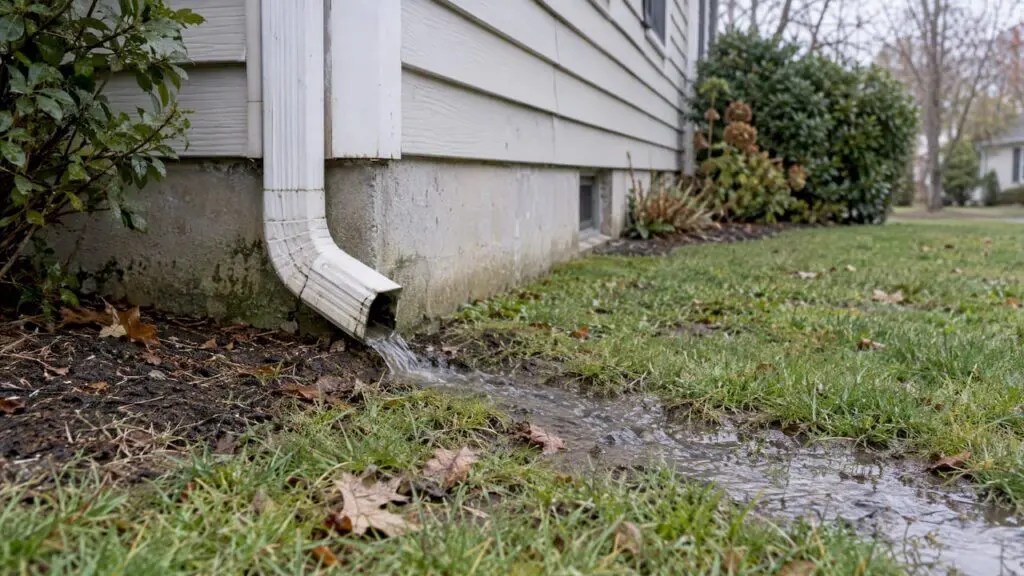
The best downspout drainage solutions fall into four categories: splash blocks and extensions for simple surface redirection, buried laterals that carry water to daylight or a pop-up emitter, infiltration features like rain gardens and drywells for soil that drains well, and rain barrels for homeowners who want to capture and reuse water. The right choice depends on your foundation type, available yard space, and soil conditions.
Quick Answers
Keep discharge at least 10 feet from basement foundations and 5 feet from crawlspace or slab homes; aim for a 5% outward grade.
Skip rain gardens and drywells if a percolation hole still holds water after 24 hours; convey roof runoff to daylight instead.
Use solid, nonperforated pipe for roof runoff, keep drywell bottoms at least 1 foot above seasonal groundwater, and place geotextile only along sides and top.
Clean gutters twice yearly and flush laterals each season; hire a professional for basement seepage, standing groundwater, utility conflicts, or grading near neighbors.
A shortlist of common downspout drainage solutions
Most yards benefit from a combination of these fixes rather than a single solution. Here’s a quick rundown of what each option does and who it suits best.
-
Splash blocks, hinge elbows, and removable extensions move water a short distance from the foundation and work well for crawlspace or slab homes with modest grading needs.
-
Buried non-perforated laterals run underground from the downspout to a daylight outlet or a pop-up emitter, keeping yards clear of visible pipe while moving water much farther than a surface extension could.
-
Rain gardens, drywells, and infiltration trenches let water soak into the soil on site, which suits properties with permeable soil and enough distance from the foundation.
-
Rain barrels and cisterns capture roof runoff for later use, cutting down on the volume that reaches the ground during a storm.
-
Riprap, rock channels, and French drain tie-ins control erosion at outlets and work alongside any of the options above when water needs a stable place to land.
Many homes end up using two or three of these together: a buried lateral paired with a rock-lined outlet, for example, or a rain barrel feeding overflow into a shallow infiltration bed.
How to choose the right solution for your yard and foundation
Picking the right fix starts with understanding your foundation and site, not with picking a product first.
-
Identify your foundation type. Homes with basements generally need discharge at least 10 feet from the foundation or into an underground catchment system, while crawlspace and slab homes can often work with 5 feet, according to Fairfax County’s drainage guidance.
-
Measure your runout and slope. Aim for roughly a 5% grade over 10 feet away from the house whenever your lot allows it, a benchmark outlined by the Building America Solution Center.
-
Run a simple percolation test before committing to a rain garden or drywell. Dig a test hole, fill it with water, and see how quickly it drains.
-
Factor in maintenance habits, leaf load, and property limits. A home surrounded by mature trees needs a different plan than one with a clear roofline and tight side-yard setbacks.
-
Check municipal rules before disconnecting downspouts from any existing drainage connection or regrading near a property line.
Pro Tip: If your percolation test leaves standing water after 24 hours, skip infiltration features and plan on conveyance to daylight instead.
Materials and installation basics for pipes, emitters, and drywells
Material choice affects how long a drainage fix lasts and how well it performs during heavy rain. Solid, non-perforated PVC or flexible pipe is the standard for carrying roof runoff away from the foundation, since perforated pipe placed too close to a house can let water seep back toward the walls instead of carrying it away, a caution echoed in building science guidance on final grading.
-
Lateral pipe slope should fall around 5/8 inch per foot, which works out to roughly the same 5% grade recommended for surface drainage, maintained consistently from the downspout to the outlet.
-
Drywells need at least 1 foot of separation between the bottom of the structure and the seasonal high groundwater table, along with properly sized washed rock, based on municipal drywell design criteria.
-
Geotextile fabric belongs on the sides and top of a drywell or infiltration trench only, never the bottom, so water can still soak into the soil below.
-
Pop-up emitters and catch basins give you a visible discharge point and a place to add a cleanout, which makes future maintenance much easier.
-
Perforated pipe has its place in French drains built for subsurface water collection, but it should stay well away from foundation walls where it isn’t appropriate.
Getting these details right the first time saves a lot of digging later, especially once plantings or walkways have gone in around the pipe route.
Quick DIY steps for three common homeowner fixes
Here’s how three popular fixes typically go, along with a cue for when to stop and call in help.
-
Downspout extension: Measure the distance to your target discharge point, cut a flexible or rigid extension to length, attach it with a hinge elbow, and check that the end sits at least 5 feet from the foundation (10 feet for basements). This takes under an hour with basic hand tools.
-
Buried lateral to daylight: Dig a trench holding a steady slope, lay solid non-perforated pipe, run water through it to confirm flow before backfilling, and mark the cleanout location for future access. Plan on a half-day for most residential runs, longer if you hit roots or rock.
-
Rain garden or drywell: Choose a spot at least 10 feet from the foundation, confirm drainage with a percolation test, build the inlet so water enters cleanly, and route overflow to a safe secondary outlet before adding plants or rock.
Stop and call a professional if your trench crosses utility lines, your yard has standing groundwater, or the grading needed to make any of these work affects a neighboring property.
Maintenance, common problems, and troubleshooting tips
Downspouts overflow in heavy rain most often because gutters are clogged, mis-sized, or losing their pitch toward the downspout opening, according to the Building America Solution Center.
-
Clean gutters at least twice a year, more often if overhanging trees drop leaves and debris regularly.
-
Flush lateral pipes and pop-up emitters each season using a cleanout access point to clear sediment before it builds into a full clog.
-
Fix erosion at outlets by resetting splash blocks level and adding rock where water has carved a channel.
-
Prepare for winter by draining rain barrels before a hard freeze, flipping up hinge elbows to prevent ice damage, and keeping pop-up emitters clear of snow and leaf buildup.
When to hire a pro for complex grading, basements, or permits
Some drainage problems go beyond what a weekend project can fix safely. Watch for these red flags:
-
Basement seepage after storms, which usually points to a combination of grading and foundation drainage issues.
-
Insufficient setback between your home and a property line, septic field, or well.
-
Repeated surface pooling in the same spot no matter what surface fixes you try.
-
Regrading needs that would affect slope near a neighbor’s property or a shared drainage path.
-
Municipal permit requirements for altering stormwater flow or connecting to a public system.
A contractor visit for one of these issues typically includes a site assessment, a written quote, and a phased plan, since French drains, drywell installations, and grading corrections often go together. Our landscaping and design team handles these combined grading and drainage projects for homes across Morris and Somerset Counties.
A practical inspection checklist from the field
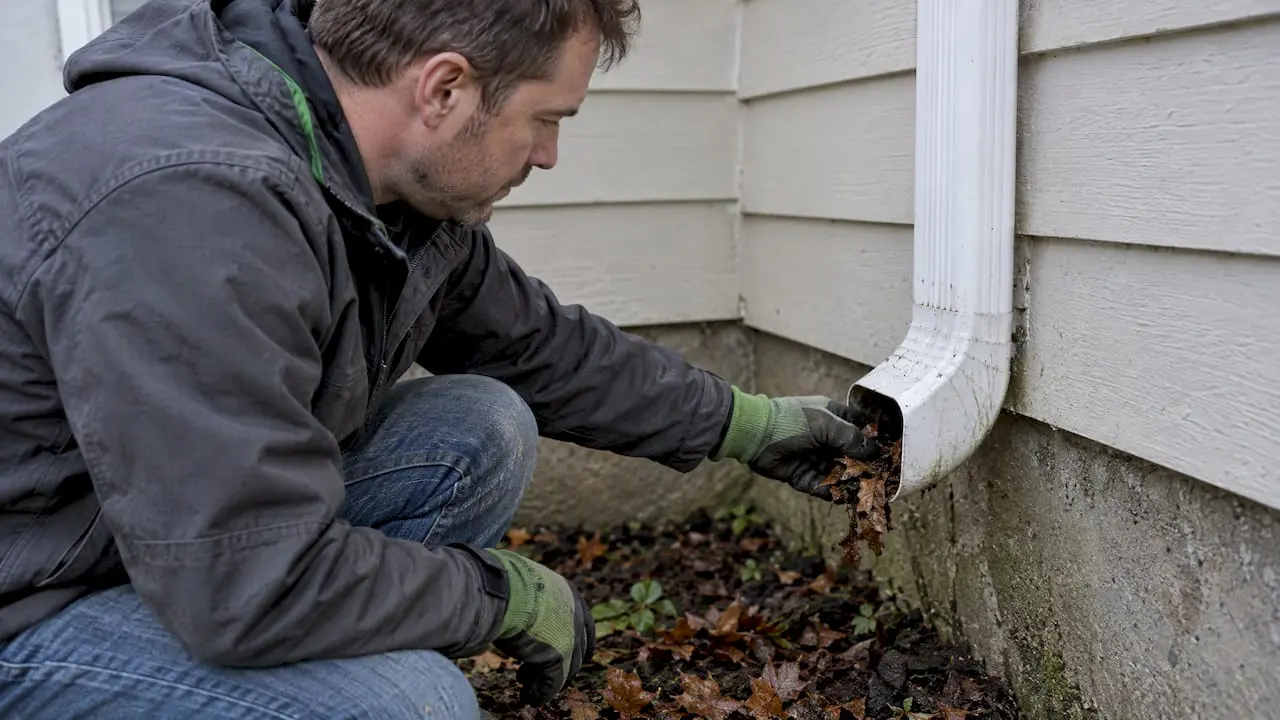
Walk your property after a heavy rain and you’ll usually spot the real problem areas faster than any guesswork indoors. Check your gutters for sag or debris, confirm each downspout location lines up with a clear discharge path, look at the grade within 10 feet of the foundation, and run a basic soak test anywhere water tends to collect.
Professionals typically sequence a drainage project the same way: stop active leaks first, redirect the water, then add capture or infiltration features, and finish with landscaping that ties the repair into the yard. Combining a drainage fix with a planting bed or a low retaining wall, as we cover in our guide to retaining wall drainage, often solves two problems in a single project.
— VF
Get a free estimate for drainage, grading, and hardscaping work
When a drainage fix calls for grading, a French drain, or masonry work to protect an outlet, our team brings hands-on experience to the job. We handle landscape design and grading, drainage tie-ins, and the stonework or paver repair that often goes along with redirecting water near patios and walkways.

Every estimate is free, and our work comes backed by a satisfaction guarantee. Reach out through our site to schedule a visit and get a plan built around your yard.
FAQ
What is the best solution for downspouts?
The best solution depends on your foundation and soil: downspout extensions or buried laterals work for most homes, moving water at least 5 feet from crawlspace or slab foundations and 10 feet from basements, per Fairfax County guidance. Homes with well-draining soil can add a rain garden or drywell for on-site infiltration.
What is the best way to disperse water from a downspout?
A buried non-perforated lateral pipe running to a daylight outlet or pop-up emitter disperses water effectively while keeping your yard clear of visible hardware. Pairing it with a rock-lined outlet or splash block prevents erosion where the water finally surfaces.
What is the best downspout drainage option when space is limited?
A drywell is often the best fit for tight yards, since it handles infiltration underground rather than needing a long surface run. Design criteria call for at least 1 foot of separation from the seasonal high groundwater table, along with properly sized washed rock, according to municipal drywell specifications.
Why do my downspouts overflow in heavy rain?
Overflow usually comes from clogged or undersized gutters, or from a downspout that has lost its pitch toward the opening, as noted in Building America Solution Center guidance. Cleaning gutters at least twice a year and checking that extensions maintain a steady slope resolves most overflow issues.
How do I know if a rain garden will work on my property?
Run a simple percolation test by digging a hole and timing how fast it drains; standing water after 24 hours means the soil won’t support infiltration well. For homeowners weighing this against buried pipe or grading changes, a partner guide to downspout drainage fixes walks through similar decision points for comparison.