
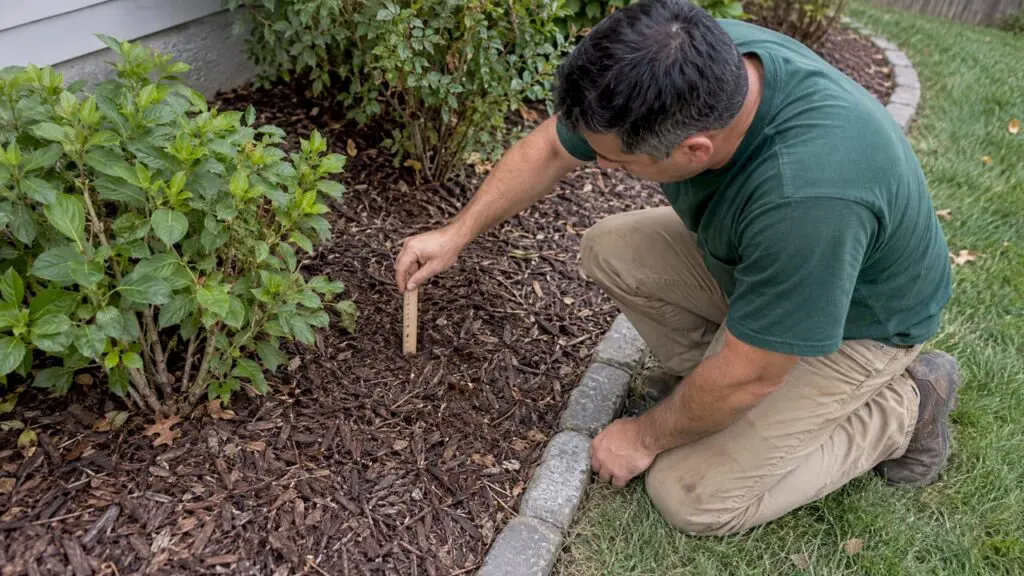
Most landscape beds need 2 to 4 inches of organic mulch, with the lower end reserved for fine-textured materials and poorly drained soils. Keep mulch pulled back from trunks in a doughnut shape rather than piled into a volcano. Both University of Illinois Extension guidance and what we see in yards across Morris and Somerset Counties point to the same range.
Quick Answer
Using 2 to 4 inches of organic mulch is recommended for most beds, with finer materials kept closer to 1 to 2 inches to avoid compaction.
Mulch depth should be adjusted based on soil drainage; clay or poorly drained soils require thinner layers, while well-drained soils can support thicker layers.
Mulch should be spread evenly and kept 3 to 6 inches away from trunks to prevent moisture buildup and pest problems, following the doughnut method.
Coarser mulch materials like wood chips remain effective at 3 to 4 inches, whereas fine mulches such as shredded leaves or compost need only 1 to 2 inches.
Overmulching or piling mulch against plant stems causes damage; regular checking and proper spreading prevent problems like root rot or fungal growth.
Recommended depths by plant type and mulch texture
The right depth depends on what you are mulching and what material you are using. Trees and shrubs tolerate the deeper end of the range because their root systems sit further below the surface, while shallow-rooted perennials and annuals need a lighter touch.
Penn State Extension recommends 2 to 4 inches of organic mulch for trees and shrubs, with coarse wood chips suited to the upper end of that range. Perennials and flower beds do better with 1 to 2 inches, especially when the material is fine compost or shredded leaf mulch. Vegetable gardens and annual beds also call for 1 to 2 inches, and heavy fresh wood chips should stay out of planting rows where they can tie up nitrogen as they break down near shallow roots.
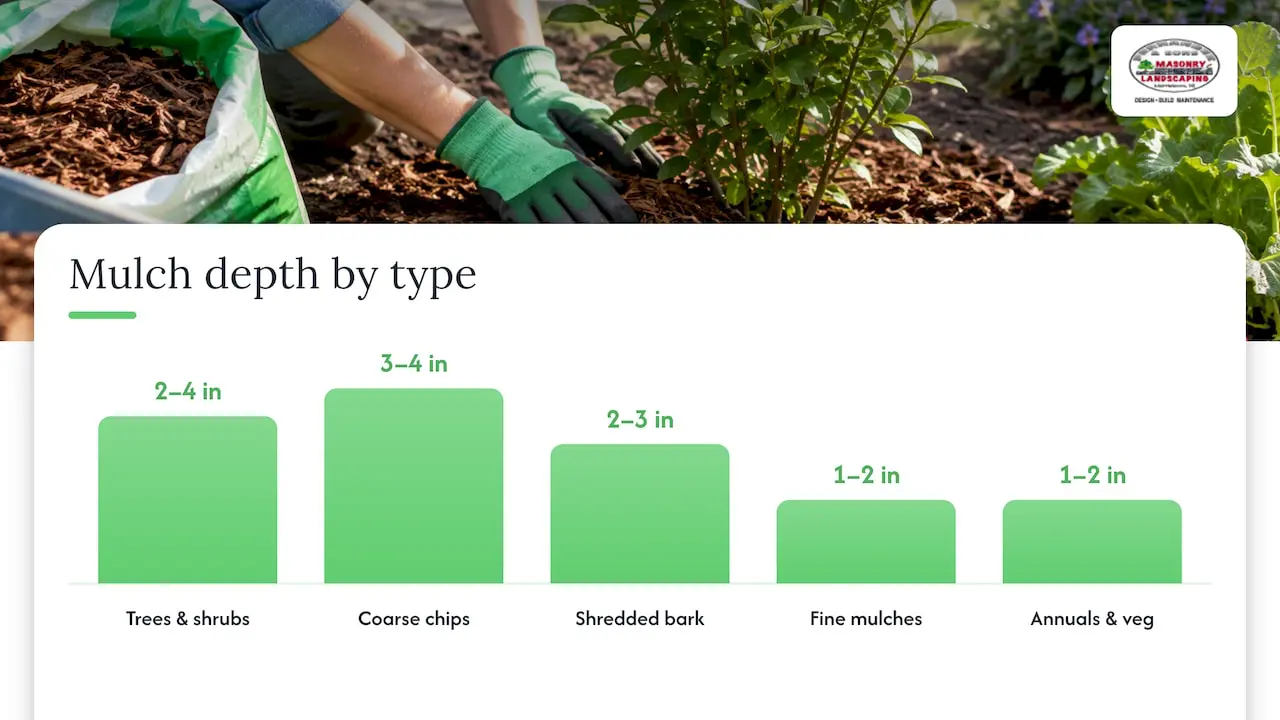
Particle size drives these differences. Fine materials like shredded bark or grass clippings pack tightly and can form a crust that blocks water and air, so a shallow layer keeps them from matting into an impermeable mat. Coarser chips leave more airspace between pieces, which is why they can go on a little thicker without suffocating the soil underneath. Fine-textured mulches such as grass clippings or shredded leaves should stay under 2 inches for exactly this reason.
A simple field check: lay your hand flat on the mulch surface with fingers extended. If the layer is deeper than the heel of your hand, it is probably too thick for a perennial bed.
Common mulch materials and where they tend to fall in the range:
-
Hardwood or softwood chips: coarse texture, suited to 3 to 4 inches around trees and shrubs.
-
Shredded bark: medium texture, generally 2 to 3 inches in most beds.
-
Shredded leaves or leaf mold: fine texture, best kept to 1 to 2 inches.
-
Compost: fine texture, typically blended in or applied at 1 to 2 inches as a top layer.
-
Pine straw: light and airy, often applied at 2 to 3 inches since it settles quickly.
How soil type and drainage change recommended depth
Soil texture changes how much mulch a bed can handle before it starts working against the plants in it. Clay and other poorly drained soils already hold water close to the surface, so a thick mulch layer traps even more moisture against roots and can push oxygen out of the root zone. On these sites, stay closer to 1 to 2 inches. Well-drained sandy soils dry out faster and can support the fuller 3 to 4 inch range without the same risk.
A few quick ways to judge your drainage before you spread anything:
-
Percolation check: dig a 12-inch hole, fill it with water, and see if it drains within a few hours.
-
Surface pooling: watch the bed after a normal rain; standing water after 24 hours signals poor drainage.
-
Compaction signs: hard, cracked soil that resists a trowel usually drains slowly and needs a lighter mulch layer.
For problem sites, three adjustments work better than forcing a standard depth: thin the organic layer to 1 inch, switch to coarser chips that allow more airflow, or leave a bare buffer where water consistently pools rather than mulching over standing water.
Pro Tip: If a bed stays soggy a full day after rain, fix the drainage before you mulch at all, since even 1 inch of fine mulch on waterlogged soil can smother roots.
Correct application: spacing, spread area, and technique
Getting the depth right only matters if the mulch is placed correctly around the plant. The doughnut method is the standard: keep mulch 3 to 6 inches away from the trunk or root flare so moisture and pests do not collect against the bark. If the flare, the point where the trunk widens into roots, is already buried under old mulch or soil, gently dig it back out before adding anything new.
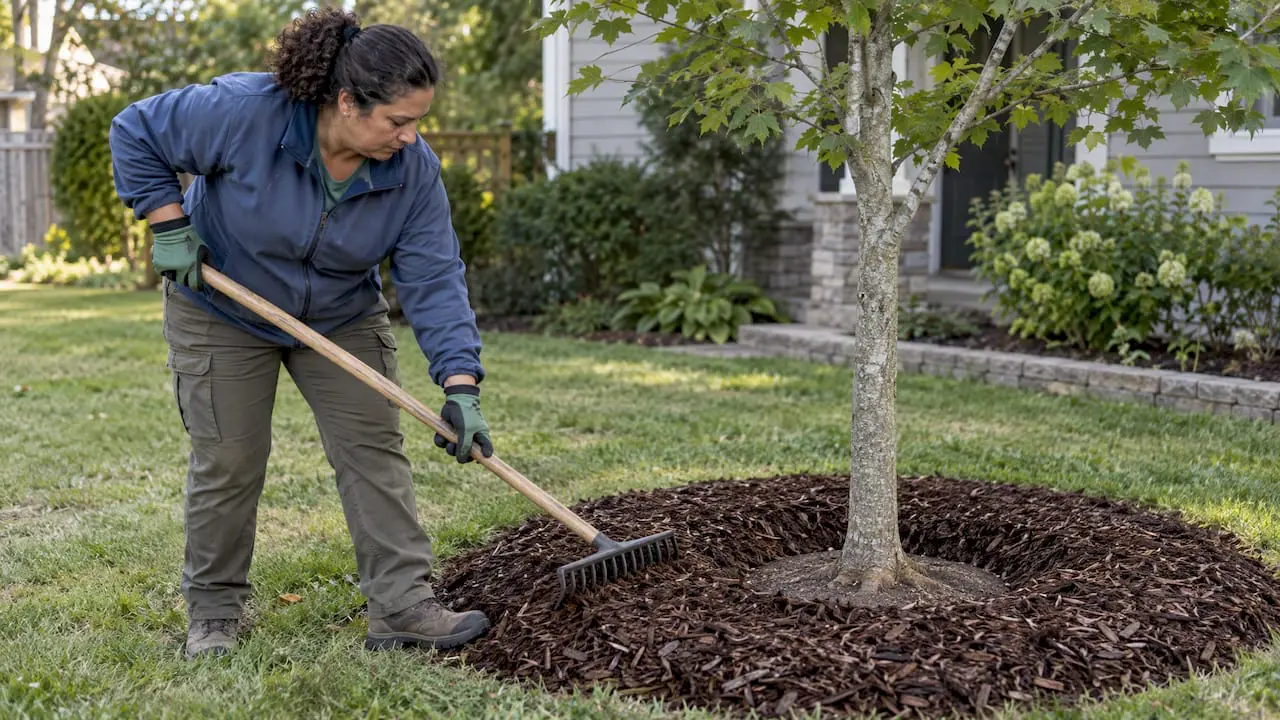
Spread mulch as wide as you reasonably can. Extending it to the tree’s dripline protects the most active roots, but a practical minimum is a 3-foot radius for most trees, which Penn State Extension ties to mimicking the loose, nutrient-cycling layer found on a forest floor. Wider rings also keep mowers and trimmers away from bark, a common source of injury.
A 2-inch mulch layer covers roughly 160 square feet per cubic yard, a figure worth knowing before you start spreading so you do not run short halfway through a bed.
To apply mulch correctly:
-
Clear grass and weeds from the bed area down to bare soil.
-
Lay landscape fabric only where persistent weeds are a known problem, since it is not necessary for most beds.
-
Spread mulch evenly, working outward from the plant base without piling against stems or trunks.
-
Rake the surface to break up any clumps and even out the depth.
-
Check the final depth in several spots with a ruler or trowel to confirm it falls in the 2 to 4 inch range.
For maintenance, top up thin spots rather than adding a full new layer every year. If the existing mulch has matted or compacted, raking it loose often restores air and water movement without needing fresh material at all, a point University of Illinois Extension makes directly. For more on prepping beds before mulching day, see our guide to applying mulch.
How much mulch you need: quick math and rules of thumb
Calculating mulch volume comes down to one formula: area in square feet times depth in feet, divided by 27, gives cubic yards. A shorter version of the same math is area times depth times 0.0031. Either way works, and Iowa State Extension confirms both as standard conversions homeowners can use.
Coverage reference numbers make ordering easier without doing the math for every bed:
| Depth | Approximate coverage per cubic yard |
|---|---|
| 2 inches | 160 square feet |
| 3 inches | 100 to 108 square feet |
| 4 inches | 160 square feet |
As a worked example: a 265 square foot bed mulched at 1.5 inches needs about 1.22 cubic yards, using the area times depth divided by 27 formula. For homeowners ordering in bags instead of bulk, a mulch calculator can convert square footage into bag counts based on standard bag sizes.
Common mistakes and troubleshooting
The most common mulch mistake is the “mulch volcano,” a cone of mulch piled directly against the trunk. It traps moisture against bark, invites rot, and can hide the root flare entirely. Ohio Department of Natural Resources notes this practice also encourages rodents and fungal problems. The fix is straightforward: pull the excess mulch away from the trunk, redistribute it outward in a thinner layer, and expose the root flare so it is visible above grade.
Fine mulches that have matted into a dense crust block water and air from reaching the soil. A quick permeability test, pouring a cup of water on the surface and watching how fast it absorbs, tells you whether to rake the layer loose or replace it outright. We cover this in more detail in our piece on why mulch volcanoes are bad.
Watch for these warning signs:
-
Fungal growth or a sour smell: often means the mulch is staying too wet underneath.
-
Thin, pale plant growth nearby: can signal oxygen-starved roots from mulch piled too deep.
-
Rodent burrows at the base: a sign that mulch against the trunk is providing cover.
Pro Tip: When in doubt, rake first and add mulch second. Most “overmulched” beds need less material, not more.
Practitioner tips from Fernandez & Sons
We lean toward 3 inches rather than the full 4 inch maximum, since it looks clean, needs less frequent refreshing, and leaves margin for settling over the season. We reserve the deeper 4 inch depth for coarse arborist chips on well-drained sites where appearance is less of a priority than moisture retention.
A typical mulching day checklist includes:
-
Checking existing depth in several spots before adding anything new.
-
Breaking up matted or compacted sections with a rake rather than covering them over.
-
Pulling mulch back from trunks and stems to expose the root flare.
-
Measuring and ordering enough bulk mulch for one consistent target depth across the bed.
-
Planning an annual visual check each spring rather than mulching on a fixed calendar schedule.
For a closer look at using chips from recent tree work, see our notes on using wood chips after tree trimming.
Adjusting mulch depth for climate and weather conditions
Hot, dry climates benefit from mulch at the fuller end of the range since a thicker layer slows evaporation and keeps roots cooler through summer stretches. In consistently wet or humid regions, the same depth can trap excess moisture, so trimming back toward 2 inches helps air reach the soil surface.
Winter brings its own adjustment. A slightly deeper layer, still within the 2 to 4 inch range, helps insulate roots against freeze and thaw cycles that can heave shallow-rooted perennials out of the ground. Once spring arrives and the soil has warmed, pulling back any excess helps the ground dry out and warm faster, which matters for early-season planting.
Heavy rainfall regions call for coarser material that resists washing away and compacting into a waterlogged mat. Fine mulches move more easily in a downpour and tend to settle into a denser layer than intended, which is another reason finer materials stay shallower from the start. If your region swings between drought and heavy storms, coarse wood chips tend to hold their depth and structure better across both conditions than fine bark or compost.
Seasonal timing for mulch application and its effect on depth
Spring and fall are the two windows most often recommended for mulching, and timing affects how much material you actually need. A spring application, once soil has warmed, supports the growing season ahead and typically calls for a full 2 to 4 inch layer since the mulch will break down gradually over summer heat.
Fall mulching leans toward insulating roots before winter, and many beds only need a top-up rather than a full fresh layer if spring mulch is still mostly intact. Measuring existing depth before adding more prevents the gradual buildup that leads to overmulching, since layering fresh material on top of mulch that has not fully broken down each season is one of the most common ways beds end up too thick. Checking depth at each seasonal application, rather than assuming last year’s layer has vanished, keeps the total within the recommended range year after year.
A practitioner’s take on getting mulch depth right
The 2 to 4 inch rule works for most beds, but soil drainage and plant type matter more than hitting an exact number. If a bed stays wet for days after rain or a mature tree shows stress despite reasonable mulch practices, that usually points to a drainage or root issue worth a professional look rather than more mulch. For site-specific guidance on beds, trees, or drainage problems that go beyond a simple refresh, our landscape design and maintenance services are available to help sort out what a particular yard actually needs.
FAQ
How deep should mulch be laid?
Most organic mulch should be laid 2 to 4 inches deep, with finer materials like shredded leaves or compost kept to 1 to 2 inches. University of Illinois Extension notes that exceeding 4 inches risks oxygen deprivation and root rot.
Is 4 inches of playground mulch enough?
Playground surfacing has different safety standards than landscape mulch and is governed by fall-height requirements rather than plant health guidelines. For playground-specific depth and material standards, check with the equipment manufacturer or your local parks department rather than general landscaping guidance.
Should I water mulch after putting it down?
A light watering after applying mulch helps settle the layer and can reduce the chance of it blowing or washing away before it compacts naturally. It is not required, but it is a simple step that helps new mulch stay in place through the first few rains.
How much will 1 yard of mulch cover at 2 inches deep?
One cubic yard of mulch covers approximately 160 square feet at a 2-inch depth. At 3 inches, that same cubic yard covers closer to 100 to 108 square feet, so deeper applications need proportionally more material.