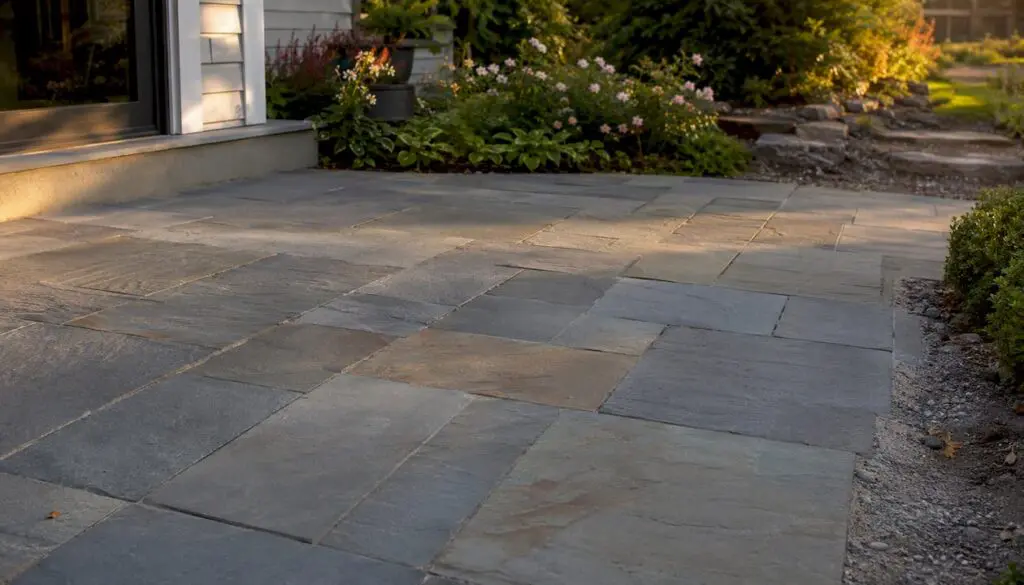
A professionally installed bluestone patio typically runs in a moderate to higher range per square foot nationwide, putting a 200-square-foot patio at several thousand dollars and a 400-square-foot patio at correspondingly higher total costs according to national cost aggregators. Materials alone cost $6–$14 per square foot, so the gap between a supplier quote and a contractor invoice is almost always labor, base preparation, and delivery. The single most useful thing you can do right now: get three written, line-item quotes and compare each one’s sub-base depth, delivery allowance, and waste/cut factor before you agree to anything.
The biggest cost drivers are stone type and finish, site preparation complexity, and regional freight distance from Pennsylvania quarries. A flat, accessible backyard in New Jersey will cost noticeably less than a sloped, tree-rooted yard in California. Keep those variables in mind as you read through the numbers below.
Table of Contents
- How much does bluestone patio cost per square foot?
- Sample project totals by patio size
- Which bluestone type and finish should you choose?
- What goes into a contractor’s line-item quote?
- How to read a contractor quote and spot red flags
- Key Takeaways
- Why the base matters more than the stone
- Ready for a free on-site estimate in Morris or Somerset County?
- Sources and further reading
How much does bluestone patio cost per square foot?
“Cost per square foot” means something different depending on who is quoting it. A stone supplier quotes materials only, which covers the bluestone itself. A masonry contractor quotes an installed price, which bundles the stone, setting bed, sub-base aggregate, labor, jointing material, edging, and disposal of excavated soil into one number.
National pricing data puts the ranges at:
- Installed (mid-to-upper range): $22–$53 per square foot for many residential projects, depending on finish and base requirements, per trade guides
- Calculator-driven mid-range estimate: $27.38–$36.95 per square foot for basic work, per Homewyse’s cost calculator
The spread is wide because “installed” is not a fixed recipe. A simple running-bond paver pattern on a flat lot with good access sits at the low end. A custom irregular-cleft slab pattern on a sloped yard with drainage work and a retaining wall sits at the high end.
What the installed price actually includes
- Bluestone material (pavers or slabs)
- Compacted gravel sub-base (typically 4–6 inches)
- Sand or stone-dust setting bed
- Labor for excavation, base compaction, stone setting, and cutting
- Polymeric sand or mortar jointing
- Edge restraints or border stone
- Debris hauling and site cleanup
Two quick examples: A 200-square-foot patio installed at an average price comes to several thousand dollars, while the materials-only cost is noticeably lower, reflecting stone alone before labor and base preparation. A 400-square-foot patio installed naturally costs more, with a similar gap between materials and total installed cost due to labor and base work, which are essential for durability in colder climates.
Sample project totals by patio size
The table below uses a mid-range installed assumption of $15–$31 per square foot, reflecting standard site access, minor prep, and typical regional freight for the Northeast. Actual totals will shift based on finish selection, site conditions, and contractor rates in your area.
| Patio Size (sq ft) | Low Estimate | Mid Estimate | High Estimate |
|---|---|---|---|
| 100 | $1,500 | $2,300 | $3,100 |
| 200 | $3,000 | $4,600 | $6,200 |
| 288 | $4,320 | $6,650 | $8,928 |
| 400 | $6,000 | $9,200 | $12,400 |
For context, HomeAdvisor data shows a 288-square-foot patio averaging $4,608–$7,200, which aligns with the mid column above.
Adjusting for difficult conditions: Add 15–25% to any estimate when the site has a slope greater than 6 inches per 10 feet, limited equipment access (narrow gate, tight side yard), or existing concrete that needs demolition. Heavy grading and tree root removal are frequently billed as separate line items and can add $10 or more per square foot on their own.
Which bluestone type and finish should you choose?
Bluestone is a dense sandstone quarried primarily in Pennsylvania and New York. The finish you select changes both the look and the price, and it affects slip resistance in ways that matter for pool edges and shaded patios.
- Natural cleft: The stone is split along its natural grain, leaving a textured, slightly uneven surface. This is the most common residential choice. Material cost typically falls in the $6–$10/sq ft range. The texture provides good grip and a relaxed, organic appearance well suited to casual gathering spaces.
- Thermal (flamed): A torch is passed over the surface to open the grain and create a coarser, slip-resistant texture. Supplier data confirms the thermal finish premium runs roughly $1–$3 per square foot above natural cleft. Thermal bluestone is the preferred choice for pool decks and shaded patios where wet-surface traction matters.
- Sawn/slab: The stone is cut on all four sides to precise dimensions, producing clean, contemporary edges. This finish works well for formal terraces and modern outdoor kitchens. Expect material costs toward the upper end of the range, and more cutting labor on site.
- Honed: A smooth, matte surface achieved by grinding. Honed bluestone is better suited to interior applications or covered outdoor areas; it becomes slippery when wet and is rarely specified for open patios.
- Pavers vs. slabs: Bluestone pavers are smaller, uniform pieces (often 12×12 or 16×16 inches) that are easier to handle and replace. Large-format slabs (24×36 inches and up) create a more dramatic visual effect but require more precise base work and heavier equipment. Retail SKU data shows unit prices ranging from about $14.99 for smaller thermal pavers to $89.94 for large slab formats, illustrating how dramatically format affects per-piece cost.
Pro Tip: If your patio will be partially shaded or adjacent to a pool, specify thermal finish in your quote request. The $1–$3/sq ft premium is far less expensive than a slip-and-fall repair or a resurfacing job two years in.
What goes into a contractor’s line-item quote?
Labor accounts for 60–70% of the total installed price for bluestone pavers, with installation labor running $9–$17 per square foot on its own. That single fact explains why two quotes for the same stone can differ by thousands of dollars: one contractor may be pricing a thicker base, a more experienced crew, or a more complex pattern.
Here is what a well-structured quote should itemize:
| Line Item | Typical Range |
|---|---|
| Bluestone material | $6–$14/sq ft |
| Gravel sub-base (material + compaction) | $2–$5/sq ft |
| Sand/stone-dust setting bed | $0.50–$1.50/sq ft |
| Labor (excavation, setting, cutting) | $9–$17/sq ft |
| Polymeric sand or mortar jointing | $0.50–$1/sq ft |
| Edge restraints/border stone | $1–$3/linear ft |
| Delivery/freight | $200–$300 flat fee |
| Debris hauling and disposal | $150–$300 flat fee |
| Permit (if required) | $50–$300 varies by municipality |
| Demo of existing surface | $2–$6/sq ft (if applicable) |
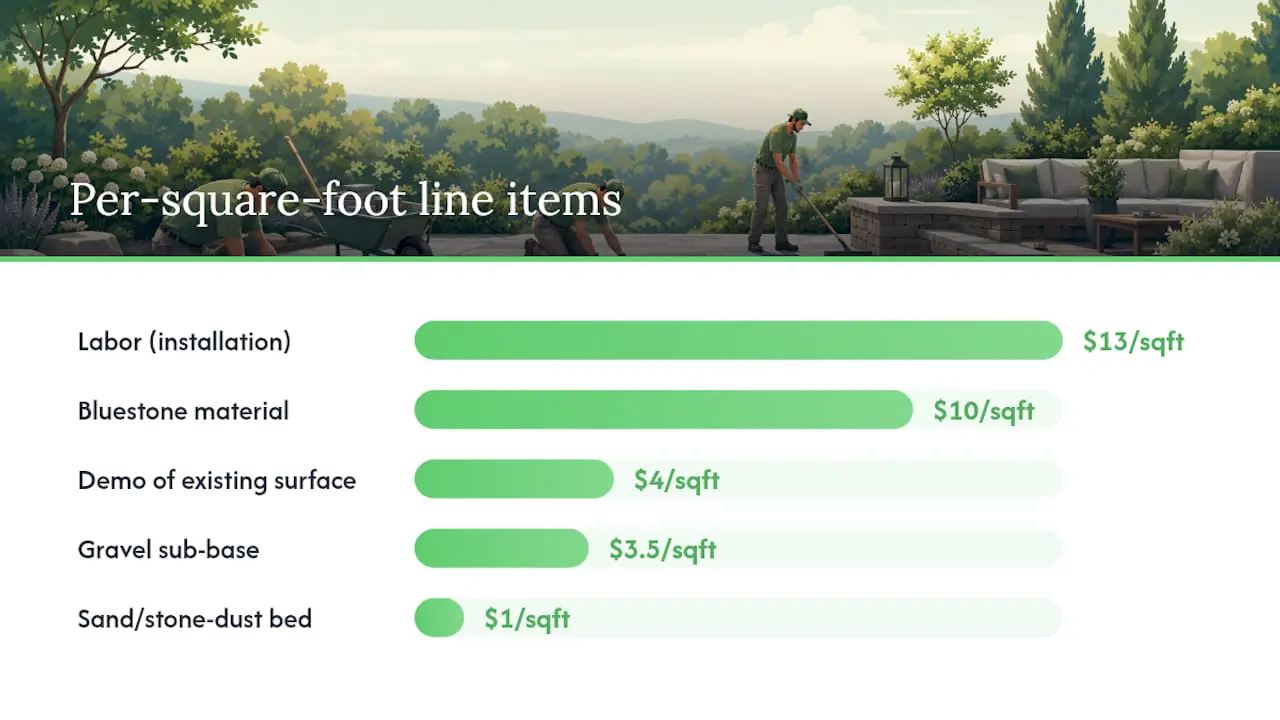
Regional wages move the labor line significantly. Projects in the Northeast, including New Jersey, sit closer to the upper end of the labor range. Regional data shows Northeast installed costs running $20–$45 per square foot, while West Coast projects can reach $30–$65 per square foot, driven largely by freight distance from Pennsylvania quarries.
Site prep extras are where budgets most often get surprised. Demolition, root removal, and significant regrading are commonly excluded from base quotes and billed separately, sometimes adding $10 or more per square foot.
How to read a contractor quote and spot red flags
A clear, line-item quote that separates material, labor, base, and allowances for cutting and transport correlates directly with fewer mid-job change orders and better outcome predictability. Here is what a solid estimate looks like and what to push back on.
Sample line-item estimate for a 200-sq-ft patio (mid-range):
| Item | Quantity | Unit Cost | Subtotal |
|---|---|---|---|
| Natural cleft bluestone (10% waste factor) | 200 sq ft | — | $1,980 |
| Dense-grade gravel sub-base | 200 sq ft | $3.50 | $700 |
| Sand setting bed | 200 sq ft | $1.00 | $200 |
| Labor (excavation, setting, cutting) | 200 sq ft | $13.00 | $2,600 |
| Polymeric sand jointing | 200 sq ft | $0.75 | $150 |
| Edge restraint | 60 linear ft | $2.00 | $120 |
| Delivery | Flat fee | — | $350 |
| Debris hauling | Flat fee | — | $250 |
| Total | $6,350 |
Questions to ask every contractor:
- Where is the stone sourced, and what is the quarry or supplier name?
- What is the sub-base depth and compaction method?
- What jointing product do you use, and is it polymeric sand or mortar?
- Does the quote include a waste/cut allowance, and what percentage?
- What is your warranty on base work and stone setting?
- How are change orders handled, and what triggers one?
- Can you provide proof of liability insurance and NJ contractor registration?
- What is the payment schedule, and is a large deposit required upfront?
Red flags to reject or clarify:
- A lump-sum quote with no line-item breakdown
- A bid 30–40% below all others with a request for a large upfront deposit
- No written project schedule or start date
- Inability to provide proof of insurance or a contractor license number
- No mention of sub-base depth or compaction method anywhere in the quote
Pro Tip: Ask for the sub-base specification in writing before signing. A properly built sub-base adds $1,200–$3,500 to a 300-square-foot patio in quarry-belt states, but skipping it is the most common cause of long-term failure in freeze-thaw climates like New Jersey’s.
Key Takeaways
A properly installed bluestone patio costs $15–$31 per square foot nationwide, with labor accounting for 60–70% of the total, making contractor selection and base specification the two decisions that most determine long-term value.
| Point | Details |
|---|---|
| Installed cost range | Expect $15–$31/sq ft nationally; $22–$53/sq ft for many residential projects with premium finishes. |
| Labor is the largest cost | Labor runs $9–$17/sq ft and makes up 60–70% of the total installed price. |
| Sub-base is non-negotiable | A proper sub-base adds $1,200–$3,500 on a 300-sq-ft patio but prevents costly frost-heave failures. |
| Finish affects price and safety | Thermal bluestone costs $1–$3/sq ft more than natural cleft and is the right choice for pool decks and shaded areas. |
| Fernandeznsons | Serves Morris and Somerset Counties, NJ with free on-site estimates and line-item written quotes for bluestone patios and hardscaping. |
Why the base matters more than the stone
Most homeowners focus their budget conversations on which bluestone finish looks best. That is understandable. But after more than a decade of building patios across Morris and Somerset Counties, the clearest pattern is this: the patios that fail early almost never fail because of the stone. They fail because someone cut corners on the sub-base.
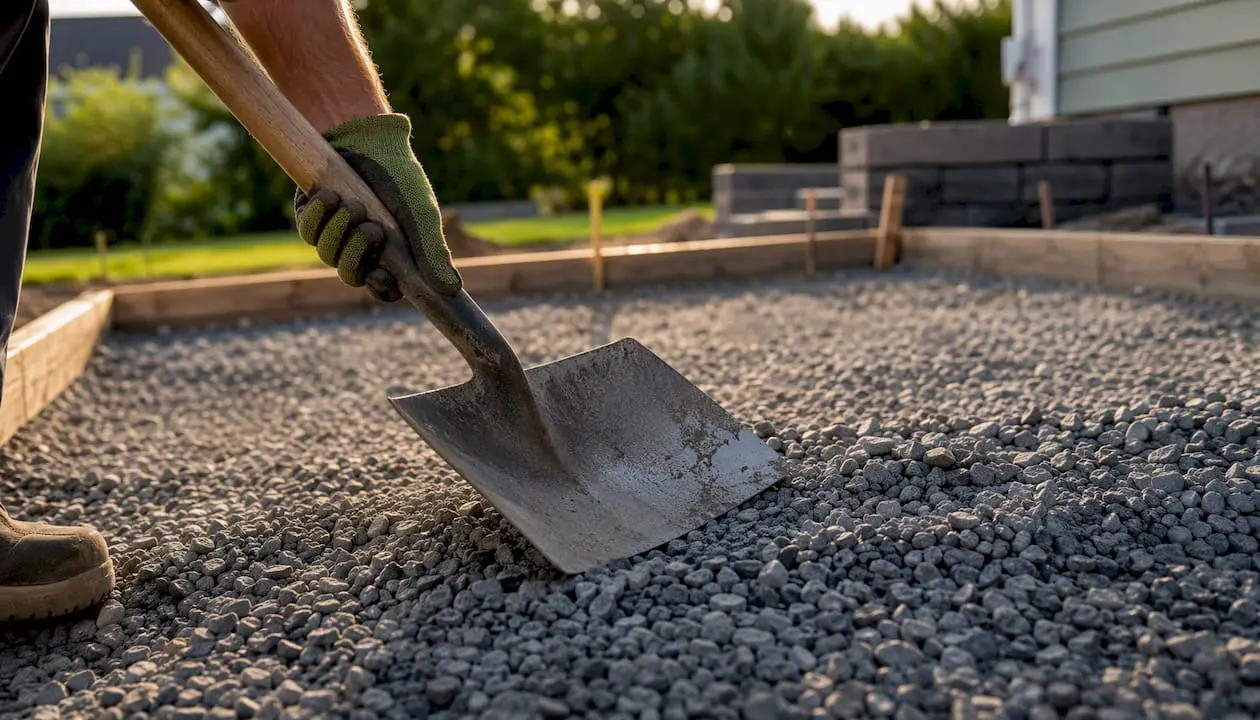
A 4-inch compacted gravel base might hold up in a mild climate. In New Jersey, where freeze-thaw cycles can run 40–60 times a season, that base needs to be 6–8 inches of properly compacted dense-grade aggregate, with drainage slope built in from the start. That work costs more upfront. It also means the patio you install this year is still level and solid fifteen years from now.
The other thing worth saying plainly: a vague lump-sum quote is not a budget-friendly option. It is a risk transfer. When a contractor does not itemize sub-base, jointing, and waste allowance, those costs do not disappear. They show up as change orders mid-project. Always ask for a written, line-item estimate, verify the contractor carries liability insurance, and get the sub-base specification in writing before signing anything.
Ready for a free on-site estimate in Morris or Somerset County?
Fernandeznsons brings over a decade of masonry and hardscaping experience to homeowners across Morris and Somerset Counties, NJ. A bluestone patio is one of the most durable and visually rewarding outdoor investments you can make, and getting the numbers right from the start is what separates a project you love from one you regret.
The team at Fernandeznsons provides free on-site estimates with written, line-item quotes that break out stone, base, labor, and delivery separately, so you can compare bids with confidence. Services include bluestone and stone masonry patios, custom hardscaping, retaining walls, outdoor living spaces, and full landscape design. Before your estimate, have your desired patio size, a few photos of the space, and any access notes ready (gate width, slope, existing surfaces). To schedule your free estimate, visit Fernandeznsons hardscaping services or call the team directly.
Sources and further reading
- How Much Does Bluestone Cost? (2026 Prices)
- Cost to Install Bluestone Patio – 2026 Cost Calculator (Customizable)
- Bluestone Patio Cost in the US: 2026 Price Guide | found.rocks
- Bluestone Pavers Cost: A Comprehensive Guide to Material and Install Prices – Stone Styling
- How Much Does a Bluestone Patio Cost to Install?
- Bluestone Paver, Thermal Blue Select – Lurvey’s product listing
For the most accurate estimate, contact local suppliers and licensed masonry contractors in your area to get region-specific quotes based on your site conditions and stone preferences.