The main landscape design styles are formal, cottage, contemporary, woodland or naturalistic, and eco-friendly, and the right one for a Morris County property depends less on taste than on how you use the yard and what the site allows. Sun, slope, drainage, soil and deer pressure decide which style will hold up. A design that suits the site and the household’s routine looks better after five years than one copied from a photo. At Fernandez & Sons, we design and build outdoor spaces for homes and commercial properties across Morris and Somerset Counties, and this guide walks through the styles, the design process and the choices that matter locally.
Helpful Facts
-
Formal, cottage, contemporary, woodland and eco-friendly are the styles most homeowners choose between, and each one needs a different amount of upkeep.
-
Contemporary design relies on crisp lines, geometric layouts, natural stone or wood, and restrained planting.
-
Start with how you want to use the space, then match the style to sun, drainage, soil and slope.
-
The design process runs from site observation and a base map to a master plan, with plant selection last.
-
A local design-build team can handle the layout, hardscape and planting under one plan, and we offer free estimates across Morris and Somerset Counties.
The Main Landscape Design Styles
A landscape style is a consistent set of choices: how the layout is organized, which materials appear, and how plants are used. Most yards blend styles, but one should lead so the property feels intentional. Here are the styles homeowners ask about most.
Formal Landscape Design
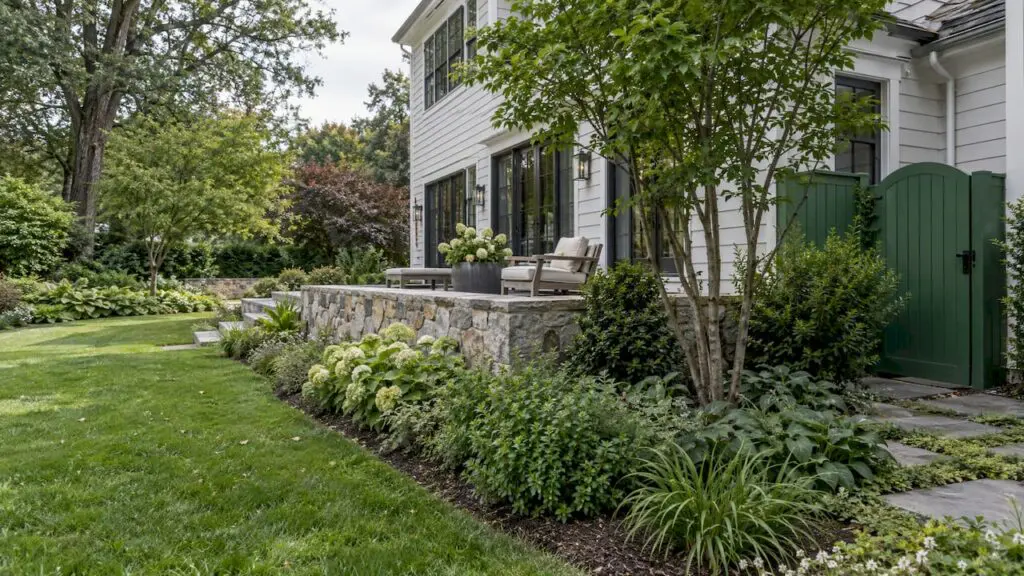
Formal gardens are built on balanced symmetry and a clear geometric floor plan, with planting or paths arranged around a central feature, according to the Royal Horticultural Society. Think of a front walkway centered on the door, matching planting beds on either side, and clipped hedges that frame the entry.
This style suits traditional colonial and Georgian-style homes, which are common across Morris County. It works best where the lot is relatively level. The trade-off is that sharp edges and clipped forms stay sharp only with regular seasonal care, so it pairs naturally with a maintenance plan.
Cottage Landscape Design
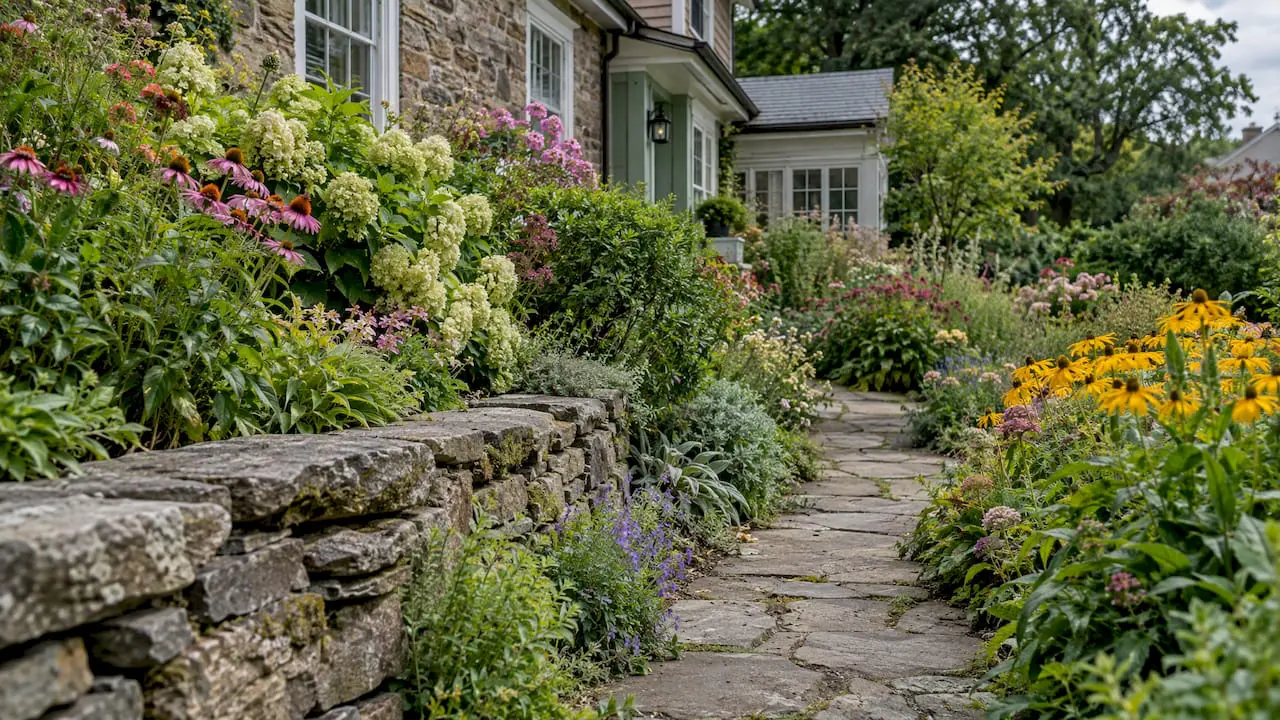
Cottage gardens are abundant, colorful and scented, with plantings spilling around narrow paths. The RHS notes that repeated colors and hedging give the style its structure, which keeps it from looking random.
It fits older homes, smaller lots and front yards where you want warmth and a welcoming approach. A stone walkway or a low stone wall gives the loose planting a firm frame.
Contemporary and Modern Landscape Design
Modern gardens are spare and uncluttered. Architectural Digest describes their look as driven by spatial shapes, materials and a carefully curated plant selection. Contemporary design is the most searched variation, so it gets its own section below.
Woodland and Naturalistic Landscape Design
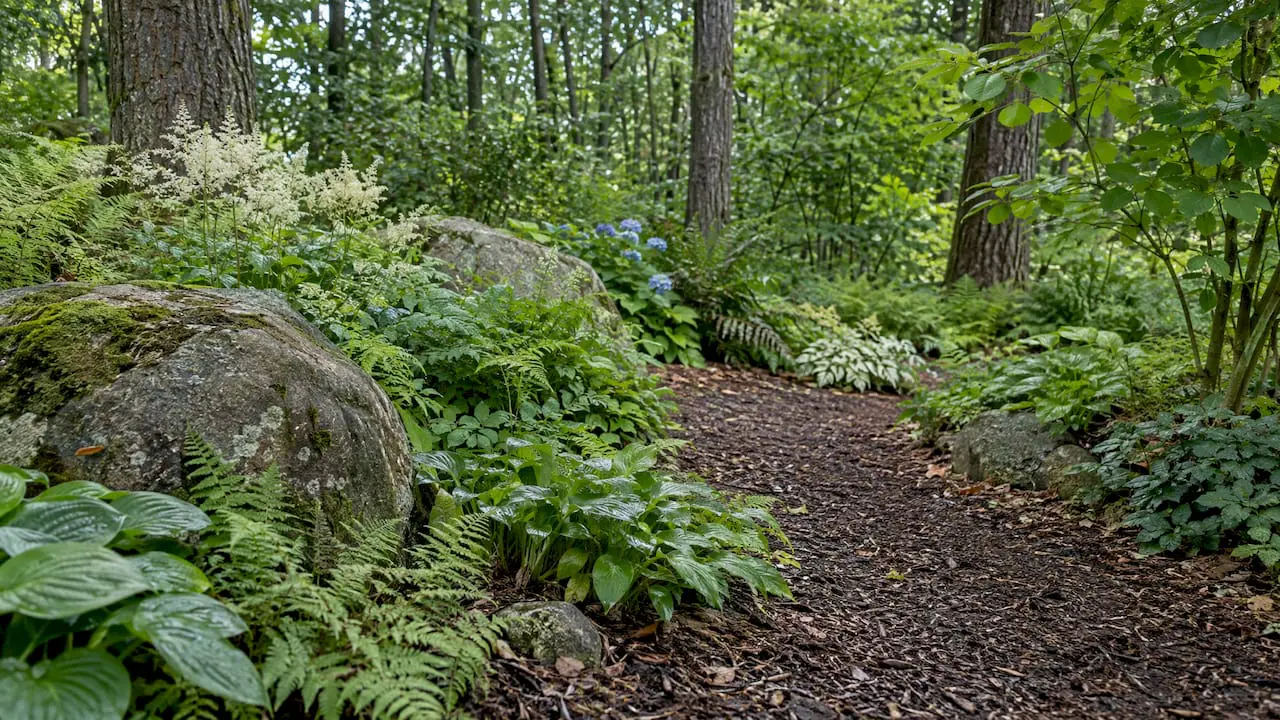
Woodland gardens use lush shade planting and a naturalistic feel, as Architectural Digest outlines. Many Morris County lots already have mature trees, which makes this style a natural fit. Paths of stone or mulch, layered understory plants and a few well-placed boulders do most of the work.
A related American tradition is the Prairie style. The National Park Service describes it through regionalism, grouped native plants arranged in ecological layers, water and stone, controlled views and movement through the landscape.
Eco-Friendly and Native Plant Design
Eco-friendly gardens usually combine native plants with rainwater features. The Rutgers New Jersey Green Building Manual says Mid-Atlantic native and adapted plants can reduce maintenance, support wildlife and biodiversity, reduce stormwater runoff and help mitigate flooding. For a property with a wet corner or a sloped lawn, that is a practical advantage on top of a good look. Our guide to NJ native plants by sun exposure shows which plants suit which light conditions.
Japanese-Inspired Design
Japanese-inspired gardens rely on stone, water, restrained planting and carefully framed views. They suit larger backyards where there is room for a path, a focal point and quiet seating. We cover the variations in three Japanese garden styles for a large backyard.
Styles at a Glance
| Style | Defining features | Best for | Upkeep level |
|---|---|---|---|
| Formal | Symmetry, geometric layout, central feature | Traditional homes, level lots | Higher |
| Cottage | Dense, colorful, scented planting, narrow paths | Older homes, small front yards | Moderate to higher |
| Contemporary | Clean lines, hard materials, restrained palette | Newer or modern homes, patios, outdoor kitchens | Lower to moderate |
| Woodland | Shade planting, naturalistic paths | Wooded lots | Lower to moderate |
| Eco-friendly | Native plants, rainwater features | Sloped or wet sites | Lower once established |
Upkeep levels are general guidance and change with plant choices and lot size.
What Contemporary Landscape Design Looks Like
Contemporary landscape design uses crisp lines, geometric layouts and little clutter. The RHS lists natural materials such as stone, slate and wood, and plants such as clipped hedges, specimen trees and simple blocks of planting. An official South Australian guide to contemporary gardens adds clean lines, geometric forms, hard materials such as stone, hardwood and steel, and a restrained plant palette with bold forms and grasses.
Here is how that translates to a Morris County yard:
-
Layout: Rectangular patios, straight walkways and stepped planters that echo the lines of the house.
-
Materials: Large-format pavers, stone veneer on walls and fireplaces, and concrete or stone steps with clean edges.
-
Planting: Masses of a single plant rather than mixed beds, plus clipped evergreens and a few specimen trees.
-
Grasses: Grasses add structure, texture, volume and movement, and sedges and rushes tolerate damper conditions, which helps in low spots.
-
Outdoor living: Built-in seating, fire features and outdoor kitchens that use the same materials as the patio, so everything reads as one design.
Contemporary design leans heavily on hardscape, which is the masonry portion of a landscape: patios, walls, steps and walkways. Because the hard surfaces are the design, the quality of the construction shows. Level bases, clean joints and proper drainage matter more here than in a loose cottage planting. That is where a team that does both masonry and landscaping keeps the layout, the materials and the planting working together. For current ideas, see our look at 2026 modern outdoor design trends for NJ.
Modern layouts also tend to include gates, lighting and other built features. If a gate is part of your plan, modern gate technologies are worth considering early so the posts, paving and wiring paths fit the design.
How to Choose a Style for Your Property
Start with how you want to use the space, then balance personal taste with site conditions and budget, as Architectural Digest recommends. Work through these questions in order.
1. How Will Your Household Use the Yard?
A family that entertains wants a patio sized for a table and a grill. Someone who wants quiet evenings may prefer a fire pit and a few comfortable seats. A business or property manager needs clear walkways, a welcoming entrance and low-maintenance planting. Write down your must-haves and keep the list short: the same magazine suggests limiting initial must-haves to five.
2. What Does the Site Allow?
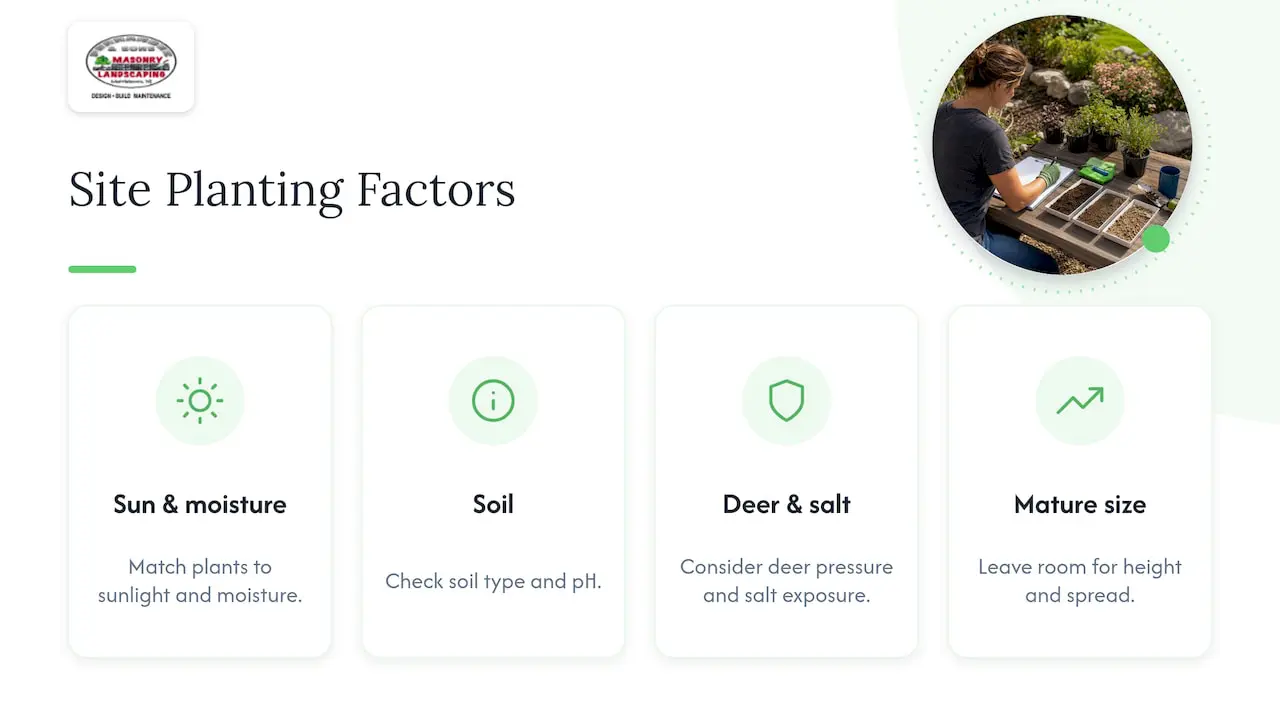
The Jersey-Friendly Yards program recommends matching plants to sunlight, moisture, soil type, pH, deer pressure and salt exposure, while leaving room for each plant’s mature height and spread. In Morris County, deer pressure is a real factor in plant choice, and many properties have slopes, wet spots or shaded woodland edges.
A formal style needs level ground. A steep lot may suit terraced retaining walls and naturalistic planting instead. Our guide to slope landscaping ideas that hold up over time explains how walls and planting work together on grades.
3. How Much Maintenance Do You Want?
If you want a low-maintenance yard, native and adapted plants, simple planting blocks and durable hardscape all help. Formal hedges and dense perennial borders reward regular care. Be honest about the hours you want to spend, or decide to have the upkeep handled through seasonal landscape maintenance.
4. Does the Style Suit the House?
The landscape should match the architecture. Clean modern lines look natural beside a contemporary home and stiff beside a rustic farmhouse. Walls, patios and entry steps should repeat the stone or brick already on the house. Our guide to pool landscaping ideas for different NJ home styles shows the same logic around a pool deck.
The Landscape Design Process Step by Step
Landscape design considers views, outdoor-use areas, hardscape, shapes, drainage, soil and plant conditions. The Morton Arboretum outlines a process of observing the site, making a base map, sketching and refining a plan, and choosing plants suited to the site. Here is how that plays out in practice.
-
Observe the property and list what you want. Walk the yard at different times of day. Jersey-Friendly Yards advises noting drainage, rainwater flow, wet spots, slopes, sun exposure, breezes, winter winds and the movement of people, pets and vehicles.
-
Make a base map. The Morton Arboretum suggests drawing it from a property survey or a measured drawing, including lot lines, the house, doors, windows and paved surfaces. Garden Design adds faucets, electrical outlets, traffic patterns, sun, shade, wind and slopes.
-
Test the soil and read the water. Rutgers Soil Testing Laboratory testing can assess pH, nutrient levels, soil type, organic matter and soluble salts. Fix drainage before building anything on top of it. Our guides on swales versus French drains and retaining wall drainage explain the options.
-
Sketch the spaces and hardscape. Plan patios, walkways, walls, seating and structures spatially before deciding where plants go, as Architectural Digest recommends.
-
Create a master plan. A long-term plan lets you build in phases, for example a patio this year and an outdoor kitchen later, without redoing earlier work.
-
Select plants last. Choose for light, wind, moisture, soil and mature size. Rutgers also recommends minimizing site disturbance, amending soil with compost when needed, watering plants until established and keeping a long-term maintenance plan, all described in the NJ Green Building Manual.
A New Jersey planning guide from Bruce Crawford for Jersey-Friendly Yards says a successful plan should meet residents’ needs, apply design elements and principles, engage more than sight, and offer environmentally sensitive solutions to site problems. That is a useful standard: a good design is judged by how it works, not only how it photographs.
Water deserves special attention if other work is planned. If a roof replacement is coming, see how protecting landscaping during roof replacement can be built into your schedule, so new plantings and downspout routes are not disturbed. Our own advice on downspout drainage solutions covers where roof water should go.
We provide landscape design as part of our residential services, so site review, hardscape and planting come together in one plan. See our landscaping and design services for the scope.
Quick Answers: Landscape Design Styles
-
What are the main landscape design styles? Formal, cottage, contemporary, woodland or naturalistic, eco-friendly and Japanese-inspired.
-
What defines contemporary landscape design? Clean lines, geometric layouts, natural hard materials and a restrained plant palette with grasses.
-
What are the steps in landscape design? Observe the site, make a base map, address soil and drainage, sketch hardscape, build a master plan and choose plants last.
-
How do you pick a style? Start with your household’s use of the space, then match the site’s light, water, soil and slope.
-
Who designs and builds landscapes in Morris County? Fernandez & Sons, with masonry, hardscaping and landscape design in Morris and Somerset Counties.
Why We Pair Design With Masonry
Most outdoor projects we are asked about start with a style and end with a construction question. Does the patio drain? Will the wall hold the slope? Can the outdoor kitchen share a material with the walkway? Those answers decide whether a design looks as good in year five as it does on paper.
With more than a decade of work across Morris and Somerset Counties, we believe the strongest outdoor spaces are planned as one project: the layout, the stonework and the planting. Our services cover patios and walkways, retaining walls, pool decks, fire pits and fireplaces, outdoor kitchens, stone veneer and landscape design, so a single team can carry a design from the first sketch to the finished space.
We also think a yard should work in every season. That is why homeowners and property managers can pair a new design with seasonal landscape maintenance and snow removal, keeping the property looking cared for year-round.
Fernandez & Sons Masonry & Landscaping
Plan Your Design With Fernandez & Sons
If you are weighing styles for a patio, an outdoor kitchen or a full yard, we can help you turn the idea into a plan that fits your lot. We design and build residential and commercial outdoor spaces across Morris and Somerset Counties, and we back our work with a satisfaction guarantee. Estimates are free. Start on our landscaping and design page or contact us through our main site.
For project ideas, browse our outdoor living projects and our outdoor kitchen layout guide. For balance and proportion in a design, read landscape design and the importance of balance.
Landscape Design Questions Homeowners Ask
What Does Landscape Design Consist Of?
Landscape design covers the layout of outdoor spaces, hardscape such as patios and walls, drainage, soil preparation and plant selection. It also considers views, sun, wind and how people move through the property. The goal is a space that is attractive and works for the people who use it.
What Is the Difference Between Landscape Design and Landscape Architecture?
Landscape design usually focuses on residential and small commercial outdoor spaces, including layout, plants and hardscape. Landscape architecture is a licensed profession that often covers larger public or engineered projects. For most home and office-park projects, a design-build team handles the work from plan to installation.
Which Landscape Style Is Lowest Maintenance?
Contemporary designs with simple planting blocks and eco-friendly designs with native plants tend to need the least upkeep once established. Rutgers notes that native and adapted plants can reduce maintenance. Durable hardscape also cuts the work compared with large lawns and dense borders.
Can I Combine Landscape Styles?
Yes, if one style leads and the others support it. A contemporary patio can sit beside a naturalistic planting, provided the materials and plant colors repeat across both. A single master plan keeps the combination looking deliberate.
Where Can I Get a Landscape Design in Morris County, NJ?
Fernandez & Sons designs and builds outdoor spaces for homes and businesses in Morris and Somerset Counties, including Parsippany-Troy Hills, Dover, Morris Plains and East Hanover. Contact us through fernandeznsons.com to schedule a free estimate and start planning your Morris County landscape.