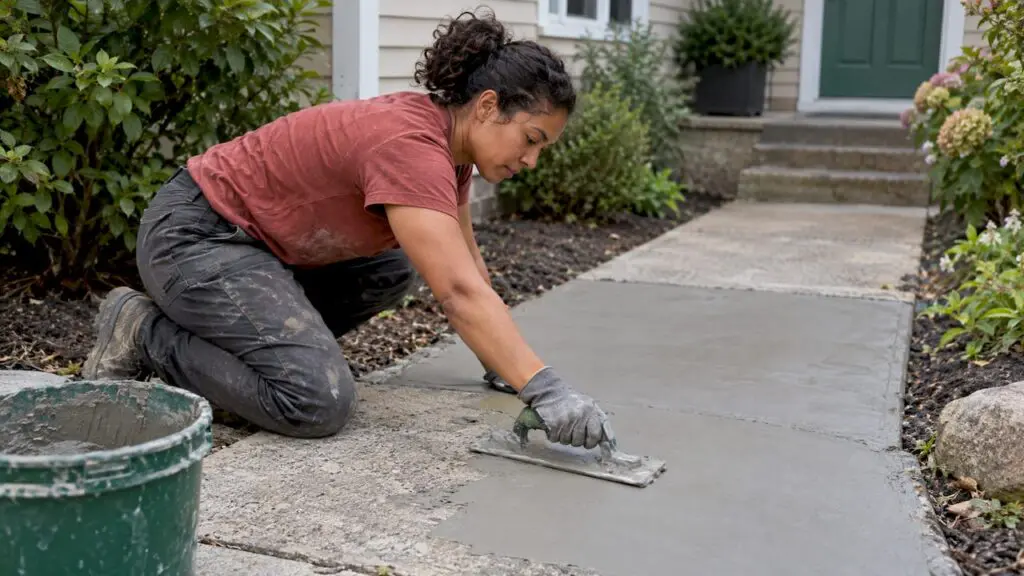
If your concrete walkway is worn, stained or pitted but still solid underneath, you can usually refresh it instead of tearing it out. The main options are a thin cement-based resurfacer, a stamped or textured overlay, a stain, a coating with sealer, or replacing the slab with pavers when the damage goes deeper. Which one fits depends on how sound the slab is, and that is something a mason can judge in one visit. Fernandez & Sons offers concrete work and masonry repair for homeowners across Morris and Somerset Counties, with free estimates.
This guide walks through each option, what it costs, how the surface is prepared, and how each one holds up to New Jersey freeze-thaw winters.
Quick Summary
-
A thin resurfacer works on walkways that are cracked only on the surface, pitted or worn, and it is the most budget-friendly way to update a concrete walkway.
-
Overlays run about $3 to $10 per square foot and can last 10 to 20 years or longer with proper care, according to an industry association.
-
Stamped, textured or stained finishes change the look of the walkway; sealing and re-sealing protect the color.
-
Slabs that are cracked all the way through, heaved or sinking usually call for replacement, often with pavers.
-
Prep decides how long a resurfacing lasts, and a walkway in Morris County has to survive winter freeze-thaw cycles.
Is Your Concrete Walkway a Candidate for Resurfacing?
Resurfacing is a cosmetic and surface-repair fix. It works when the slab underneath is sound. It does not fix a slab that is moving.
Here is the practical sorting test:
-
Good candidates: surface pitting, flaking, rough or worn texture, stains, hairline cracks and faded color.
-
Poor candidates: cracks that run all the way through the slab, sections that have heaved or sunk, and slabs that rock or settle under foot.
Pitting, known as spalling, is a good example of what resurfacing can handle. This Old House general contractor Tom Silva explains that spalling happens when too much water went into the original mix, which weakens the surface. As long as the walkway is not cracked all the way through, a concrete resurfacer can fix it.
There is one more catch. A manufacturer’s resurfacing guide warns that old cracks may reappear because of movement in the base concrete. If the slab beneath your walkway is shifting, a new top layer will crack along the same lines.
If you are not sure which category your walkway falls in, that is the first thing we look at during a free estimate. Our concrete work and masonry repair services cover both the surface fix and the deeper repairs that a slab sometimes needs first.
Five Ways to Refresh or Replace an Old Walkway
Thin Cement-Based Resurfacer
This is the most common answer to “what can I resurface my sidewalk with.” A resurfacer is a blend of Portland cement, sand and polymer additives. Product literature describes it as a shrinkage-compensated material for thin repairs to sound concrete that is built to take foot traffic.
A few details that matter to a homeowner:
-
It goes on in a thin layer, typically 1/8 to 1/4 inch thick, which means it will not hide a slab that has dropped or tilted.
-
It can be tinted, so the walkway does not have to stay gray.
-
For exterior use, look for a freeze/thaw-resistant product. One polymer-modified resurfacer is rated for exterior sidewalks and walkways, resists freeze/thaw and reaches 3,500 psi at 28 days.
This option is the best fit for a walkway that is structurally fine and simply looks tired.
Stamped or Textured Overlay
When you want the walkway to look like something other than plain concrete, a decorative overlay adds a new surface layer that can be stamped or textured. Decorative-concrete references describe overlays as a new, sculptable surface that can be stamped and stained, and note that decorative work is sealed, with a plan to re-seal every two to four years outdoors.
Stamping can imitate stone, slate or brick patterns, and a textured finish adds grip. This option suits front walks where curb appeal matters most, such as the path from the driveway to the door. Our page on hardscaping updates that increase curb appeal shows how the entry walk fits into the whole front of the house.
Concrete Stain
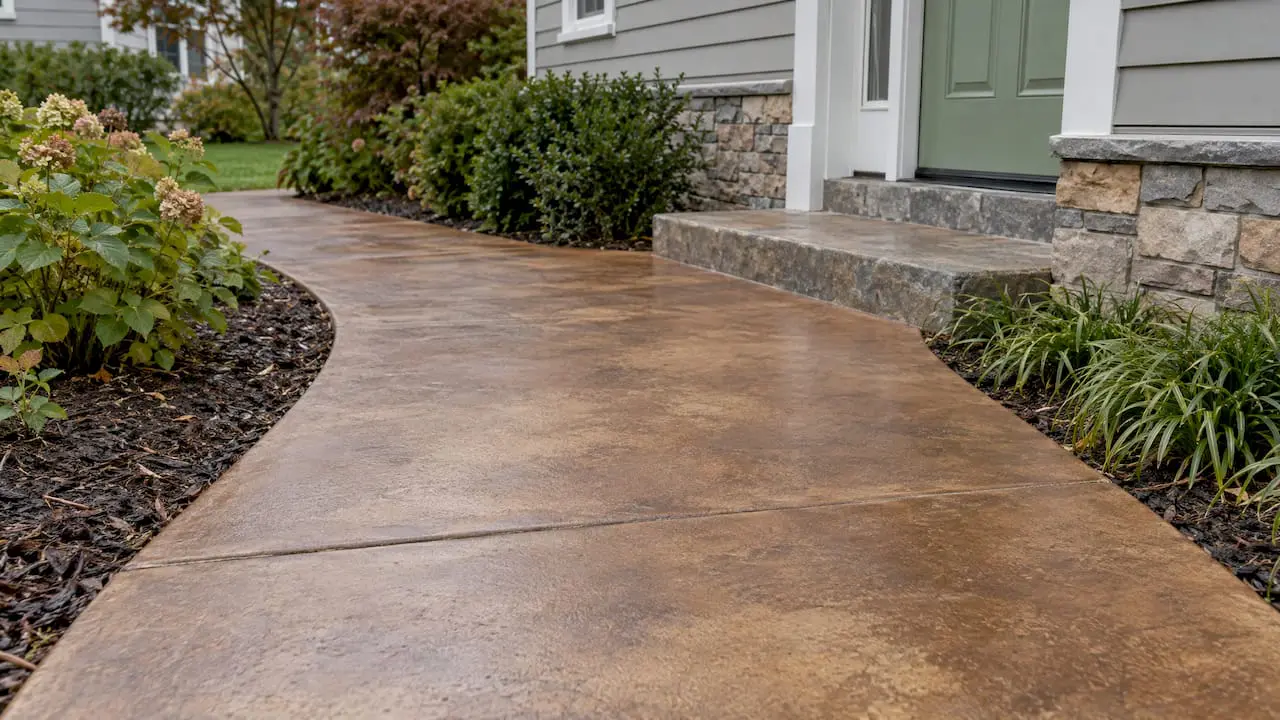
Stain changes color without adding thickness. Acid and polymer stains are not paints or coatings: they color concrete through a chemical reaction with the cement surface, while water-based stains made with acrylic resins penetrate the concrete and add color and protection.
Stain is a fit when the surface is smooth and intact and you want a warmer tone. It will not repair pits or deep cracks, and the result is mottled by nature, so it suits a natural look rather than a uniform one.
Coating and Sealer
Coatings and sealers are not the same thing. A trade magazine article explains that a typical sealer system uses two coats of 20% to 25% solids material, while a coating system uses two to three coats of 40% to 60% solids, leaving a thicker film. Coatings protect better and clean more easily, but the smoother film can be slippery when wet.
That last point matters on a walkway. Ask for a slip-resistant additive or a textured finish on any coated path that people use in rain, frost or snow.
Elastomeric coatings are a newer variation. They form a thick, elastic film that conceals hairline cracks and patches and let moisture vapor escape from below, which reduces blistering and peeling.
Replace With Pavers
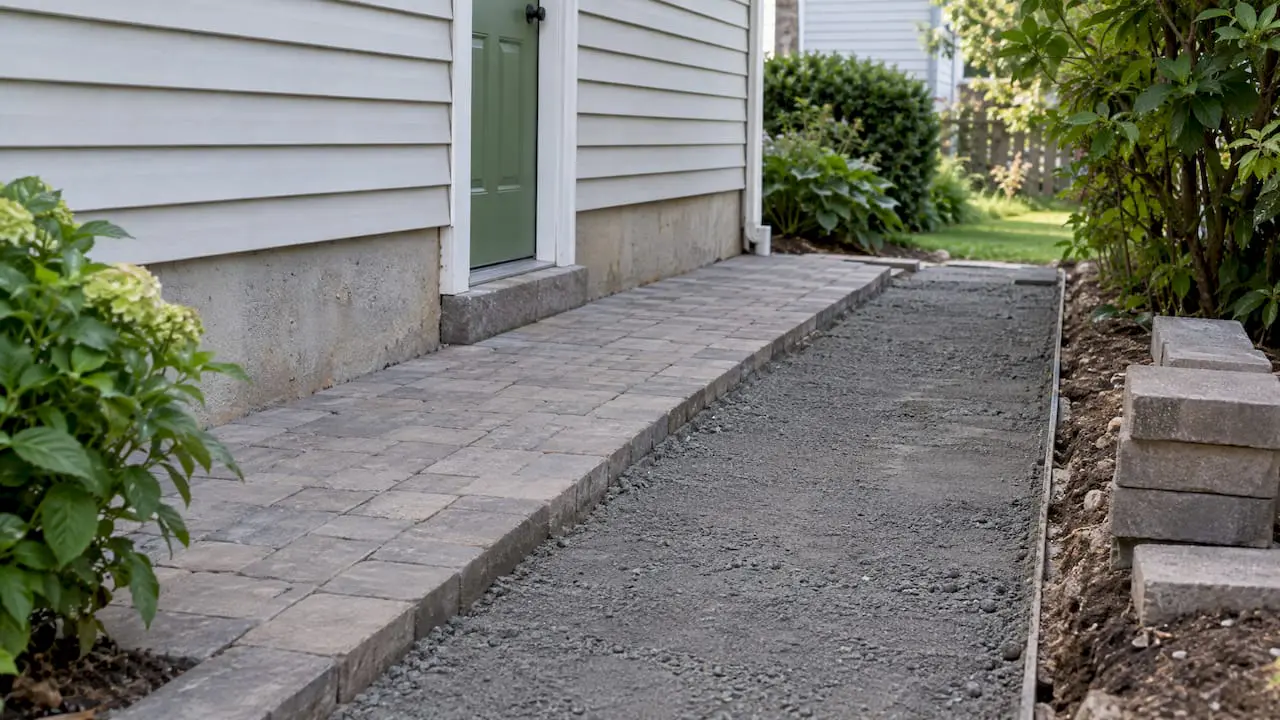
When the slab is cracked through, sinking or heaving, the honest answer is replacement. Pavers are the most popular way to do it, because a paver walkway is built on a compacted base and can be repaired in sections instead of redone as a whole. You can see styles and layouts in our paver walkway ideas, and examples of finished work on our paver and patio projects page.
If you replace the walkway, it is also the moment to check the width. Our guide to walkway width standards explains the 36-inch code minimum and why 48 inches is more common when built.
On a longer, more visible walkway or one that joins steps, our steps projects show how the path and entry can be rebuilt together.
What Resurfacing Costs and How Long It Lasts
The industry association for overlay contractors states that concrete overlays cost $3 to $10 per square foot and last 10 to 20 years or longer when maintained, with regular cleaning, resealing every few years and prompt attention to small cracks. That is a national range for materials and labor, and the final number depends on the product, the finish and the prep the slab needs.
Here is a worked example. A typical front walk 4 feet wide and 30 feet long is 120 square feet. At $3 to $10 per square foot, an overlay lands between $360 and $1,200 on that national range. A local quote can come in above or below it, and a walkway with cracks to repair first costs more.
| Option | Best for | Changes the look? | Fixes surface damage? | Upkeep |
|---|---|---|---|---|
| Thin resurfacer | Worn, pitted, sound slabs | Tint available | Yes | Clean; seal if desired |
| Stamped or textured overlay | Entry walks, curb appeal | Yes, pattern and color | Yes | Re-seal every 2 to 4 years |
| Stain | Smooth, intact slabs | Color only | No | Re-seal |
| Coating and sealer | Stain resistance, color | Yes | Hides hairlines | Recoat; add slip resistance |
| Paver replacement | Cracked, heaved or sinking slabs | Complete change | Replaces the slab | Occasional joint and base care |
The cheapest way to resurface concrete is the thin resurfacer, as long as the slab is sound. Paying for a decorative finish or a paver walk is a larger project, but it addresses a bigger range of problems.
How a Walkway Resurfacing Is Done
The sequence below is what a properly done job involves. It also shows why the work is more than spreading a bag of mix, and where a mistake leads to peeling later.
-
Inspect the slab. Look for through cracks, settling and drainage problems. This decides whether resurfacing is the right call at all.
-
Remove paint, sealer and loose material. A resurfacer should not be applied to painted or sealed concrete, so any coating has to come off first. Manufacturer guidance says painted or sealed surfaces are not suitable.
-
Pressure wash. The same guidance treats a thorough wash with a 3,500 psi pressure washer as an essential step for a proper bond.
-
Repair cracks and spalls. Patch pits and fill the joints before the new layer goes on, so they do not show through or fill with material.
-
Dampen the surface. The slab should be saturated, with standing water removed, before application.
-
Mix in small batches and apply. The product stays workable for about 20 minutes, so timing and speed matter. Work in sections no larger than 144 square feet, per the manufacturer’s guide.
-
Texture or stamp. The finish is added while the material is still workable.
-
Cure and seal. Protect the surface as it cures, then seal it.
Weather controls steps 6 through 8. Manufacturer curing guidance calls for temperatures above 50°F for 8 hours, protection from freezing for 24 hours and protection from rain for at least 6 hours. That is why resurfacing is a spring-to-fall job in northern New Jersey, and why scheduling around a forecast is part of the work.
The DIY route exists, and a guide to concrete resurfacer repair on a driveway entrance shows how small surface repairs differ from jobs that need a professional. For a walkway the whole family uses, the prep, timing and sealing are where a contractor’s experience pays off.
What Morris County Winters Do to a Walkway Surface
A walkway in Parsippany, Morris Plains, Dover or East Hanover sits through snow, ice, rain and repeated freezing and thawing. That affects the choice in three ways.
-
Freeze-thaw resistance matters. Choose products rated for exterior use. Industry guidance notes that newer polymer-modified thin overlay systems improve flexibility and bond strength, helping the surface withstand freeze-thaw cycles.
-
Traction matters more than shine. A glossy, smooth finish looks good in July and is slick in January. Regional guidance on New Jersey walkways says textured surfaces give better traction than polished or highly smooth ones when wet, though no surface is completely slip-proof.
-
Sealing is maintenance, not a one-time step. Plan for re-sealing on the schedule your installer gives you, and keep any snow clearing gentle on the surface.
If you also need winter service, we offer snow plowing for residential properties, so one contractor can handle both the walkway and the winter upkeep.
Walkway Work From Fernandez & Sons
We provide residential masonry, concrete work, paver walkways, steps and driveways across Morris and Somerset Counties, New Jersey, with free estimates and a satisfaction guarantee. If you want a straight answer on whether your walkway can be refreshed or needs to be rebuilt, start with our concrete work page or our main site.
We can also tie the walkway into the rest of your yard, from patios and outdoor living spaces to driveways, so the finishes match.
Quick Answers: Walkway Resurfacing Options
-
Best option for a sound but worn walkway: a thin cement-based resurfacer, applied 1/8 to 1/4 inch thick.
-
Best option for a new look: a stamped or textured overlay, sealed and re-sealed every two to four years.
-
Best option for color only: a stain on a smooth, intact slab.
-
Best option for a cracked or sinking walkway: replacement, often with pavers.
-
Typical overlay cost: $3 to $10 per square foot nationally, with 10 to 20 years of life when maintained.
-
Best time to do it in New Jersey: warm, dry weather, with temperatures above 50°F through curing.
Frequently Asked Questions About Updating a Concrete Walkway
Can You Put a Thin Coat of Concrete Over an Existing Walkway?
Yes, if the slab is sound. A resurfacer is designed for layers about 1/8 to 1/4 inch thick over clean, bare concrete. It will not bond to paint or sealer, and it will not stop cracks that come from slab movement.
How Do You Cover an Old Concrete Walkway?
The usual choices are a resurfacer or decorative overlay, a stain or coating, or new pavers set over a proper base. The right one depends on whether the old slab is cracked through or only worn. A mason can tell you in one visit.
What Is the Cheapest Way to Resurface Concrete?
A thin resurfacer on a sound slab, with prep done correctly, is the lowest-cost route. The industry range for overlays is $3 to $10 per square foot. Skipping prep to save money usually leads to peeling, so the cost is only low if the bond holds.
How Long Does a Resurfaced Walkway Last?
Overlays can last 10 to 20 years or longer with regular cleaning, resealing every few years and quick attention to small cracks. Freeze-thaw winters make sealing and good drainage especially important in northern New Jersey.
Who Can Update My Walkway in Morris County?
Fernandez & Sons handles concrete work, masonry repair and paver walkways for homeowners in Morris and Somerset Counties, including Parsippany-Troy Hills, Morris Plains, Dover and East Hanover. Request a free estimate through our website and we will tell you whether your walkway should be refreshed or rebuilt before the next freeze.