
Two Hours to Winter Patio Maintenance: Weekend Tasks for NJ Homeowners
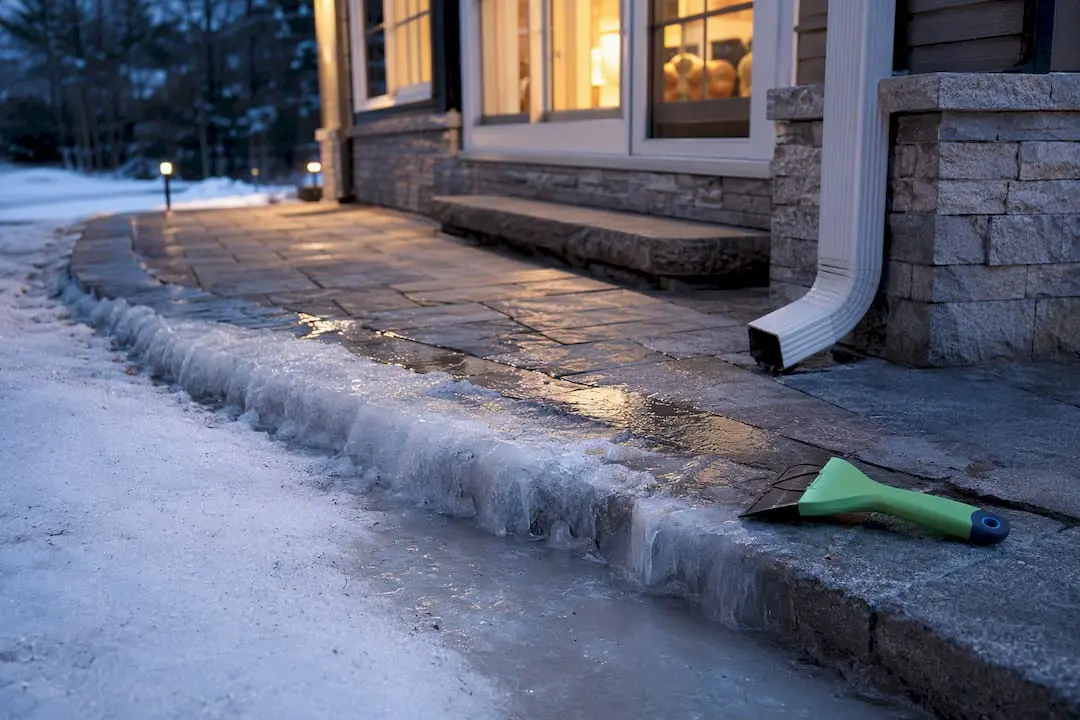
Protect your patio in late fall by clearing debris, refilling joint sand, and applying a penetrating sealer before the first hard freeze. Through winter, stick to rubber-edged shovels and safer deicers instead of rock salt. Once temperatures climb back into the 40s, inspect for cracks, sunken pavers, and joint loss, then repair early. Professional contractors handle every step of this cycle for homeowners who would rather not do it themselves.
TL;DR:
- Proper fall maintenance relies on cleaning debris, refilling joint sand, and applying sealer during the right conditions before freezing weather begins.
- Use plastic or rubber-edged shovels and grit instead of metal tools or salt to prevent surface damage and long-term deterioration during snow removal.
- Calcium magnesium acetate and magnesium chloride are safer deicers for patios than rock salt, which causes surface scaling and corrosion over time.
- Spring inspections should focus on detecting displacement, cracks, and joint loss, with repairs prioritized based on severity and underlying base conditions.
- Effective drainage through proper slope, clear drains, and gutter extensions is critical to preventing freeze-thaw damage and ice dams on patios.
Table of Contents
- Your Late-Fall Patio Preparation Checklist
- How Do You Remove Snow Without Damaging Your Patio?
- Which Deicers Are Safe for Patios, and Which Should You Avoid?
- Spring Inspection and Repair: What to Check After Thaw
- Why Drainage Matters More Than Any Other Winter Fix
- How Fernandez & Sons Approaches a Winter-Ready Patio
- Protecting Patio Furniture and Accessories All Winter
- Common New Jersey Winter Pests That Target Patios
- Managing Ice Dams and Water Pooling on New Jersey Patios
- What I’d Do This Weekend, and When I’d Call a Pro
- Let Fernandez & Sons Handle Your Patio This Winter
- Sources
Your Late-Fall Patio Preparation Checklist
New Jersey patios take a beating every winter because water expands roughly 9% when it freezes. That expansion is what drives freeze–thaw damage in every crack, joint, and hairline gap on a paver or concrete surface. The fix isn’t complicated, but timing matters. Get these done before nighttime temperatures start dropping into the 30s.
- Clear organic debris. Sweep leaves, dirt, and moss out of paver joints and off the surface. Trapped organic matter holds moisture against the stone, which accelerates staining and freeze damage.
- Pressure-wash if needed. A light wash removes grime hiding in pores and joints, but skip this step if a hard freeze is forecast within 48 hours.
- Refill joint sand. Polymeric sand needs roughly 24 to 48 hours of dry weather to cure, so pick a stretch of clear days, not the weekend before a storm.
- Inspect for loose units and hairline cracks. A single wobbly paver you can reset with hand tools is a DIY job. Multiple sunken areas or cracked edge restraints usually mean a base problem worth a professional look.
- Apply sealer while conditions allow. Penetrating sealers need dry surfaces and temperatures within the product’s minimum range, typically above 50°F. Late fall is typically the last realistic window before spring.
- Check your slope. Water should run away from the house, not pool against it.
Pro Tip: Do your joint sand and sealer work on the same dry stretch if you can. Sand needs to set before sealing, and chasing a second window of clear, mild days in November is harder than it sounds.
How Do You Remove Snow Without Damaging Your Patio?
The tool you grab during a snowstorm matters more than most homeowners realize. Metal shovel blades chip pavers and gouge softer natural stone, especially when the surface is already stressed by cold. Switching tools is the single easiest habit to build this winter.
- Use plastic or rubber-edged shovels on every paver, concrete, or natural stone surface.
- If you run a snow blower, make sure the skid shoes are set correctly so the auger and scraper bar never make direct contact with the surface below.
- Clear snow while it’s fresh and loose. Once foot traffic and freeze cycles compact it into ice, you’re stuck scraping, which is exactly what causes surface gouging.
- Reach for sand or grit before salt when you need traction on an icy morning.
That last point comes with a tradeoff. Sand and grit work without chemical damage, but they migrate into joints over the season and need a spring cleanup to prevent the joint erosion they can otherwise cause.
Which Deicers Are Safe for Patios, and Which Should You Avoid?
Rock salt is the deicer most New Jersey homeowners reach for, and it’s the one that does the most long-term harm. Sodium chloride pulls moisture through concrete and natural stone, causing surface scaling, and it can corrode steel reinforcement inside slabs over repeated seasons.
The safer swap: calcium magnesium acetate (CMA) and magnesium chloride both melt ice effectively at manufacturer-recommended application rates without the same corrosive chemistry, and they’re gentler on nearby grass and garden beds.
For sealers, the choice depends on the look you want and the climate you’re sealing against:
- Penetrating sealers (silane or siloxane based) soak into the surface, block water absorption, and still let vapor escape. That breathability is what makes them the better pick for New Jersey’s freeze–thaw cycles.
- Film-forming sealers sit on top and can enhance color and sheen, but they’re more prone to peeling when moisture gets trapped underneath and freezes.
Whichever you choose, apply only when the surface is dry and air temperature meets the product’s minimum, then give it a full cure window before the first freeze.
Spring Inspection and Repair: What to Check After Thaw
Once the ground thaws, usually by mid to late March in Morris and Somerset Counties, walk the entire patio and document what you find. Photos taken now become your baseline for comparing next winter’s damage.
- Look for displacement, spalling, and joint loss. Pavers that shifted, concrete surfaces flaking at the top layer, and joints that lost their sand are the three most common signs of a rough winter.
- Pressure-wash carefully. Stick to roughly 1,200 to 2,000 psi, hold the nozzle at least 12 inches from the surface, and use a fan tip. Anything more aggressive can gouge softer natural stone or blast out joint material you just spent money refilling.
- Reset sunken pavers. A single low paver often just needs to come up, get an added layer of sand, and go back down level. Multiple sunken areas across a section usually mean the crushed stone base underneath has settled and needs to be rebuilt, not patched.
- Know your crack thresholds. A hairline crack in a mortar joint can often take a flexible masonry caulk and hold fine. A crack running through the paver or slab itself, or one that keeps widening year over year, calls for a professional assessment before it spreads.
Why Drainage Matters More Than Any Other Winter Fix
Standing water is the real enemy behind most freeze–thaw damage, more than any single storm or cold snap. Local hardscape guidance consistently points to drainage and base quality as the most decisive long-term protection a patio can have.
- Check your slope with a level. It should run 1/8 to 1/4 inch per foot away from the house.
- Walk the patio after a rainstorm and flag any spot where water sits for more than a few minutes.
- Clogged or undersized drains are often the real culprit behind a “wet corner.” A channel drain or French drain can redirect that water before it ever reaches the base.
- Chronic pooling on soft or clay-heavy soil sometimes needs professional regrading rather than a surface patch.
Pro Tip: A patio that drains well rarely needs major joint repair. One that doesn’t will keep losing joint sand and settling in the same spots, no matter how many times you refill them.
How Fernandez & Sons Approaches a Winter-Ready Patio
A contractor sees the same failure points across dozens of properties every season, which is why professional inspections tend to catch problems homeowners miss until they’re expensive. A professional masonry and landscaping company works through patios with a consistent process:
- Full-surface inspection for edge restraint failure, base settling, and joint loss before recommending any fix.
- Sealing with penetrating products timed to the fall cure window.
- Reset and relevel work on sunken or shifted paver sections.
- Snow removal service through the winter months so surfaces never take a metal-blade hit.
A fair estimate should walk through what’s driving the damage, not just quote a patch job. Fixing a failed base once usually costs less than resealing and rematching the same spot every year.
Protecting Patio Furniture and Accessories All Winter
Outdoor furniture takes a different kind of beating than the hardscape underneath it. Cushions trap moisture and grow mildew, metal frames rust, and wood furniture cracks when it swings between freezing and thawing without protection.
Store cushions, umbrellas, and anything fabric indoors, in a shed, or in a weatherproof deck box. Leaving cushions out under a tarp still lets humidity build up underneath, so a sealed container beats a loose cover every time.
For furniture that stays outside, breathable covers work better than plastic tarps. Plastic traps condensation against metal and wood, which speeds up rust and rot exactly the way you’re trying to prevent. A breathable, water-resistant cover lets moisture escape while still blocking snow and ice.
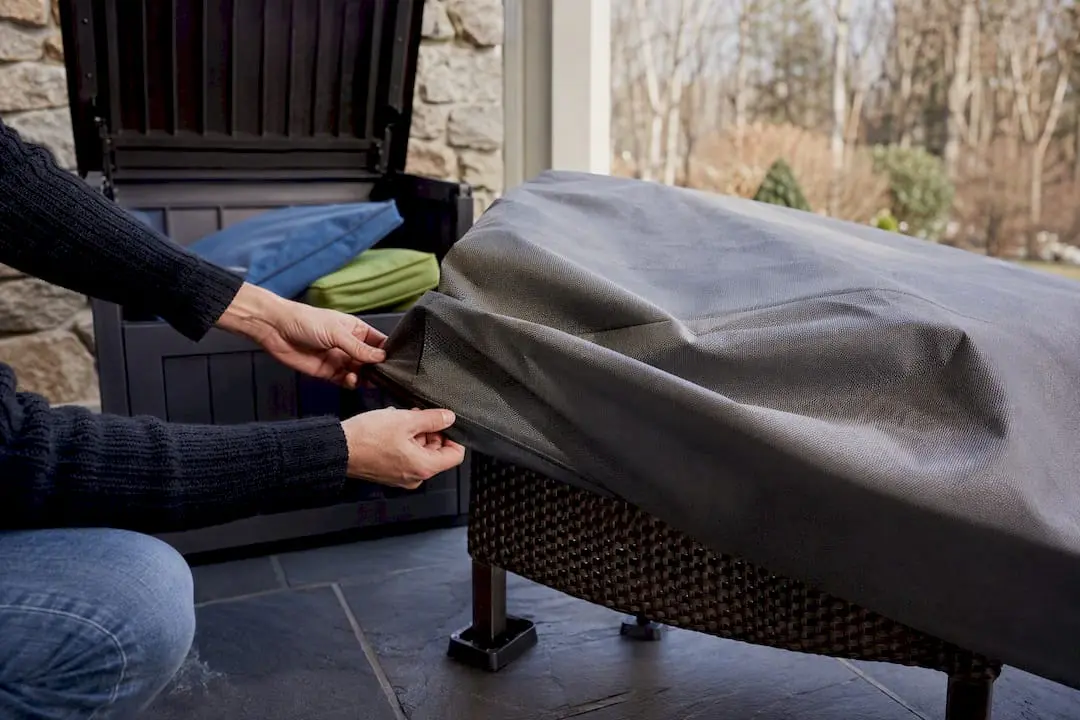
Elevate furniture legs off the patio surface with small risers or feet where you can. Direct contact between metal or wood and a wet, freezing surface transfers cold and moisture straight into the material.
If you have a fire pit or built-in kitchen features, drain any water lines and cover grill components separately. Cast iron grates and burners left exposed to freezing moisture rust fast, and a cracked gas line from freeze expansion is a repair nobody wants to discover in April.
Pro Tip: Bring cushions in before the first frost, not after. Once fabric freezes wet, mildew sets in faster once it thaws.
Common New Jersey Winter Pests That Target Patios
Cold weather doesn’t stop every pest problem. Several species common to Morris and Somerset Counties actually use patios and the ground beneath them as winter shelter.
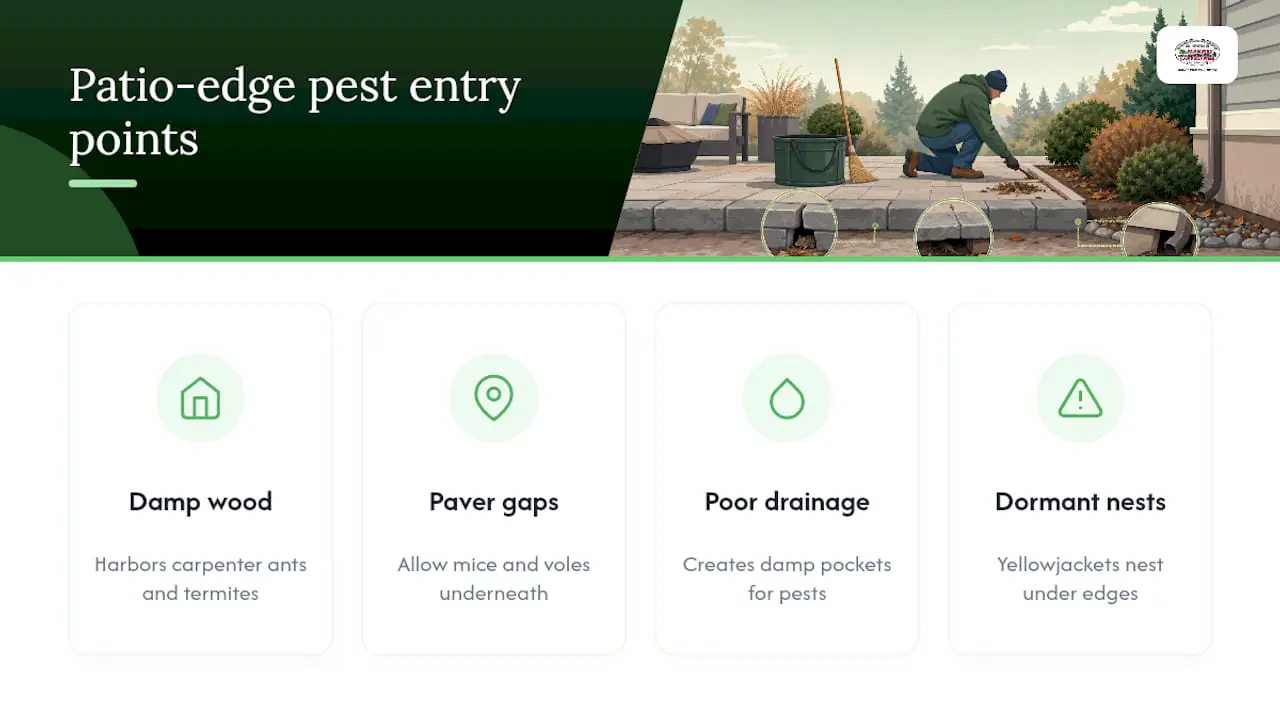
Carpenter ants and termites often overwinter in moisture-damaged wood structures near a patio, like pergolas or attached decking. A patio with poor drainage that keeps wood elements damp gives these insects exactly the environment they need to survive the cold.
Rodents, particularly mice and voles, burrow under paver edges and loose stone where soil stays slightly warmer than open ground. Gaps at edge restraints or settled areas along the perimeter are common entry points. Sealing those gaps during fall prep does double duty: it protects the base from water intrusion and closes off a rodent access route at the same time.
Ground-nesting insects, including yellowjackets, sometimes establish colonies in soil beneath patio edges during warmer months and can remain dormant nearby through winter, becoming a spring problem before you’ve even opened the patio for the season.
Keeping joints filled, edges sealed, and drainage working isn’t just a hardscape maintenance task. It closes off the small gaps and damp pockets that give pests a reason to move in.
Managing Ice Dams and Water Pooling on New Jersey Patios
New Jersey’s freeze-thaw pattern, cold snaps followed by 40-degree days, creates a specific problem: water melts during the day, runs toward the patio, then refreezes overnight into ice dams along low edges or against the house foundation.
Ice dams that form directly against a patio’s edge restraint push outward as they expand, which is one of the more common causes of edge restraint failure homeowners notice in spring. If you see ice consistently building in the same spot along your patio each winter, that’s a drainage signal, not just a weather event.
Roof runoff makes this worse. Gutters that dump water directly onto or near a patio surface, without a downspout extension carrying it further away, are a frequent-hidden cause of localized ice buildup and pooling. Extending downspouts at least several feet past the patio edge during fall prep often solves a problem homeowners assumed was just “bad winters.”
For pooling that isn’t tied to roof runoff, the fix comes back to slope and subsurface drainage. A patio built with proper base depth and a working drain will shed water before it has the chance to freeze in place. One that’s already settled unevenly will keep collecting ice in the same low corner every year until the base gets addressed.
What I’d Do This Weekend, and When I’d Call a Pro
If you’ve got a clear weekend before the first freeze, clear the joints, refill sand where it’s thin, and get a penetrating sealer on if temperatures allow. That’s the highest-value two hours you’ll spend on this patio all year.
Call a contractor when you see heave, a structural crack running through a paver or slab, or more than a couple of sunken areas. Those aren’t cosmetic. Take photos now, note the date, and check again after the spring thaw. Patterns matter more than any single crack.
— BG
Let Fernandez & Sons Handle Your Patio This Winter
Skipping DIY guesswork altogether is the real advantage of hiring local. Fernandez & Sons already knows how Morris and Somerset County soil, drainage, and freeze cycles behave on real patios, which means an inspection catches the base and edge issues a homeowner might not think to check.

Fernandez & Sons offers full-scope masonry and hardscaping services, including patio inspection, penetrating sealer application, paver reset and relevel work, and seasonal snow removal so your surfaces never take a metal-blade hit through winter. Every estimate is free, and the work is backed by a satisfaction guarantee, so you know what you’re paying for before anything starts. If your patio has sunken spots, lost joint sand, or a drainage issue that keeps coming back every spring, consider requesting an estimate to get it fixed before next winter makes it worse.
Sources
- What type of snow melt is safe for concrete — Heattrak (homeowner guidance)
- Best ways to protect New Jersey hardscaping from freeze-thaw damage — Cultivating Flora