Stone veneer gives you the full-stone look with far less weight and cost than solid masonry, and it remains the most practical way to redesign a fireplace without touching structural framing. Three decisions shape every successful project. First, pick a style direction: clean-lined ledgestone and ashlar for modern rooms, or irregular fieldstone and mosaic for rustic warmth. Second, choose your material: natural thin stone for authenticity, manufactured veneer for budget and speed. Third, decide who installs it, since a small surround is a reasonable weekend project while a full-height chimney wall usually calls for a licensed mason.
Skip the code basics and you risk a failed inspection or a cracked wall within a year.
-
Style: shape and color set the mood (modern vs. rustic)
-
Material: natural stone vs. manufactured veneer
-
Installation: DIY-friendly surround vs. pro-only full-height build
Quick fact: combustible mantels typically need a minimum 6-inch clearance from the fireplace opening under IRC guidance, a rule that trips up more DIY plans than any other single detail.
Natural stone provides authentic texture and mineral variation, making it ideal for close-up use, while manufactured veneer offers lower cost and lighter weight.
Full-height chimney walls and outdoor fireplaces require structural reinforcement, precise substrate preparation, and often professional installation to meet safety codes.
Proper clearance for combustible mantels is a minimum of six inches from the fireplace opening, which often causes DIY projects to fail inspection without adjustments.
Ordering 15-20% extra stone material and including costs for lath, flashing, and permits prevents costly delays or mismatched repairs later.
DIY installation suits small surrounds with stable, non-load-bearing substrates, but full-height or load-bearing walls should always be installed by licensed masons.
Table of Contents
Stone Veneer Fireplace Ideas Worth Copying
The style of stone you choose does more to set the room’s mood than any other single decision, since stone shape and color largely define whether a fireplace reads as modern, transitional, or rustic. Here are twelve directions worth considering before you order a single pallet.
-
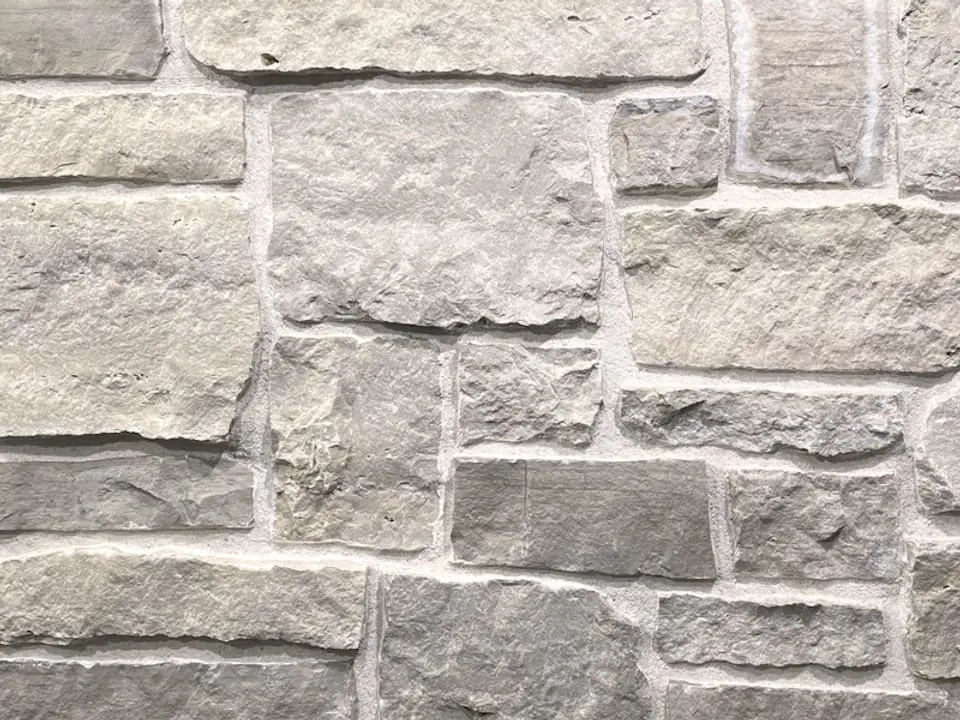
Floor-to-ceiling ledgestone. Long horizontal lines in gray or charcoal tones stretch a room visually and suit contemporary living rooms with high ceilings.
-
Large-format ashlar panels. Rectangular cuts laid in a running bond give you a clean, architectural look that pairs well with minimalist furniture and black steel fixtures.
-
Mosaic fieldstone. Irregular, multi-sized stones in warm browns and tans create the cabin or lodge feeling many homeowners want in a family room.
-
Surround-only treatment. Stone framing just the firebox opening, leaving drywall or shiplap above, works well in smaller rooms or rental-friendly renovations.
-
Full chimney breast wraps. Stone that runs floor to ceiling and wall to wall becomes the room’s anchor, especially effective in open-concept great rooms.
-
Whitewashed or painted ledgestone. A limewash finish over natural texture softens a rustic stone’s color for farmhouse and coastal interiors.
-
Corner fireplace veneer. Angled stone treatments make an awkward corner feel intentional, particularly in smaller dens or bedrooms.
-
Stacked stone with a floating wood mantel. The contrast between rough stone and a clean-cut wood beam is one of the most requested modern stone fireplace looks right now.
-
Two-tone stone banding. Alternating a darker ledgestone base with a lighter ashlar upper section adds depth without going busy.
-
Raised hearth in matching stone. Extending the veneer onto a raised hearth slab, rather than switching to tile or slate, keeps the whole composition unified.
-
River rock accents. Rounded, tumbled stones in a mosaic pattern suit cabins, screened porches, and lake houses looking for texture over precision.
-
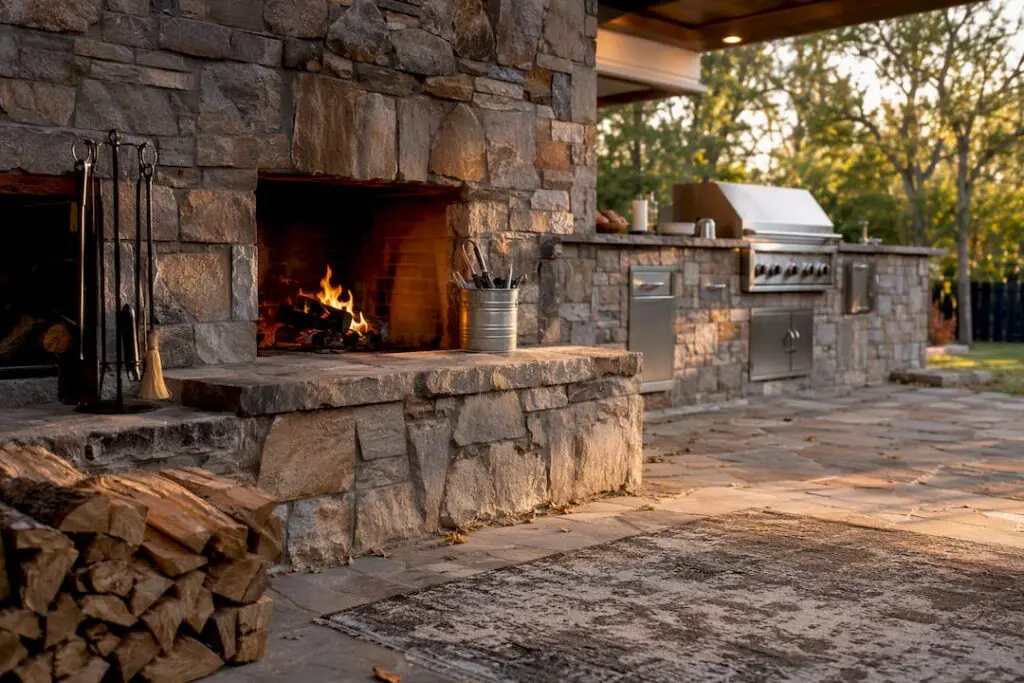
Outdoor stone veneer fireplace surrounds. Covered patios and outdoor kitchens benefit from the same manufactured veneer products used indoors, provided the substrate and mortar are rated for exterior exposure.
A few pattern notes matter more than the stone type itself:
-
Horizontal ledgestone lines make narrow rooms feel wider.
-
Vertical or full-height treatments draw the eye up and work in rooms with 9-foot-plus ceilings.
-
Mixing two stone colors on one wall almost always looks better in a herringbone or banded pattern than a random blend.
Pro Tip: Order stone samples and tape them to the wall in the lighting you’ll actually live with, morning and evening. Stone that looks warm under showroom lights can read cold and gray under your living room’s bulbs.
If you’re coordinating the fireplace with an outdoor living space, the same veneer choices that work on a chimney breast often carry over to outdoor kitchen cladding for a cohesive look between indoor and outdoor stonework.
Natural Stone vs. Manufactured Veneer: Which One Fits Your Project?
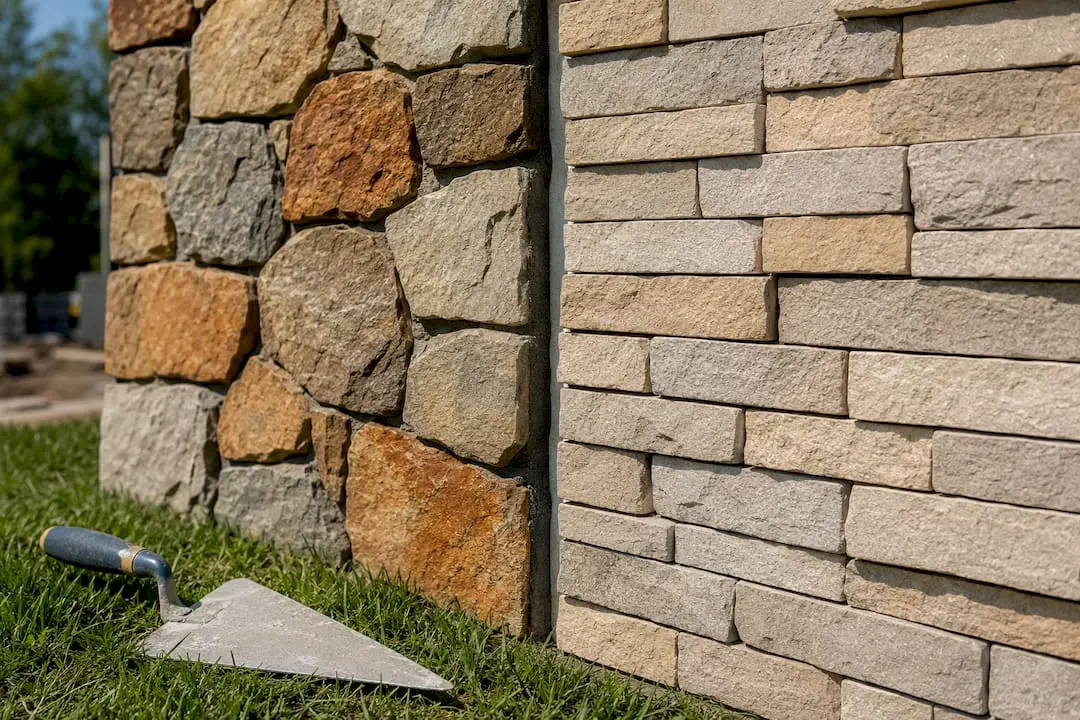
Manufactured stone veneer wins on cost and weight; natural thin stone veneer wins on authenticity. That’s the tradeoff in a sentence, and almost every other decision in this section flows from it.
Natural thin stone veneer is real quarried stone cut down to a thin profile, typically 3/4 to 1 1/4 inch thick and weighing under 14 pounds per square foot, light enough to install over a framed wall with metal lath and a scratch coat. Manufactured stone veneer is a concrete product cast in molds and pigmented to mimic natural texture and color variation.
-
Look: Natural stone shows genuine mineral variation and texture up close; manufactured veneer has improved dramatically but can still repeat patterns across a large wall if you’re not careful about ordering enough variety.
-
Weight: Manufactured veneer often runs 10 to 15 pounds per square foot, similar to natural thin stone, which is why both can go over standard framing without structural reinforcement in most residential applications.
-
Cost: Manufactured veneer is generally the more budget-friendly option per square foot; natural stone commands a premium for material and often for labor, since cutting and fitting irregular pieces takes longer.
-
Durability: Both hold up well indoors. Outdoors, natural stone tends to weather more gracefully over decades, while manufactured products depend heavily on the quality of the pigment and sealer used.
If you’re touching a stone surface with your hands every day, near a hearth bench or a mantel ledge, the tactile difference between real stone and cast concrete becomes obvious fast. That’s where paying more for natural veneer tends to make sense. If the fireplace is a visual backdrop viewed from across the room, manufactured veneer does the job for considerably less.
What Installation Codes and Safety Rules Actually Require
Every stone veneer fireplace installation starts with the substrate, not the stone. Veneer over drywall near a heat source is one of the most common and most avoidable mistakes homeowners make.
-
Substrate: Use cement board or metal lath over a moisture barrier, never bare drywall, in any area exposed to fireplace heat. IRC R1001.11 outlines minimum clearance and substrate expectations for fireplace surrounds and chimneys.
-
Clearances: Combustible mantels generally need a 6-inch minimum clearance from the firebox opening, with additional projection rules the farther out the mantel sits. Confirm your firebox manufacturer’s specific clearance chart before framing anything.
-
Mortar: Standard tile mastic is not rated for sustained heat exposure. Polymer-modified, heat-rated thin-set mortar is the standard for any surface within the fireplace’s heat zone.
-
Expansion joints: Plan a joint every 8 to 10 linear feet on long runs. Skipping this is one of the two most common causes of warranty callbacks on veneer installations, alongside poor flashing.
-
Flashing: Z-flashing at the top termination of any exterior or tall interior stone run keeps moisture from working behind the veneer and causing efflorescence or cracking later.
-
Gas and factory-built units: Direct veneer application over drywall can violate code above certain BTU outputs on gas or factory-built fireplaces. Check the firebox manufacturer’s installation instructions and your local inspector’s requirements before you plan the substrate.
Pro Tip: If your fireplace runs on gas and you’re not 100% sure of its BTU rating, call the manufacturer before you buy a single bag of thin-set. The substrate rules change based on heat output, and guessing wrong means tearing the wall back out.
What Stone Veneer Fireplace Projects Cost
Material costs for manufactured veneer generally run lower per square foot than natural thin stone, though exact pricing varies a lot by region and stone selection, so a local quote is the only number worth planning around. Labor is usually the bigger swing factor.
-
Full-height chimney walls cost more per square foot than a simple surround because of scaffolding, corner piece waste, and longer install time.
-
Structural reinforcement, needed occasionally for very tall or wide stone walls, adds framing and engineering costs that a surround project never touches.
-
Custom patterns, like two-tone banding or mixed-shape mosaics, take longer to lay out and sort than a single consistent ledgestone pattern.
-
Ordering 15 to 20% extra material covers cuts, breakage, and future repairs without a mismatched second order later.
Budget for mortar, metal lath, corner pieces, Z-flashing, and any required permit fees on top of the stone itself. These add-ons rarely show up in a per-square-foot stone price quote but they’re part of every real estimate. Spending a little more upfront on quality corner pieces and the correct heat-rated mortar almost always costs less than the callback to fix a cracked wall two winters later.
Should You DIY Your Stone Veneer Fireplace or Hire a Mason?
Project scope decides this one more than skill level does. A small surround, especially with manufactured veneer panels, is realistic for a confident DIYer with a weekend to spare. A full-height chimney wall, anything requiring structural reinforcement, or an outdoor fireplace exposed to freeze-thaw cycles is a different job entirely.
-
Rate your project honestly. Surround-only jobs on a stable substrate are DIY territory. Full-height walls, load considerations, or gas fireboxes with tight clearance requirements call for a licensed mason.
-
Check your tool and skill list. You’ll need a wet saw, notched trowels, a level, metal lath fasteners, and comfort working with heat-rated mortar. A basic DIY how-to and shopping list covers the fundamentals, but confidence with these tools matters more than the instructions alone.
-
Vet any contractor you’re considering. Ask directly about substrate approach, mortar specification, permit handling, warranty terms, and whether they can show completed projects similar to yours.
Watch for red flags: a contractor proposing drywall substrate on a high-BTU firebox, no mention of expansion joints on a long run, or a vague timeline with no material order lead time. Any of those should send you looking elsewhere.
Pro Tip: Ask a prospective mason what happens if they find rot or moisture damage behind your existing wall once demo starts. A contractor with a clear answer has done this before; one who shrugs probably hasn’t.
Keeping Stone Veneer Looking Good for Decades
Stone veneer is low-maintenance, not no-maintenance. A little routine attention prevents small issues from becoming wall-opening repairs.
-
Dust and vacuum the surface regularly; for deeper cleaning, use a mild pH-neutral stone cleaner rather than harsh acids that can etch natural stone or discolor manufactured pigment.
-
Seal natural stone periodically, especially in humid climates, and confirm whether your manufactured veneer’s factory finish needs a separate sealer at all.
-
Inspect annually for loose stones, hairline mortar cracks, white chalky efflorescence, or signs of flashing failure at the top of any tall run.
-
Small repairs like re-grouting a hairline crack or resetting a single loose stone are reasonable DIY fixes; widespread cracking or moisture intrusion behind the wall means it’s time to call a professional.
-
Coordinate hearth material, grout color, and mantel clearance as one finished composition rather than three separate decisions made at different points in the project.
When It’s Time to Call a Professional Mason
Homeowners planning anything beyond a straightforward surround should treat a mason consultation as part of the design process, not a fallback. Fernandez & Sons has spent over a decade handling masonry, hardscaping, and outdoor living projects across Morris and Somerset Counties, and fireplace and stone veneer work is a regular part of that portfolio.
Full-height chimney walls, projects needing structural reinforcement, and outdoor stone veneer fireplaces exposed to New Jersey’s freeze-thaw winters are the jobs best handled by an experienced crew rather than a weekend DIY attempt.
-
A proper estimate covers material sourcing, substrate prep, flashing details, permit handling where required, and a realistic project schedule.
-
Fernandez & Sons backs its work with free estimates and a satisfaction guarantee, so you know the scope before committing.
-
Before a contractor visit, have your firebox model, room photos, and a rough style direction ready so the conversation moves fast.
Pro Tip: Bring your firebox manufacturer’s spec sheet to the first visit if you have it. It tells your mason the exact clearance and substrate requirements before they even step inside.
What Else to Know
Choosing a stone veneer fireplace style and material correctly upfront prevents most of the cost overruns and code failures homeowners run into later.
| Point | Details |
|---|---|
| Style drives mood | Ledgestone and ashlar suit modern rooms; mosaic and fieldstone suit rustic and lodge styles. |
| Material tradeoff | Manufactured veneer costs less and installs faster; natural thin stone wins on authenticity up close. |
| Code compliance is non-negotiable | Noncombustible substrate, correct mortar, and IRC-compliant clearances prevent failed inspections and cracking. |
| Budget for extras | Order 15 to 20% extra material and include lath, flashing, and permit fees in your estimate. |
| Hire for full-scope work | Fernandez & Sons handles full-height chimneys, structural reinforcement, and outdoor fireplace veneer projects with free estimates. |
Why Design Inspiration Alone Won’t Get You a Safe Fireplace
Most stone veneer articles treat design and installation as two separate topics, one for inspiration and one for the fine print. That split does readers a disservice. The stone pattern you fall in love with on a mood board has direct consequences for substrate choice, mortar type, and labor cost, and ignoring that connection is how projects go over budget or fail inspection.
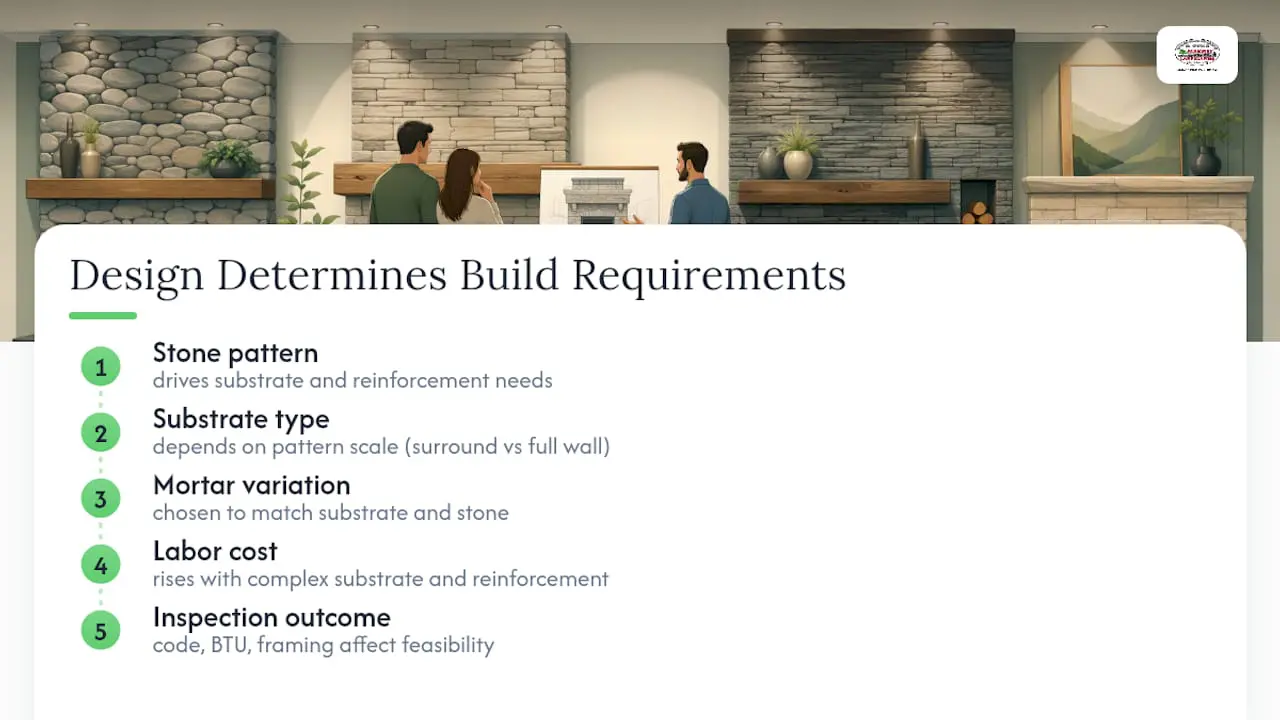
The conventional advice to “just pick a look you like and find a contractor” skips the part that actually determines feasibility: whether your firebox’s BTU rating, wall framing, and local code allow the design you want without structural changes. A full-height ledgestone chimney wall isn’t just a bigger version of a small surround. It’s a different project with different substrate, reinforcement, and flashing requirements.
If there’s one priority worth putting first, it’s this: settle your material and substrate questions before you fall in love with a specific stone pattern. A homeowner who understands the technical constraints upfront ends up with a design that’s both beautiful and buildable, rather than a Pinterest board that needs a redesign once the mason shows up.
Get a Stone Veneer Fireplace Built Right the First Time
Fernandez & Sons is the local alternative to guessing your way through a DIY chimney rebuild or hiring an out-of-area contractor unfamiliar with New Jersey’s freeze-thaw conditions. For homeowners in Morris and Somerset Counties who want the ledgestone, ashlar, or full-height stone fireplace they’ve been picturing, without worrying about substrate mistakes or code violations, this is a project the team handles regularly.
Every estimate covers material sourcing, substrate prep, flashing, and a realistic schedule, whether you’re updating a single surround or rebuilding a chimney wall from the studs out. The same team also handles masonry and hardscaping projects across the region, so your fireplace can be part of a larger outdoor and indoor stone plan if you’re thinking bigger. If you’re ready to see what your fireplace idea actually costs to build, request a free estimate from Fernandez & Sons and get a straight answer before you commit to a design.
Additional Sources
-
How To Install a Stone-Veneer Fireplace Surround (This Old House)
-
Natural stone veneer installation standards (Top Source Stone)