
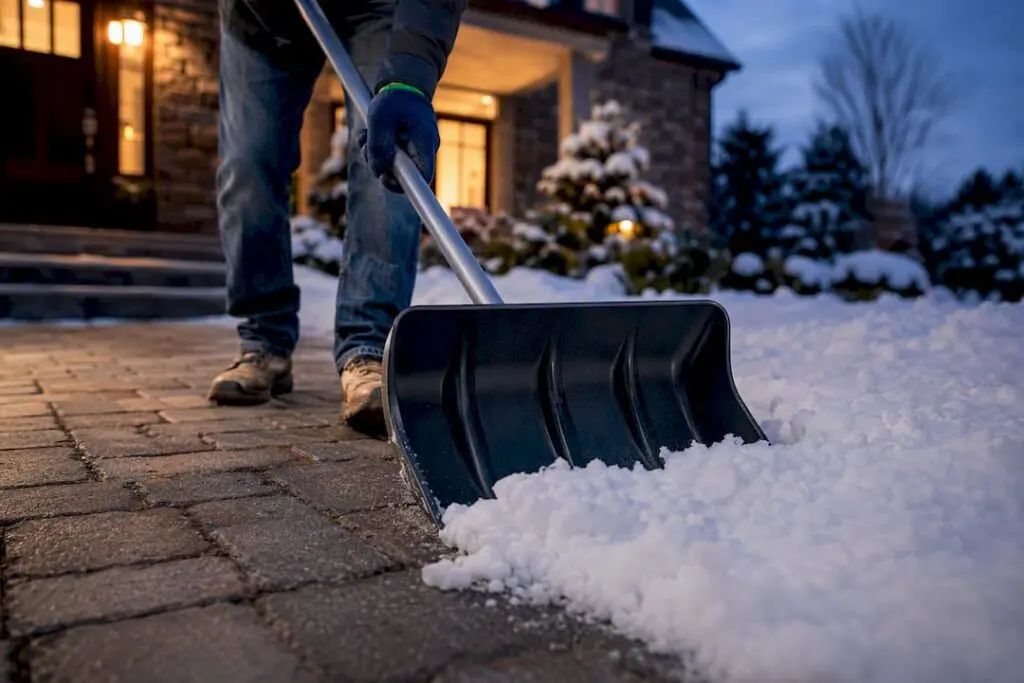
Yes, ice melt is safe on pavers when you choose the right chemistry and use it sparingly. Sodium chloride is the safest everyday option for routine icy walkways and patios, while calcium chloride should only come out for severe cold snaps and gets removed promptly afterward. The one rule that overrides everything else: shovel first, then apply a thin layer. Most paver damage traces back to over-application, not the deicer itself.
Sodium chloride is the safest and most cost-effective ice melt for pavers because it causes minimal damage when applied sparingly and with proper timing.
Calcium chloride melts ice faster at lower temperatures but significantly increases paver deterioration and should be reserved for severe cold snaps and used briefly.
Applying deicers after shoveling and in a thin, even layer reduces the risk of damage, and removing slush promptly prevents repeated freeze-thaw stress.
Sealing pavers and ensuring proper drainage during fall helps limit chemical penetration and reduces long-term damage from repeated chemical exposure.
Most damage results from over-application and neglecting initial snow removal, making patience and proper maintenance more effective than relying on faster-acting chemical options.
Table of Contents
What Types of Ice Melt Work Best on Pavers?
Not all deicers treat your hardscape the same way, and the differences come down to chemistry, not marketing.
Sodium chloride (rock salt) is the classic option. It melts ice down to about 15°F to 20°F, works slowly compared to other chlorides, and according to CMHA research, causes only minor effects on concrete pavers compared with the alternatives.
Calcium chloride melts ice fast and works down to around minus 20°F, but it generates more heat during the melting reaction and showed significant deterioration in the same CMHA comparison, including scaling and cracking.
Magnesium chloride performs well in moderate cold and is marketed as gentler on vegetation, but it landed in the same damaging category as calcium chloride in lab testing.
Calcium magnesium acetate (CMA) is often sold as an eco-friendly choice. It still showed significant deterioration on interlocking concrete pavers.
Salt-free alternatives (usually urea or proprietary blends) skip chlorides entirely, trading some melting power for reduced surface risk.
The damage mechanism matters as much as the product label. Freeze-thaw cycling physically stresses paver pores, but chloride deicers add a second threat: chemical reactions inside the concrete that form expansive crystals like calcium oxychloride, which push outward from within and cause delayed scaling.
Quick comparison for paver owners:
-
Sodium chloride: slower melt, lowest paver risk, best for routine use
-
Calcium chloride: fast melt, higher paver risk, reserve for emergencies
-
Magnesium chloride: moderate melt, notable deterioration risk
-
CMA: marketed as “green,” still damaging to pavers in testing
-
Salt-free blends: weakest melt performance, gentlest on surfaces and landscaping
Which Ice Melt Should You Actually Choose for Pavers?
For most Morris and Somerset County winters, sodium chloride is the practical default. It handles the bulk of freeze-thaw days, and CMHA’s comparative testing backs it as the least damaging chemistry for interlocking concrete pavers.
Save calcium chloride for the nights when temperatures drop below sodium chloride’s working range. Use it sparingly, and rinse or sweep the treated area once temperatures rise to keep brine from sitting in the joints.
Skip magnesium chloride and CMA for paver surfaces. Both looked appealing on paper, marketed as gentler or greener, but the deterioration data doesn’t support that reputation on concrete.
If you have pets, young kids, or garden beds bordering your patio, a salt-free product is worth the tradeoff. Consumer Reports notes these products melt less aggressively at very low temperatures, but they spare your landscaping and reduce paw and root exposure to chlorides.
Decision shortcut:
-
Mild cold, routine maintenance: sodium chloride
-
Deep freeze, one-time emergency: calcium chloride, used sparingly
-
Pet-heavy or garden-adjacent patios: salt-free product
-
New paver installation: no deicer at all for the first winter
Pro Tip: Check the bag’s melt-temperature rating before you buy. A product rated for 20°F won’t do much good during a 5-degree cold snap, and reaching for a stronger chemistry out of frustration is how most paver damage starts.
How Do You Apply Ice Melt Without Damaging Pavers?
Getting this right takes four steps, and skipping the first one is the most common mistake homeowners make.
-
Shovel or snow-blow first. Removing loose snow and ice mechanically means the deicer only has to handle the thin bonded layer left behind, not the whole snowfall.
-
Spread a thin, even layer. Use a handheld spreader or a scoop, and aim for coverage similar to seasoning a large sheet pan. A light dusting, not a snowdrift of granules.
-
Let it work, then clear the slush. Once the ice loosens, shovel or sweep away the resulting slush rather than letting it sit and refreeze overnight. Never leave concentrated piles of unused granules on the surface.
-
Rinse or sweep residue when it’s safe. Any leftover brine or granules that migrate into paver joints should get flushed out during the next thaw.
The damage from deicers rarely shows up after one application. University of Maryland Extension guidance treats deicers as a supplement to snow removal, not a replacement, precisely because over-application concentrates chemicals and accelerates freeze-thaw stress over repeated winters. A single heavy dose might not crack a paver. Ten heavy doses over three seasons often will.
How Do You Protect Pavers Between Winters?
Sealing and proper joint maintenance do more to prevent deicer damage than any product choice.
A quality sealer applied in fall creates a barrier that slows salt penetration into the paver surface, and it’s worth doing before the first freeze rather than after damage appears. Correct polymeric joint sand also matters: it resists washout and helps block brine from working down into the base material.
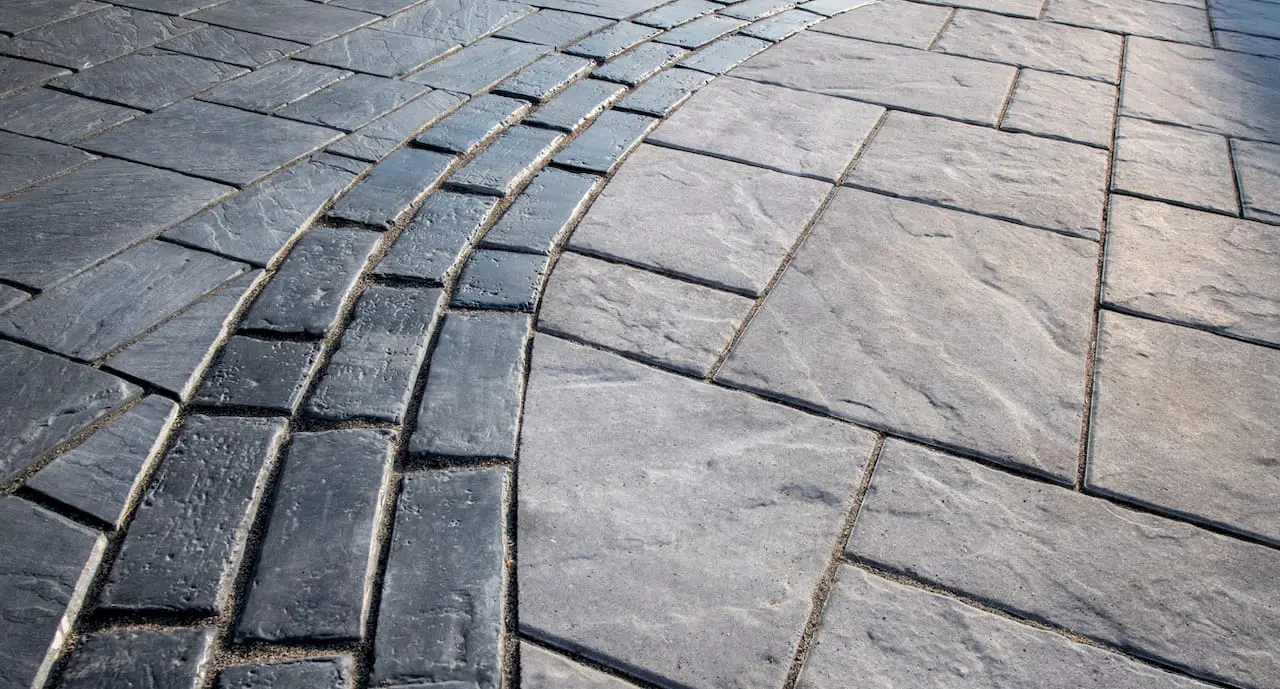
Drainage deserves equal attention. Pavers that pool water instead of shedding it toward a slope give brine more time to sit and react with the surface, so check for low spots each fall.
Come spring, walk your patio or walkway and look for:
-
Scaling or flaking on the paver surface
-
Spalling (small chips or pockmarks)
-
Joint sand that’s eroded or washed out
-
Cracks running along paver edges
Minor scaling can often wait until a routine paver walkway refresh. Cracked units, heaved sections, or widespread joint erosion are signs it’s time to call a contractor for re-sanding or partial replacement before the damage spreads to neighboring pavers.
What Does a Local Contractor Say About Deicer Damage?
After more than a decade handling masonry, hardscaping, and snow removal across Morris and Somerset Counties, Fernandez & Sons sees the same pattern every spring: homes that lean on physical snow removal first and deicer second come through winter with far less joint erosion than homes that salt heavily and skip the shovel.
The pavers that need re-sanding or partial rebuilds almost always have one thing in common: years of concentrated salt sitting in the same low spots where drainage never quite worked. It’s rarely one bad storm. It’s five winters of the same shortcut.
Some local contractors offer free estimates and satisfaction guarantees on both new paver installations and repair work, which matters if you’re deciding between DIY joint re-sanding and a professional rebuild. New installations should skip deicers entirely for their first winter while the base fully settles, a caution CMHA’s maintenance guidance backs as well. If road salt has already tracked stains onto adjacent surfaces like walkways or garage floors, professional cleaning guidance can help address residue that plain rinsing misses.
Why Most Homeowners Get Deicing Backward
The industry guidance on this is remarkably consistent, and remarkably underused. CMHA’s testing, university extension recommendations, and the peer-reviewed chemistry all point the same direction: sodium chloride used sparingly beats every “premium” alternative on paver longevity, and mechanical removal beats chemistry every time it’s an option.
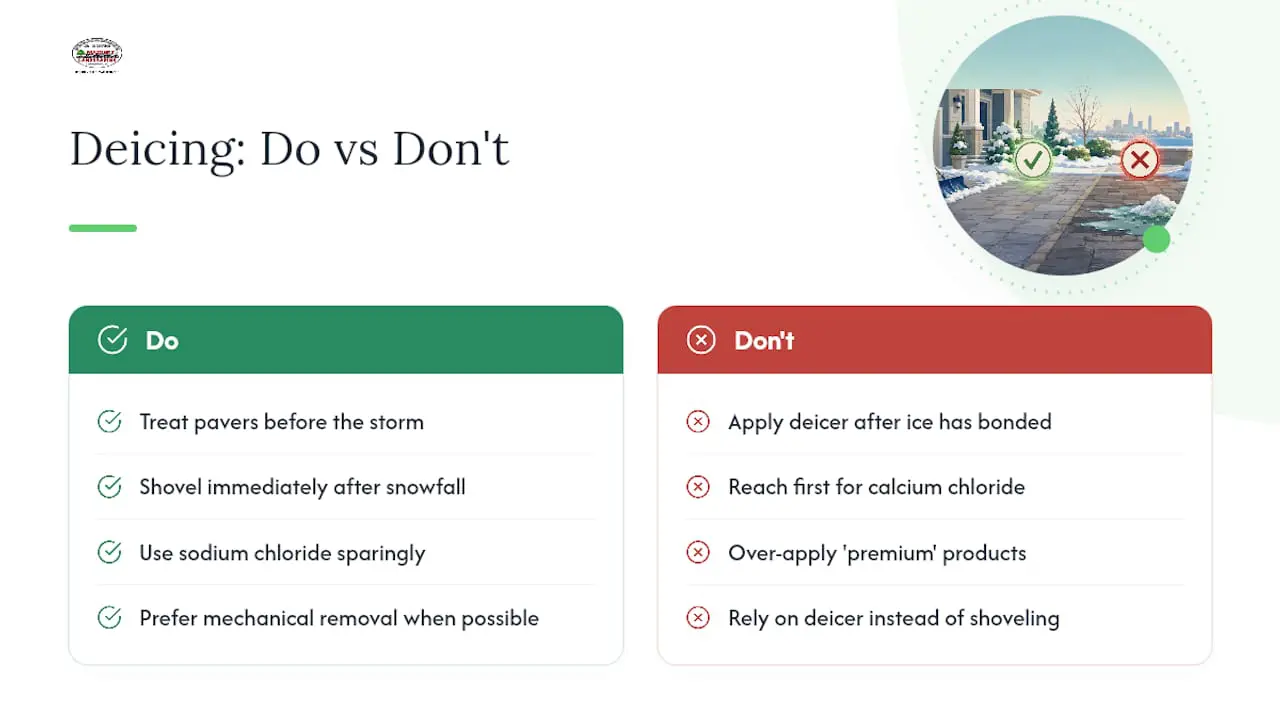
Where conventional advice falls short is timing. Most homeowners reach for the deicer bag after the ice has already bonded to the surface, which forces them to use more product to break that bond. That’s backwards. The better habit is treating your pavers before the storm, or shoveling immediately after, so the deicer only has a thin film to handle.
If there’s one priority to take from all of this, it’s patience over potency. Reaching for calcium chloride because it works faster feels productive in the moment, but the cumulative cost shows up two or three winters later as scaling you can’t undo. Sodium chloride, used thin and used less, is the boring choice. It’s also the one the evidence actually supports.
— BG
Recommended Sources to Read
-
The Effects of Deicing Chemicals on Interlocking Concrete Pavers – CMHA
-
Mechanisms of chemical damage from de-icing salts (peer-reviewed article)