
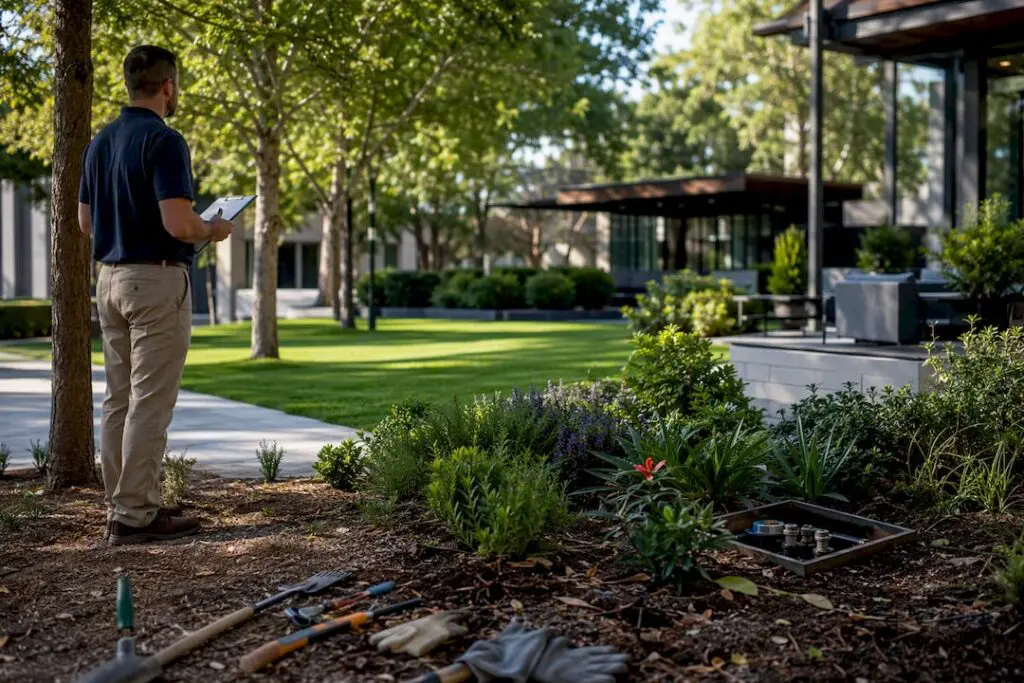
Expect to pay roughly $6 to $20 per square foot for commercial landscaping installation, with a midpoint near $12, and $800 to $1,600 per acre per month for full-service commercial lawn care and maintenance. Those two numbers get confused constantly, but they price entirely different things: one is a project, the other is a subscription. To turn either range into a real budget, measure your site’s square footage or acreage, list every service you need, and add a 5% to 10% contingency before you sign anything.
TL;DR:
Installation costs typically range from $6 to $20 per square foot, with hardscape projects near the top and basic turf near the midpoint.
Full-service maintenance contracts usually cost between $800 and $1,600 per acre per month, depending on site complexity and regional factors.
Significant bid variations often stem from labor, material choices, site prep, and hardscape features, which are major cost drivers.
Separating installation and maintenance budgets helps identify inflated bids and manage costs more effectively.
Using precise site measurements, service lists, and contingency planning enables accurate self-estimation and better vendor negotiations.
Table of Contents
-
Understanding Commercial Landscaping Cost: Pricing Models and Benchmarks
-
Notes from the Field: What Fernandez & Sons Sees on Commercial Bids
-
Get a Budget-Ready Commercial Estimate from Fernandez & Sons
Understanding Commercial Landscaping Cost: Pricing Models and Benchmarks
Vendors quote commercial landscaping in whichever unit fits the job, and knowing which unit applies to your situation is the first step toward reading a bid correctly instead of just trusting the bottom line. Installation work, like new plant beds, sod, or hardscape, gets priced per square foot because materials and labor scale directly with area. Recurring maintenance gets priced per acre per month, since mowing, trimming, and seasonal cleanup follow a repeating schedule rather than a one-time buildout. Smaller specialty jobs, like a single retaining wall or an irrigation repair, are often quoted as flat per-project fees instead.
Here’s how those units typically break down across property types:
-
Installation: roughly $6 to $20 per square foot, with basic plantings and turf landing near $12 per square foot and complex hardscape-heavy projects pushing toward the top of the range.
-
Maintenance for properties under 5 acres: mowing alone often runs $50 to $150 per acre per visit.
-
Maintenance for properties over 5 acres: mowing rates drop to roughly $25 to $60 per acre, since larger sites benefit from equipment efficiency.
-
Full-service monthly contracts: $800 to $1,600 per acre per month when mowing, edging, fertilization, and irrigation checks are bundled together.
Pro Tip: If a bid gives you a flat monthly number with no per-acre or per-square-foot breakdown, ask for one. You need that unit price to compare bids fairly across properties of different sizes.
These ranges shift with regional labor costs, water access, and how much of the property is turf versus planting beds versus hardscape. A property in a high-labor-cost metro area with dense ornamental beds will land well above the midpoint, while a flat, turf-dominant suburban office park with simple foundation plantings tends to land near the bottom. Treat every number here as a starting point for your own site walk, not a guaranteed quote.
What Drives a Landscaping Bid Higher or Lower
Two properties of identical square footage can generate wildly different bids, and the gap almost always traces back to five factors that either add labor hours or add material cost. Pricing for any landscaping vertical breaks into four components: labor, materials, equipment, and overhead recovery. The ratio between those four shifts depending on whether you’re buying installation, maintenance, or specialty work.
-
Labor rates: contractors don’t just quote an hourly wage, they build in payroll taxes, workers’ compensation, and benefits, so a crew’s “fully burdened” rate often runs well above what a single worker takes home.
-
Material selection: sod costs more upfront than seed but establishes faster; small plant material costs less than mature specimens but takes years to fill in; mulch type (shredded bark versus dyed versus stone) shifts material spend meaningfully across a large bed footprint.
-
Site prep and grading: poor drainage, compacted soil, or uneven grade adds equipment time and labor before a single plant goes in the ground.
-
Hardscape and specialty additions: retaining walls, path lighting, and drainage systems are priced closer to construction trades than to landscaping labor, and they carry their own permit and inspection costs.
-
Irrigation and water efficiency: smart controllers and drip systems cost more to install but reduce water bills and maintenance labor over the contract’s life.
One factor surprises a lot of facility managers: linear complexity. A property with long, straight bed edges and open turf mows faster and cheaper than a property with the same total square footage broken into a dozen small islands, curved paths, and light-pole obstacles. Every edge, corner, and obstacle adds mowing and trimming time independent of the total area, which is why two sites with identical acreage can post noticeably different maintenance quotes.
Installation Costs vs. Ongoing Maintenance Pricing
Confusing these two categories is the single most common budgeting mistake facility managers make, and it usually happens because both get lumped into one “landscaping cost” line in a spreadsheet.
-
Installation pricing covers design, demolition of existing plant material or hardscape, soil preparation, new materials, and any hardscape build. Project totals commonly range from a few thousand dollars for a modest bed refresh to $75,000 or more for a full campus redesign with retaining walls, lighting, and irrigation, tracking that $6 to $20 per square foot benchmark depending on scope.
-
Maintenance pricing covers mowing, pruning, fertilization, irrigation system checks, and seasonal cleanup, quoted on a recurring monthly or per-acre basis rather than as a one-time project cost.
-
Frequency and bundling change the math on both sides. A property that bundles mowing, edging, and fertilization into one annual contract typically pays less per visit than one paying separately for each service, since the contractor avoids repeated mobilization costs for the same site.
-
Upfront investment often lowers lifecycle cost. Spending more during installation on proper soil prep, drought-tolerant plant selection, or an efficient irrigation system frequently reduces the maintenance budget for years afterward. Cheap topsoil and undersized plants tend to generate replacement and repair costs that erase any installation-phase savings within two or three seasons.
Read your difference between lawn service and landscaping breakdown if your contract currently blends these two categories. Separating them in your budget worksheet makes it much easier to spot where a vendor is padding a quote.
Sample Cost Estimates by Property Type
Real numbers land differently depending on what kind of property you manage, so here’s how the ranges typically play out across common commercial site types.
-
Small office park (1 to 3 acres): installation for a lobby and parking-perimeter refresh often runs $15,000 to $60,000 depending on hardscape scope; monthly maintenance typically falls between $800 and $1,600 per acre, per the HomeGuide benchmark for full-service contracts.
-
Retail storefront strips: smaller footprints mean lower total installation cost, often $5,000 to $20,000, but per-square-foot pricing runs higher because of frequent seasonal plantings and higher-visibility bed maintenance near entrances.
-
HOA common areas: costs scale with acreage and amenity count (pools, playgrounds, entrance monuments), with monthly maintenance often landing in the $25 to $60 per acre mowing range for larger shared parcels.
-
Large corporate campuses (10+ acres): economies of scale bring per-acre mowing costs down, but added turf, athletic fields, or extensive ornamental beds push total monthly spend into the thousands.
-
Parking lot perimeter landscaping: narrow, linear beds with heavy foot and vehicle traffic drive up labor time relative to their square footage, since edge trimming and litter removal happen more often than in open turf areas.
Every property type carries its own hidden add-ons worth budgeting separately: northern-climate sites need snow removal contracts layered on top of the growing-season budget, retail centers often add seasonal and holiday plantings that maintenance contracts don’t automatically include, and large campuses should budget for storm cleanup as a distinct line item rather than assuming it’s covered under routine mowing.
How to Calculate Your Site’s Landscaping Budget
Building your own number instead of relying entirely on vendor quotes gives you leverage in negotiations and a way to sanity-check any bid that lands on your desk. Here’s a repeatable four-step method.
-
Measure your site and note its complexity. Get exact square footage or acreage, and separately note how much of that area is turf, planting beds, or hardscape. Flag anything that adds linear edge work, like islands, curved paths, or light poles, since that affects labor time independent of total area.
-
Define your service list and frequency. Write out every service you need (mowing visits per month, pruning schedule, seasonal color installs, irrigation checks) rather than assuming a generic “full maintenance” line covers everything.
-
Build the cost stack. Estimate labor hours per visit, multiply by a fully burdened labor rate, then add material costs, equipment allocation, and overhead. PricingLink’s worked example shows this as direct costs plus allocated overhead plus target margin, divided by 12 for a monthly contract figure, and reverse-engineering that formula on a vendor’s quote is one of the fastest ways to catch an inflated bid.
-
Add contingency and convert to monthly. Build in 5% to 10% for storm cleanup, emergency repairs, and plant replacement, then divide your annual total by 12 if you need a monthly line item for accounting purposes.
A quick worked example: a 4-acre office park with $1,200 per acre monthly maintenance runs $4,800 per month, or $57,600 annually.
Comparing Contracts: Questions to Ask Before You Sign
Contractors offer a handful of pricing structures, and picking the wrong one for your situation costs you money even when the headline rate looks competitive. Annual recurring contracts bundle services at a locked monthly rate and work best for properties with predictable, year-round needs. Per-visit pricing suits properties with irregular or seasonal-only needs. Per-acre pricing gives you the cleanest way to compare bids across properties of different sizes, and tiered packages let you scale services up or down as budgets shift midyear.
Before signing anything, compare bids against this checklist:
-
Does the scope explicitly list every service, or does it use vague language like “routine maintenance as needed”?
-
Are mobilization, equipment, and disposal fees included or billed separately?
-
Does the contractor carry current insurance and required state licenses?
-
Is there an escalation clause for fuel, labor, or material cost increases mid-contract?
-
What’s the guaranteed response time for storm cleanup or emergency repairs?
Pro Tip: An unusually low bid almost always means something is missing from the scope, most often disposal fees, irrigation checks, or insurance coverage. Ask the contractor to itemize their number before you compare it to a competitor.
Facility managers who bundle episodic services like irrigation monitoring and storm cleanup into their annual contract typically avoid paying premium per-visit rates for that same work later, a lesson property managers apply across commercial building operations generally, not just landscaping.
Notes from the Field: What Fernandez & Sons Sees on Commercial Bids
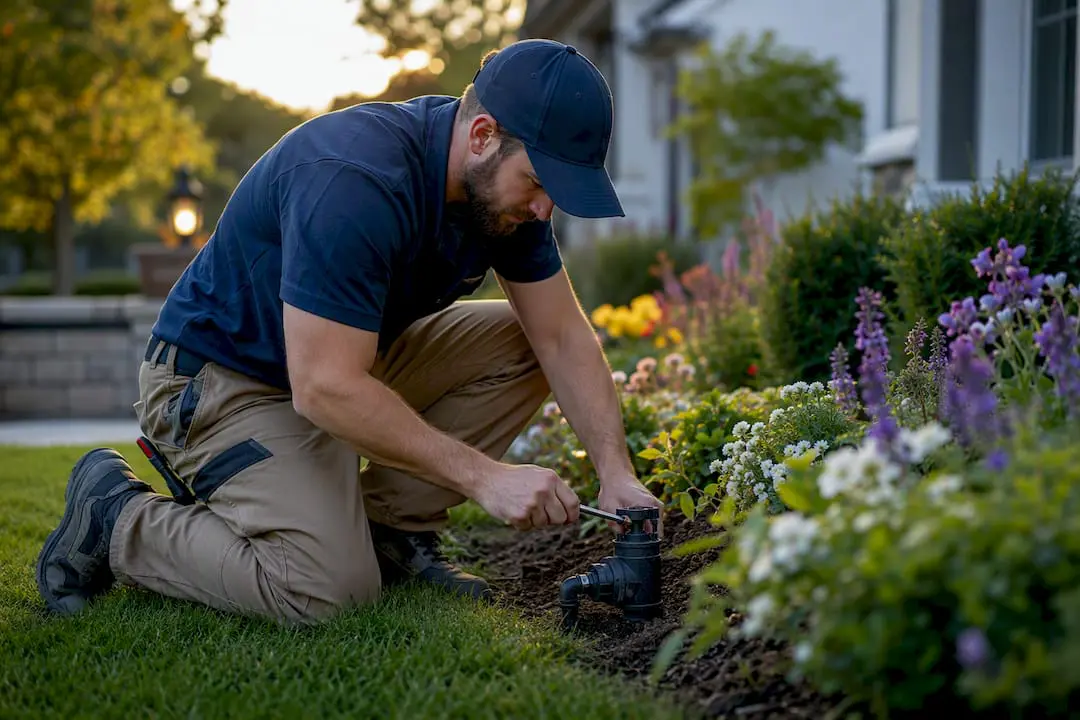
After more than a decade handling landscaping and masonry projects across Morris and Somerset Counties, Fernandez & Sons sees the same bid gaps repeat across commercial properties: irrigation checks left off the scope, disposal fees buried or omitted, and soil work skipped to hit a lower headline number. Those omissions surface later as change orders. Every estimate Fernandez & Sons provides is free and itemized, so property managers can see exactly what’s covered before comparing it against another contractor’s number, backed by a satisfaction guarantee on the finished work.
Landscaping as Asset Protection, Not Just an Expense Line
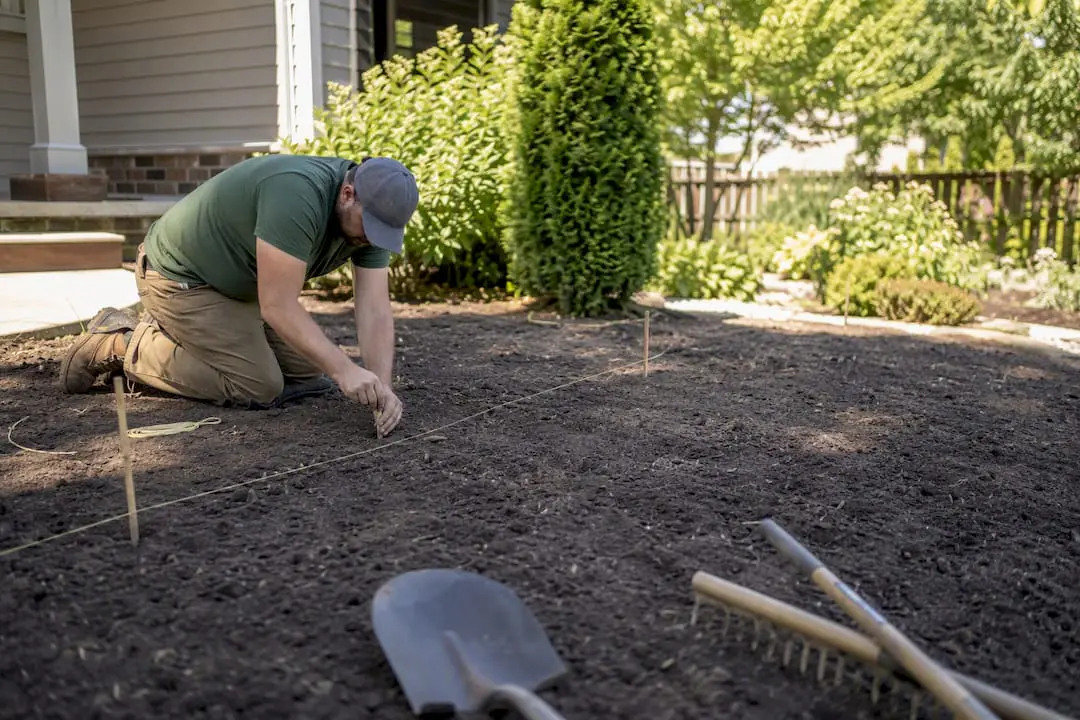
Treat major installs and redesigns as capital spend you can phase across budget years, and routine maintenance as the operating cost that protects that capital investment day to day. Well-maintained grounds support tenant retention and curb appeal in ways that show up in leasing conversations more than in any single line item. If your budget is tight, put your dollars into the entrance, the main parking approach, and any area visible from the road before spending on back-of-property turf nobody sees.
— BG
Get a Budget-Ready Commercial Estimate from Fernandez & Sons
Fernandez & Sons handles the full commercial workload in one contract instead of splitting it across separate vendors for design, install, maintenance, and snow removal, which means one point of contact and one schedule to manage instead of three. Property managers across Morris and Somerset Counties use this to consolidate contracts that used to require juggling a landscaper, an irrigation company, and a plow service separately.

To get a free estimate, have your site’s approximate square footage or acreage ready, along with your current contract terms if you have one, and a few photos of problem areas like drainage trouble spots or overgrown beds. That’s enough for Fernandez & Sons to scope a realistic number without a lengthy back and forth. Every estimate comes with a satisfaction guarantee, so there’s no risk in finding out what a consolidated commercial contract would actually cost your property. Visit the Fernandez & Sons site to request your estimate, and if your property is in a northern-exposure area, ask about bundling commercial snow removal into the same annual contract.
Sources
-
Landscaping Services Pricing Guide: National Cost Benchmarks
-
How to Price Commercial Landscape Maintenance Services | PricingLink