
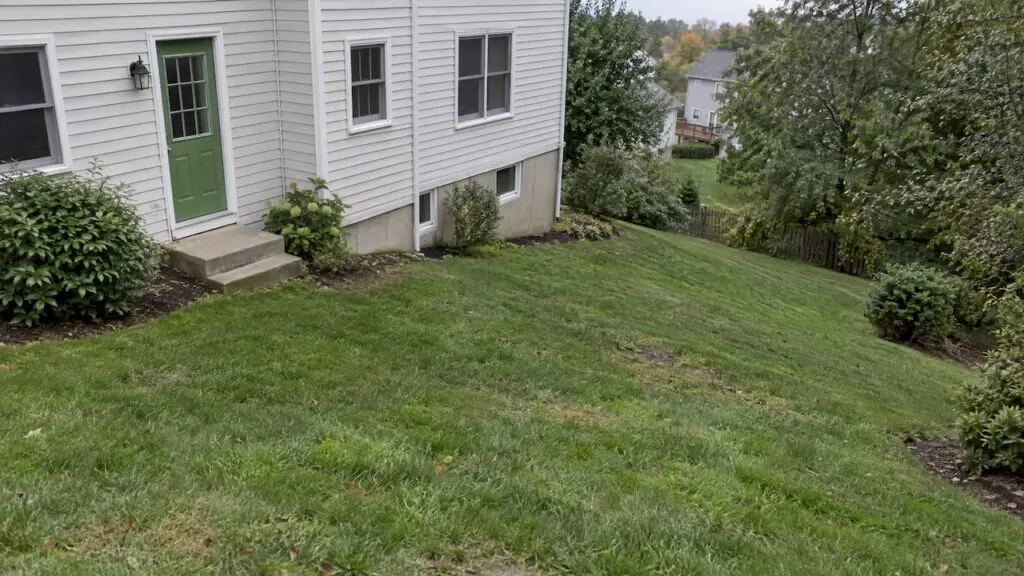
Choose a deck when your yard slopes, you want elevation off the house, or you need multi-level access to a pool or entry point. Choose a patio when your lot is flat and you want a lower starting cost with less upkeep. Decks typically run more per square foot than patios, though patios vary widely by material, and the best next step is checking your yard’s grade and permit rules before requesting a contractor estimate.
What to Know
Typical projects average $1,900 to $5,300 for patios and $4,100 to $11,220 for decks, though natural stone can cost more than basic lumber.
Wood decks need annual washing and resealing every two to three years; composite and PVC need less care, while concrete can crack in winter.
A patio on a sloped or poorly drained lot may need retaining walls, compaction, or drainage work, pushing its total cost close to deck territory.
Permit fees can add $400 to $1,500, and grading or drainage preparation can add $500 to $6,000; check local rules before setting a budget.
For a useful contractor estimate, bring site photos, rough measurements, and your planned uses, such as entertaining, grilling, or adding a hot tub.
Table of Contents
Deck vs Patio: A Quick Side-by-Side Comparison
A deck is an elevated or ground-level structure built from wood or composite boards, usually attached to the house and supported by a frame and footings. A patio is a flat, hard-surfaced area built at or near grade, typically poured concrete, pavers, or natural stone, with no structural framing underneath.
Cost is where the two diverge fastest. Patios average $1,900 to $5,300 for a full project, with material prices from $1 to $50 per square foot. Decks average $4,100 to $11,220, running $20 to $60 per square foot once labor and footings are factored in.
Here is how the two stack up on the factors that matter most:
-
Definition: decks are elevated wood or composite structures; patios are flat, ground-level hardscape.
-
Cost: patios generally cost less upfront; decks cost more due to framing and labor.
-
Lifespan: well-built patios and composite decks can both last decades with proper care.
-
Maintenance: patios need less routine attention; wood decks need yearly cleaning and periodic sealing.
-
Ideal site: decks suit sloped or uneven lots; patios suit flat, well-drained yards.
The single factor that decides the question for most homeowners is site grade. A steep slope or a raised entry point often makes a deck the only practical choice, while a flat backyard opens the door to either option.
How Materials Drive the Price of a Deck or Patio
Material choice is the biggest lever on your final number, for both decks and patios.
-
Pressure-treated lumber is the least expensive deck material and the usual starting point for budget-conscious builds.
-
Cedar costs more than treated lumber but offers a richer look and natural rot resistance.
-
Composite decking carries a higher material cost but cuts down on yearly upkeep.
-
PVC decking sits at the top of the deck price range, built for low maintenance over a long lifespan.
-
Poured concrete is typically the most affordable patio surface.
-
Concrete pavers cost more than poured concrete but allow pattern and color flexibility.
-
Natural stone, including granite cobblestone, runs $20 to $35 per square foot and sits at the high end of patio pricing.
-
Gravel remains the lowest-cost patio surface, suited to casual or transitional spaces.
A 200 to 400 square foot project lands in a wide range depending on tier. On the low end, a gravel or poured concrete patio can run close to patio averages, while a natural stone or bluestone patio pushes toward the higher end of that same range. A pressure-treated deck of the same footprint tends to land near the lower deck average, while composite or PVC decking climbs toward the top of the deck cost range.
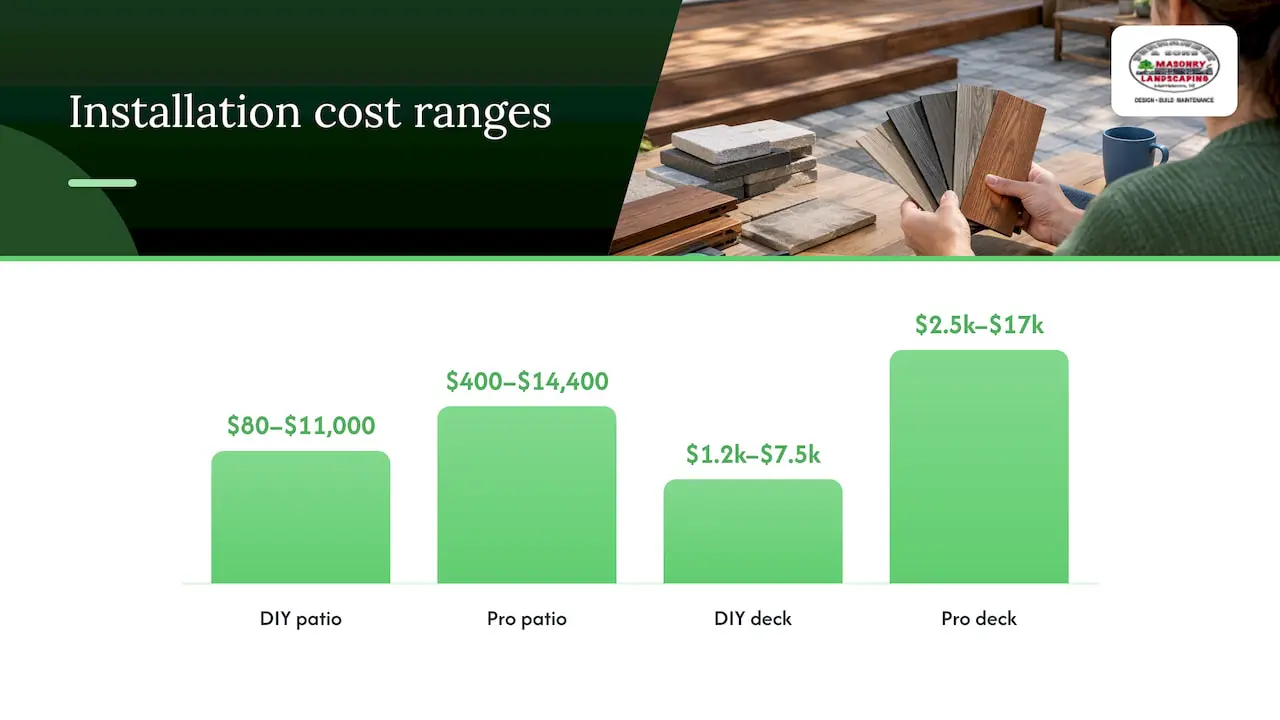
DIY savings are real but carry risk. Angi reports DIY patios can run $80 to $11,000 versus $400 to $14,400 for a professionally installed one, while DIY decks range $1,200 to $7,500 against $2,500 to $17,000 for a pro build. Permit fees often add $400 to $1,500, and site prep like grading or drainage work can add another $500 to $6,000.
Maintenance and Durability: What Each Option Asks of You
Wood decks need the most consistent attention. Plan on annual power washing and resealing or staining every two to three years to protect the boards from moisture and UV damage. Composite and PVC decking need far less, though they still benefit from periodic cleaning to prevent surface grime buildup.
Patios ask less of you overall. A occasional hose-down and paver joint sand top-up typically covers routine care, with resealing needed every few years depending on material. Concrete surfaces can crack in freeze-thaw climates, which matters for yards that see cold winters and repeated thaw cycles.
Watch for these signs that a surface needs attention:
-
Soft or spongy boards, which signal wood rot underneath.
-
Loose or popped deck fasteners after a season of temperature swings.
-
Cracked or heaving concrete, often from freeze-thaw movement.
-
Pooling water on a patio, which points to a drainage problem rather than a surface flaw.
Pro Tip: Walk your deck or patio after the first hard freeze each year. Small issues like a loose board or a hairline crack are far cheaper to fix in early spring than after a full season of use.
Matching Your Site: Slope, Drainage, and Permit Triggers
Before choosing between a deck and a patio, walk your yard with a few specific questions in mind.
-
Check the slope. A noticeable grade change between your house and yard often favors a deck over costly regrading.
-
Check drainage. Standing water after rain signals a site that needs grading or a drainage plan before any patio goes in.
-
Check soil and roots. Tree roots near your foundation can complicate excavation for either structure.
-
Check elevation relative to doors. A raised entry point usually means a deck connects more naturally than a patio at grade.
-
Check local permit rules. Many towns require a permit for decks attached to the house or built above a certain height, and some patios trigger permits too depending on size and drainage changes, as outlined in this guide to patio permits.
Decks attached to the house, or built more than a modest height above grade, often require engineered footings and a stamped structural plan. A general overview of how permit workflows typically unfold can help you anticipate the steps, though local rules always take precedence.
Patios on sloped or poorly draining lots can need retaining walls, compaction, and drainage work that pushes their total cost close to deck territory. If your yard has any of these complications, bring photos, a rough sketch with elevation notes, and utility locations to your first contractor conversation, as detailed in these slope landscaping considerations.
Which Adds More Value: Deck or Patio?
Both features can return a meaningful share of their cost at resale when built well, though the outcome depends heavily on material, execution, and how the space fits the rest of the property. A well-built deck or patio can recover a solid portion of its construction cost, according to cost and value data from outdoor living projects.
Quality hardscape materials, clean finish work, and integrated features like a built-in fire pit or kitchen tend to raise perceived value more than a bare slab or basic lumber deck. On the other hand, a poorly installed surface, one that blocks a view, or a style mismatched to the neighborhood can underperform regardless of which option you choose.
How a Contractor Evaluates Your Yard Before You Commit
A site visit tells us far more than a phone estimate ever could. We start by measuring the space, checking soil and drainage conditions, and reviewing local permit requirements before recommending a material or structure type that fits your site and budget.
To get the most accurate number from that first visit, come prepared with:
-
A few photos of the space from different angles and times of day.
-
Rough measurements of the area you are considering.
-
Your intended use, whether that means entertaining, grilling, or adding a hot tub down the line.
Homeowners exploring either option can review real project examples and material options in our patio installation guide or browse sizing ideas in our patio size guide before the estimate call.
Our Take on Choosing Between a Deck and a Patio
Most homeowners overthink the aesthetic choice and underthink the grade of their yard, which is really what decides this question. Measure your slope, check your permit rules, and request a written estimate before you fall in love with a material.
— BG
Request a Free Estimate for Your Patio or Deck Project
Whether your yard calls for a paver patio, a poured concrete slab, or a full outdoor living space with a fire pit and kitchen, we handle the masonry and hardscaping work from design through installation. We provide free estimates and a satisfaction guarantee on completed projects.

If your yard is flat and you are leaning toward a patio, our paver patio installation service is a straightforward place to start, and we will walk the grade, drainage, and material options with you on-site before you commit to a design.
FAQ
What is cheaper, a patio or a deck?
Patios are usually cheaper, averaging $1,900 to $5,300 compared to $4,100 to $11,220 for a typical deck project. Material choice can close that gap, since natural stone patios cost more than a basic pressure-treated deck.
Is a patio considered a deck?
No, a patio and a deck are different structures. A patio sits at or near ground level with no structural framing, while a deck is elevated and built on a supporting frame with footings.
What’s the average cost for a 20×20 deck?
A 400 square foot deck falls within the typical deck cost range of $20 to $60 per square foot, with the overall average project landing around $8,300 depending on material and labor. Composite or PVC decking pushes that number toward the higher end of the range.
What adds more value to a house, a deck or patio?
Both can recover a meaningful share of their cost at resale when built with quality materials and finish work, according to outdoor living cost and value data. The outcome depends more on execution and fit with the home than on which structure you choose.