
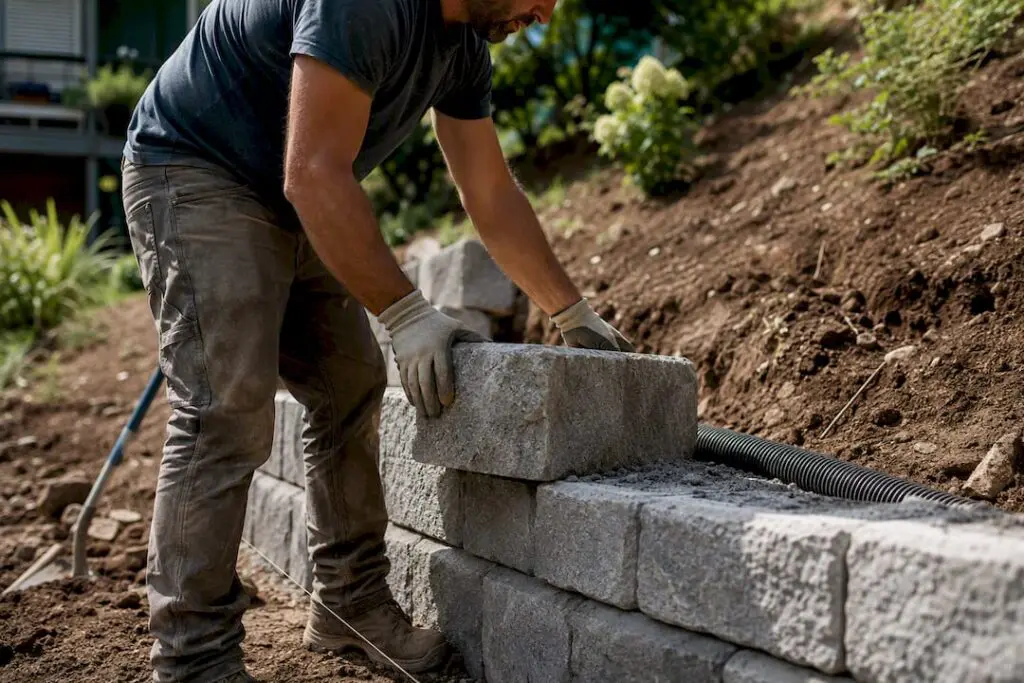
Stabilize the ground and manage water first, add structure second, and plant last. That sequence, not the design itself, is what separates a sloped yard that looks good for one season from one that looks good for twenty. Once the grade is under control, homeowners typically choose from six workable categories: terraces, retaining walls, rock or dry-stream drainage features, layered planting, decks and switchback paths, or fast, low-cost stabilization fixes.
-
Terraces and level benches for usable flat space
-
Retaining walls (segmental, timber, gabion, or poured)
-
Rock gardens and dry creek beds that double as drainage
-
Layered planting and groundcovers for erosion control
-
Decks, platforms, and switchback paths for access
-
Mulch, wattles, and erosion-control blankets for quick fixes
Pro Tip: A sloped lawn that looks fine in June can wash out completely after one heavy fall storm if the water was never given a place to go. Fernandez & Sons has seen this pattern often enough in Morris and Somerset County backyards to know it’s the single most common reason a nice-looking slope project fails within a year.
Key Takeaways
Stabilizing water flow and grade before adding structure or plants is the single factor that determines whether a sloped yard project lasts.
| Point | Details |
|---|---|
| Sequence matters most | Stabilize and drain the slope first, add walls or terraces second, and plant last to avoid rework. |
| Terraces need slight grade | Build terraces at a 2 to 5% slope rather than dead level so water sheds instead of pooling. |
| Match wall type to the job | Segmental block suits most residential walls; taller walls often need engineering and a permit. |
| Native plants reduce upkeep | Deep-rooted natives and groundcovers stabilize soil and need less watering once established. |
| Professional help pays off on risk | Fernandez & Sons handles grading, drainage, and engineered retaining walls for sloped properties across Morris and Somerset County. |
Table of Contents
Slope Landscaping Ideas Worth Considering for Your Yard
Every idea on this list earns its place because it solves a specific problem: water movement, usable square footage, or visual interest on ground that isn’t flat. Here’s how each one works in practice.
-
Terraces and benches. Cutting a steep slope into a series of level steps turns wasted hillside into planting beds, patio space, or lawn. Terraces should carry a slight grade of about 2 to 5% rather than sitting perfectly flat, since a truly level terrace traps water instead of shedding it, according to Eden Studio’s guide to sloped backyard design.
-
Segmental retaining walls and seat walls. A low wall does double duty: it holds soil in place and gives you a place to sit. Curved block systems also let you follow the natural contour of the yard instead of fighting it.
-
Rock gardens, riprap, and dry creek beds. Stone accepts moving water far better than turf. A dry creek bed dressed with river rock channels runoff to a safe discharge point while reading as an intentional design feature rather than a drainage ditch.
-
Layered planting with aggressive groundcovers. Dense root systems knit soil together on grades too steep to mow safely. Combine low groundcovers with mid-height shrubs for a planting scheme that holds multiple soil layers at once.
-
Decks, platforms, and switchback paths. Elevated platforms create flat outdoor living space without moving a truckload of earth, while a zigzagging path breaks a steep climb into manageable segments.
-
Quick, low-cost stabilization. Shredded hardwood mulch paired with fast-establishing groundcover is often enough for gentle slopes, and it buys time while you plan bigger structural work, per Lowe’s erosion-control guidance. Straw wattles and erosion-control blankets serve the same purpose temporarily on steeper ground.
For anyone drawing early inspiration, browsing multi-level retaining wall garden designs helps put numbers 1 and 2 into visual context before you commit to a layout.
How to Plan and Sequence a Slope Landscaping Project
Landscape professionals follow a set order for a reason: skip a step and you’re often redoing it a year later. The recommended sequence runs excavation and grading, then drainage, then structural walls, then hardscaping and irrigation, and only then planting or turf, according to the National Association of Landscape Professionals. Vegetation anchors soil once it’s established, but it was never meant to be the fix for a grading problem.
Start with a simple assessment. Walk the slope and estimate the rise over a set run (a 3 foot rise over 10 feet of run is a 30% grade), note where water pools after rain, and check for cracks, bare patches, or slumping soil that hint at instability.
From there, match the drainage tool to the problem:
-
A French drain works best when water is soaking into the soil and needs to be carried away underground.
-
A dry creek bed or swale handles visible surface runoff moving across the yard.
-
Berms and wattles are temporary measures that buy time during construction, not permanent solutions.
Pro Tip: Before you dig anything, watch your slope during one real rainstorm. Where the water actually goes, not where you assume it goes, should decide where your drainage line runs.
Retaining Wall and Terracing Options: Materials and Limits
Not every wall material fits every yard, and the differences matter more than they look on a brochure. Segmental block systems are the most common choice for residential projects because they combine strength, drainage performance, and design flexibility, and they allow curves that poured concrete can’t easily match, according to Nicolock’s retaining wall guide. Timber walls cost less upfront but have a shorter service life. Gabion walls (stone-filled wire cages) handle drainage naturally and suit rustic sites. Poured concrete offers the most strength for tall or load-bearing walls but costs more and needs formwork.
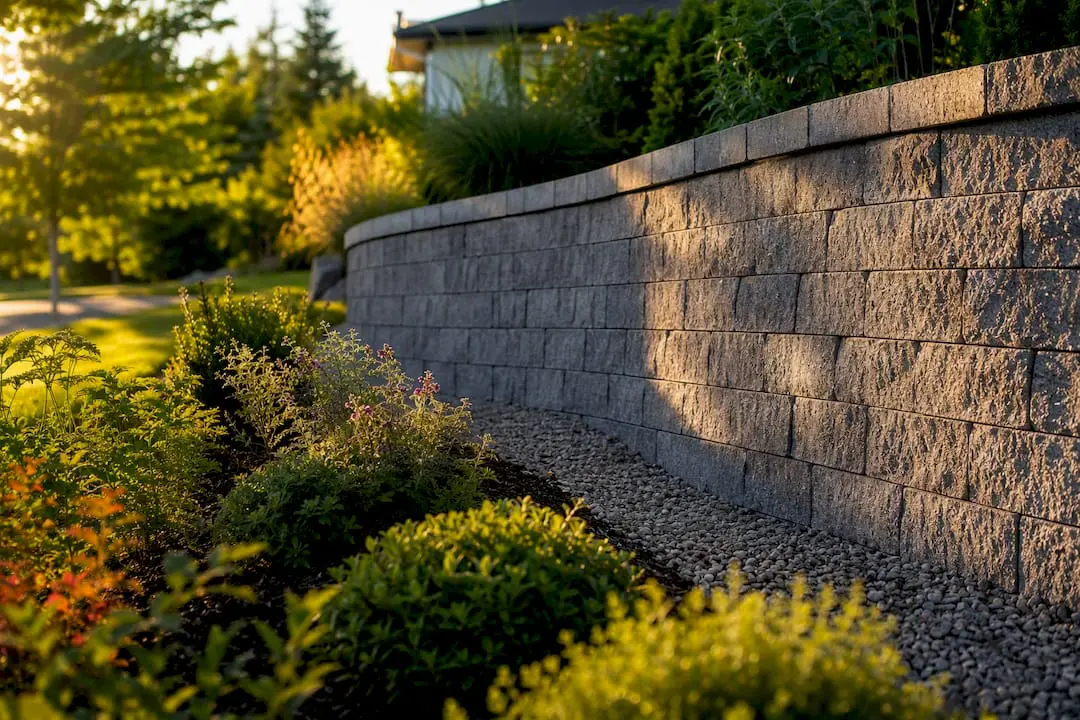
Height is where homeowners run into rules they didn’t expect. Many jurisdictions require engineered plans and permits for walls once they exceed a moderate height, so a wall proposal that skips this conversation is worth questioning. Drainage behind the wall (gravel backfill and a perforated pipe) matters as much as the material itself; a wall without it eventually fails from hydrostatic pressure, not from weak stone.
Design-wise, the best residential walls do more than hold dirt. This Old House notes that integrated steps, built-in seating, and planting pockets turn a structural necessity into a finished outdoor space. For a closer look at finish options, these retaining wall design examples show how far the category stretches beyond a plain block wall.
Planting Strategies That Actually Stabilize a Slope
Plant choice on a slope isn’t about looks first. Deep-rooted shrubs, spreading groundcovers, and clump-forming grasses each stabilize soil differently, so the right mix depends on your slope’s sun exposure and soil type. Native species establish more reliably and need less watering once rooted, since they’re already adapted to local rainfall and soil conditions, per Eden Studio’s planting research.
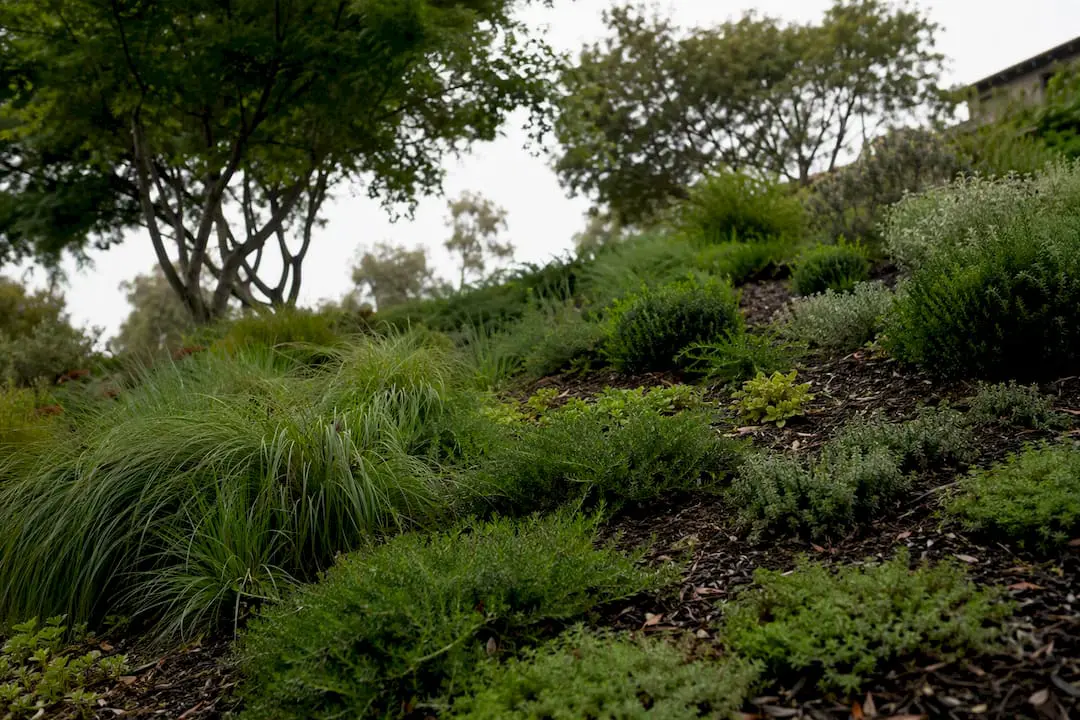
A layer of shredded hardwood mulch holds moisture and slows runoff between plants while they establish. Space new plants closer than you would on flat ground. It fills in faster and closes gaps where water could otherwise cut a channel, and plan on watering consistently for the first season since a young root system won’t yet hold soil against a heavy rain.
By function, that generally breaks down to:
-
Groundcover: creeping juniper, sedum, and low-growing sedges
-
Erosion control: ornamental grasses with dense, fibrous roots
-
Screening: taller native shrubs planted in staggered rows
For a full rundown of species and upkeep, these low-maintenance landscaping tips go deeper into aftercare.
Access Solutions: Stairs, Paths, and Safe Surfacing
A steep yard becomes usable the moment you solve circulation. Switchback paths, ones that zigzag rather than run straight up the grade, cut the effective steepness of each segment and include a flat landing every so often so anyone climbing has a place to pause.
-
Natural stone steps look the most polished but cost more and need a solid base to stay level.
-
Timber steps are budget-friendly but wear faster in wet climates.
-
Pavers offer consistent footing and easy repair if one section settles.
-
Gravel paths need edging or containment, otherwise loose stone migrates downhill with every rainstorm.
Add low-voltage lighting along any path used after dark, and install a handrail on stairs steeper than a gentle incline or used regularly by kids or older family members.
When to DIY and When to Call a Professional
Some slope work is a weekend project. Some of it is a liability if it’s done wrong. Red flags that call for a professional, and often a structural engineer, include grades steeper than roughly 30%, water pooling near a foundation, a wall already showing bulging or leaning, or any project that requires major regrading.
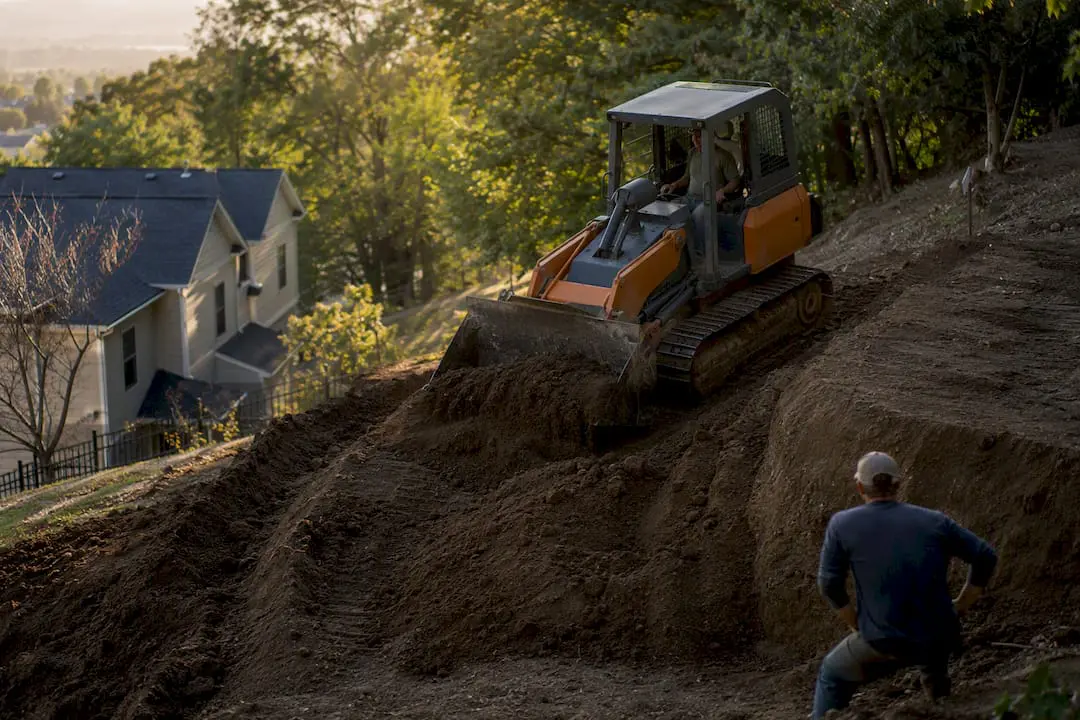
Professionals bring engineered drainage plans, proper wall design, and grading equipment that most homeowners don’t have access to, along with the permit knowledge to keep a project legal from the start. Fernandez & Sons has spent over a decade building retaining walls, terracing, and drainage systems across Morris and Somerset County, and that hands-on experience is usually what catches a foundation risk before it becomes an expensive repair.
Pro Tip: If you’re getting more than one contractor quote, ask each one specifically how they plan to handle drainage behind any wall. A quote that skips this question entirely is a quote worth skipping.
Reading Slope Photos Before You Talk to a Contractor
Inspiration photos are useful, but only if you read them correctly. Look for where the drainage exits, how tall the wall base actually is, and whether the planting shown is newly installed or fully mature. Save images that show scale clearly, note what you like or dislike about each one, and bring that shortlist to your first conversation with a contractor instead of a single “I want this” picture.
A Field Note on What Actually Works
Homeowners tend to fall in love with the plants and rocks in a slope photo and skip past the wall base and drain outlet sitting quietly in the same frame. That’s backward. The boring civil work, grading, buried pipe, compacted backfill, is what keeps the pretty part standing five years later. Budget your time and money in that order, not the reverse.
Get a Free Estimate on Your Sloped Yard Project
If your yard has fought you for years with runoff, a leaning wall, or unusable steep ground, a done-for-you build solves problems that mulch and patience never will. Fernandez & Sons handles the full sequence on sloped properties across Morris and Somerset County: grading, drainage, retaining walls, terracing, and the stonework that ties it together, backed by a satisfaction guarantee on the finished work. Rather than piecing together weekend fixes that need redoing after the next storm, you get one contractor who plans the drainage, structure, and finish as a single project. Explore masonry and stone options for your home and request a free estimate to see what your slope actually needs before you spend money guessing.
Frequently Asked Questions
What is the cheapest way to landscape a slope? Mulch combined with fast-establishing groundcover is the lowest-cost option for gentle grades, but steeper slopes usually need a structural fix like a low retaining wall or terrace to hold long term.
How steep does a yard need to be before I need a retaining wall? There’s no single number, but grades steeper than roughly 30%, or any slope showing soil movement or pooling near a foundation, generally call for a wall or engineered drainage rather than plants alone.
What plants stop erosion on a hill best? Deep-rooted native shrubs and dense, spreading groundcovers hold soil most reliably because their root systems bind multiple soil layers, unlike shallow-rooted turf grass.
Do I need a permit for a retaining wall in my backyard? Many areas require permits and engineered plans once a wall exceeds around 4 feet, so check with your local building department before finalizing a design.
Should I plant before or after fixing drainage on a slope? Fix drainage and grading first. Planting is a finishing step that anchors soil once the water problem is already under control, not a substitute for solving it.
Sources
-
Design-Build: Sloped Lawn Solutions – The Edge (National Association of Landscape Professionals)
-
How to Landscape a Sloped Backyard: Terracing, Retaining Walls & Plant Solutions – Eden Studio
-
Types of retaining walls: how to choose the right one for your yard – Nicolock