
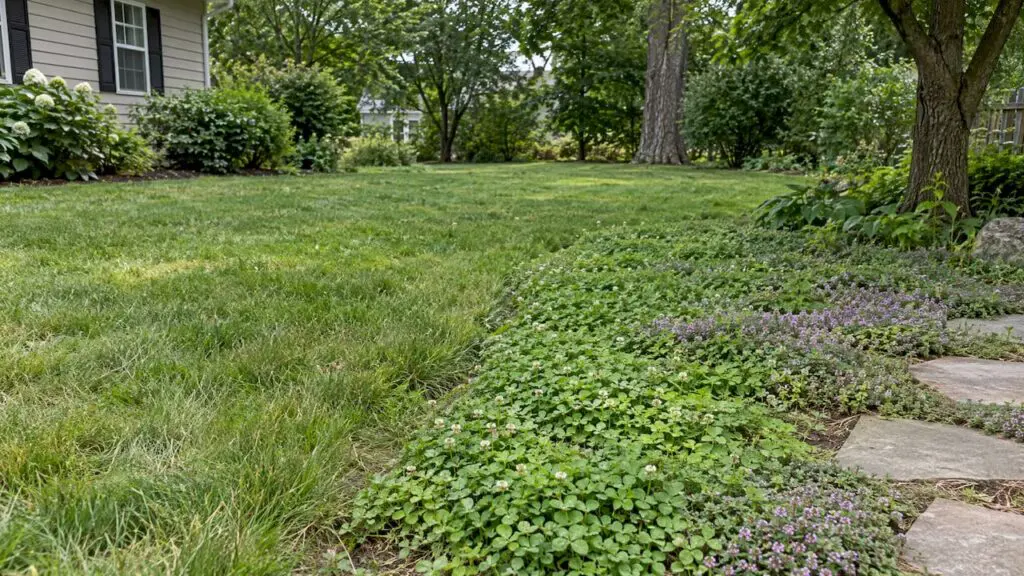
The best drought tolerant lawn alternatives fall into six categories: groundcovers like creeping thyme and sedum, native grasses such as buffalograss and blue grama, sedge or fine fescue lawns, no-mow meadow mixes, permeable hardscape or rock gardens, and artificial turf. Each trades some upfront effort or a longer establishment window for far less water and mowing once it matures. The right mix depends on how you use each section of your yard, which is why a phased, zone-by-zone conversion works better than ripping out the whole lawn at once.
TL;DR:
- Choose buffalograss for sunny, open areas, where established plants use 50 to 75% less irrigation; use sedges or fine fescues in shaded zones.
- Mow wildlife buffers only once every four to seven years, after mid July, to protect nesting birds; established meadows otherwise need one annual cut.
- New plantings need consistent moisture during establishment, and two to three inches of mulch suppresses weeds; water savings come after plants mature.
- Replace high traffic or poorly growing lawn with permeable paths, patios, or mulched strips, which remove those areas from irrigation needs.
- Convert in phases, check local rules before planting, and hire a professional when drainage, steep slopes, retaining walls, or major grading are involved.
Table of Contents
- 1. Compare Groundcovers, Native Grasses, and No-Mow Options
- 2. How Should You Choose the Right Option for Each Yard Zone?
- 3. What Watering, Mowing, and Weed Control Should You Expect?
- 4. Removing Old Lawn and Installing Your Replacement
- 5. Pairing Plantings With Hardscape to Cut Water Use Further
- 6. When Does This Project Need a Professional?
- Fernandez & Sons: Converting Lawns Into Low-Water Landscapes
- FAQ
- Sources
1. Compare Groundcovers, Native Grasses, and No-Mow Options
Picking a replacement starts with matching the plant to the spot: how much sun it gets, whether kids or pets run through it, and how formal you want it to look.
Groundcovers like creeping thyme, sedum, and clover blends work well in sunny beds, between pavers, or on slopes where mowing is awkward. Thyme tolerates light foot traffic and stays under four inches tall, so it rarely needs cutting at all. Sedum varieties handle poor, rocky soil and some of the driest spots in a yard. Clover blends green up fast and fix nitrogen in the soil, which cuts down on fertilizer needs.
Native and warm-season grasses, especially buffalograss and blue grama, are built for low water from the ground up. Buffalograss (Bouteloua dactyloides) is one of the most recognized drought-tolerant warm-season lawn alternatives, capable of using 50 to 75% less irrigation than a traditional cool-season lawn once it’s established. It goes dormant and turns tan in cold months, which is normal, not a sign of failure. It fits best in full sun, open yards without heavy shade from trees.
Sedges and fine fescues fill the gap for shadier yards where buffalograss struggles. According to Iowa State Extension, fine fescues and sedges are useful low-mow, shade-adapted choices for spots where cool-season turf typically thins out. Many sedge varieties need mowing only once or twice a season, if at all.
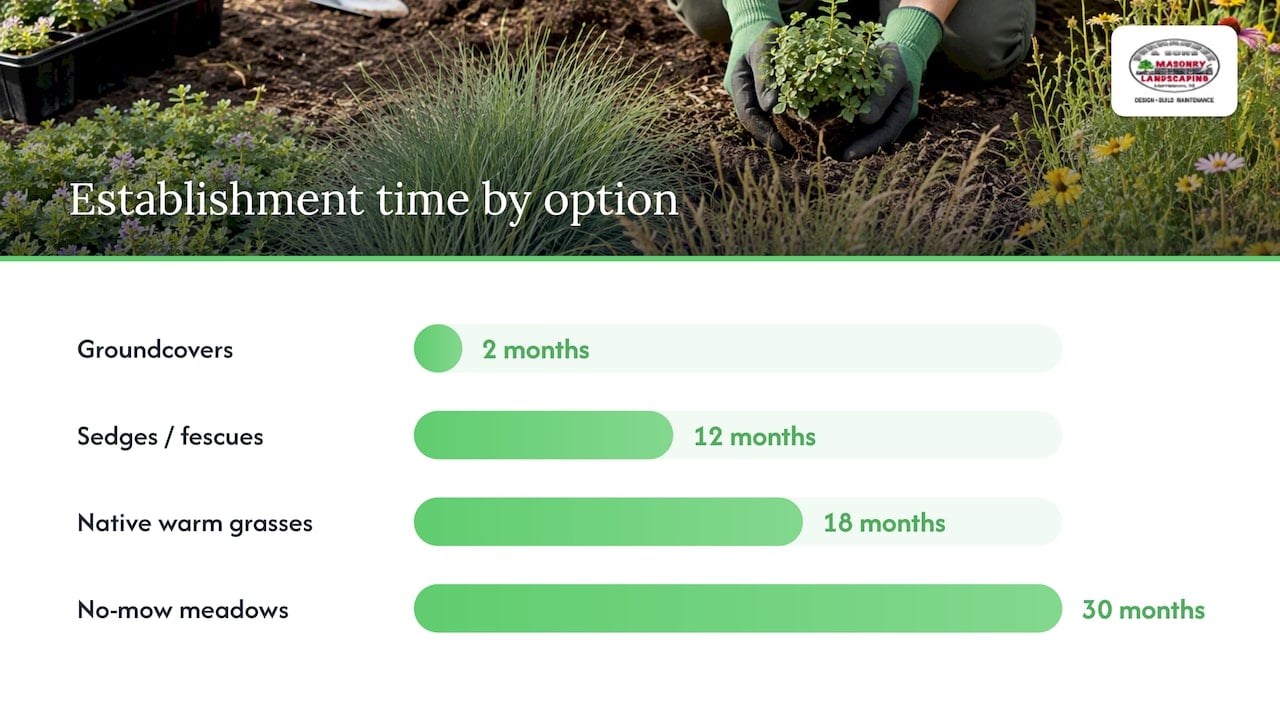
No-mow meadow and prairie mixes swap a manicured look for wildlife value and near-zero long-term maintenance. Once established, a native meadow is close to maintenance free, needing only occasional weeding and a single annual mowing, according to Penn State Extension. The catch is patience: full establishment takes two to three years, and wildlife-friendly buffers are best mowed only once every four to seven years, after mid-July, to protect nesting birds.
Permeable hardscape, rock gardens, and artificial turf round out the non-living options. These remove irrigation needs almost entirely in the areas they cover and work well for high-traffic zones, dog runs, or spots where nothing seems to grow well anyway.
- Groundcovers: weeks to a few months to establish, little to no mowing after that.
- Native and warm-season grasses: one to two growing seasons, seasonal dormancy is expected.
- Sedges and fine fescues: one season in shade, minimal mowing year-round.
- No-mow meadows: two to three years, then near-zero maintenance.
- Hardscape and artificial turf: ready for use almost immediately, no establishment period.
Pro Tip: Mix two or three options rather than committing the whole yard to one: a meadow in the back, groundcover along the front walk, and turf grass only where the kids actually play.
2. How Should You Choose the Right Option for Each Yard Zone?
A lawn rarely needs one single answer. Breaking the yard into zones by function makes the decision much easier.
- Map your use zones first, marking where you need durable turf for play or pets, where a formal look matters near the entry, and where habitat value or low maintenance is the priority.
- Assess sun, shade, soil, and slope for each zone, since buffalograss wants full sun and good drainage while sedges and fine fescues tolerate shade and damp soil.
- Set a budget and convert in phases, starting with the section that causes the most frustration, whether that’s a struggling side yard or a slope that’s hard to mow.
- Favor native or regionally adapted mixes over imported ornamental seed blends, and avoid any species flagged as invasive in your region before planting.
- Check HOA rules or local ordinances before removing turf, since some neighborhoods have specific guidelines on meadow height, ground cover, or visible rock landscaping.
3. What Watering, Mowing, and Weed Control Should You Expect?
Every drought-tolerant option still needs real attention while it’s getting established. The water savings come later, not on day one.
- Groundcovers typically need regular watering for a few weeks to a couple of months before roots are deep enough to handle dry stretches.
- Native grasses and meadow mixes need consistent moisture through their first one to two growing seasons, with full meadow establishment taking two to three years.
- Buffalograss needs notably more supplemental water during establishment than people expect from a “drought-tolerant” grass, even though it uses far less once mature.
- Sedges planted in fall generally root in faster than spring plantings, since cooler, wetter weather reduces transplant stress.
- Mowing height matters: keeping grass taller (around three inches for cool-season lawns) shades roots and reduces water stress, while meadows need only one cut a year once mature.
A WaterSense-labeled soil moisture controller can save an average home with an automatic irrigation system more than 15,000 gallons of water annually when it’s properly installed, because it waters based on actual soil conditions instead of a fixed timer. Pairing one of these controllers with drip irrigation on new plantings, as outlined in Utah’s homeowner landscape guidance, reduces evaporation and gets water straight to the root zone where new plants need it.
Weeds are most aggressive in bare soil during the first season. A two to three inch layer of mulch around new groundcovers and meadow plantings suppresses most weed pressure while roots establish, and hand-pulling during the first year prevents competitors from gaining a foothold before your new plants fill in.
4. Removing Old Lawn and Installing Your Replacement
How you remove the existing lawn shapes how fast your replacement takes hold.
- Mechanical sod removal (renting a sod cutter) clears grass and roots in a weekend and lets you plant right away, though it’s physical work and leaves bare soil exposed to weeds until new plants fill in.
- Smothering or solarization (covering the lawn with cardboard, mulch, or clear plastic for 6 to 8 weeks) kills grass without machinery or chemicals, but it takes a full summer season and isn’t practical for a yard you need back quickly.
- Targeted herbicide, applied carefully and only where needed, can clear stubborn turf before a tighter planting window, though it requires following label instructions closely and waiting the recommended interval before replanting.
- Choosing seed, plugs, sod, or hardscape comes down to budget and patience: seed is cheapest but slowest, plugs and sod cost more but fill in faster, and sod requires specific site prep to root successfully, while hardscape is ready the day it’s installed.
Fall planting generally gives grasses and groundcovers a head start thanks to cooler air and warmer soil, while meadow seed mixes are often sown in late fall or early spring depending on the species. Converting in patches rather than all at once, with mulched buffers between the new planting and remaining lawn, keeps weed pressure down and lets you judge results before committing the rest of the yard.
5. Pairing Plantings With Hardscape to Cut Water Use Further
The fastest way to shrink your water bill isn’t always a different plant. It’s replacing some of the lawn with surfaces that need no water at all.
Permeable patios, decomposed granite paths, and mulched play strips remove entire sections from the irrigation equation while still looking intentional. Rain gardens and shallow swales capture roof and yard runoff and put it to use on nearby plantings instead of letting it run to the storm drain, an approach covered in more detail in this rain garden design guide. Retaining walls help on sloped yards, both for erosion control and for creating flat planting terraces that hold water instead of shedding it.
- Permeable patios or walkways replace high-traffic turf that struggles anyway.
- Decomposed granite paths connect planting beds without adding irrigated area.
- Mulched strips along fences or play areas cut down on edge-trimming and weeds.
- Retaining walls turn a steep, erosion-prone slope into usable planting terraces.
Pro Tip: Start hardscape and planting zones at the same time: a patio or path installed before new beds go in gives you firm edges that keep mulch and plants contained from day one.
Combining a few of these features with a professional design means fewer surprises mid-project, since drainage, grading, and plant placement get mapped out before anything is removed.
6. When Does This Project Need a Professional?
A small bed of groundcover or a patch of clover is a reasonable weekend project. Once drainage, slope, retaining walls, or irrigation upgrades enter the picture, the margin for costly mistakes grows fast. Erosion on a slope or water pooling near a foundation is not something to solve through trial and error, and permitting questions around retaining walls or major grading are worth a professional opinion before work starts. If you’re unsure who to trust with the job, it’s worth knowing what to ask a landscaper before signing anything.
— BG
Fernandez & Sons: Converting Lawns Into Low-Water Landscapes
We design and install the hardscape and planting elements that make a drought-tolerant yard work long term: landscape design, patios and walkways, retaining walls, and ongoing landscape maintenance. A well-planned conversion blends permeable paths, mulched beds, and the right plant choices into a yard that still looks finished while using far less water.

We back every project with a free estimate and a satisfaction guarantee. Whether you’re converting one bed or reworking the entire yard in phases, our team can map the zones, handle the grading and hardscape, and set the planting up to succeed from day one. Get a free estimate through our landscaping and design services page and start the conversation about what your yard actually needs.
FAQ
What is the most drought-resistant lawn?
Buffalograss is widely considered one of the most drought-resistant warm-season lawn grasses, using 50 to 75% less irrigation than traditional cool-season turf once established. It still needs consistent water during its first growing season to root in properly.
What is poor man’s grass?
“Poor man’s grass” is a common nickname for clover, since it spreads easily, needs little fertilizer, and tolerates poor soil better than traditional turf. It’s often used in low-maintenance lawn blends for its drought tolerance and nitrogen-fixing properties.
What can I do instead of having a lawn?
Options include groundcovers like creeping thyme or sedum, native grass or meadow plantings, permeable hardscape such as patios or gravel paths, and artificial turf. Most yards do best with a mix, keeping durable turf or hardscape in high-traffic areas and lower-water plantings elsewhere.
What can I put down instead of grass?
Mulch, decomposed granite, permeable pavers, and groundcover plantings are common grass replacements, each suited to different levels of foot traffic and sun exposure. Pairing mulched beds with drip irrigation, as recommended in Utah’s landscape guidance, helps new plantings establish with less water waste.
Sources
- Meadows and prairies: wildlife-friendly alternatives to lawn — Penn State Extension
- Water-wise landscape design: selecting turf options — Colorado State University Extension
- Soil moisture-based irrigation controllers — EPA WaterSense
- Utah homeowner landscape resources — Conserve Water Utah