
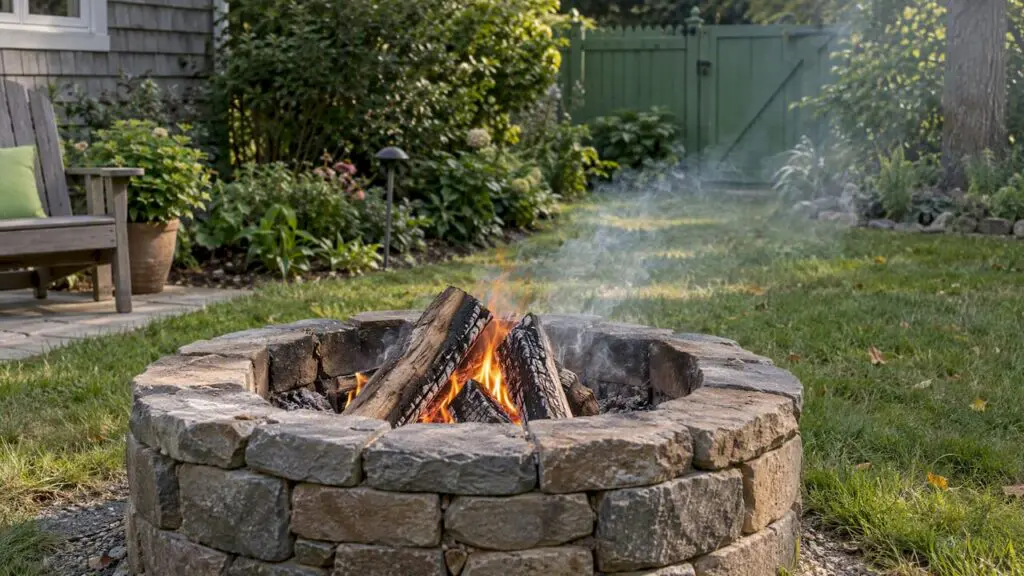
The fastest way to control fire pit smoke is to burn dry, seasoned wood, keep the fire small enough to get air, and place the pit where the wind carries smoke away from your seating. Fuel, fire building and layout account for most of the difference between a pleasant evening and one spent moving chairs. For homeowners in Morris and Somerset Counties, the pit’s design and location matter as much as the wood in it.
Below, we walk through why fire pits smoke, what to burn, how to build the fire, whether smokeless models deliver, and how to plan a pit so smoke is less of a problem from the start.
TL;DR
- Smoke is mostly a sign of incomplete combustion, and the cure is a hotter, cleaner fire: dry wood, good airflow, and a modest amount of fuel.
- The EPA recommends seasoned firewood at about 20 percent moisture and says never to burn green wood, garbage, plastic, construction waste or yard waste.
- Smokeless pits can cut smoke substantially, but they still need dry wood and sensible use.
- Wind direction and seating layout decide where the remaining smoke goes, so plan them before the pit is built.
- Check New Jersey rules and current fire danger before you light up.
Quick Answers: Fire Pit Smoke Control
- What causes fire pit smoke? Incomplete combustion. Wet fuel, too little air or a smoldering fire all produce more smoke.
- What is the best wood for low smoke? Clean, seasoned hardwood such as oak, maple, ash or birch, split and dried until it measures around 20 percent moisture or less.
- Do smokeless fire pits work? They reduce smoke significantly, but they do not eliminate it.
- Is gas cleaner than wood? Yes. The EPA lists natural gas and propane as cleaner alternatives that reduce harmful air pollutants.
- What else helps? Smaller fires, one or two logs at a time, regular ash cleanout and a pit positioned with the wind in mind.
Why Fire Pits Smoke in the First Place
A fire pit smokes when the wood does not burn completely. Connecticut’s environmental agency identifies incomplete combustion as the principal reason that fire pits, bonfires and similar devices can give off large amounts of smoke and unburned particles.
That smoke is more than a nuisance. The EPA notes that wood smoke contains gases and fine particulate matter, and that recreational fires can be a considerable source of fine-particle pollution. A USDA Forest Service study adds that PM2.5 poses the greatest public-health risk in outdoor wood smoke.
Three things usually push a backyard fire toward incomplete combustion:
- Wet or green wood. Much of the fire’s energy goes into boiling off water instead of making heat.
- Restricted airflow. Too many logs, a crowded pit or a deep bed of ash starves the fire of oxygen.
- A cool, smoldering fire. The American Lung Association points out that a hot-burning fire burns more completely and pollutes less, while a poorly built or smoldering fire makes unhealthy smoke.
Every smoke fix below targets one of those three causes.
Start With Dry, Seasoned Firewood
Fuel is the single biggest lever. The EPA recommends seasoned, dry firewood at about 20 percent moisture, checked with a moisture meter, because dry wood burns hotter and cleaner. A meter costs little and removes the guesswork. Split a log, press the probe into the freshly exposed face, and read the number.
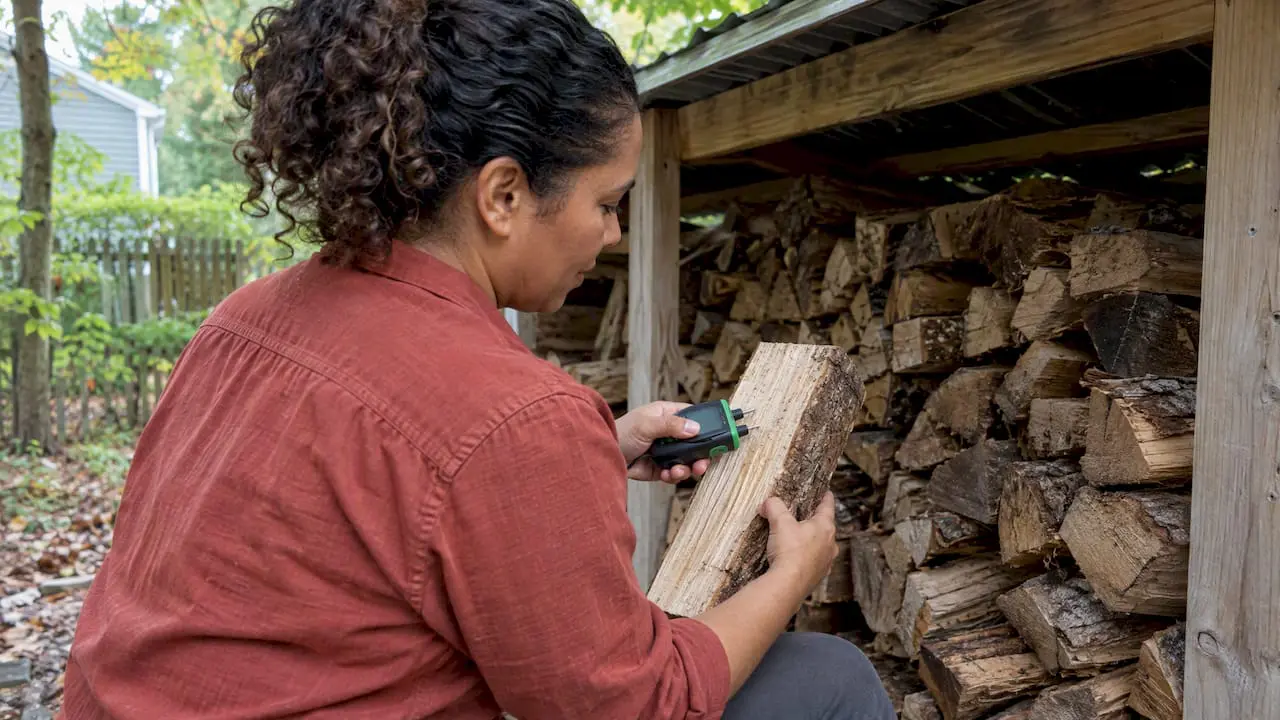
The American Lung Association suggests wood that has been split, stacked and covered for six months or more, with air able to circulate around the stack. The EPA agrees on storage: cover the pile, but leave the sides open so air can move through and finish the drying.
A few practical habits for New Jersey homeowners:
- Stack wood off the ground on a rack or pallets so humidity and ground moisture do not creep in.
- Cover only the top of the stack, not the sides.
- Be skeptical of bundles sold at roadside stands or gas stations. Many are not fully dry, so test them with a meter.
- Keep a small covered supply near the pit so tonight’s wood is not sitting in morning dew.
Which species? Lowe’s homeowner guidance recommends clean, dry seasoned hardwood such as oak, maple, ash or birch because it burns longer, makes more heat and creates less smoke than freshly cut or damp wood. Dryness still matters more than species: dry softwood burns cleaner than wet oak.
What Never Belongs in the Pit
The EPA says specifically not to burn green wood, construction waste, plastic, garbage or yard waste. Lowe’s adds a longer list of things to keep out: pressure-treated, painted or stained wood, plywood, particleboard, rubber, foam, leaves and liquid accelerants.
This matters for smoke and for safety. Treated and manufactured wood produces heavy, acrid smoke, and it is the most common cause of a pit that “never burns clean.” If you are clearing a deck, fence or renovation project, haul the scraps away rather than feeding the fire pit.
In New Jersey, what you may burn is also a legal question. Our guide to what you may and may not burn in a fire pit in NJ covers it in more detail.
Build and Tend the Fire for Airflow
Even good wood smokes when it is piled badly. Airflow is the second lever, and it is entirely in your hands.
Start Small and Build Up
Begin with a small bundle of kindling and a couple of dry splits, and let the fire establish a bed of hot coals before adding more. A fire that starts hot stays cleaner for the rest of the night. Smoke is heaviest in the first few minutes and whenever fuel is added carelessly.
Add One or Two Logs at a Time
Lowe’s explains that too many logs reduce airflow and create excess smoke. Its advice is to add one or two seasoned pieces at a time and to keep logs below the rim of the pit. A fire that rises above the rim is also harder to manage in wind.
Leave Room for Air
Arrange logs loosely, with gaps, so air can reach the flame from below and from the sides. Tightly packed logs smolder. A crisscross or teepee arrangement gives air a path.
Clear the Ash
A deep layer of ash can choke the fire’s air supply, particularly in pits that draw from below. Once ashes are fully cold, remove them. Do not dispose of them while any ember is warm.
Skip the Smolder
It is tempting to bank a fire down late in the evening. A smoldering fire is the cloudiest fire there is. If you are finished, let the wood burn down and put the fire out properly instead of letting it sulk.
Do Smokeless Fire Pits Actually Work?
Mostly yes, with a catch. Most low-smoke designs rely on secondary combustion. The USDA Forest Service describes air circulating from a raised floor through a double-walled side cavity to feed it. Wirecutter’s testing explains the same idea: double walls and temperature differences draw extra air through wall openings, supplying oxygen to burn the gases that would otherwise become smoke.
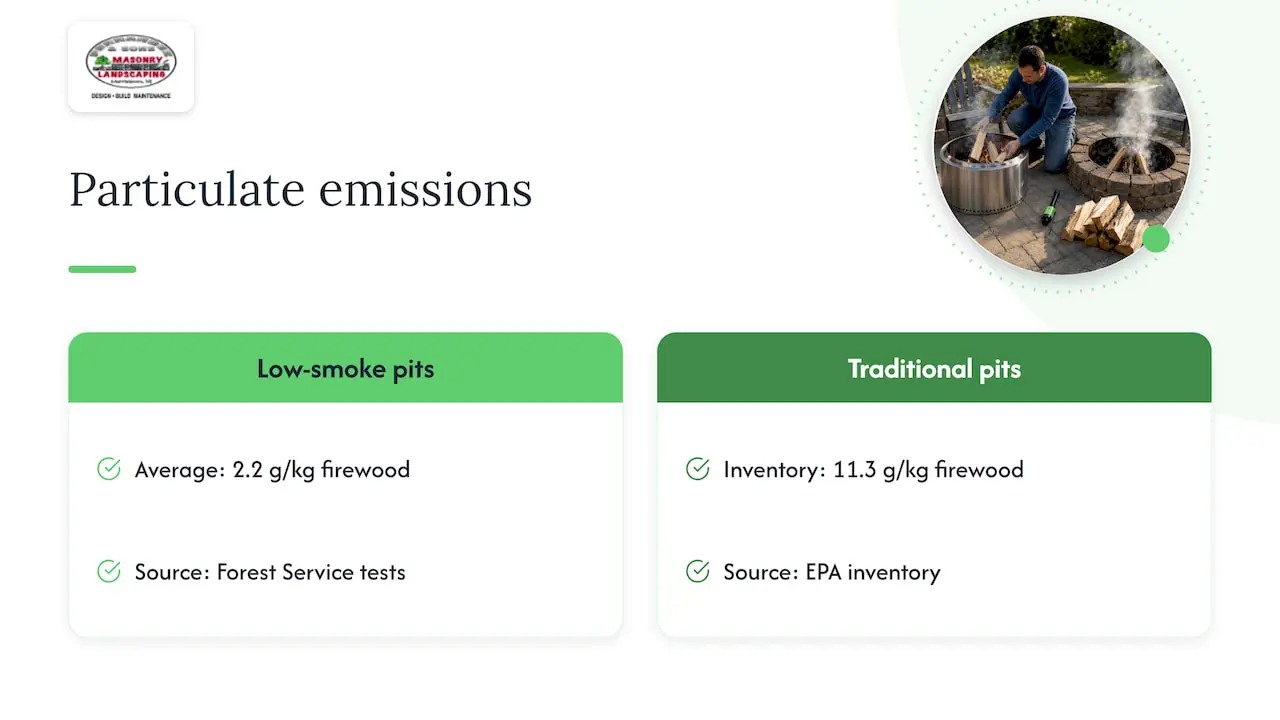
The measured results are encouraging. In Forest Service tests, three fire pits averaged 2.2 grams of particulate matter per kilogram of firewood, compared with 11.3 grams per kilogram used for traditional pits in the EPA’s emissions inventory. That is a difference of about 80 percent.
The catch is in the conditions. The Forest Service says the low-smoke pits cut smoke when users followed manufacturer instructions and used firewood below 20 percent moisture. Wirecutter likewise found that these designs do not eliminate smoke and that results depend on wood moisture, how much wood you burn at once and the wind.
In other words, a smokeless pit is a strong upgrade when it is paired with the habits above. It is not a license to burn damp wood.
Gas Fire Pits as the Lowest-Smoke Option
If you want a fire pit that produces almost no smoke, fuel choice is the answer. The EPA advises that natural gas or propane reduce harmful air pollutants compared with wood. A gas pit also lights and shuts off on demand, with no ash, no wood storage and no wondering whether the logs are dry enough.
The tradeoff is the experience: no crackle, no wood aroma. Many families choose wood for the atmosphere and accept a little attention to technique. Others, especially those with patios close to the house or neighbors nearby, prefer gas. When we plan a fire pit with you, fuel type is one of the first decisions because it shapes the footprint, the surround and the layout.
Placement, Wind and Seating Layout
No fire is completely smoke-free, so where the smoke goes becomes a design question. A well-planned yard handles it before the first fire.
- Observe your prevailing wind. Spend a few evenings watching which way smoke from a grill or a candle drifts, and place seating on the upwind side of the pit where you can.
- Think about structures. Smoke near an open window, a covered porch or a neighbor’s patio will bother people. Keep the pit clear of overhangs and walls that trap it.
- Leave open sky above. Low branches and roof lines hold smoke down around people.
- Keep a comfortable distance. Seats need to be close enough to share the warmth and far enough that smoke has room to rise and disperse.
- Plan for movement. A layout with clear paths lets guests shift seats easily when the wind changes, which it will.
Seating arrangement is where smoke control and comfort meet. Our fire pit seating ideas show circular, curved and bench-style layouts for backyard gatherings. Once the seating area is settled, ground comfort matters too, and these outdoor patio rug ideas can help you choose a surface that handles weather and embers’ neighborhood better than a bare paver.
Because smoke and sparks drift, a hard, non-combustible surface under and around the pit is the sensible base. Stone, pavers and masonry surrounds all fit that role, and we can show you how they work in our fire pit projects.
Our Perspective: Smoke Control Starts With the Build
Most advice on fire pit smoke focuses on what you do after the pit is already in the ground: buy drier wood, tend the fire, move your chair. That advice is right, and we pass it on to every homeowner we work with.
But as a masonry and landscaping company serving Morris and Somerset Counties, we see how much smoke comes down to decisions made during design. Where the pit sits relative to the house and the wind, how the seating is laid out, what the surround is made of, and whether the space has open sky overhead all shape how the fire feels on a real evening.
That is why we treat a fire pit as part of the whole outdoor living space, not a standalone object. Our work covers patios, walkways, seating walls, outdoor kitchens, fireplaces and fire pits, so we can plan them together and give the fire a sensible home. We want your family gathering around it, not chasing the smoke from chair to chair.
We offer free estimates and stand behind our work with a satisfaction guarantee, so you can talk through placement and options before you commit to anything.
Plan a Fire Pit Built for Comfortable Evenings
If smoke has made your current pit more trouble than it is worth, or you are planning a new one, we can help. Fernandez & Sons designs and builds fire pits, fireplaces, patios and complete outdoor living spaces for residential and commercial properties across Morris and Somerset Counties.

We will look at your yard’s layout, your seating plans and how you like to use the space, and talk through the fuel and design choices that fit. To get started, request a free estimate and tell us what you have in mind.
Check NJ Rules and Fire Danger Before You Light Up
Smoke control is also about being a good neighbor and following the rules. The EPA and the American Lung Association both advise against burning during air-quality alerts, and the EPA’s guidance says the same. New Jersey adds its own requirements for fire pits and open burning, and local fire officials may have additional rules.
Our guide to NJ fire pit regulations explains the details in plain language:
- When you can actually use a fire pit in NJ
- Temporary bans and how to check current fire danger
- Approved fire pits and equipment that meet NJ standards
- Permits, fees and when to call your local fire official
If you live in a town such as Parsippany-Troy Hills, Dover, Morris Plains or East Hanover, call your local fire official before building or using a pit. Rules and permitted hours can differ by municipality, and a quick call is cheaper than a fine.
A Simple Routine for a Cleaner Fire Every Time
Put it together, and a low-smoke evening looks like this:
- Check the fire danger and any air-quality alert for the day. Skip the fire if there is one.
- Confirm your wood is seasoned, around 20 percent moisture or less.
- Clear cold ash from the pit.
- Build a small, loose fire with kindling and a couple of dry splits.
- Add one or two logs at a time, keeping them below the rim.
- Reposition seating if the wind shifts.
- Let the fire burn down fully, then extinguish it completely.
Follow that routine and most of the smoke people complain about simply does not show up.
Frequently Asked Questions About Fire Pit Smoke
How Do I Make a Smokeless Fire Pit?
You get the closest to smokeless by starting with a pit designed for secondary combustion, with double walls and air openings, and burning only dry seasoned wood. Add small amounts of fuel at a time. If you are building a custom masonry pit, talk with a builder about airflow and layout during design.
What Can I Burn in a Fire Pit to Reduce Smoke?
Burn clean, seasoned hardwood at about 20 percent moisture, as the EPA recommends. Avoid green wood, treated or painted lumber, plastic, garbage and yard waste. Natural gas or propane are cleaner alternatives if you prefer a fire with almost no smoke.
Why Does My Fire Pit Smoke So Much?
The usual causes are damp wood, too many logs, a bed of old ash and a fire that smolders instead of burning hot. Each one starves the fire of oxygen or heat, which leads to incomplete combustion. Fix the wood first, then airflow.
Do Smokeless Fire Pits Really Work?
Yes, to a large degree. USDA Forest Service testing found roughly 80 percent less particulate matter per kilogram of wood than traditional pits when users followed instructions and burned dry wood. They still produce some smoke, especially in wind or with wet fuel.
Can Fernandez & Sons Build a Fire Pit That Fits My Yard?
Yes. We design and build fire pits, fireplaces, patios and outdoor living spaces for homeowners and businesses in Morris and Somerset Counties. Call us for a free estimate and we will help you plan a pit and seating area you will enjoy using in your own backyard.