
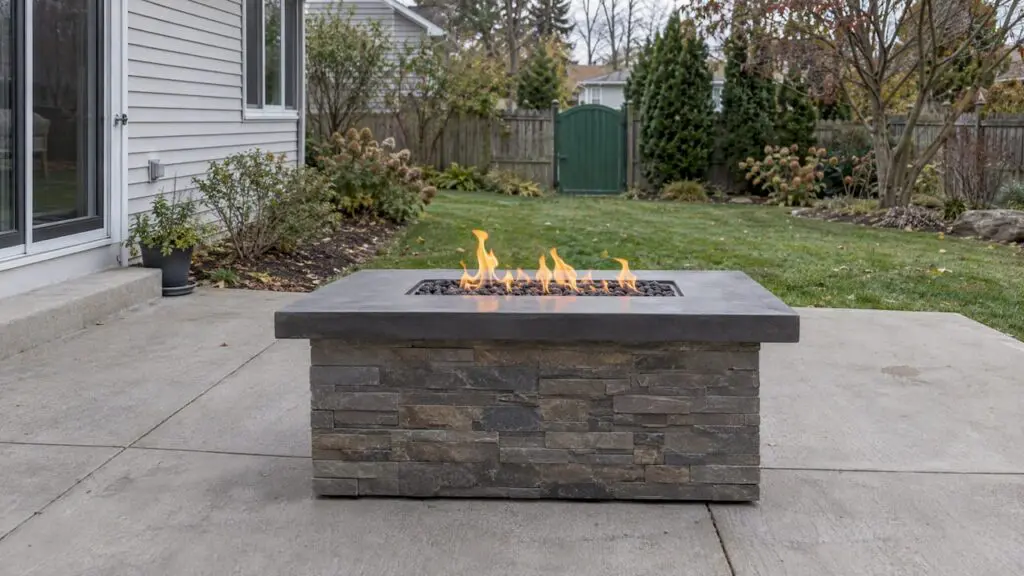
A gas fire pit is safe when it sits on a non-combustible surface, has clear space around and above it, burns only outdoors with open airflow, gets a leak and hose check before each use, and is never left burning unattended. Most problems come from placement and installation, not from the flame itself. If you are planning a fire pit in Morris or Somerset County, the choices you make before the first stone is set matter more than any rule you follow later.
Quick Answers
-
Keep any outdoor fire at least 10 feet from anything that can burn, and give the burner more room above and around it if the manufacturer asks for it.
-
Never run a gas fire pit in a screened-in porch, garage, gazebo or any enclosed space.
-
Check the fuel connection and hose for leaks and damage before every use, and shut the gas off when you finish.
-
Gas piping for outdoor appliances in New Jersey should be handled by a licensed professional, and your town may require a permit.
-
Build on a level, non-combustible base such as pavers, stone or concrete, and cover the unit when it is not in use.
How Far a Gas Fire Pit Should Sit From Your House
The most common rule of thumb is 10 feet. The National Fire Protection Association’s educational guidance suggests keeping fire pits at least 10 feet from anything that can burn, which includes your house, deck, fence, shed, hedges and low tree branches. NFPA also notes that embers from even small outdoor fires can ignite nearby structures, and that larger flames throw radiant heat farther, so a bigger fire needs more distance.
That 10 feet is guidance, not a universal legal number. The same NFPA source points out that jurisdictions enforcing NFPA 1 can require outdoor fires to be at least 50 feet from structures, and that an enforced code is law while recommendations do not necessarily carry that force. Your manufacturer’s installation manual and your local fire official set the numbers that actually apply to your yard.
Clearance Around and Above the Burner
Burner makers publish their own clearances to combustibles. One fire glass manufacturer, for example, recommends 36 inches on all sides and 96 inches above the burner. Treat that as an example of the scale involved, and read the figures in the manual for the exact unit you own, because they differ by model and fuel type.
The overhead number is the one homeowners overlook. Pergolas, covered patios, string lights, overhanging branches and the eaves of a second-story roofline all sit in the heat plume. Even where a pergola gives you the full overhead clearance, heat-sensitive materials such as vinyl can still warp or buckle, so clearance alone does not guarantee a material is safe. Choose cedar, stone or metal elements near the flame, and keep vinyl, fabric shades and plastic lighting out of the zone.
A Simple Placement Checklist
-
Measure from the edge of the burner, not from the center of the table or bowl.
-
Look up as well as sideways: branches, awnings, pergola slats and wiring.
-
Keep furniture, planters and cushions outside the clearance distance, not just near it.
-
Leave a clear path around the pit so guests are never squeezed against a wall or hedge.
-
Plan seating a comfortable arm’s length or more from the rim so no one leans over the flame.
The Right Base: Surface, Level and Drainage
The ground under a gas fire pit matters as much as the space around it. Build or set the unit on a level, non-combustible surface: concrete, natural stone or a properly built paver patio. Placing a pit on a wood deck, on bare turf or on a deck surface not rated for heat invites scorching, shifting and, in the worst case, a fire.
A paver base done correctly also solves problems you will not see at first. Compacted aggregate and good drainage keep the surface from settling, so the pit stays level and the gas line connection is not stressed by movement. Frost heave is a real factor in North Jersey winters, which is one reason our crews pay close attention to base depth and drainage on every paver patio installation. If you are weighing materials for the surface, our patio installation guide for New Jersey walks through the options.
Built-In Pits and Fire Tables
A built-in masonry fire pit can be designed around the burner, with the enclosure, the vent openings and the surrounding hardscape planned together. A freestanding fire table is easier to place, but it still needs the same clearances, a stable surface and room to breathe. In both cases the unit and the surround must be compatible: a burner designed for a specific enclosure should not be dropped into a box that blocks its airflow.
Ventilation: Why Open Air and Vent Openings Matter
Gas fire features need fresh air for clean combustion, and the enclosure beneath a burner needs to release heat and any gas that could collect. Ventilation helps prevent that heat and gas buildup. Enclosed fire pit bases normally include vent openings sized by the manufacturer. As one example of the scale, one manufacturer recommends at least 2 inches under the burner pan, but your burner’s manual is the document to follow.
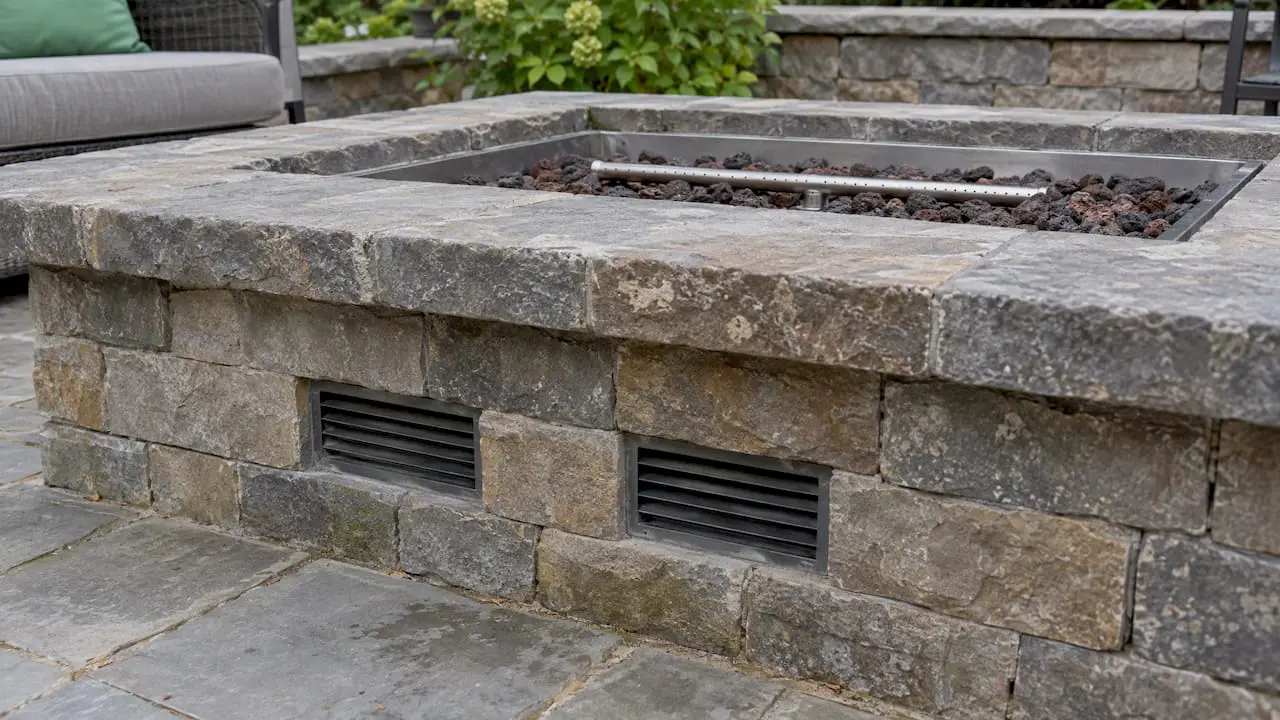
When we build a masonry surround, we plan these openings into the design before the stone goes up, because cutting vents into finished stonework later is harder and rarely looks as clean. If you are also building a grill or bar nearby, the same thinking applies, and our guide on outdoor kitchen ventilation covers how airflow shapes the layout.
What to Check in an Enclosure
-
Vent openings that are open and unobstructed, not blocked by planters, covers or stored items.
-
Space beneath the burner pan as the manual specifies.
-
A way to reach the shutoff valve without removing finished stonework.
-
No spiders’ nests, leaves or debris in the burner area at the start of the season.
Screened Porches, Gazebos and Covered Patios
This is one of the most common questions, and the answer is firm. Manufacturer instructions for outdoor gas fire tables state that the appliance is for outdoor use only in a well-ventilated space and must not be used inside a building, garage, screened-in porch, gazebo or other enclosed area. Screens and walls trap heat and combustion byproducts, which is exactly what outdoor-rated units are not designed to handle.
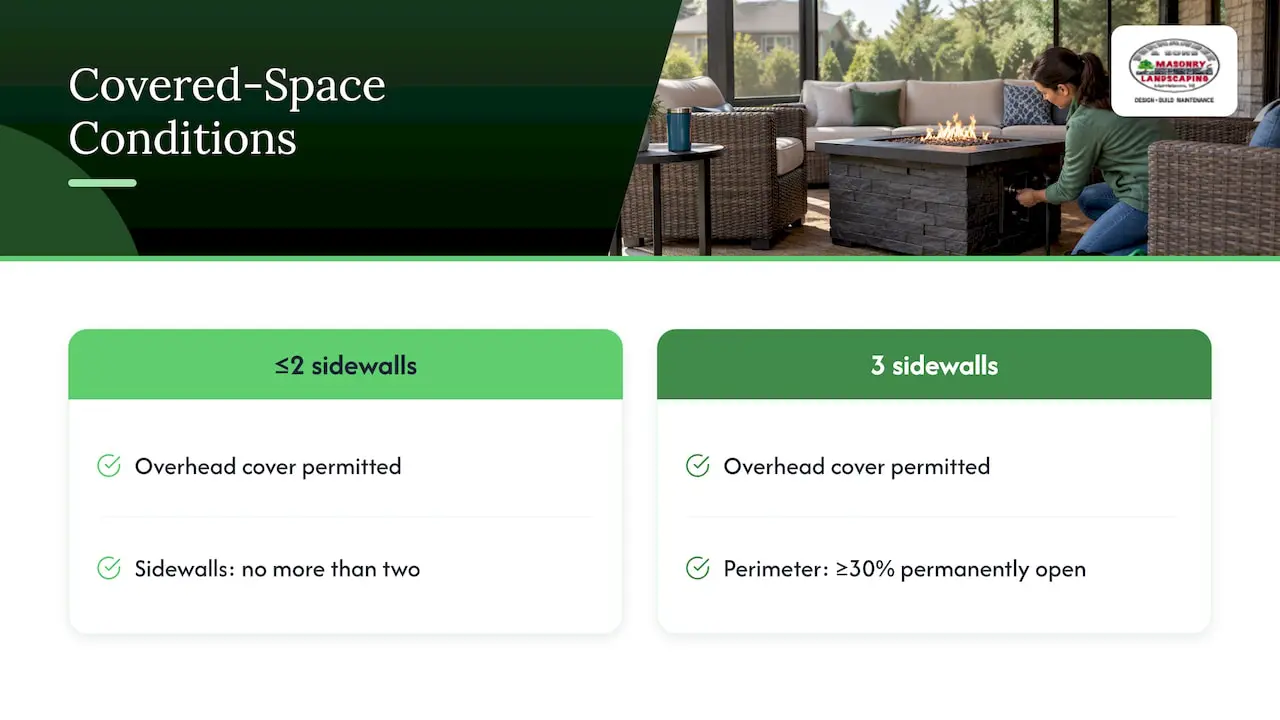
Covered spaces are a narrower question. In that same manual, the appliance may be used under an overhead cover only in a partial enclosure with no more than two sidewalls, or with three sidewalls if at least 30 percent of its horizontal perimeter is permanently open. Your own unit’s manual may differ, so confirm it before you design a roofed outdoor room around a fire feature. If you want a fire feature near a pavilion or covered seating, ask your contractor to confirm the unit’s rating and the clearance to the ceiling before layout is final.
Before You Light It: A Routine That Takes Two Minutes
A short habit prevents most gas-related incidents. The same manual instructs owners to inspect the fuel supply connection for leaks and the hose assembly for damage before each use. Follow the manufacturer’s method for leak testing, which typically involves a soapy water solution on the connections, and never use a flame to look for a leak.
Run through this each time:
-
Check that the area is clear of leaves, cushions, cords and anything within the clearance zone.
-
Inspect the hose and connections for cracks, wear or loose fittings.
-
Confirm the vents and burner area are free of debris.
-
Light the unit following the manual’s sequence, with your face and hands away from the burner.
-
If you smell gas, shut off the supply, stay clear and call your gas utility or 911 from a safe distance. Do not relight until the problem is fixed by a qualified technician.
While It Burns: Supervision, Kids and Pets
NFPA’s guidance is plain: closely supervise outdoor fires and make sure the fire is out before you leave the area. Gas flames look tame, which makes people careless, but the surfaces around them get very hot and the flame is still open fire.
For families, the same manufacturer manual says children and adults should be warned of high surface temperatures to prevent contact burns and accidental clothing ignition, and it recommends physical barriers such as safety gates to keep children away. A few habits help in practice:
-
Set a no-running rule around the pit and keep toys and balls away from it.
-
Avoid loose, flowing sleeves and scarves when reaching toward the burner.
-
Keep pets leashed or out of the seating area while the fire is on.
-
Keep a hose or other water source nearby and know where your shutoff is.
-
Do not use gasoline or other flammable liquids near the pit. NFPA warns against using gasoline or other flammable liquids on an outdoor fire.
-
Keep the wind in mind: on gusty days, skip the fire.
Leaving a Gas Fire Pit On Overnight
Don’t. Outdoor fires should be supervised and extinguished before you leave the area, and that includes going to bed. Turn the burner off, then close the gas supply valve. Closing the line means the pit cannot be ignited accidentally by a child, a pet or a malfunctioning control.
After the Fire: Shutdown, Covers and Winter Care
When you are done, turn off the burner control and the gas supply and let the surface cool before touching it or covering it. Putting a cover over a warm unit can melt or discolor the cover and trap heat.
A gas fire pit can stay outside through a New Jersey winter if it is built for it and protected. The manufacturer manual referenced above recommends covering the appliance to protect it from the elements when it is not in use, and says not to use it if any part has been under water. After a flood, heavy storm surge or a long period of standing water in the base, have a qualified technician check the controls and burner before you relight it. Before the season starts, clear debris, look for rodent or insect nests in the burner area and recheck the hose and connections.
Yearly attention to gas appliances in general is worth building into your routine, and a guide on annual gas fireplace inspections shows why a regular professional look at gas-burning equipment makes sense.
Codes, Permits and Licensed Installation in New Jersey
Safety is partly a matter of rules. NFPA advises homeowners to contact the local fire department or municipality and obtain proper permits, if required before starting an outdoor fire. In New Jersey, that conversation usually starts with your town’s construction and fire officials, and it is worth having before you design anything.
Two points deserve attention:
-
Gas piping. Proposed New Jersey regulations published in 2022 state that installation, improvement, repair or maintenance of gas piping for outdoor patio appliances and hearth products must be done by a licensed professional. Whatever the current status of those rules, running a gas line to a fire pit is not a weekend task, and a licensed professional should do it.
-
Permits. The state’s fire protection permit form lists fuel-fired appliances, including gas, oil and solid-fuel units, so gas-fueled outdoor features can fall under permit review depending on the project and the municipality.
Requirements differ from one town to the next, whether you live in Parsippany-Troy Hills, Morris Plains, East Hanover or Dover Township. We cover what you may burn, permit fees and when to call your local fire official, and how to check for temporary burn bans in our full guide to New Jersey fire pit regulations.
Choosing Equipment and a Build That Supports Safe Use
Safe use starts with the right product and a design that respects it. Look for these when you shop or plan a build:
-
A burner and control system listed for outdoor use, with a manual you keep.
-
Clearances that fit your yard, not just your wish list.
-
An enclosure design with ventilation built in from the start.
-
A shutoff valve you can reach easily.
-
A heat-resistant, level surround that suits the home’s style.
It also helps to look at how others have solved the same problems. Our gallery of fire pit projects and the wider set of outdoor living spaces show how stone, pavers and layout can work together around a fire feature.
Our Perspective: Design the Safety In
We build fire pits, fireplaces and outdoor living spaces across Morris and Somerset Counties, and the lesson we repeat on every site is that safe fire features are designed, not retrofitted. The clearance to the house, the overhead space, the vent openings and the access to the shutoff all have to be decided while the patio is still a drawing.
That is why we like to plan the fire pit as part of the whole outdoor space: base, seating, walkways, nearby plantings and any outdoor kitchen. When the masonry, hardscape and landscape are planned together, you avoid the common mistakes of placing a pit too close to a hedge, under a low branch or against a wall that cannot take the heat.
Our approach is to walk the property with you, explain what your town and the manufacturer require, and build a gathering area your family can use with confidence through every season. A fire pit should feel relaxing, and that comes from knowing it was built right.
Fernandez & Sons Masonry & Landscaping
Plan a Fire Pit Built Around Safety
If you want a fire pit, fireplace or full outdoor living area, our team handles the masonry, hardscaping and landscape design in one project, with free estimates and a satisfaction guarantee. We can help you choose the location, the base and the surround so the finished space looks good and works the way you need it to. Explore our masonry and landscaping services to see what we build.

If you are also thinking about seating areas, a grill island or walkways, we can design them together so the whole space flows. Start with our outdoor kitchen layout guide for ideas on how a fire feature fits into a larger entertaining area.
Frequently Asked Questions About Gas Fire Pit Safety
How Far Away From the House Should a Gas Fire Pit Be?
NFPA guidance suggests at least 10 feet from anything that can burn, including your house, fence and trees. Some jurisdictions that enforce NFPA 1 require outdoor fires to be farther from structures. Check your manufacturer’s manual and call your local fire official before you choose a spot.
Can You Leave a Gas Fire Pit Outside in Winter?
Yes, if it is built for outdoor use and protected. Manufacturer guidance recommends covering the unit when it is not in use and not using it if any part has been under water. Let it cool before covering it, and have a technician check it after any flooding.
Is It Safe to Use a Gas Fire Pit in a Screened-In Porch?
No. Outdoor gas fire tables are made for open, well-ventilated spaces and should not be used in a screened-in porch, garage, gazebo or other enclosed area. A covered patio may be acceptable only if your unit’s manual allows it and enough of the sides stay open.
Is It Safe to Leave a Gas Fire Pit On All Night?
No. Supervise the fire while it burns and make sure it is out before you leave the area. Turn off the burner and close the gas supply valve every time you finish.
Do I Need a Permit for a Gas Fire Pit in New Jersey?
It depends on your town and the project. Contact your local fire department or construction office before you build, and use a licensed professional for the gas piping. We can help you understand the steps for your Morris or Somerset County property.
Ready to build a fire pit that is as safe as it is inviting? Call Fernandez & Sons for a free estimate on your Morris County or Somerset County outdoor living project.