The best office park landscaping ideas in 2026 combine performance-first design, native-forward planting, and low-maintenance hardscape rather than chasing pure decoration. Prioritize strong entrance treatments, native and drought-tolerant beds, smart irrigation, and multifunctional hardscape that doubles as gathering space. A landscaping company with over a decade of experience in commercial landscapes across Morris and Somerset Counties finds that properties holding their value are designed to perform, not just photograph well.
Quick Answer to Office Park Landscaping Ideas
Native planting beds and drought-tolerant trees can significantly reduce water usage and maintenance costs over annual budgets.
Smart irrigation with soil moisture sensors can cut outdoor water use by 30 to 50 percent, especially when retrofitted zone by zone.
Proper hardscape installation with adequate sub-base and edge restraints extends pavement lifespan and improves stormwater management.
Site inspections before finalizing planting plans help maintain visibility, safety, and asset value through continuous monitoring of sightlines and plant health.
Incorporating performance-focused elements like native beds, stormwater features, and biophilic design supports long-term tenant retention and property value.
15 Office Park Landscaping Ideas Worth Prioritizing
Office park landscaping works best when every square foot earns its place through both appearance and operational payoff. The list below runs roughly from highest impact and lowest effort to more involved capital projects, so you can start where the return is fastest.
-
Strong entrance and signage planting. First impressions form in the first ten seconds a visitor spends in the parking lot, so layered beds around monument signage with a mix of structural shrubs and seasonal color pull real weight. Tip: keep sightlines to signage clear by capping shrub height at 24 inches near the sign face. Maintenance: medium.
-
Signature shade trees near building facades. A mature canopy tree on the south or west side of a building measurably lowers surface heat and cooling load. Plant on the sunniest exposures first and stake for the first two seasons. Maintenance: low once established.
-
Native planting beds. Regionally native perennials and grasses need less water, less fertilizer, and less pest control than exotic ornamentals. Group them by water need rather than by bloom color. Maintenance: low.
-
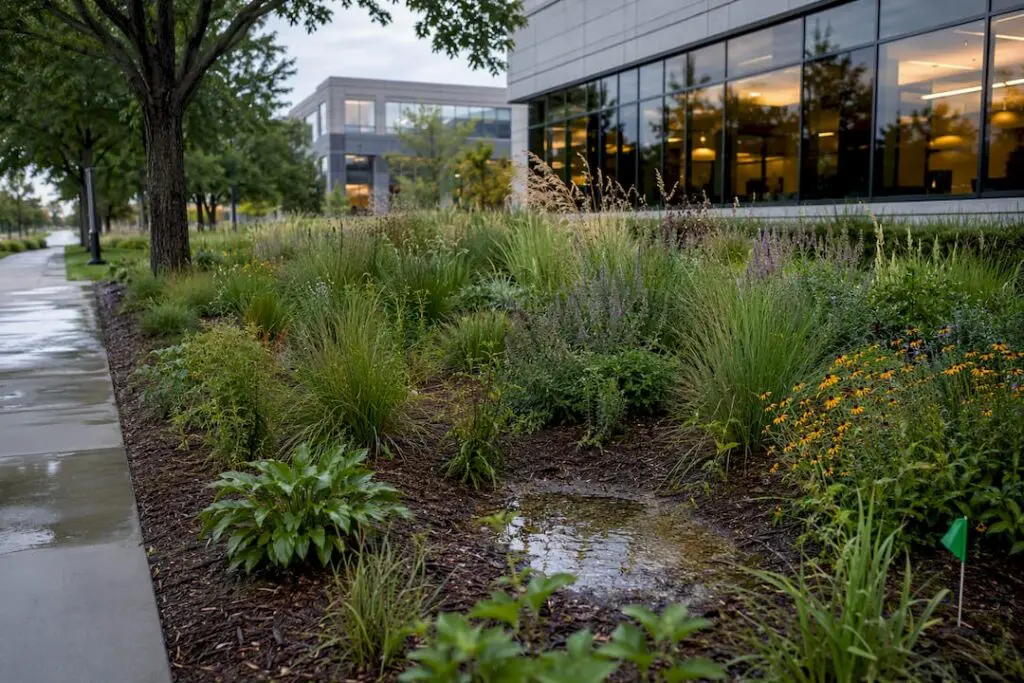
Bioswales and rain gardens. Shallow, planted channels that intercept runoff before it hits storm drains reduce erosion and can lower stormwater utility fees. Site them along parking lot low points and downspout discharge paths. Maintenance: medium.
-
Permeable paving. Permeable pavers or porous asphalt in overflow parking or walkways cut ponding and reduce the load on storm infrastructure. Best used where drainage complaints are frequent. Maintenance: low.
-
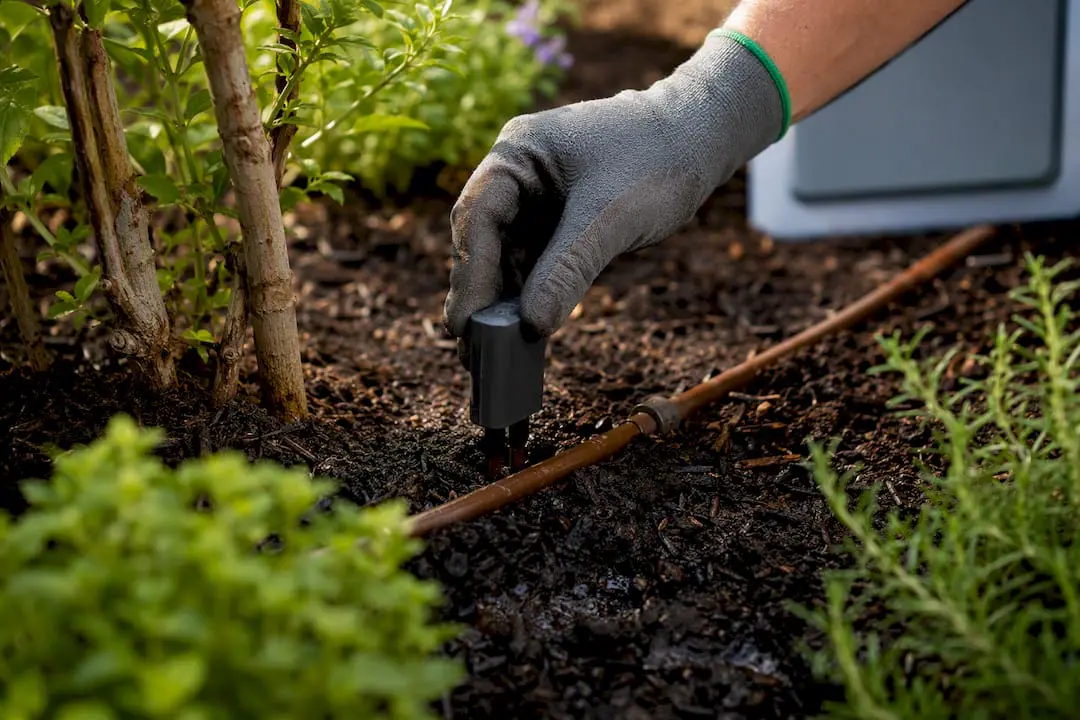
Smart irrigation and soil probes. Weather-integrated controllers paired with soil moisture sensors adjust watering automatically instead of running on a fixed timer. Maintenance: low after setup, since it reduces manual adjustment.
-
Layered shrub structure. Three height tiers, tall background shrubs, mid-height fillers, and low edging, give beds visual depth without complicated care routines. Maintenance: medium.
-
Parking-lot shade. Canopy trees spaced along parking rows reduce dashboard heat and asphalt degradation over time. Coordinate spacing with light poles and utility lines before planting. Maintenance: medium.
-
Walking loops and seating clusters. A quarter-mile loop connecting building entrances gives employees a lunchtime walk option and doubles as a wellness perk. Maintenance: low.
-
Low-maintenance groundcovers. Spreading perennials or ornamental grasses replace mulch beds that need constant refreshing. Maintenance: low.
-
Seasonal color strategy. Rotate annuals only at high-visibility entry points; let the rest of the property run on perennials and evergreens. Maintenance: medium at entries, low elsewhere.
-
Landscape lighting for safety and branding. Path lighting along walkways and uplighting on signature trees extends usable hours and improves security sightlines after dark. Maintenance: low.
-
Durable hardscape. Well-built plazas and paths in concrete pavers or natural stone hold up to daily foot traffic and snowplow operations far longer than poured asphalt patches. Maintenance: low.
-
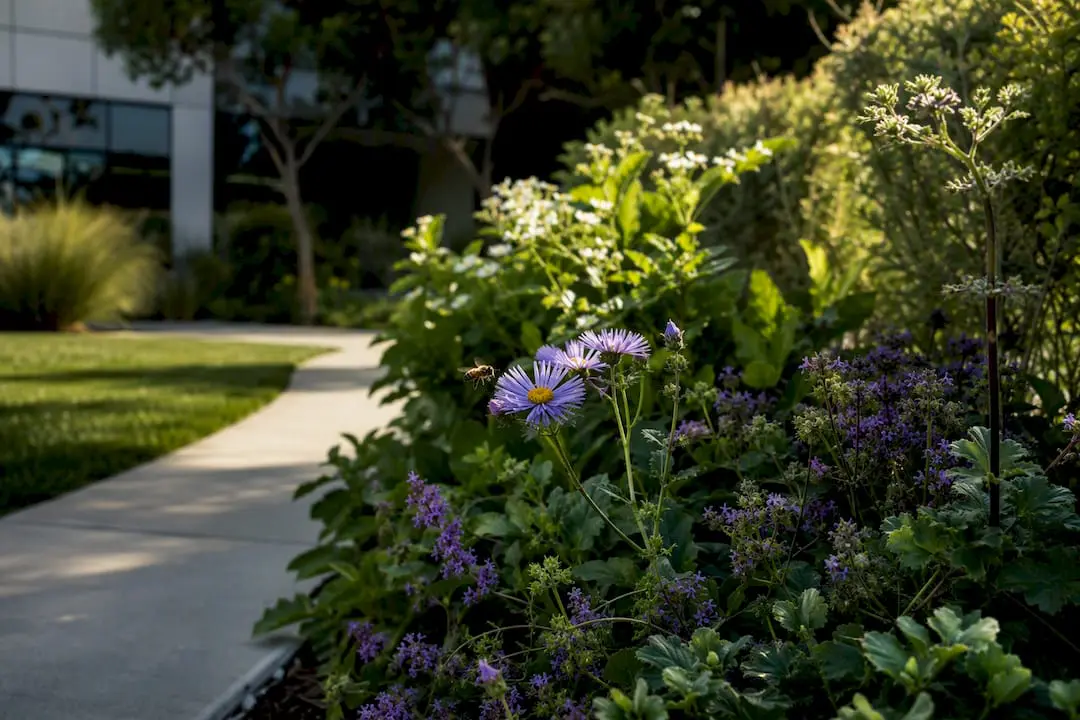
Pollinator pockets. Small clusters of native flowering perennials near courtyards support bees and butterflies without disrupting mowed lawn areas. Maintenance: low.
-
Subtle wayfinding through planting. Directional hedge rows or tree lines guide visitors from parking to entrances without needing extra signage. Maintenance: medium.
Design Rules That Keep an Office Park Looking Intentional
Good commercial landscaping follows a handful of rules that separate a designed property from a randomly planted one.
-
The rule of three: group plants in odd numbers, typically three or five, at entry beds and courtyard corners. Odd groupings read as natural rather than mechanical, and they hide the gaps that appear as one or two plants mature unevenly.
-
Mature size and spacing: always plan for the plant’s size at year five, not at installation. Crowded beds mean constant pruning bills and shrubs that outgrow their space within two seasons.
-
Sightlines and circulation: balance screening (hiding a dumpster enclosure or utility box) against visibility (keeping sightlines open at driveway intersections and building entrances). Planting that blocks a driver’s view of pedestrians is a liability, not a design choice.
Pro Tip: Walk the property at three different times of day (morning, midday, and dusk) before finalizing a planting plan. Shadows, glare, and foot traffic patterns shift more than most designs account for.
On a walk-through, check for plants encroaching on walkways, dead or declining specimens near entrances, and any bed where sightlines to signage or crosswalks have closed in since the last inspection. Field surveys have tied functional landscaping like screening and shade near buildings and parking to measurable rental-rate differences, so these checks aren’t cosmetic housekeeping. They protect asset value.
Native Planting and Smart Irrigation That Actually Save Money
Native and drought-tolerant plants adapted to your regional climate need less supplemental water once established, and grouping plants by water need (hydrozoning) lets you irrigate efficiently instead of watering an entire bed to satisfy its thirstiest plant. Turf reduction is often the biggest opportunity: replacing high-water lawn panels with native beds or low-maintenance groundcover cuts mowing labor and can lower cooling costs when paired with added shade trees.
Retrofitting irrigation zone by zone, rather than replacing the whole system at once, spreads the cost and lets you validate results before committing further budget. Smart, weather-integrated controllers and soil moisture sensors reduce outdoor water use by roughly 30 to 50 percent compared with conventional timer systems, a range confirmed by separate industry reporting on 20 to 50 percent savings depending on property and climate.
-
Start with the zones on the highest water bills or the most visible beds.
-
Install a soil moisture sensor per zone before adjusting controller schedules.
-
Track water meter readings monthly for the first year to confirm savings.
-
Expect newly installed native beds to need close monitoring for 12 to 18 months before they’re fully drought-tolerant.
Hardscape and Circulation That Hold Up Over Time
Entry plazas and gathering hardscape need proper sub-base preparation and edge restraint, or they heave and crack within a few winters. Tree pits near paved areas benefit from structural soil or suspended pavement systems, which protect roots while keeping pavement stable, avoiding the heave-and-repair cycle common with unprotected tree pits. Light-colored concrete or permeable pavers help where heat buildup or drainage complaints are recurring issues, and they read as more modern than standard asphalt.
Request these items when reviewing a hardscape proposal:
-
Confirmed sub-base depth and compaction specs for the soil type on site.
-
Edge restraint details at all paver or unit-paving joints.
-
ADA-compliant slope and clearance measurements on all primary walkways.
-
Root protection method specified for any tree pit within 10 feet of pavement.
Managing Stormwater Without Fighting Nature
Bioswales and rain gardens work best sited at natural low points, along curb cuts, or directly downstream from downspouts and parking lot drains, where they can intercept water before it concentrates. They need periodic inspection, not constant attention: clear debris from inlets after major storms, check for standing water beyond 24 to 48 hours (a sign of clogged infiltration), and remove sediment buildup once or twice a year.
-
Site swales along the lowest-elevation path runoff naturally follows.
-
Inspect inlets after storms exceeding one inch of rainfall.
-
Track infiltration time as your simple pass/fail success metric.
-
Budget for annual sediment and debris removal rather than reactive fixes.
Properties that manage runoff on-site often see reduced stormwater utility fees and fewer emergency drainage repairs, which makes these features a budget item worth defending during capital planning, not just an environmental gesture.
Outdoor Amenities That Tenants Actually Use
Modular amenities give tenants a reason to step outside without adding a heavy maintenance line. Shaded seating pockets near building entrances, movable furniture that staff can reconfigure for a lunch meeting, walking loops connecting parking to entrances, and small outdoor meeting niches with Wi-Fi access all see steady use with minimal upkeep.
-
Choose furniture-adjacent plants without thorns, heavy leaf drop, or sticky sap that stains fabric or pavement.
-
Position seating clusters where they get afternoon shade, not full afternoon sun.
-
Rotate seasonal planters at amenity areas twice a year for low-cost visual refresh.
-
Consider a pop-up event or vendor day once a quarter to activate underused courtyard space.
Pro Tip: Survey tenants informally before adding amenities. A seating area installed where nobody actually walks becomes an expensive, empty photo op rather than a used space.
Plant Palettes That Match 2026 Design Trends
An evergreen backbone (boxwood-type shrubs, upright junipers, or holly varieties) anchors a bed through winter, while seasonal accents carry the color story. The 2026 palette leans toward earth tones and muted florals rather than bright primary colors: think dusty blues, soft golds, and burgundy foliage layered against silver-blue evergreen tones.
-
Use shade-tolerant evergreens as the structural base near building shadows.
-
Add silver-blue or variegated foliage perennials for texture without relying on bloom.
-
Choose drought-tolerant flowering perennials for accent color that survives irregular watering.
-
Rotate seasonal color at entry beds only, twice a year, to limit labor while keeping high-visibility zones fresh.
This approach reflects the broader shift toward performance-based landscaping that prioritizes measurable outcomes over pure aesthetics, where the palette still looks intentional but doesn’t demand constant replanting.
Building a Maintenance Plan That Proves Its Own Value
Proactive maintenance, scheduled pruning, irrigation checks, and seasonal bed cleanup, consistently costs less over a property’s life than reactive repairs made after a plant dies or a drain clogs. Professional maintenance programs with phased improvements tend to lower lifetime landscaping costs compared with reactive-only approaches.
-
Weekly: mowing, litter removal, and irrigation spot checks during growing season.
-
Monthly: pruning, bed weeding, and controller schedule adjustments by season.
-
Seasonally: mulch refresh, fertilization, seasonal color rotation, and irrigation winterization.
-
Annually: full site audit comparing photo records year over year, and water meter comparison against prior seasons.
Photo audits, water meter logs, and dated service records give you the paper trail to justify capital requests to ownership. They also make it far easier to spot which landscape maintenance service tasks are actually preventing bigger repairs down the line.
Making the Landscaping Reflect Your Corporate Identity
Landscaping is one of the few touchpoints that communicates brand identity before a visitor ever reaches the lobby. Color palettes drawn from a company’s brand guidelines, planted at entry beds and courtyards, quietly reinforce identity without a single sign. A tech campus might lean toward clean geometric hedge lines and modern grasses; a professional services park might favor traditional layered plantings with a more formal structure.
Materials matter here too. Consistent paver colors, coordinated planter styles, and matching bench or bollard finishes across multiple buildings in a park create a cohesive campus feel rather than a patchwork of whatever each tenant installed independently. Where a property spans several buildings under one ownership, standardizing hardscape materials and plant palettes across all of them makes the entire site read as a single, well-managed asset instead of a collection of separately maintained lots.
Signature specimen trees or a distinctive entry feature, a fountain, a stone monument sign, a sculptural planting bed, give a property a memorable identity that tenants reference when giving directions or describing the address to clients. That kind of recognition has real value during lease renewals, since tenants who feel their building projects a polished, professional image are less likely to shop competitors during renewal negotiations.
Keep branding integration subtle. Landscaping that tries too hard to mimic a logo or corporate color scheme can read as gimmicky. The goal is a consistent, high-quality feel that reinforces the brand without shouting it.
Designing Landscapes That Work for Everyone
Accessible landscape design starts with circulation. Primary walkways need ADA-compliant slopes, adequate width for wheelchairs and mobility devices to pass comfortably, and firm, stable surfaces, meaning no loose gravel or uneven paver joints on main routes. Curb cuts at every crossing point and clear, unobstructed sightlines at intersections protect pedestrians using mobility aids as much as anyone else.
Seating areas need at least some options without armrests and with adequate clearance for wheelchairs to pull alongside rather than only facing a bench from the front. Shade matters more for accessibility than most designers assume, since heat sensitivity affects people with certain medical conditions disproportionately, making shaded rest points along longer walking loops a genuine inclusion feature rather than a comfort extra.
Signage and wayfinding should use high-contrast lettering and tactile elements where budgets allow, and planting should never obscure directional signs or building numbers that visitors with low vision rely on. Fragrance-heavy plantings near entrances can also cause problems for people with certain sensitivities, so concentrate strongly scented species away from doorways and ventilation intakes.
Inclusive design isn’t a separate checklist bolted onto a finished plan. It’s most effective when accessibility requirements shape the layout from the first sketch, because retrofitting a beautiful but inaccessible path is far more expensive than designing it correctly the first time.
Landscaping as a Well-Being Investment
Biophilic design, incorporating natural elements into built environments, has moved from a wellness buzzword into a practical retention tool for office parks competing for tenants in a hybrid-work market. Employees who have access to greenery, natural light, and outdoor space during the workday report better mood and lower stress, and property managers increasingly hear this cited directly in leasing conversations.
Practical biophilic elements for an office park include sightlines from ground-floor windows into planted courtyards rather than parking lots, walking loops that let employees take a working call outdoors, and small pocket gardens positioned near break rooms or cafeterias where staff naturally congregate. Water features, even modest ones, add ambient sound that masks traffic noise and creates a calmer outdoor space for phone calls or informal meetings.
Seasonal variety matters here too. A landscape that changes noticeably through the year, spring bulbs, summer perennials, fall foliage color, winter evergreen structure, gives employees something to notice and look forward to, which sounds minor until you consider how flat and static a purely evergreen, low-variety landscape feels by month eight of working there. Tenants renewing leases increasingly ask property managers directly about outdoor amenities during renewal conversations, treating them as a workplace perk on par with parking availability or building security.
Where Technology Fits Into a Modern Office Park
Irrigation technology is the most mature and highest-value technology integration for most office parks right now. Weather-integrated controllers and soil sensors, covered earlier, represent proven, low-risk technology adoption with a measurable water-savings return.
Beyond irrigation, a growing number of commercial properties are adding app-controlled landscape lighting that lets facilities staff adjust path lighting schedules remotely or trigger security lighting scenarios without a truck roll. Some properties are experimenting with interactive elements in courtyards, charging stations built into seating, small digital directories at entry plazas, though these additions work best when they solve a real tenant request rather than existing purely as a novelty.
Digital operations behind the scenes matter more than visible gadgets. Photo audits, geofenced crew check-ins, and irrigation telemetry let a maintenance provider document exactly when a crew serviced a property and what condition it was in, which reduces disputed service calls and gives property managers hard data instead of a verbal report. That kind of documentation is quickly becoming a differentiator when property managers evaluate which landscaping partner to hire, since it replaces guesswork with a paper trail.
Resist the urge to add technology for its own sake. A smart irrigation retrofit with a clear water-savings number will do more for your budget and your credibility with ownership than a flashy but underused interactive feature.
Sustainability as the New Baseline, Not an Add-On
Pollinator pockets, small native flowering plant clusters tucked into courtyards or low-traffic bed edges, support bee and butterfly populations without requiring any change to how the rest of the property is mowed or maintained. They’re one of the lowest-cost sustainability additions available and photograph well for tenant newsletters or sustainability reporting.
Turf reduction remains the single highest-leverage sustainability move for most office parks, since traditional lawn areas demand the most water, fuel for mowing, and fertilizer of any landscape element. Converting non-functional turf panels, strips too narrow to use for recreation, slopes too steep to mow safely, to native beds or groundcover cuts input costs while improving the property’s environmental profile in ways ownership can point to in reporting.
Carbon footprint reduction in landscaping comes less from a single dramatic gesture and more from compounding small choices: fewer gas-powered mowing hours, reduced fertilizer runoff from native plantings that need less feeding, and shade trees that lower building cooling loads in summer. None of these show up as a single line item, but together they shift a property’s operating profile measurably over five to ten years.
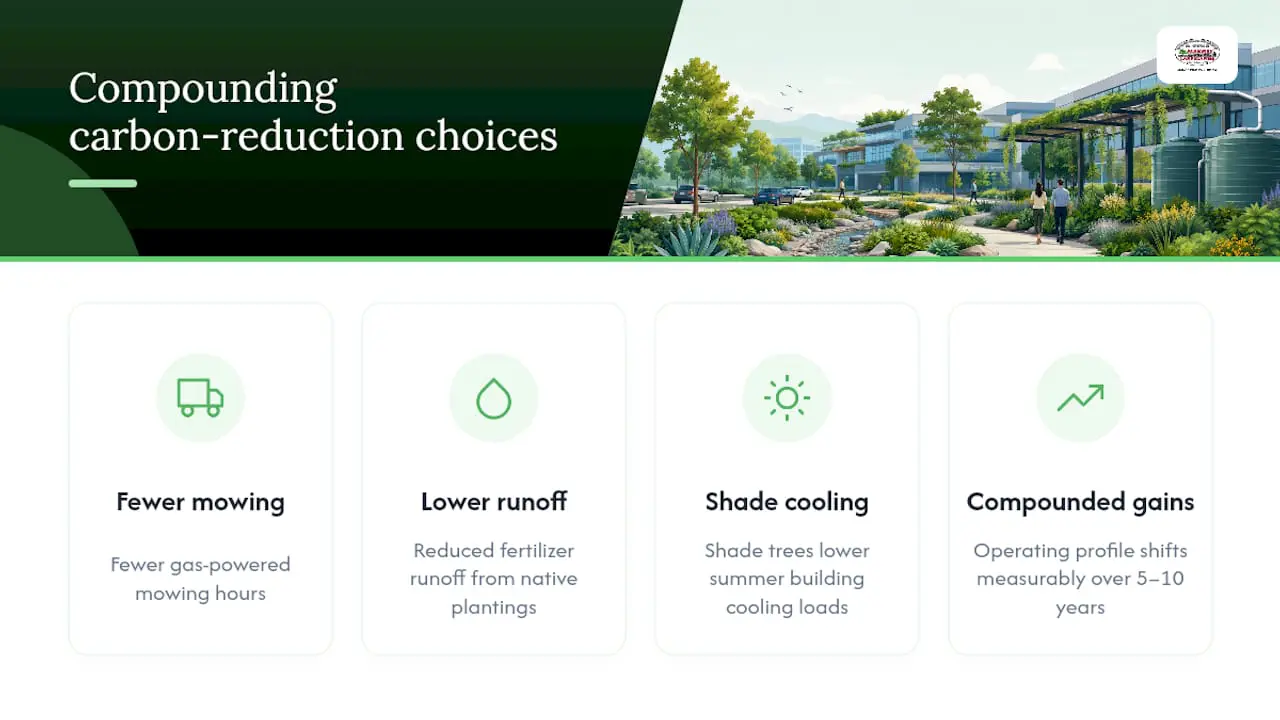
Performance-based landscaping treats these outcomes, water savings, resilience, tenant experience, as the actual design brief rather than treating sustainability as a separate initiative layered on top of a conventional plan. Properties designed this way from the start tend to need far less retrofitting later.
What Property Managers Get Wrong About Commercial Landscaping
Most office park landscaping decisions still get made on appearance alone, with performance treated as an afterthought if it gets discussed at all. Fernandez & Sons’ commercial work across Morris and Somerset Counties consistently runs into the same constraint: site staging. Parking lots stay operational during install, so phased work, one section or one row at a time, is often the only realistic path.
Irrigation retrofits follow the same logic. Staging zone by zone lets a property keep watering during construction while validating savings before committing to the next phase. Seasonal windows narrow the calendar further; fall planting for trees, spring for perennials, means good jobs get scheduled well ahead, not decided the week budgets get approved. Recent landscaping projects reflect exactly this phased approach across commercial sites.
— BG
How Fernandez & Sons Approaches Commercial Landscaping Projects
A landscaping company provides office parks with a streamlined approach to manage irrigation, hardscape, and planting without needing multiple vendors, using a consistent skilled crew from design through installation to ongoing seasonal maintenance.
Whether you’re planning a phased native-bed conversion, a smart irrigation retrofit, or a full entry plaza rebuild, the process starts with a free estimate and a site walk-through to map priorities against budget. Fernandez & Sons handles landscaping and design services for commercial properties across Morris and Somerset Counties, backed by a satisfaction guarantee on completed work, and also covers seasonal snow removal so your property has one point of contact year round instead of a rotating list of subcontractors. If an office park needs a landscaping plan that aims to improve water savings and tenant retention. It is recommended to request a free estimate and schedule a site evaluation.
FAQ
What is the rule of three in landscaping?
The rule of three groups plants in odd numbers, usually three or five, because odd-numbered clusters read as more natural than even pairs and hide gaps that appear as plants mature at different rates.
Can ChatGPT create a landscape design?
AI tools can generate rough plant lists or mood-board style layouts, but they can’t assess your site’s drainage, sun exposure, soil, or mature plant spacing, which is why professional site evaluation still matters for anything beyond initial inspiration.
What are the landscape design trends for 2026?
The dominant trend is performance over pure aesthetics: smart irrigation, native and drought-tolerant plantings, stormwater management, and climate-resilient design choices that produce measurable water savings and lower long-term maintenance costs.
What are the six rules of landscape design?
Landscape designers commonly reference principles like unity, balance, proportion, focalization, rhythm, and simplicity, though different sources phrase and group these principles somewhat differently.
How often should office park landscaping be maintained?
Most commercial properties need weekly attention during the growing season for mowing and irrigation checks, monthly pruning and bed maintenance, and seasonal tasks like mulching and irrigation winterization, a cadence that a landscape maintenance program typically builds around your property’s specific plant mix.