
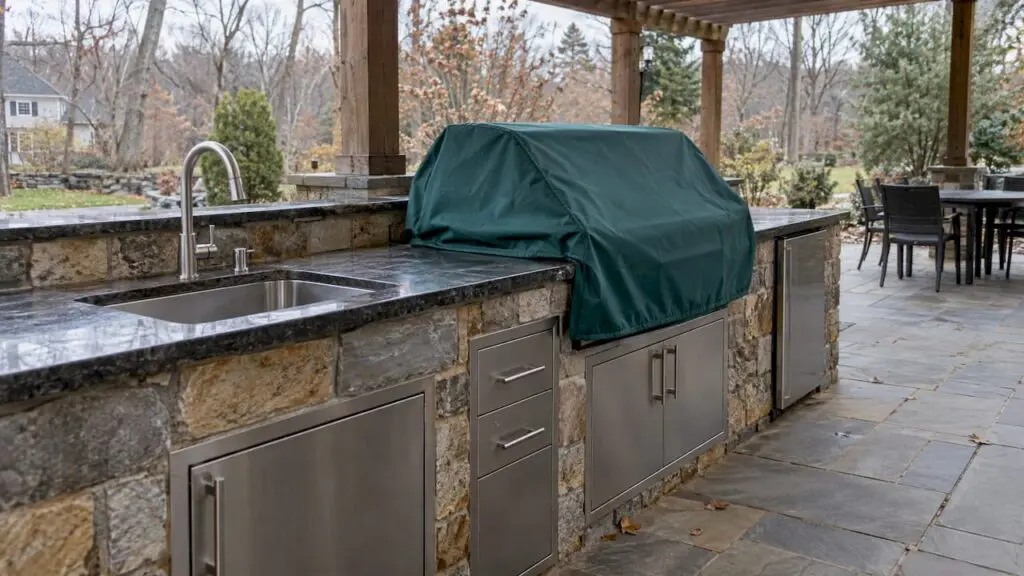
To winterize an outdoor kitchen in New Jersey, finish before the first hard freeze. Shut off the water, gas and power. Drain every water line, the sink, the refrigerator and the ice maker. Clean and dry the appliances, then cover them with breathable, vented covers. In Morris and Somerset Counties, that usually means working through October and November, before nights settle below freezing.
This guide walks through each step in order, explains what to leave uncovered, and shows how to protect the stone, masonry and plantings around your gathering space. That way the kitchen is ready for the first warm weekend of spring.
Quick Answers: Winterize Outdoor Kitchen
-
When: Before the first hard freeze. In northern New Jersey, plan the work for October through early December, and go earlier if you are in the Morris County hills.
-
What comes first: Water. Close the shut-off valve, open the faucets and drain valves, and let every line empty.
-
Compressed air: Use it only where the manufacturer of every component on the line allows it. Otherwise follow the manufacturer’s drain procedure or call a plumber.
-
Antifreeze: Use only RV (propylene glycol) antifreeze in a sink trap, never automotive antifreeze.
-
Covers: Breathable and fitted. Do not cover the refrigerator or ice maker.
-
Surrounding landscape: Mulch, clear leaves, and choose hardy, low-maintenance shrubs that handle winter wind.
When To Winterize An Outdoor Kitchen In New Jersey
The rule is simple: do it before the freeze, not after it. One outdoor-kitchen supplier recommends winterizing before the first hard freeze. Waiting until it is already below freezing raises the chance that water has frozen in the lines. Condensation can also start forming inside covered appliances.
For most Morris County homeowners, the practical window runs from mid-October to mid-November. A New Jersey winter-prep timeline suggests spreading the work across October to December, and moving earlier in northern New Jersey. It also treats October as the month to inspect hardscapes, start mulching and service grills and appliances. Inland towns see deeper cold and more snow than the shore, so Parsippany, Morris Plains, East Hanover and Dover should not wait for a December cold snap.
If you have an ice maker, move sooner. One manufacturer says to winterize ice makers before outdoor temperatures drop below 45°F.
It is November 7 as you read this. If you have not started, this weekend is a good time.

Step 1: Shut Off Water, Gas And Electricity
Shut things off in this order so nothing is running while you drain.
-
Water. Close the indoor shut-off valve that feeds the outdoor kitchen. Many outdoor kitchens are fed from the main house, so the valve is often in a basement or utility space.
-
Gas. Turn off the supply at the shutoff valve for any grill, side burner or fireplace feed.
-
Electricity. Switch off the circuits at the panel. Appliance care guidance also points to isolating power for non-refrigerator appliances at the GFCI.
Winterizing guidance generally says to shut off gas, electricity and water, then drain the lines to the refrigerator, ice maker and sink, and to leave drain valves open all winter.
Gas lines and electrical circuits are not casual DIY territory. If you are unsure how your kitchen was plumbed or wired, ask the licensed plumber, gas fitter or electrician who installed it to do the shutdown.
Step 2: Drain The Sink And Water Lines
Water expands when it freezes, and water left in plumbing causes the most damaging winter failures, according to one winterizing checklist. A cracked fitting inside a masonry island is also hard to reach, so prevention matters.
A manufacturer’s winterization instructions describe the process like this:
-
Close the shut-off valves.
-
Open the hot and cold drain valves.
-
Open the hot and cold taps fully.
-
If the manufacturer allows it, blow compressed air or CO2 through the drain valves to push remaining water out through the faucet.
The compressed-air step needs care. Air should be used only where every manufacturer on the line permits it, because improper blowouts can break fittings and valves. When in doubt, follow each manufacturer’s drain procedure or hire a plumber.
Sink Traps And Antifreeze
If you want protection in the sink trap, use only RV antifreeze made with propylene glycol. Never use automotive antifreeze. Do not leave any liquid sitting in a sink, refrigerator or ice maker that you have not drained.
Hose Bibs And Outdoor Faucets
A nearby hose bib shares the same freeze risk. Disconnect hoses, close the interior shut-off and open the outdoor spigot so it can drain. Wrapping a towel around a faucet is not a substitute for draining the line.

Step 3: Winterize The Refrigerator And Ice Maker
Appliances with water connections need their own steps. The manufacturer guidance for ice makers calls for:
-
Turning off power.
-
Shutting off the water supply.
-
Opening the drain valve.
-
Blowing out the internal water circuit.
For an outdoor refrigerator, drain its supply line, empty and clean the interior, and prop the door slightly so air can circulate. Always check your own appliance manual first, since procedures differ by brand. Some homeowners simply move a portable outdoor refrigerator into the garage or basement for the season.
Step 4: Clean And Cover The Right Way
Covers protect against snow, leaves and grime, but a poor cover does more harm than none. Cabinet makers warn that moisture trapped under a cover can do as much damage as exposure.
Follow these rules:
-
Clean and dry first. Cover only after surfaces are clean and dry. Grease and food residue invite pests and corrosion.
-
Choose breathable, fitted covers. Guidance on weatherproofing says to use breathable, weather-resistant covers that fit properly, and warns that tight plastic can raise corrosion and mold risk.
-
Keep vents open. Covers must not block ventilation openings. If you are still planning your build, our guide to outdoor kitchen ventilation explains why airflow matters year-round.
-
Cover basins, skip refrigerators. One retailer says to cover sinks and basins to keep debris out, but not refrigerators or ice makers, because trapped moisture can cause electrical damage.
-
Empty the cabinets. Remove food, paper goods and anything that attracts rodents or holds moisture.
Step 5: Protect Stone, Pavers And Masonry
Plumbing is only half of winterizing. New Jersey’s freeze-thaw cycles work on stone countertops, veneer, mortar joints and the patio under your feet. Water gets into small cracks, freezes, expands and widens them.
Before the freeze:
-
Sweep and rinse the patio, steps and countertops so no debris holds moisture.
-
Walk the joints. Look for hairline cracks in mortar, loose veneer pieces and pavers that have shifted. Small repairs now prevent bigger ones in spring.
-
Check sealer. Cabinet makers advise using stone sealers to help protect against stains and other damage. For paver patios, see our paver sealing guide.
-
Read the seasonal routine. Our exterior stone maintenance guide and winter patio maintenance weekend tasks cover what to do and when.
One caution for snow season: ask whoever plows or shovels your driveway to keep rock salt and plow blades off the patio and walkways.
Don’t Forget Lighting, Heaters And Irrigation
The New Jersey winter-prep plan mentioned earlier says to assess site risks first, then decide which irrigation, lighting and heater systems need attention. A quick pass:
-
Unplug and store portable heaters, string lights and speakers.
-
Have the irrigation system drained before freezing temperatures arrive.
-
Leave permanent low-voltage fixtures in place if they are rated for outdoor use. If you are designing a new setup, our outdoor kitchen lighting guide covers fixture choices.
-
Bring cushions and umbrellas indoors.
Low-Maintenance Shrubs And Landscaping Around Your Outdoor Kitchen
An outdoor kitchen sits in a landscape that also needs winter planning. Low-maintenance planting means less cleanup next spring and a better view from the kitchen window all winter.
Shrubs That Hold Up To Cold
Two examples from university plant references:
-
Little Gem arborvitae is described as a low-maintenance evergreen that holds deep green color through cold winters, though it does not tolerate dry, exposed, windy sites.
-
Oakland holly provides red-orange berries for winter interest and does best with protection from cold northern winds.
Both notes point to the same lesson: site placement matters as much as plant choice. Keep exposed corners and windy edges in mind when deciding where evergreens go.
A Simple Low-Maintenance Plan For New Jersey Yards
A New Jersey borough’s low-maintenance landscaping guide recommends matching plants to soil and sunlight, reducing lawn size and applying mulch annually. It also suggests watering only when needed, about an inch a week.
Native plants are another route. A Barnegat Bay Partnership guide says natives can require less water and fertilizer and are less likely to need pesticides. Its roots also help hold soil in place and increase rainwater infiltration.
For a kitchen area, that means:
-
Mulch beds in fall, keeping mulch off stone and off the base of shrubs.
-
Cut back perennials after the first frost so leaves do not pile against cabinetry.
-
Keep plantings clear of vents and appliance panels.
-
Group hardy evergreens as a backdrop and wind buffer.
Our landscape design and maintenance services in Morris County are built around exactly this kind of year-round upkeep.
Winterizing Checklist At A Glance
| Task | When | Who usually handles it |
|---|---|---|
| Shut off water, gas and power | Before first hard freeze | You, or a licensed plumber, gas fitter or electrician |
| Drain sink, lines, hose bibs | Before first hard freeze | You or a plumber |
| Winterize ice maker and refrigerator | Before temperatures fall below 45°F | You, following the manual |
| Clean and cover with breathable covers | After surfaces are dry | You |
| Inspect stone, mortar and pavers | October to November | You, with a masonry contractor for repairs |
| Mulch and tidy beds | October to November | You or a landscape maintenance crew |
| Arrange snow removal | Before first snowfall | Property owner or plowing contractor |
Our Perspective: Build It So Winter Is Easier
We build and repair outdoor kitchens, patios, retaining walls, fire pits and stone veneer across Morris and Somerset Counties, so we see what winter does to them. Most winter problems start with water: water in a line, water in a joint, water trapped under a cover.
That is why we think winterizing begins at the design stage. A kitchen planned with good drainage, proper airflow and a stable base is simpler to close up each fall. Our outdoor kitchen layout guide and cost and permit guide for New Jersey cover those choices.
Materials matter too. The cladding materials around your frame take every freeze-thaw cycle.
For us, the goal is a space your family can use for gatherings in three seasons and look forward to reopening in the fourth.
Fernandez & Sons Masonry & Landscaping
Get Your Outdoor Space Ready For Winter With Fernandez & Sons
We handle the parts of winter prep that involve stone, concrete and landscaping. That includes masonry repair for cracked joints and loose veneer, and seasonal landscape maintenance. We also offer residential and commercial snow plowing. If you want a new or rebuilt kitchen ready for next season, we design and build outdoor kitchens, patios, pool decks and fire features.

We offer free estimates and a satisfaction guarantee. See everything we do on our Fernandez & Sons home page, or browse our outdoor living projects for ideas. Homeowners and property managers in Parsippany-Troy Hills, Morris Plains, East Hanover and Dover Township can request an estimate before the ground freezes.
Frequently Asked Questions About Winterizing An Outdoor Kitchen
Do I Have To Winterize My Outdoor Kitchen In New Jersey?
If your kitchen has water lines, a sink, an ice maker or a refrigerator connection, yes. Freezing temperatures are routine in Morris County, and water left in plumbing can crack pipes and fittings. A kitchen with no water feed still benefits from cleaning, covering and a stone check.
Can I Use Compressed Air To Blow Out The Lines?
Only if every manufacturer on the line allows it. Improper blowouts can break fittings and valves. If the manuals do not clearly permit it, follow each manufacturer’s drain procedure or ask a licensed plumber to do it.
Should I Cover My Outdoor Kitchen All Winter?
Yes, but with breathable, fitted covers and open vents, applied only to clean, dry surfaces. Skip the refrigerator and ice maker, and avoid sealed plastic. Trapped moisture can cause corrosion, mold and electrical damage.
What Is Easiest To Care For Around An Outdoor Kitchen?
Hardy evergreens, mulched beds and a smaller lawn keep upkeep low. Choose plants for your soil and sun, and shelter them from harsh winter wind. For a plan fitted to your yard, Fernandez & Sons designs and maintains landscapes across Morris and Somerset Counties, so call us for a free estimate before the first freeze.