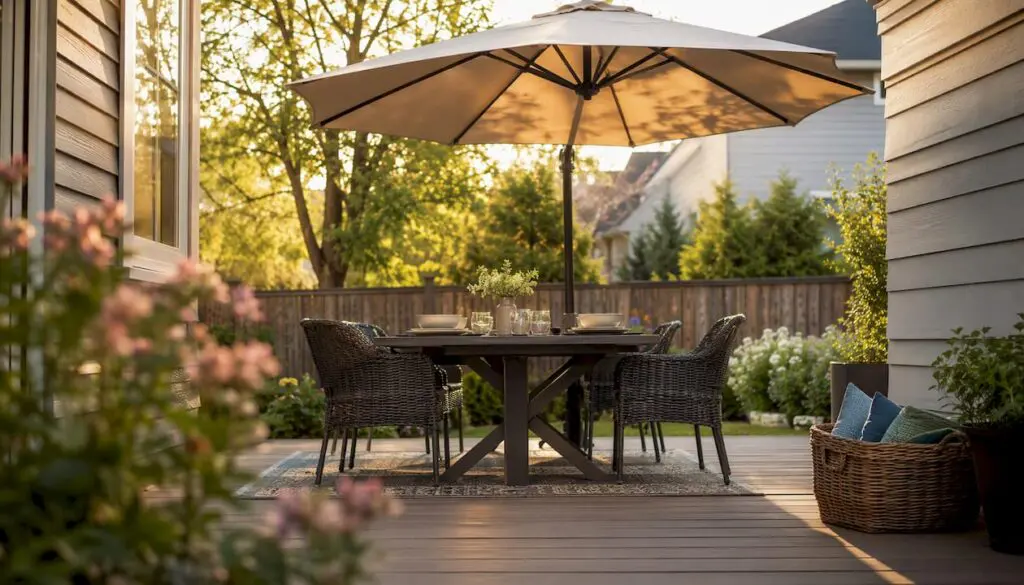
For most homeowners who want fast, comfortable relief, a high-quality patio umbrella or shade sail is the quickest, lowest-cost fix you can put in place this weekend. For longer-term comfort and added property value, a pergola with climbing vines or a well-placed native shade tree pays dividends for decades. Lowe’s rounds up eight popular backyard shade ideas — from gazebos and awnings to pop-up canopies and outdoor curtains — and this guide walks through every one of them with costs, materials, and honest tradeoffs. Homeowners in Morris and Somerset Counties, NJ, can also call on Fernandez & Sons for professional hardscaping, pergola builds, and planting integration.
Before you buy or build anything, run through this 10-minute checklist:
-
Measure the area you want to shade (length × width in feet)
-
Note which direction the afternoon sun hits (usually south or west)
-
Check for overhead utilities or tree branches that limit height
-
Decide: temporary, semi-permanent, or permanent?
-
Set a rough budget range before browsing products
Takeaways to View
The fastest, most cost-effective shade yard solutions for most homeowners are a quality patio umbrella or shade sail for immediate relief, with a pergola or native shade tree as the right long-term investment.
| Point | Details |
|---|---|
| Start with temporary shade | A patio umbrella or shade sail provides same-day relief for $30–$600 with no permits required. |
| Native trees cut cooling costs | A well-placed mature shade tree can reduce AC needs by an estimated 20%–50% for the shaded portion of a home. |
| Pair shade with light hardscape | Combining overhead shade with reflective hardscaping lowers surface temperatures by roughly 15–20°F. |
| Permits matter for structures | Most NJ municipalities require a permit for structures over 100–200 sq ft; check before breaking ground. |
| Fernandez & Sons for permanent installs | Fernandez & Sons handles engineered footings, patios, planting, and full outdoor living design across Morris and Somerset Counties, NJ. |
Table of Contents
-
1. Budget-friendly shade yard solutions you can install today
-
2. Semi-permanent structures that balance style and durability
-
4. Fabric and material guide: what to look for before you buy
-
7. Maintenance, wind safety, and keeping your shade solution lasting longer
1. Budget-friendly shade yard solutions you can install today
Temporary options are the fastest way to add shade to a yard, and several of them cost under $100. The tradeoff is that most need seasonal storage and won’t survive a serious storm without proper anchoring.
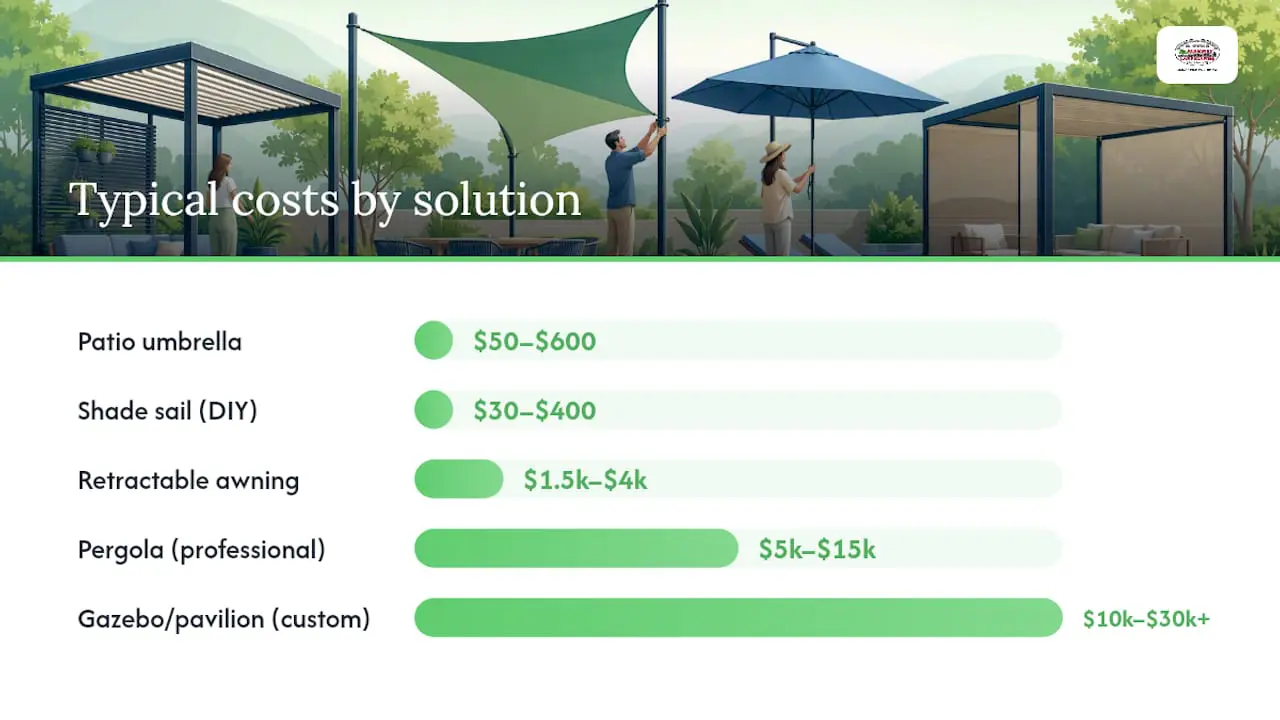
Patio umbrella: The most familiar option. A 9-foot market umbrella runs $50–$150 at entry level; a commercial-grade cantilever umbrella with a weighted base costs $300–$600. Best for dining tables and poolside seating. Look for a UPF 50+ fabric rating for meaningful UV protection.
Shade sail: A tensioned triangular or rectangular panel anchored to posts, walls, or trees. Entry-level polyethylene sails start around $30–$80; higher-quality HDPE sails with stainless hardware run $150–$400. They cover larger areas than an umbrella and suit play areas and open patios well. Houzz highlights shade sails as one of nine stylish solutions for patios and small garden areas, particularly where a fixed structure isn’t possible.
Pop-up canopy: A folding steel or aluminum frame with a fabric top. Typical cost is $60–$200. Great for temporary events, kids’ play zones, or renters who can’t make permanent modifications. Lifespan is roughly 2–5 seasons depending on storage habits.
Outdoor curtains: Fabric panels hung from a pergola, fence, or tension wire. They add privacy as well as partial shade. Weatherproof polyester panels cost $25–$80 per panel. They work best as a supplement to overhead shade, not a standalone solution.
Quick-install checklist:
-
Use ground anchors or a weighted base rated for your umbrella or canopy size
-
Tension shade sails tightly at all three or four corners — slack fabric flaps and tears in wind
-
Store fabric items indoors or in a weatherproof bin from November through March in NJ
-
Check hardware connections at the start of each season
Pro Tip: For shade sails, the anchor points carry the entire load. Use steel eye bolts rated for at least twice the sail’s stated tension, and angle each anchor point away from the sail’s center to keep the fabric taut and water-shedding.
2. Semi-permanent structures that balance style and durability
Pergolas, gazebos, and retractable awnings sit between a weekend purchase and a full construction project. They require more planning than a shade sail but far less commitment than a permanent structure.
Pergola: An open-beam overhead frame, typically wood or aluminum, that defines a space without fully enclosing it. DIY kits start around $1,500–$3,000; professionally installed cedar or pressure-treated wood pergolas run $5,000–$15,000 depending on size and complexity. Aluminum pergolas with louvered roofs start higher, around $8,000–$20,000 installed. Pergolas pair naturally with climbing vines like wisteria or Virginia creeper for added shade over time.
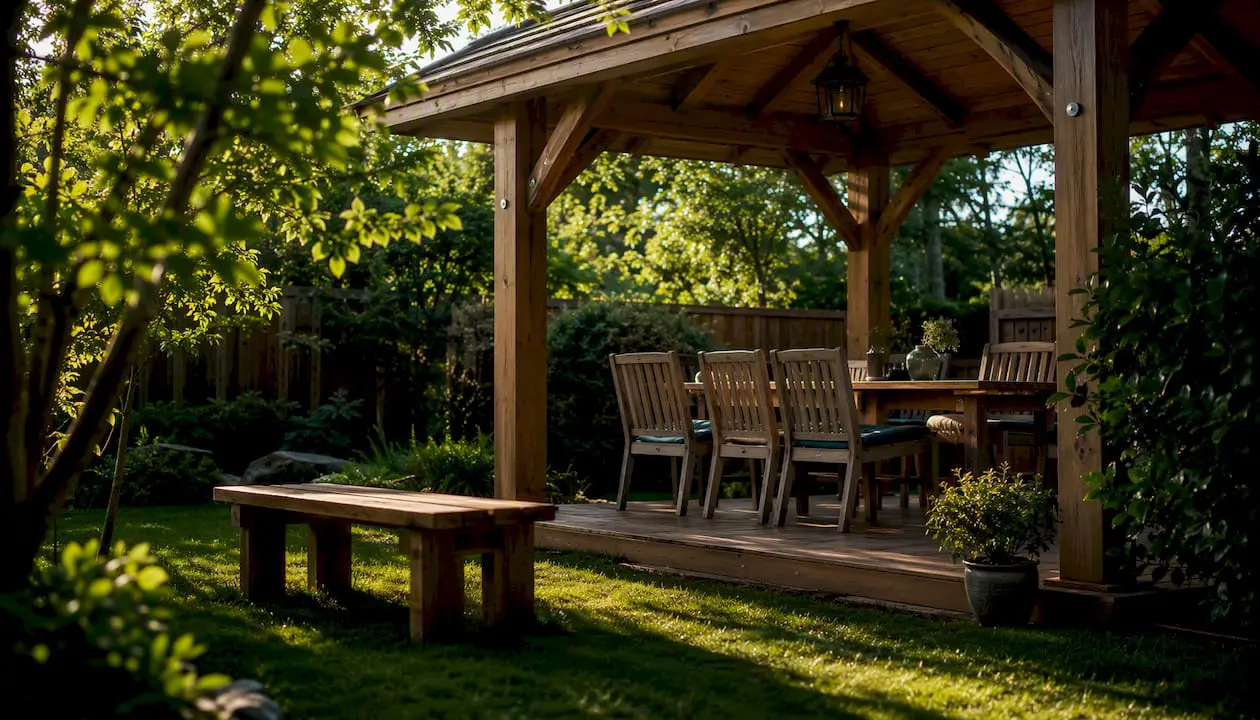
Gazebo/pavilion: A fully roofed, freestanding structure. Pre-fabricated steel or aluminum gazebos cost $500–$2,500 for DIY assembly; custom-built wood pavilions run $10,000–$30,000 or more. They offer the most weather protection of any semi-permanent option and work well as a dedicated outdoor dining or gathering space.
Retractable awning: Mounted to the house wall above a door or window, a retractable awning extends over a patio or deck on demand. Motorized units with acrylic fabric cost $1,500–$4,000 installed. They’re a strong choice for compact yards where a freestanding structure would crowd the space, and Houzz specifically recommends retractable awnings for small patios where a pergola would feel oversized.
Fixed awning: A stationary fabric or metal canopy attached to the house. Less expensive than retractable at $500–$1,500 installed, but it shades the space even on cool days and can trap heat against the wall in summer.
Installation checklist for semi-permanent structures:
-
Check local zoning: many municipalities require a permit for structures over 200 sq ft or attached to the house
-
Confirm footing depth requirements — in NJ, frost depth is typically 36–42 inches
-
Locate underground utilities before any digging (call 811)
-
Allow 4–8 weeks for custom materials and contractor scheduling
-
For pergolas and gazebos in northern NJ, engineered footings are strongly recommended given seasonal snow loads and wind exposure
Pro Tip: DIY shade-sail and pergola kits can save 50–70% versus professional installation on simple projects, according to Shade Space. But improper tensioning or under-sized footings are the leading causes of early failure — and they can void the manufacturer’s warranty.
3. How plants create lasting shade in your yard
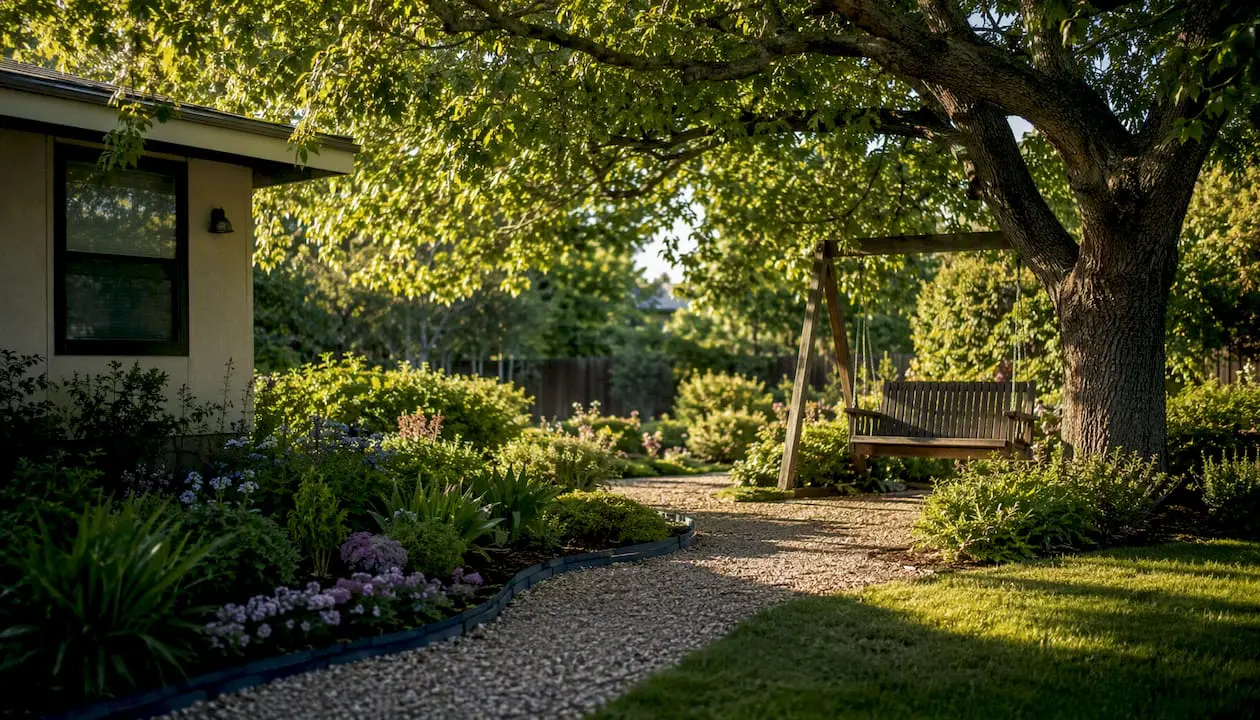
Living shade takes longer to establish than any structure, but it pays back in cooling, privacy, and landscape value that no fabric or aluminum frame can match. A properly placed mature shade tree can reduce air conditioning needs by an estimated 20% to 50% for the shaded portion of a home.
Deciduous vs. evergreen: choosing the right type
Deciduous trees drop their leaves in fall, which means they shade the house in summer and let warming winter sun through — exactly what most homeowners want for energy savings. Evergreens provide year-round privacy screening but block winter sun, which can increase heating costs on north and west exposures.
For NJ yards, strong deciduous choices include:
-
Red maple (Acer rubrum): Fast-growing, native, tolerates wet soils, reaches 40–60 ft at maturity
-
Tulip poplar (Liriodendron tulipifera): One of the fastest-growing native trees, 60–90 ft, excellent canopy spread
-
Northern red oak (Quercus rubra): Slower to establish but extremely long-lived; 60–75 ft at maturity
-
Serviceberry (Amelanchier spp.): A smaller native option (15–25 ft) suited to tight yards and near-house planting
Vines on a pergola or trellis offer faster coverage. Virginia creeper, climbing hydrangea, and native wisteria (Wisteria frutescens) all establish within 2–3 seasons and can cover a 10 × 12 ft pergola roof with dense foliage.
Siting and planting guidance
SummerWinds Nursery recommends combining structures and plantings — for example, hanging planters from a pergola while positioning trees to extend shade beyond the structure’s edge. For energy savings, place deciduous canopy trees on the west and southwest sides of the house, where afternoon sun is most intense. Maintain at least 10–15 ft of clearance from the foundation for small trees, and 40 ft or more for large-canopy species to avoid root and utility conflicts.
Fall is generally the best planting window in NJ, when cooler temperatures and steady rainfall support root establishment before winter. Spring, after the last frost, is a reliable second option.
When to call an arborist or contractor:
-
Planting trees over 3-inch caliper (trunk diameter)
-
Sites near overhead power lines or within 20 ft of the foundation
-
Grading or drainage work needed before planting
-
Removing existing trees to make room for new plantings
4. Fabric and material guide: what to look for before you buy
The fabric and frame material you choose determines how long your shade solution lasts, how much maintenance it needs, and how it looks alongside your house and hardscape.
Shade fabrics
HDPE (high-density polyethylene): The most common material for shade sails and commercial shade structures. It’s knitted rather than woven, which makes it breathable and allows some airflow underneath. Professional-grade HDPE shade fabric can last up to about 12 years with proper installation and maintenance.
PVC (polyvinyl chloride): A coated, non-breathable fabric used in fixed awnings and heavy-duty canopies. It’s waterproof and easy to clean, but it traps heat underneath more than HDPE does. Better suited to rain protection than hot-climate shade.
Solution-dyed acrylic (e.g., Sunbrella): The premium choice for retractable awnings and outdoor curtains. Colorfast, mold-resistant, and rated for 5–10 years of outdoor exposure. More expensive than HDPE but significantly better-looking over time.
Structural materials
-
Pressure-treated pine: Affordable and widely available; requires staining every 2–3 years to prevent rot and checking
-
Cedar: Naturally rot-resistant, lighter than pressure-treated pine, and more attractive; costs roughly 20–30% more
-
Aluminum (powder-coated): Rust-proof, low-maintenance, and lighter than wood; the best choice for coastal or high-humidity yards
-
Powder-coated steel: Strong and affordable but heavier; needs periodic inspection for rust at cut edges and fastener points
Pairing overhead shade with light-colored or reflective hardscaping amplifies the cooling effect. Integrating shade with appropriate hardscape materials can lower surface temperatures by roughly 15–20°F compared to unshaded, heat-absorbent surfaces. A light-colored concrete patio or natural stone deck under a pergola stays noticeably cooler than dark asphalt or unshaded brick.
5. How to choose the right solution for your yard
The best backyard shade idea for your property depends on four variables: how you use the space, how much sun and wind it gets, how permanent you want the solution to be, and what your budget allows.
Site checklist — do this before anything else:
-
Mark the shaded and sunny zones at 10 AM, 1 PM, and 4 PM on a clear day
-
Measure the area you want to cover (most shade sails and pergolas are sized in 10 × 10 or 12 × 12 ft increments)
-
Note wind direction and speed — exposed corners and hilltop yards need heavier anchoring and more durable materials
-
Check for drainage: water should flow away from any footing or post base
-
Confirm property lines if a structure will be near a fence or neighbor’s yard
Questions to answer before buying or building:
-
Will you use this space for dining, lounging, play, or all three?
-
Do you want shade only in summer, or year-round privacy too?
-
Is this a rental property where permanent modifications aren’t allowed?
-
What’s your total budget, including installation and any permit fees?
-
How much annual maintenance are you willing to do?
Design considerations: Match the structure’s material and color to your house’s exterior. A cedar pergola suits a craftsman or colonial home; powder-coated aluminum reads more contemporary. If you’re planning a patio installation alongside a shade structure, coordinate the hardscape material and color palette at the same time — it’s far easier to get right before concrete is poured than after.
Step-by-step planning process:
-
Complete the site checklist above
-
Choose your permanence level (temporary, semi-permanent, or permanent)
-
Set a firm budget range, including a 10–15% contingency for permits or site prep
-
Get at least two contractor quotes for any structure requiring footings
-
Pull permits before any ground is broken
-
Order materials or schedule installation with a 4–8 week lead time for custom work
6. Ballpark costs, lead times, and expected lifespan
Budgeting for shade is straightforward once you know which category you’re in. The ranges below reflect typical U.S. retail and contractor pricing; NJ labor costs tend to run at the higher end of national ranges.
| Solution | Typical Cost Range | Lead Time | Expected Lifespan |
|---|---|---|---|
| Patio umbrella | $50–$600 | Same day (in stock) | 3–7 years |
| Shade sail (DIY) | $30–$400 | 1–3 days shipping | 5–10 years |
| Pop-up canopy | $60–$200 | Same day (in stock) | 2–5 seasons |
| Outdoor curtains | $25–$80/panel | 1–5 days | 3–6 years |
| Retractable awning (installed) | $1,500–$4,000 | 2–4 weeks | 10–15 years |
| Pergola (professional install) | $5,000–$15,000 | 4–8 weeks | 15–25+ years |
| Gazebo/pavilion (custom) | $10,000–$30,000+ | 6–12 weeks | 20–30+ years |
| Native shade tree (planted) | $200/tree | 1–2 weeks | Decades |
Custom fabric orders for professional shade sails typically add 3–6 weeks to the timeline. Permit windows in NJ municipalities vary from 2 weeks to 6 weeks depending on the township, so factor that into any project starting after May.
7. Maintenance, wind safety, and keeping your shade solution lasting longer
A shade structure that isn’t maintained will fail faster than one that is — and in NJ, where nor’easters and summer thunderstorms are routine, anchoring and seasonal prep matter as much as the initial install.
Seasonal maintenance checklist:
-
Spring: Inspect all hardware for rust or loosening; re-tension shade sails; clean fabric with mild soap and water; check post bases for heaving or settling after frost
-
Summer: After any storm above 30 mph, check anchor points and re-tension as needed; spot-clean fabric stains promptly
-
Fall: Deep-clean fabric before storage; apply a UV protectant spray to acrylic and HDPE panels; tighten all bolts and fasteners
-
Winter: Remove and store all temporary shade items (umbrellas, sails, canopies) before the first hard freeze; cover fixed awnings with a breathable fabric cover
Wind safety:
-
Most residential shade sails are rated for winds up to 25–35 mph; remove them when sustained winds exceed that range
-
Pergolas and gazebos in northern NJ should be engineered for snow loads of at least 25–30 psf (pounds per square foot) and wind loads per local building code
-
Never anchor a shade sail to a fence post alone — fences aren’t designed for lateral tension loads
Permits and code: Most NJ municipalities require a zoning permit for any structure over 100–200 sq ft or attached to the house. Check with your local building department before starting work; fines for unpermitted structures can exceed the cost of the permit itself.
Pro Tip: The single best way to extend fabric life is to keep it taut. A slack shade sail pools water, stretches unevenly, and develops mold along the folds. Re-tension at the start of each season and after any major storm.
For ongoing seasonal care of your planted shade and outdoor structures, Fernandez & Sons’s seasonal landscape maintenance guidance covers the full NJ calendar.
8. When to hire a contractor for shade projects
Some shade projects are genuinely DIY-friendly. Others carry enough structural, electrical, or code complexity that a professional isn’t just convenient — it’s the safer and often cheaper long-term choice.
Hire a contractor when:
-
The structure requires concrete footings (pergolas, pavilions, large gazebos)
-
You’re attaching a structure to the house’s structural framing
-
The project includes integrated lighting, ceiling fans, or gas lines
-
The site needs grading, drainage work, or retaining walls before installation
-
You’re in a municipality with strict permit requirements or HOA review
-
You’re planting large-caliper trees near utilities or the foundation
-
The project is in a flood zone or on a sloped lot
For NJ homeowners specifically, engineered footings are worth the added cost. Northern NJ’s frost depth and wind exposure mean that a DIY kit without proper footings can shift, lean, or fail within a few seasons.
What a professional scope looks like:
-
Site survey and sun/wind assessment
-
Engineered footing design and permit application
-
Certified installation crew with liability insurance
-
Material sourcing and lead-time management
-
Post-installation warranty and maintenance guidance
Fernandez & Sons provides exactly this kind of end-to-end service for shade-related projects across Morris and Somerset Counties:
-
Masonry footings and hardscape foundations for pergolas and pavilions
-
Custom patio and deck construction that integrates with overhead shade structures
-
Planting and landscape design, including native shade trees and vine integration
-
Retaining walls and grading for sloped sites
-
Outdoor living space design that coordinates shade, seating, fire features, and hardscape into a single cohesive plan
-
Free estimates and a satisfaction guarantee on all work
What a contractor actually notices that most guides skip
Most shade guides focus on what to buy. What they underestimate is how much the site itself determines whether a solution works or fails within two seasons.
The two factors that matter most aren’t the fabric brand or the pergola style — they’re anchoring and drainage. A shade sail anchored to an undersized post will pull the post out of the ground in the first serious storm. A pergola footing that sits in poorly drained soil will heave after the first hard freeze, throwing the whole frame out of square. These aren’t rare edge cases; they’re the most common reasons shade structures fail prematurely in NJ yards.
The second thing most guides skip is the relationship between shade and hardscape. Shade alone cools the air above you, but the surface you’re sitting on radiates heat back up for hours after the sun moves. Pairing a pergola with a light-colored stone or concrete patio makes a measurable difference in comfort — not just aesthetically, but physically. That combination is where the real outdoor living upgrade happens.
Fernandez & Sons brings your shade vision to life in NJ
Ready to move from planning to a finished outdoor space? Fernandez & Sons delivers the masonry foundations, hardscaping, and landscape integration that turn a shade idea into a durable, code-compliant reality across Morris and Somerset Counties.
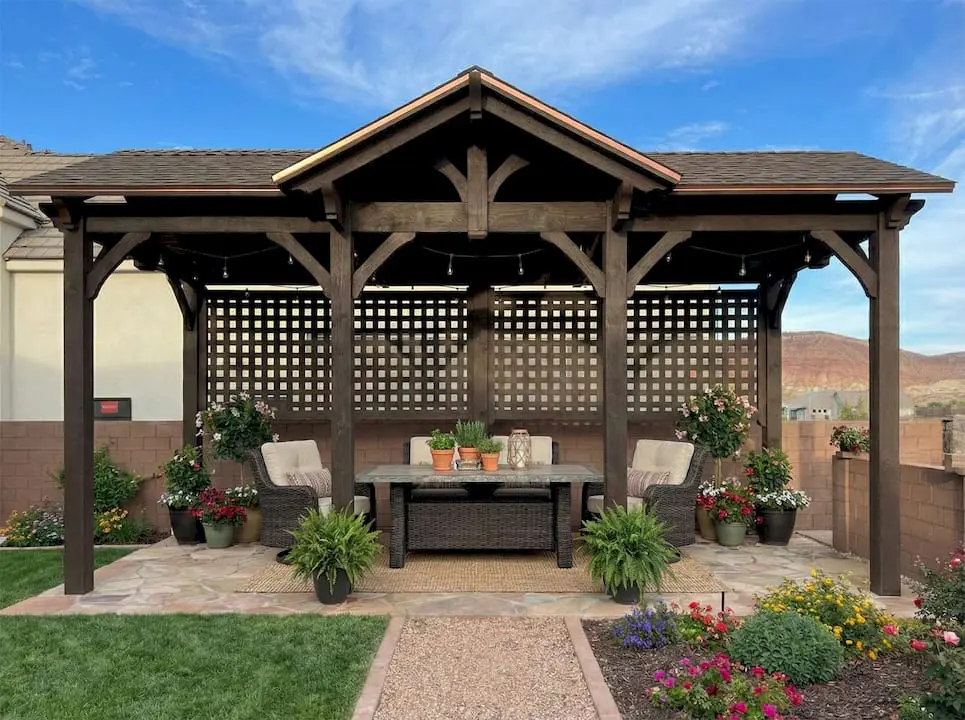
The team handles the full scope: engineered footings for pergolas and pavilions, custom patio surfaces that pair with overhead shade, native tree and vine planting, and complete outdoor living space design that ties shade, seating, and hardscape into one cohesive plan. Every project starts with a free estimate and is backed by a satisfaction guarantee. Contact Fernandez & Sons today to schedule your consultation and get a no-obligation quote for your shade project.
Supporting Resources
The following references were used throughout this guide and are worth bookmarking for deeper research:
-
9 Stylish Shade Solutions for Patios and Small Garden Areas – Houzz
-
Benefits of Native Shade Trees for New Jersey Homes – Cultivating Flora