
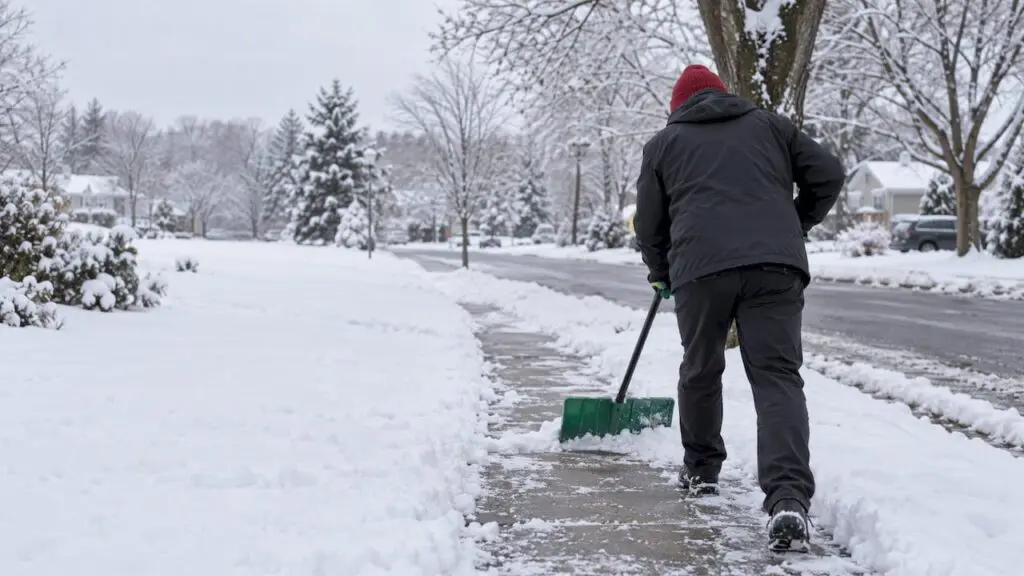
In New Jersey, drivers must clear snow and ice from their vehicles before driving, property owners must follow their town’s sidewalk ordinance, and parking lot operators must clear accessible spaces, curb cuts, and ramps within 24 hours after a storm ends, often using specialized services like drone building & facade cleaning in New Jersey to maintain property exteriors efficiently. Beyond those state rules, sidewalk deadlines and fines vary by municipality, so checking your local code matters.
TL;DR:
- Drivers must clear snow and ice from all exposed vehicle surfaces, including the roof, before driving, with fines increasing significantly if dislodged snow causes injury or damage.
- Municipalities set sidewalk shoveling deadlines typically between 12 and 24 hours after snowfall ends, with enforcement including fines, liens, or contractor-installed clearing.
- Accessible parking spaces, curb cuts, and ramps must be cleared within 24 hours after a storm under state law, with substantial fines for violations.
- The ongoing storm rule generally exempts commercial property owners from clearing snow during active precipitation unless pre-existing hazards or owner actions justify intervention.
- Proper documentation and early clearing are key to compliance and defending against fines or liability claims during snow removal.
Table of Contents
- Driver responsibilities under New Jersey’s vehicle snow law
- Sidewalk rules differ by town, and so do the penalties
- The state’s 24-hour rule for accessible parking and curb cuts
- The ongoing storm rule and what New Jersey courts actually look at
- What happens after a violation or an injury
- A practical compliance checklist for storms this winter
- How local contractors help property owners stay on the right side of the law
- Compliant snow removal for Morris and Somerset County properties
- Sources
- FAQ
Driver responsibilities under New Jersey’s vehicle snow law
N.J.S.A. 39:4-77.1 requires drivers to remove accumulated snow and ice from the exposed surfaces of a vehicle, including the roof, hood, trunk, windows, and any truck cab or intermodal container, before getting on the road. The idea behind it is straightforward: a sheet of ice flying off a car roof at highway speed is a hazard for everyone nearby.
- Standard fines typically range from a moderate amount for a first violation.
- If dislodged snow or ice causes injury or property damage, non-commercial drivers may face significantly higher fines.
- Commercial vehicle operators and owners may face steep fines for the same violation.
New Jersey’s “Ice and Snow, Remove It Before You Go” campaign urges drivers to clear every exposed surface, not just the windshield, before pulling out of the driveway, and outlines the fines that apply statewide. A scraper and a soft brush handle most passenger cars in a few minutes. Trucks, trailers, and vehicles with cargo boxes need more time, since snow can hide on surfaces drivers rarely look at. Police typically enforce this law during routine stops or after a complaint, and a state grant program now helps commercial fleets install equipment specifically for clearing snow and ice from larger vehicles.
Sidewalk rules differ by town, and so do the penalties
New Jersey has no single statewide deadline for shoveling a sidewalk. Instead, each municipality writes its own ordinance, and most set a window of 12 to 24 hours of daylight after snow stops falling before a property is considered noncompliant. That local variation catches a lot of homeowners off guard, especially people who moved from a state with one uniform rule.
Enforcement generally follows a predictable pattern:
- The town issues a fine to the property owner once the deadline passes without action.
- If the owner still fails to clear the walk, the municipality can send a crew to do it and bill the owner, often attaching the cost as a lien on the property.
- Repeat violations in the same season typically draw higher fines or closer scrutiny from code enforcement.
Commercial properties tend to face tougher expectations than single-family homes, partly because courts and towns assume a business has staff, equipment, or a contractor on call, and partly because commercial lots see far more foot traffic. A shopping plaza with an uncleared entrance is treated differently than a homeowner who missed a step during a workday storm.
To find your exact deadline, search your town’s code on eCode360 or call the municipal clerk’s office. Look for language under “sidewalks,” “snow and ice removal,” or “obstructions,” since towns file this requirement under different headings.
The state’s 24-hour rule for accessible parking and curb cuts
Separate from local sidewalk codes, N.J.S.A. 39:4-207.9 requires anyone who owns or controls a public parking area to clear snow and ice from designated accessible parking spaces, curb cuts, and ramps within 24 hours after the weather event ends. This applies statewide, regardless of what any individual municipal ordinance says about general sidewalks.
- Violations carry substantial fines.
- The rule covers parking lots, curb cuts, and ramps, not just marked spaces.
- The 24-hour clock starts when the snow or ice actually stops, not when it begins.
This statute carries some of the steepest fines in New Jersey’s snow removal framework, reflecting state policy that treats accessible parking as a safety priority, not a convenience. A blocked curb cut can trap a wheelchair user at the edge of a parking lot in freezing weather, which is exactly the scenario the law aims to prevent.
The ongoing storm rule and what New Jersey courts actually look at
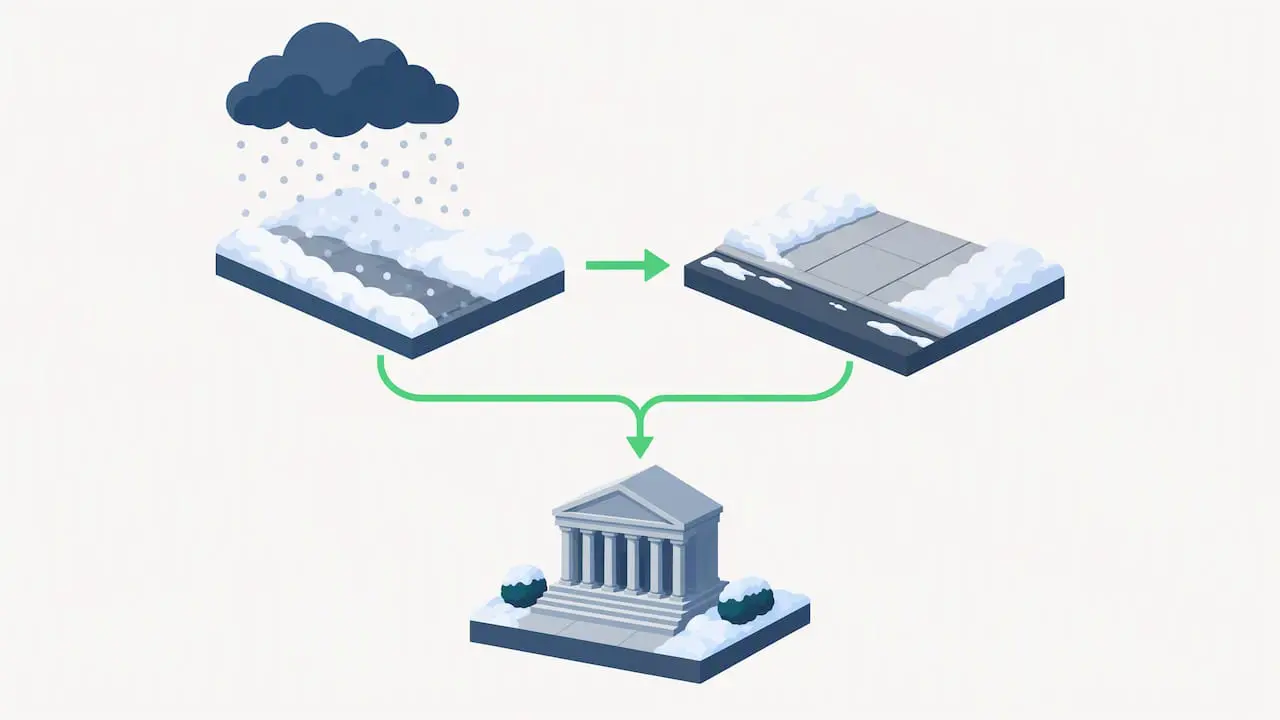
New Jersey’s “ongoing storm” rule generally relieves commercial property owners of a duty to clear snow while precipitation is still falling, on the theory that clearing during an active storm is often futile. Courts have carved out exceptions, though, when a pre-existing hazard already existed before the storm or when an owner’s own actions made conditions worse, such as plowing snow into a pile that later melted and refroze across a walkway.
The New Jersey Supreme Court’s decision in Pareja v. Princeton International Properties addressed how this rule applies to commercial landowners, and courts since then have leaned on a fact-specific reasonableness test rather than a bright-line rule.
- How much snow or ice had accumulated, and how quickly.
- Whether clearing during the storm was practical given staffing and equipment.
- Whether the owner had notice of a hazard that predated the weather.
- Whether the area in question was a main entrance or heavily trafficked exit.
Reasonableness in snow removal liability is fact-specific: the same snowfall can create different duties depending on business hours, foot traffic, and whether a hazard existed before the storm began.
The practical lesson for property managers is that documentation during and after a storm, not just eventual clearing, tends to shape how a court views reasonableness.
What happens after a violation or an injury
Regulatory fines and civil liability run on separate tracks, and it helps to know both before a storm hits. On the regulatory side, drivers risk the fines tied to vehicle snow removal, lot owners risk the $500 to $1,000 penalty for blocked accessible spaces, and homeowners risk municipal fines plus a lien if the town has to send a crew to clear a sidewalk.
Civil liability works differently. A slip-and-fall claim against a property owner typically turns on whether the owner knew or should have known about a hazardous condition and failed to act reasonably, and New Jersey’s comparative negligence rules can reduce a plaintiff’s recovery if they were partly at fault for the fall.
- Drivers may face fines ranging from low to higher amounts depending on the violation and whether damage occurred.
- Fines for blocked accessible parking, curb cuts, or ramps are relatively high.
- Municipal sidewalk fines vary by town, with penalties sometimes resulting in liens on the property.
After any incident, photograph the area immediately, note the time, and get contact information from any witnesses before memories fade.
A practical compliance checklist for storms this winter
Drivers should scrape every exposed surface, not just the windshield, and give trucks or trailers extra time since snow collects in spots that are easy to miss. If ice is bonded to a roof, a plastic scraper with a wide blade works faster than brushing, and running the defroster for a few minutes loosens stubborn patches before you start.
Property owners benefit from a short seasonal routine:
- Mark your town’s sidewalk deadline on a calendar before the first snowfall, since 12-hour and 24-hour windows pass quickly.
- Clear accessible parking spaces, curb cuts, and ramps first, within 24 hours, since that deadline carries the steepest fines.
- Avoid piling snow where it will melt and refreeze across a walkway or parking space.
- Keep de-icing salt covered and stored on a paved surface rather than bare ground, following NJDEP guidance aimed at reducing runoff into storm drains.
When hiring a contractor, ask for proof of insurance, a written response time for storms of a given size, and documentation such as timestamped photos showing accessible areas were cleared.
Pro Tip: Keep a simple written log of when each storm ended and when your property was cleared, since that record is often the strongest evidence if a fine or a claim ever comes up.
How local contractors help property owners stay on the right side of the law
A local company with extensive experience in residential and commercial snow removal in Morris and Somerset Counties notes the best practice is simple: clear early, document everything. Crews that log before-and-after photos and timestamps give owners something concrete to point to if a town inspector or an injured visitor ever raises a question. Reading your own municipal ordinance and keeping a signed service agreement on file rounds out the picture.
— BG
Compliant snow removal for Morris and Somerset County properties
Meeting New Jersey’s patchwork of driver, accessibility, and municipal sidewalk rules is easier with a crew that already knows the local deadlines. Fernandez & Sons provides residential and commercial snow removal throughout Morris and Somerset Counties, backed by a free estimate and a satisfaction guarantee on every job.

Before signing with any contractor, ask for:
- Proof of insurance and a clear indemnity clause.
- A stated response window for storms of a given snowfall total.
- Written confirmation that accessible parking areas and curb cuts are cleared within the 24-hour state deadline.
If you manage a property in Parsippany-Troy Hills, Morris Plains, East Hanover, or a nearby town and want help meeting those deadlines this season, request a quote for snow plowing services and get your property on the schedule before the first storm.
This article is general information, not a substitute for advice from a qualified lawyer. Consult a qualified legal professional about your own circumstances before acting on anything here.
Sources
- Ice and Snow – Remove it Before You Go (NJ Attorney General / Division of Highway Traffic Safety)
- Pareja v. Princeton International Properties — NJ Court opinion on ongoing storm rule
- NJDEP snow removal guidelines
- FY26 Motor Vehicle Snow and Ice Removal Safety Fund notice (NJ Division of Highway Traffic Safety)
FAQ
What is the law on snow removal in New Jersey?
New Jersey law requires drivers to clear snow and ice from their vehicles under N.J.S.A. 39:4-77.1 and requires parking lot owners to clear accessible spaces, curb cuts, and ramps within 24 hours under N.J.S.A. 39:4-207.9. Sidewalk shoveling itself is governed by individual municipal ordinances rather than one statewide law.
Can I be sued if I don’t shovel my sidewalk?
Civil liability for an uncleared sidewalk depends on whether you knew or should have known about the hazard and failed to act reasonably, and courts apply an ongoing storm rule that can limit liability for commercial owners while a storm is still active. Separate from any lawsuit, your municipality can still fine you or clear the walk and bill you for failing to meet its ordinance deadline.
What new laws take effect in NJ in 2026?
No new statewide snow removal statute is scheduled to take effect in New Jersey in 2026, though the Motor Vehicle Snow and Ice Removal Safety Fund continues supporting equipment grants for commercial vehicle operators during the fiscal year. Existing driver, accessibility, and municipal ordinance rules remain in force.
Who is responsible for snow removal on roads?
Public roadways are cleared by the municipality, county, or state agency that owns and maintains that particular road, not by individual property owners. Driveways, private lots, and sidewalks fall to the property owner, while the vehicle itself is the driver’s own responsibility under state law.