
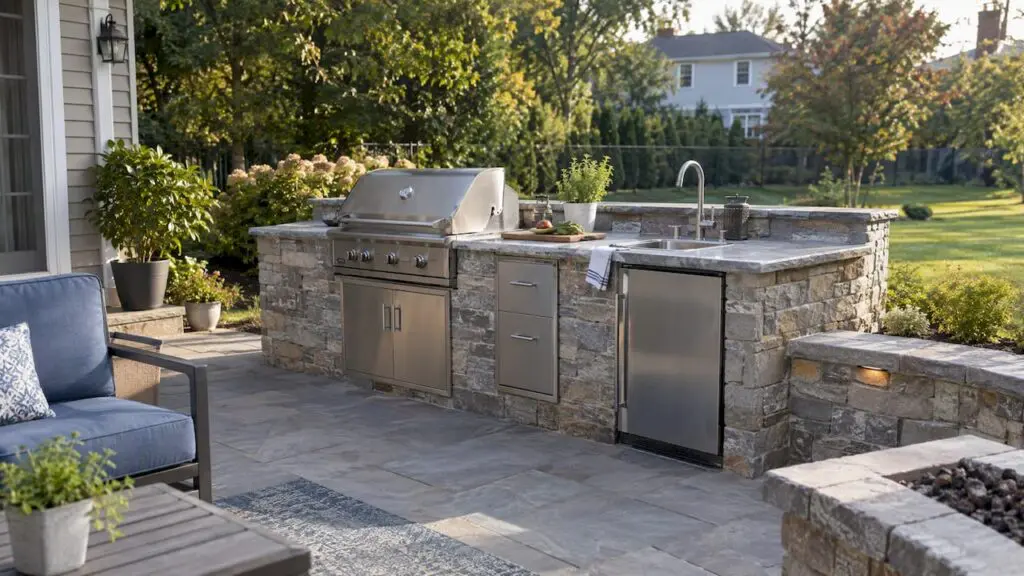
Most New Jersey homeowners land in one of three tiers: entry-level outdoor kitchens run roughly $5,000 to $15,000, mid-range builds fall between $15,000 and $35,000, and fully custom designs can exceed $50,000. Appliance quality, how far your utilities have to travel, and the amount of masonry work involved explain most of that spread. Add to that mandatory permit fees and licensed trade labor, both required under New Jersey code before you fire up the grill.
Quick Answer: Outdoor Kitchen Cost in New Jersey
Utility distance is the primary factor influencing cost, with buried lines over 40 feet significantly increasing trenching and restoration expenses.
Permits for gas, electrical, and plumbing work in New Jersey are mandatory and often involve multiple subcode approvals, which can cause project delays and cost escalations.
Mid-range outdoor kitchens in New Jersey typically cost between $15,000 and $35,000, with custom builds exceeding $50,000 and adding more complex permits and trades.
Comparing line-item bids that itemize appliances, masonry, utilities, and permits helps prevent mid-project surprises and ensures accurate budgeting.
Building in stages, choosing durable materials, and positioning near existing utilities can reduce both upfront costs and long-term maintenance expenses.
Typical Turnkey Cost Ranges From Entry-Level to Fully Custom
An entry-level outdoor kitchen usually means a freestanding grill island, a small run of countertop, and maybe a side burner, all built on an existing patio. These projects tend to skip plumbing and heavy electrical work, which keeps labor and permitting simple.
Mid-range projects add real function: a built-in grill, a sink with a dedicated water line, storage cabinets, and a stone or concrete counter long enough for prep and serving. This tier often includes some hardscape work, like extending a patio or adding a low seating wall, and it’s where most Morris and Somerset County homeowners end up once they start planning around how the family actually gathers outside.
Fully custom builds go further with a pizza oven, a beverage refrigerator, a bar seating area, roofed or pergola-covered structures, and premium stone veneer that matches the home’s exterior. These projects usually involve multiple subcode permits and licensed trades working in sequence, which adds both cost and schedule.
Several site conditions can push any project above its expected range:
-
A sloped or uneven yard that requires additional grading or retaining wall work.
-
Long distances between the kitchen and the home’s gas, water, or electrical service.
-
HOA or historic-district design review that limits materials or requires extra documentation.
-
Existing hardscape that needs to be cut into or removed for utility runs.
Browsing outdoor kitchen design ideas built for New Jersey homes is a useful way to see how these tiers translate into real layouts before you request quotes.
Line-Item Costs: Appliances, Masonry, Utilities, and Labor
Breaking a quote into line items is the only reliable way to compare bids, since a vague lump sum can hide add-ons that surface mid-project. Here’s what typically drives each category:
-
Appliances: A basic grill starts around $500, while built-in stainless models with side burners, rotisseries, or smokers can run several thousand dollars each.
-
Countertops and cabinets: Granite, concrete, and tile counters vary widely in price per square foot, and cabinet material (stainless versus outdoor-rated wood) affects both cost and longevity in New Jersey weather.
-
Masonry and hardscape: Stone veneer, block construction, and paver work make up a large share of the budget on custom builds, since they involve both material and skilled labor.
-
Utilities: Gas lines, water lines, and electrical circuits each require separate trade labor, and cost scales with distance from the home’s existing service.
-
Permits and licensed labor: Subcode permit fees and licensed plumber or electrician rates are fixed costs that don’t shrink with a smaller design.
Utility distance deserves special attention. Trenching through an existing patio or driveway to reach a gas or water line adds demolition and restoration costs on top of the utility work itself, and that expense is often underestimated during early planning.
A standard contractor estimate usually includes materials, labor, and equipment for the listed scope. It commonly excludes permit fees, utility company hookup charges, and unexpected site conditions discovered once digging starts.
Pro Tip: Ask every contractor to itemize permits and utility work separately from construction labor so you can compare bids apples to apples.
New Jersey Permits and Licensing That Affect Cost and Schedule
Permanent outdoor kitchens in New Jersey fall under the Uniform Construction Code, and most projects trigger more than one subcode permit. According to permit guidance for Newark, a built-in kitchen with a grill, sink, fridge, and hardwired electrical typically needs separate building, electrical, plumbing, and sometimes fire-protection permits, along with zoning sign-off since the structure counts as an accessory building.
Jersey City follows a similar pattern: any project with gas lines, permanent electrical, plumbing, or a roofed structure needs permits, and skipping them can lead to stop-work orders and doubled fees once the city catches up.
Gas piping is where the rules get strict. Under New Jersey law, only a licensed New Jersey Master Plumber can install gas piping for an outdoor kitchen, except in narrow cases where homeowners work on their own primary residence under a direct permit.
Common permit triggers include:
-
A built-in grill or cooktop connected to a gas line.
-
A sink or ice maker requiring a permanent water supply.
-
Any hardwired electrical circuit, including outdoor-rated outlets.
-
A roof, pergola, or other permanent structure over the kitchen.
Unpermitted gas or electrical work can void homeowners insurance and force removal of the installation, according to permit guidance for Newark, which is a real financial risk on top of the fees themselves.
Smart Ways to Manage Your Outdoor Kitchen Budget
You don’t have to build everything at once to get a functional outdoor kitchen this season. A few strategies can lower upfront cost without sacrificing long-term quality.
-
Phase the build: Install the grill island and countertop first, then add plumbing, a sink, or a refrigerator in a later phase once budget allows.
-
Compare prefab and custom masonry: Prefabricated kitchen frames cost less upfront than fully custom masonry, though custom stonework offers more design flexibility and can match your home’s exterior more closely.
-
Site the kitchen close to existing utilities: Placing the kitchen near the home’s gas meter or electrical panel cuts trenching distance and avoids costly hardscape restoration.
-
Choose durable, climate-appropriate materials: Natural stone and concrete pavers hold up better through New Jersey freeze-thaw cycles than lower-grade alternatives, reducing repair costs down the road.
-
Budget for winterization: Drain-back plumbing lines or insulated gas and water runs cost more initially but prevent expensive freeze damage each winter.
Pro Tip: If you’re building near a wood deck instead of a patio, ask your contractor early about structural load and clearance requirements, since decking changes the permitting picture.
Why New Jersey Homeowners Should Budget Differently Than National Guides Suggest
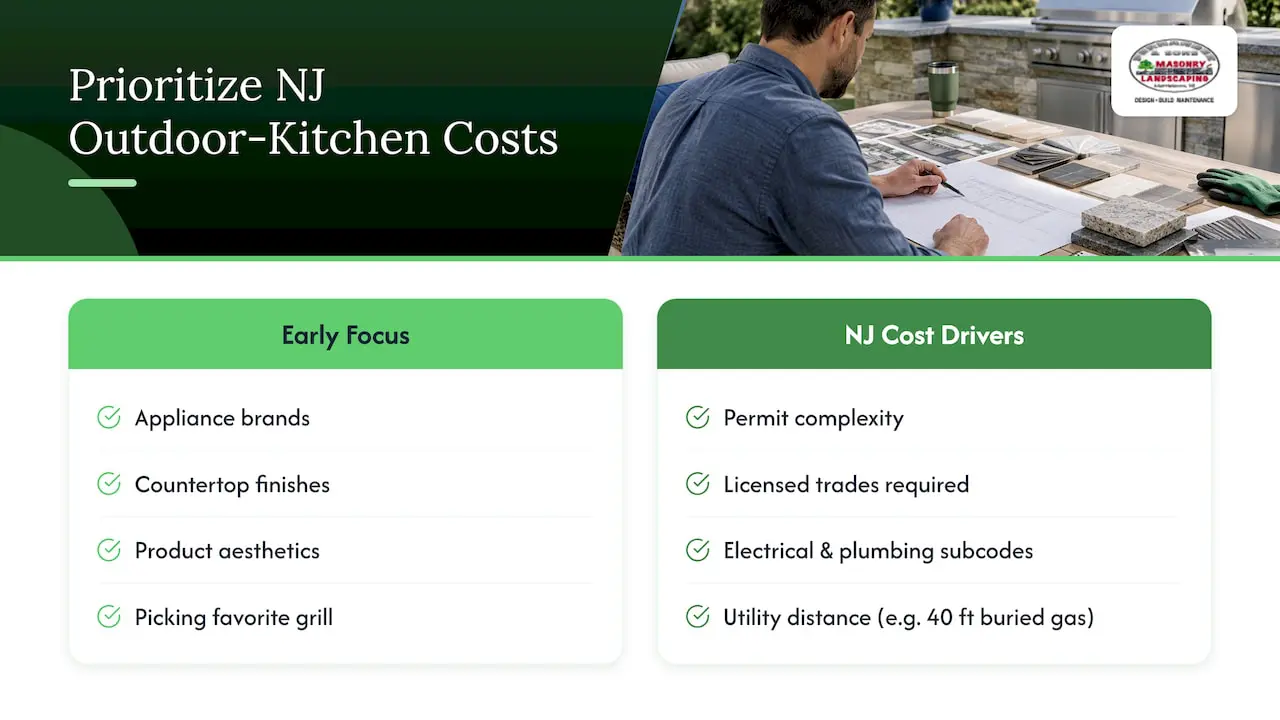
Most national cost guides treat outdoor kitchens as a single line item, which misses what actually drives price in New Jersey. Permit complexity and licensed trade requirements here add real cost that a generic guide from a warmer, less regulated state simply won’t capture. Homeowners who research appliance brands and countertop finishes before understanding their town’s permit mix often get blindsided by a bid that’s thousands higher than expected once electrical and plumbing subcodes enter the picture.
The bigger mistake is treating utility distance as an afterthought. A kitchen sited 40 feet from the house with a buried gas line will cost meaningfully more than the same kitchen built 10 feet away, yet most homeowners focus their early planning on appliances and finishes instead of siting. If you take one thing from this guide, let it be this: settle your site plan and utility path before you fall in love with a specific grill or countertop material. That single decision affects your budget more than almost any product choice you’ll make.
How Fernandez & Sons Helps You Plan and Build Your Outdoor Kitchen
A local masonry and landscaping company builds outdoor kitchens for homeowners, handling the masonry, hardscape, and coordination that a project like this demands. Working directly with a local contractor means you’re not paying a middleman markup, and you get someone knowledgeable about the permit process for towns in this part of New Jersey.
A proper estimate should lay out the full scope of work, itemized costs for materials and labor, who’s responsible for pulling which permits, an expected timeline, and warranty terms in writing. Licensed trades for gas and electrical work are coordinated to help ensure the project meets New Jersey code from the start, and winterization details can be planned into the design rather than added later.
Before requesting a free estimate, it helps to have:
-
A rough idea of your budget tier and must-have features.
-
Photos or measurements of your intended kitchen location.
-
Notes on the distance from existing gas, water, or electrical service.
Reach out through the Fernandez & Sons website to request a free, no-obligation estimate and get a written plan built around your property.
Permits & Codes
New Jersey’s Department of Community Affairs maintains the Uniform Construction Code rule proposals that govern electrical subcode amendments, along with construction code commentary distinguishing residential from commercial cooking appliances. City-specific permit rules for Newark and Jersey City illustrate typical permit mixes, and the NAR 2023 Remodeling Impact Report offers cost and value-recovery context for outdoor kitchen projects nationally.
FAQ
What is the average cost to build an outdoor kitchen?
Costs in New Jersey vary widely depending on design and features. The NAR 2023 Remodeling Impact Report provides a landscape professional cost estimate for a representative outdoor kitchen project including an inset grill, sink, ice chest, and countertop, useful for budgeting purposes.
What is the best price for an outdoor kitchen?
There’s no single best price since it depends on your scope, but the best value comes from matching your design to your actual cooking and entertaining habits rather than overbuilding. Getting itemized estimates from a licensed local contractor lets you compare real costs against your budget tier before committing.
Is an outdoor kitchen worth the money?
Many homeowners find outdoor kitchens worthwhile for the everyday enjoyment they add, particularly for families who entertain often. The NAR 2023 Remodeling Impact Report notes that REALTORS® estimated full cost recovery in some cases, alongside high homeowner satisfaction with the finished feature.
Does an outdoor kitchen increase property value?
An outdoor kitchen can support property value, particularly when it’s well built and integrated with the home’s existing outdoor living space. Value impact varies by market and build quality, so working with an experienced local contractor on design and construction matters as much as the feature itself.
Do I need a permit for an outdoor kitchen in New Jersey?
Most permanent outdoor kitchens in New Jersey require permits, especially any project involving gas lines, permanent electrical, plumbing, or a roofed structure. Permit rules vary by municipality, and cities like Newark and Jersey City require separate building, electrical, and plumbing subcode permits for built-in installations.