
Sealing your pavers is worth doing if you want richer color, real stain resistance, and joints that stay put through a New Jersey winter. Choose a penetrating sealer for a natural look or a film-forming one for a wet-look finish, and put most of your effort into prep, since that’s where sealing jobs succeed or fail. Plan to reseal every 3 to 5 years, and call a professional if your base has settled or a past sealer job went wrong; while waiting, avoid placing outdoor rugs to protect your sealed patio surface by choosing the right outdoor rugs designed for such environments.
Quick Answers to Paver Sealing Contractor Prep
Sealing pavers should be delayed at least two months after installation to allow efflorescence to dissipate and prevent permanent hazing.
Penetrating sealers are best for a natural look with longer-lasting protection, while film-forming sealers provide a glossy finish but require more frequent reapplication.
Proper surface prep, including cleaning, removing stains, and ensuring the surface is dry, is crucial for a successful sealing job and prevents failure.
Resealing is recommended every 3 to 5 years, with more frequent reapplication needed for driveways exposed to salt, heavy traffic, or intense sunlight.
Large or problem-prone projects should be handled by professionals to ensure correct techniques, product choices, and long-term results.
When Should You Seal Your Pavers?
Timing matters more than most homeowners realize, and the biggest mistake in any paver sealing guide is rushing the job. If your pavers are brand new, hold off. Efflorescence, that chalky white residue that surfaces as the concrete cures, needs time to run its course. Sealing over it traps the salts underneath and creates permanent hazing.
-
Wait at least two months after a new installation before sealing, and longer if you still see white residue after cleaning
-
Prioritize sealing for driveways, pool decks, and patios that see heavy entertaining, oil drips, or de-icing salt in winter
-
Consider sealing essential in Morris County’s freeze-thaw climate, where trapped moisture in unsealed joints can crack pavers over time
-
Treat sealing as optional for shaded, low-traffic side yards or a rarely used walkway where staining risk is minimal
Existing installations get more flexibility. If your pavers are a few years old, clean and dry, you can seal them almost any time the forecast cooperates. Manufacturer guidance suggests waiting for efflorescence to fully dissipate before locking in a sealer, since salts that linger under the surface tend to resurface as blotchy discoloration months later.
Which Sealer Type Fits Your Patio or Driveway?
Not every sealer behaves the same way, and picking the wrong one causes more regret than skipping sealing altogether. The core decision comes down to two families of products.
-
Penetrating (non-film-forming) sealers soak into the paver and leave the surface looking essentially unchanged, just cleaner and better protected. These tend to last longer with less maintenance drama and work well if you like the natural stone or concrete look.
-
Film-forming sealers sit on top and create a visible layer, ranging from a subtle satin sheen to a glossy wet look that deepens color dramatically. They protect well but need more frequent reapplication and can turn slippery when wet.
-
Water-based formulas have less odor, clean up with soap and water, and suit most residential jobs in populated neighborhoods.
-
Solvent-based formulas cure harder and often bond better in cooler weather but come with stronger fumes and stricter ventilation needs.
For pool decks, steps, or any surface that gets wet feet regularly, ask about a nonslip additive mixed into the sealer. Wet-look and high-gloss finishes change surface traction enough that a beautiful patio can become a hazard without one.
Pro Tip: If you installed polymeric sand in the joints, confirm your sealer is compatible with it before buying a full pail. Some solvent-based products can soften certain polymeric sand binders and cause the joints to wash out.
What Does a Contractor-Grade Prep Checklist Look Like?
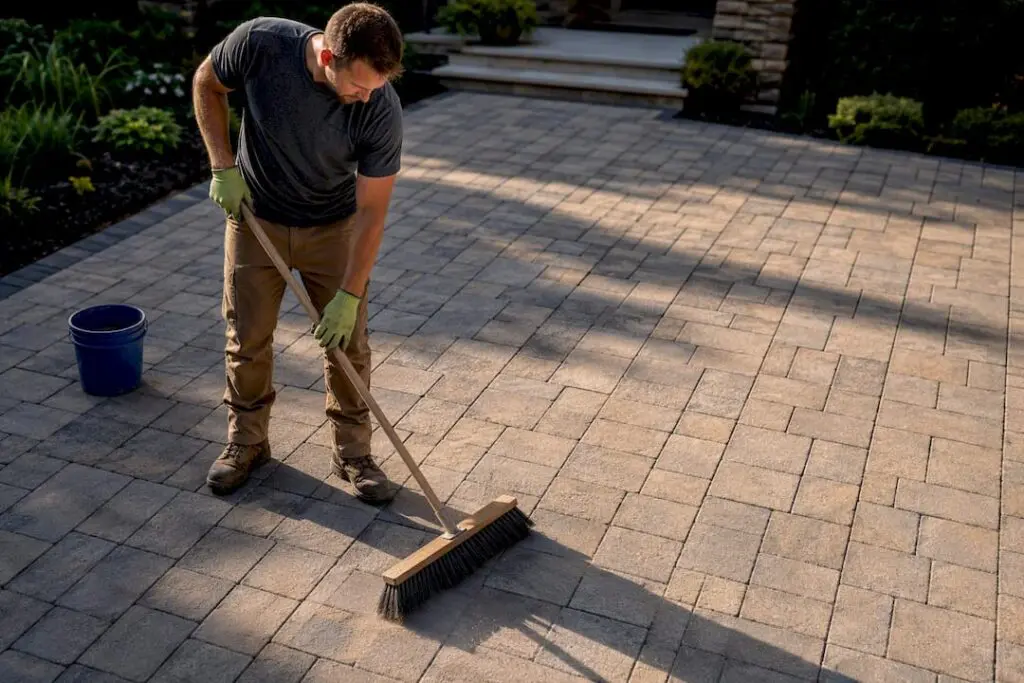
Professionals treat prep as the whole job, not a preliminary step. A contractor surface-prep checklist warns that most sealer failures trace back to something left on the surface before the sealer ever went down. Whatever is under the sealer stays under the sealer, permanently, since sealing locks in dirt, stains, and old sand just as effectively as it locks in the good stuff.
-
Read the product data sheet (PDS) and safety data sheet (SDS) for your specific sealer before buying anything else. Coverage rates, temperature limits, and cure times vary by manufacturer.
-
Inspect the whole surface for oil stains, rust marks, old failing sealer, and any loose or settled pavers that need resetting first.
-
Treat stains and remove efflorescence with cleaners matched to the problem. Oil needs a degreaser, rust needs an acid-safe cleaner, and efflorescence needs a specialized efflorescence remover, not just soap.
-
Pressure-wash and rinse thoroughly, then let the joints refill and re-sand as needed, using polymeric sand where drainage and weed resistance matter most.
-
Confirm the surface is bone-dry. Pros use a plastic sheet test, taping a small sheet down overnight and checking for condensation, or a dark-spot test, watching for shaded areas that hold moisture longer than the rest of the surface.
Pro Tip: Skip the wire brush when scrubbing stains. Metal bristles leave tiny particles behind that rust and create permanent orange spotting you’ll be stuck with for years.
Weather matters just as much as the surface itself. Most sealers need at least 24 to 48 hours without rain and moderate humidity before and after application. Check the extended forecast, not just tomorrow.
How Do You Apply Paver Sealer the Right Way?
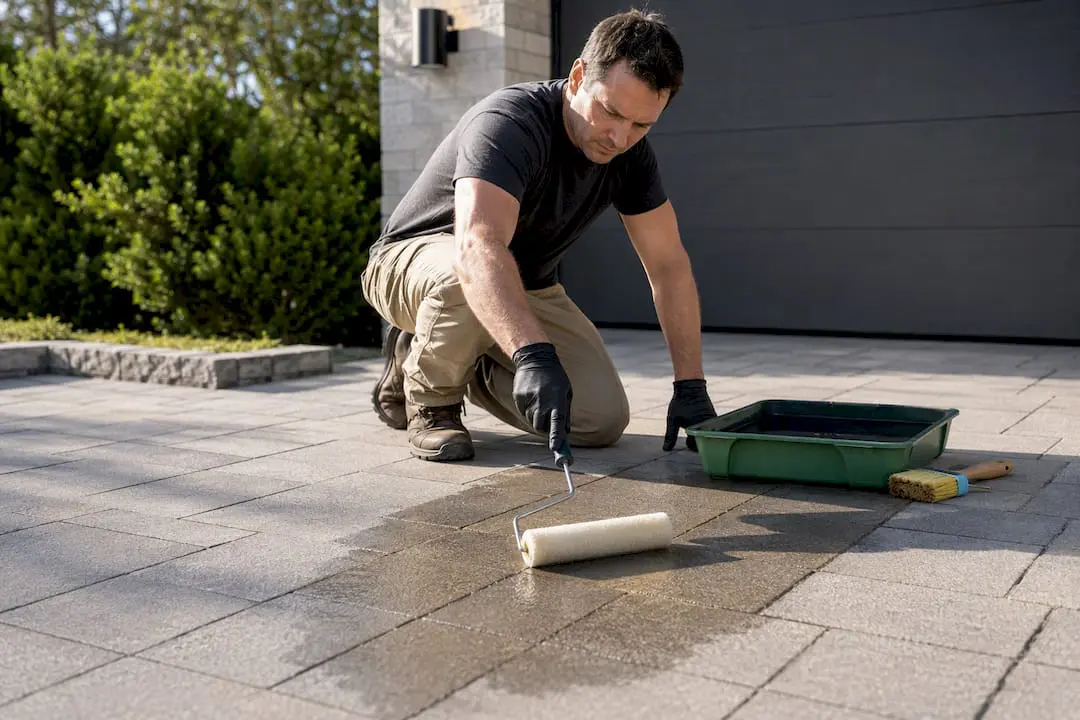
Application technique separates a professional finish from streaky lap marks and cloudy patches. Gather the right equipment before you start: a pump sprayer for even coverage, a foam or short-nap roller for touch-ups and edges, a dry roller for pulling up puddling, and basic PPE, safety glasses and chemical-resistant gloves at minimum, plus a respirator if you’re using a solvent-based product in a garage or enclosed courtyard.
-
Start with a small test patch in an inconspicuous corner and let it cure fully before committing to the whole surface
-
Apply thin, even coats rather than one heavy application, since thick coats trap solvents and cure unevenly
-
Maintain a wet edge as you work across the surface to avoid visible overlap lines
-
Back-roll immediately after spraying to pull excess sealer out of the joints and eliminate puddling
Back-rolling after spraying is the single technique that separates a smooth, even finish from a blotchy one, since it redistributes sealer that pools in low spots and joint lines before it has a chance to dry unevenly.
Pro Tip: Follow the product’s coat-count recommendation exactly. More coats isn’t better with most sealers. Two thin coats almost always outperform one thick one, and the PDS will tell you the recommended dry time between them.
Cure windows vary by product, but expect 24 to 72 hours of dry weather before light foot traffic, and longer, often 48 to 72 hours minimum, before vehicles return to a sealed driveway. Reading the actual product data sheet for your sealer beats guessing every time.
How Often Should You Reseal Your Pavers?
Plan on resealing every 3 to 5 years for most residential applications. That interval shrinks to 2 to 3 years for driveways exposed to road salt, heavy vehicle traffic, or intense southern sun exposure with minimal shade.
-
Water no longer beads on the surface, it soaks in instead
-
Color looks noticeably faded compared to when it was first sealed
-
Joint sand has visibly eroded or washed out between pavers
-
Stains that used to wipe off now leave a mark
Late spring through early fall gives you the most reliable stretch of warm, dry weather in Morris County for sealing work. A stretch of humid August days can extend cure time, while a cool, damp October week can push a project back by more than a week if you’re not watching the forecast closely.
Why Do Sealers Haze, Peel, or Turn Slippery?
Most sealer problems trace back to one of four causes, and each has a fairly clear fix.
-
Haze or blushing usually means trapped moisture under the film. Confirm the moisture source first; a sealer stripper and full redo may be necessary if the haze covers a large area.
-
Peeling almost always points to prep failure, often dirt or moisture left on the surface before application. Strip the sealer, address whatever was trapped underneath, and reapply with proper prep this time.
-
Slippery finishes call for a nonslip additive mixed into the next coat, or switching to a penetrating sealer in problem zones like pool decks and entry steps.
-
Trapped efflorescence means you should not reseal yet. Let the salts finish dissipating on their own, or have a professional strip and remove the deposits before you try again.
Ready for a Sealing Job That’s Done Right the First Time?
Hiring professional contractors ensures contractor-grade prep, correct product matching for your pavers, and experienced crews familiar with local conditions. That matters because a botched DIY seal job usually costs more to strip and redo than hiring it out correctly the first time.

Whether your pavers need a full masonry service overhaul, base repair before sealing makes sense, or you’re planning a new patio and want sealing built into the installation project from day one, Fernandez & Sons handles both. Browse completed paver patio projects for a sense of the finished results, then request your free estimate and get a written quote that spells out every prep step, product, and cure window before work begins.
Surface Prep Additional Sources
FAQ
Do I Really Need to Seal My Pavers?
Sealing isn’t mandatory, but it protects against staining, UV fading, and joint sand loss, and it’s strongly recommended for driveways, entertaining patios, and anywhere freeze thaw cycles are a concern.
How Long Should I Wait to Seal New Pavers?
Wait 60 to 90 days after installation, and longer if efflorescence is still visible, since sealing too early traps salts underneath the surface and causes hazing.
What’s the Difference Between Penetrating and Film-Forming Sealers?
Penetrating sealers soak in and preserve a natural look with less frequent maintenance, while film-forming sealers sit on the surface and create a satin or wet-look finish that needs more frequent reapplication.
How Often Should Pavers Be Resealed?
Most pavers need resealing every 3 to 5 years, shrinking to 2 to 3 years for driveways exposed to de-icing salt or heavy traffic.
Can I Seal Pavers Myself, or Should I Hire a Pro?
DIY sealing works for small, straightforward areas if you follow proper prep and drying tests, but large driveways, prior sealer failures, or suspected base damage call for a professional like Fernandez & Sons who can inspect the substrate first.