
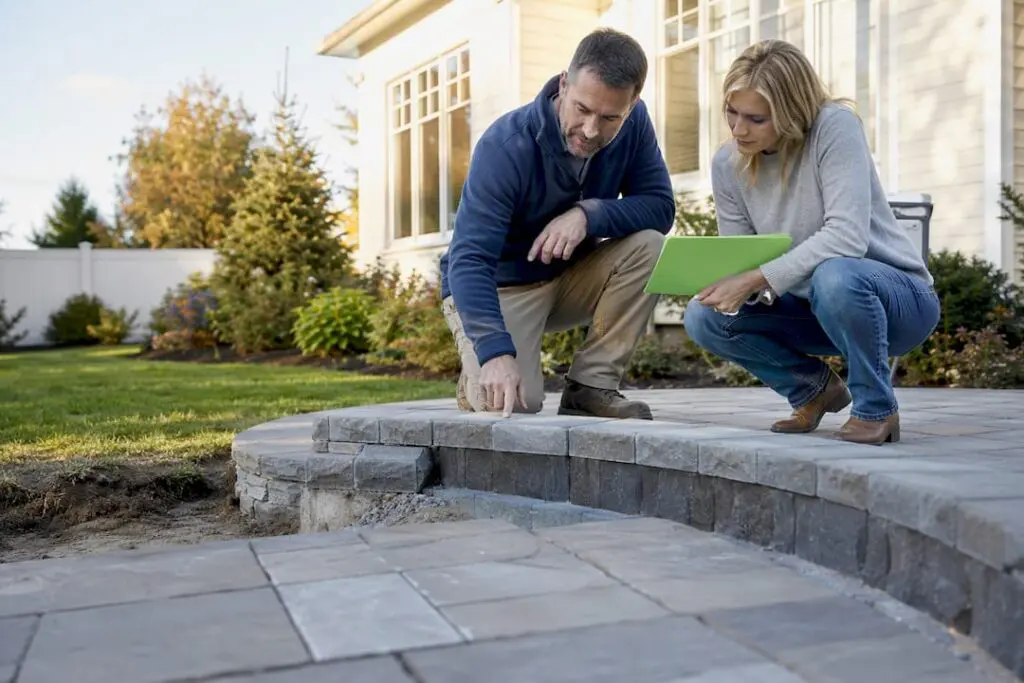
Ask about credentials, a written scope with specific material specs, timeline, payment schedule, and warranty terms before a shovel touches your yard. Cover five categories in that first meeting: credentials, scope and cost, timeline and logistics, materials and maintenance, and contract terms. Request a written scope and proof of insurance before you pay or sign, and if any answer feels vague, get a second written proposal before committing.
What You Must Know
Verify that the landscaper has valid licensing, proof of insurance, and references from similar projects before agreeing to any work.
Ensure the bid includes specific details about materials, exclusions, and a payment schedule tied to milestones to prevent budget surprises.
Confirm that foundation, base preparation, and drainage techniques align with industry standards to avoid future heaving or water issues.
Obtain a detailed written contract with explicit scope, warranties, change procedures, and termination clauses to protect against scope creep and disputes.
Ask how regional climate and soil conditions influence project design, material choices, and installation practices to ensure long-term performance.
Table of Contents
-
Essential Questions to Ask a Landscaper During Your First Meeting
-
A Straight Answer on What Separates a Good Proposal From a Bad One
Essential Questions to Ask a Landscaper During Your First Meeting
A good landscaper consultation is really a screening interview, and the questions you ask determine whether you get comparable bids or three vague guesses dressed up as proposals. Group your questions by theme so you can compare answers side by side later.
Credentials and reputation
-
Are you licensed for this type of work, and can I see your certificate?
-
Do you carry general liability and worker’s compensation insurance, and can I get a copy of the certificate directly from your insurer?
-
Can you give me the names and phone numbers of three past clients with projects similar to mine?
-
Do you have a portfolio of completed work I can see in person, not just photos?
Insurance matters more than most homeowners realize. A serious contractor should hand over proof of coverage without hesitation, and it is worth verifying insurance certificates and license numbers directly with the issuing agency or insurer rather than taking a photocopy at face value.
Scope and cost specifics
-
What exactly is included in this bid, and what is explicitly excluded?
-
Can you list every material by manufacturer name and product line, not just a general category like “pavers” or “natural stone”?
-
What is the allowance amount for materials I still need to select, and what happens if I choose something above that allowance?
-
How are change orders priced and approved once work begins?
Timeline and logistics
-
What are the realistic start and end dates, and what could push them back?
-
Who will actually be on site each day, your crew or subcontractors?
-
What are your typical working hours, and do you need permission for heavy equipment access?
-
Where will materials and equipment be staged during the project?
Materials, warranties, and maintenance
-
How long is the plant guarantee, and what does it cover if something dies within that window?
-
What is the workmanship warranty period on hardscaping, separate from any manufacturer warranty on the pavers or stone themselves?
-
Do you offer ongoing maintenance, and what is included versus billed separately?
-
Who handles establishment care for new plantings during the first season?
Permits and site risk
-
Who is responsible for pulling permits, you or me?
-
How do you typically handle unexpected discoveries, like old utility lines or poor drainage, once digging starts?
-
Will this project change how water moves across my property, and if so, how will you manage that?
Print these landscaping interview questions or keep them on your phone. Written answers, not verbal reassurances, are what protect you later.
How to Judge a Landscaper’s Answers, Not Just Their Prices
Specificity is the tell. A landscaper who says “we use good quality pavers” is telling you nothing. One who says “we install Belgard Mega Arbel pavers in a 60-millimeter thickness with a ten-year manufacturer warranty on the units and a two-year workmanship warranty on our installation” has given you something you can actually check.
Watch for these red flags:
-
Vague material language like “premium stone” or “high-grade pavers” with no brand or model attached
-
Reluctance to provide references or a certificate number for insurance
-
A request for a large upfront deposit with no milestone payments tied to it
-
Pressure to sign the same day, especially paired with a “today only” discount
Pro Tip: Call two references and ask them one specific question: “Did the final invoice match the original quote, or were there surprise charges?” That single question tells you more than a five-star review ever will.
If an answer sounds rehearsed but thin, ask for the certificate number and call the insurer yourself. A landscaper with nothing to hide will not mind.
Contract Terms That Protect You Before Work Begins
The proposal is a sales document. The contract is what actually protects you, and homeowner disputes usually trace back to a scope that never spelled out what was excluded. Vague scopes and missing exclusions are a leading cause of homeowner disputes, which is why the written contract needs to go further than the verbal pitch.
Before you sign, insist on:
-
A written scope listing explicit inclusions and exclusions, not a one-line description
-
Full material specifications: manufacturer, product line, color, size, and thickness
-
A payment schedule tied to project milestones, with lien-release language attached to each payment
-
A clear change-order process requiring written approval before extra costs are charged
-
A termination-for-convenience clause
That last point deserves its own line. A termination-for-convenience clause requiring written notice in advance keeps you from being locked into a maintenance contract you no longer want, and it should spell out how refunds work on anything you prepaid.
Hardscape-Specific Questions About Foundations and Drainage
Patios and retaining walls fail from the ground up, not from the surface down. Base preparation, compaction, and drainage matter more than which paver color you picked, because hardscape questions need to focus on the unseen work, since appearance alone never tells you whether a patio will heave after its first freeze.
Ask directly:
-
How deep will the base aggregate be, and how will it be compacted?
-
What edge restraint system will you use to keep pavers from shifting?
-
What paver or stone thickness do you recommend for this application, driveway versus patio versus walkway?
-
How will you grade the site so water drains away from my foundation instead of toward it?
-
Does this retaining wall need an engineered plan or a permit, and who is responsible for pulling it?
The Interlocking Concrete Pavement Institute publishes technical standards for paver base depth and installation that a qualified contractor should already be following, and it is a reasonable resource to check if you want to verify a bid against industry norms.
Understanding Costs and Avoiding Surprise Charges
A landscaping bid typically breaks into materials, labor, equipment rental, permits, disposal, and an allowance for items not yet finalized. The line item most likely to blow up your budget is materials, because vague descriptions like “natural stone” can conceal a 40 to 60 percent swing in price depending on which specific product ends up on your patio.
-
Require exact product names and model numbers, not general categories
-
Keep deposits modest and tie the rest of the payment schedule to completed milestones
-
Document every change order in writing, with a signature, before work continues
Pro Tip: Ask for the material spec sheet before you sign, not after delivery. If the invoice references a different product line than the proposal, that’s your leverage to pause payment.
What Happens Once the Crew Shows Up
Most projects settle into a rhythm: a crew arrives, someone runs the site, and work continues until weather or material delays interrupt it. Confirm who manages daily communication before the first truck pulls in.
-
Ask how the crew will protect your driveway, lawn, and any trees near the work zone
-
Confirm where equipment and material staging will happen so it does not block access
-
Get working hours in writing, since most municipalities restrict power equipment to daytime hours and an early start could violate a local noise ordinance
-
Ask how the company communicates weather delays or unexpected change events, by phone, text, or a project app
Your Printable Site-Visit Checklist
Bring these documents to your first meeting and request them in writing before signing:
-
Certificate of insurance (general liability and worker’s compensation)
-
Written scope of work with inclusions and exclusions
-
Material specification sheet (manufacturer, size, thickness)
-
At least two client references you can call
-
A sample contract showing payment schedule and change-order language
Call two references and verify the license and insurance certificate directly with the issuing agency before you sign anything.
Ask About Sustainable and Eco-Friendly Practices
Sustainability questions used to be an afterthought. Now, they belong in the same conversation as cost and timeline, especially with more homeowners asking landscapers to reduce water use and chemical dependence on their property.
Ask whether the landscaper designs for native and drought-tolerant plantings, since these typically need less irrigation once established. Ask how they handle stormwater, whether through permeable paver options, rain gardens, or grading that channels runoff into planted areas instead of storm drains. Find out if they use organic or slow-release fertilizers rather than heavy synthetic applications, and whether their maintenance program includes integrated pest management instead of routine blanket spraying.
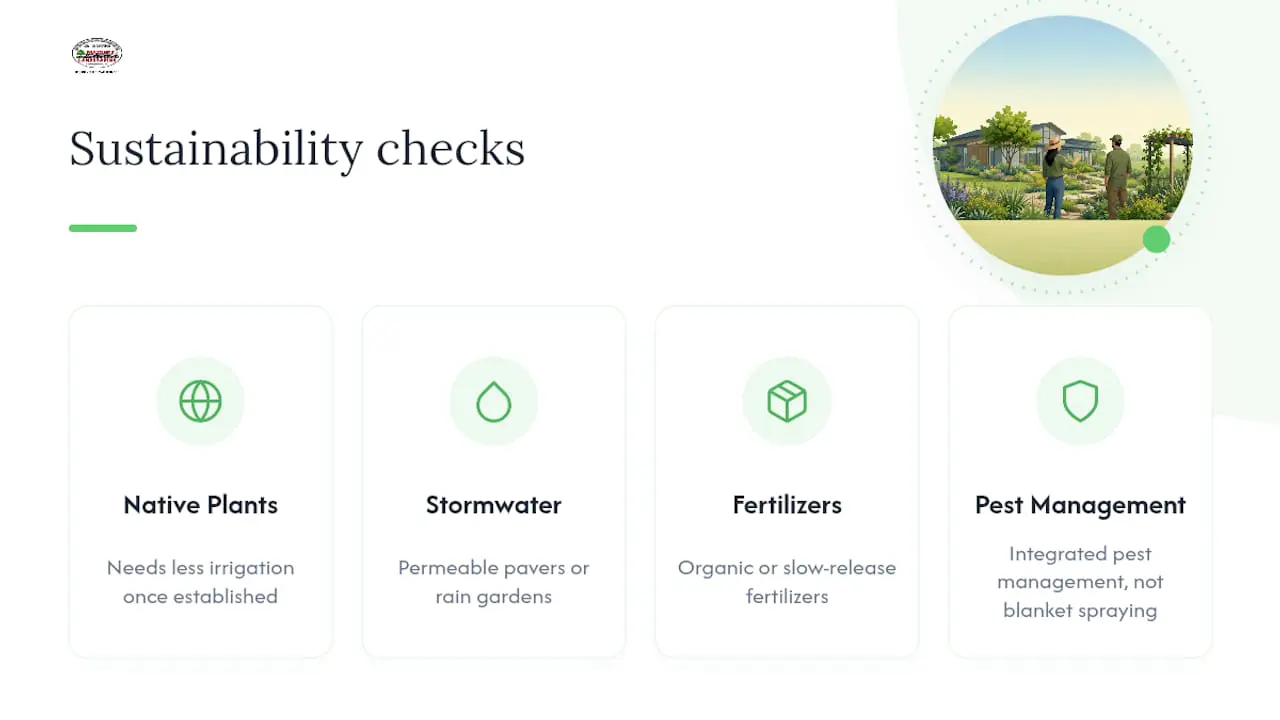
Ask about plant sourcing too. A landscaper who works with local nurseries and selects species suited to your specific soil and light conditions is setting you up for lower long-term water bills and fewer replacement plants. If sustainability matters to you, say so early, because it changes which plants, materials, and grading choices belong in the design from the start.
Talking Through Design Style and Personal Taste
A landscaper who pushes one signature style onto every property is not designing for you, they are designing for their portfolio. The consultation should feel like a conversation about how you actually use your yard, not a sales pitch for the most recent installation photos.
Bring reference images if you have them, but also talk through function: do you want a quiet reading corner, a space for kids to play, or a patio built for entertaining? Ask how the designer balances your preferences with what works for your specific lot, since a formal symmetrical layout might clash with an irregularly shaped backyard. Ask how many design revisions are included before extra fees kick in, and whether you will see a scaled drawing or 3D rendering before construction starts.
Personalization also means asking how the plan adapts over time. A design that only looks good the day it is installed, before plants mature or seasons change, is a design that was never really finished.
Support and Maintenance After Installation
Installation day is not the finish line. Ask what happens in the weeks and seasons after the crew leaves, because new plantings and fresh hardscaping both need a transition period.
Ask specifically whether the landscaper offers an establishment care package for new plants, typically covering the first growing season when root systems are most vulnerable. Find out if seasonal maintenance, mulching, pruning, and irrigation checks are offered as an ongoing service or billed as one-off visits. Ask how quickly they respond if a paver settles unevenly or a plant fails within its guarantee window. A company that treats post-installation support as a real service line, not an afterthought, tends to stand behind its own work more consistently.
How Disputes and Unexpected Problems Get Handled
Every outdoor project eventually runs into something nobody planned for, an old drainage pipe, unexpectedly rocky soil, or a delivery delay on a specific paver color. What matters is how the landscaper handles it, not whether it happens.
Ask how they document and communicate unexpected discoveries once digging begins, and whether that triggers a formal change order before costs increase. Ask what their process looks like if you are unhappy with an aspect of the finished work, is there a defined walk-through and punch-list period, or do you have to chase them down. Find out how they resolve disagreements over scope interpretation, ideally through a written clarification process rather than a verbal argument on site. A contractor with a defined dispute-resolution approach, even something as simple as a documented punch-list sign-off, is signaling they expect to be held accountable.
Local Climate and Soil Knowledge Actually Matters
A landscaper’s familiarity with your specific climate zone and soil type affects nearly every decision from plant selection to drainage design. Clay-heavy soil drains differently than sandy loam, and a planting plan that thrives in one condition can struggle badly in the other.
Ask how long the landscaper has worked in your specific area and whether they have handled properties with soil conditions similar to yours. Ask what plant varieties they typically recommend for local frost dates and seasonal swings, and how they adjust hardscape base depth for regional freeze-thaw cycles. A landscaper who cannot speak specifically to your region’s soil drainage or frost timeline is guessing, even if their portfolio looks impressive.
A Straight Answer on What Separates a Good Proposal From a Bad One
The gap between a trustworthy landscaper and a risky one rarely shows up in the sales pitch. It shows up in how much detail they are willing to put in writing before you owe them a dollar. Contractors who avoid specifics, whether about material brands, warranty length, or payment milestones, are not necessarily dishonest. But they are giving themselves room to explain away a surprise later, and that room comes out of your pocket.
Every estimate should start with an on-site visit, followed by a written scope that names materials and timelines rather than describing them in general terms, ideally backed by a satisfaction guarantee. That process exists because homeowners consistently raise the same worries: will the price hold, will the crew show up when promised, and will the work still look good in five years? Addressing those concerns before they become questions is simply good practice.
Ready for a Contractor Who Puts It All in Writing
Local homeowners across Morris and Somerset Counties hire contractors for landscape design and installation, patios, outdoor kitchens, retaining walls, and seasonal maintenance backed by a satisfaction guarantee and experience with the region’s soil and climate.
That local track record matters when you are trying to reduce hiring risk. A contractor who already knows how New Jersey clay drains, how local frost lines affect base depth, and which paver specs hold up through a Morris County winter is answering half of your interview questions before you even ask them. For hardscape work specifically, masonry and hardscaping services covering patios, walls, and outdoor kitchens come with the same written-scope approach outlined throughout this guide.
If you are ready to compare a real proposal against the vague ones you have collected so far, request a free estimate and see what a fully specified, written scope actually looks like.