
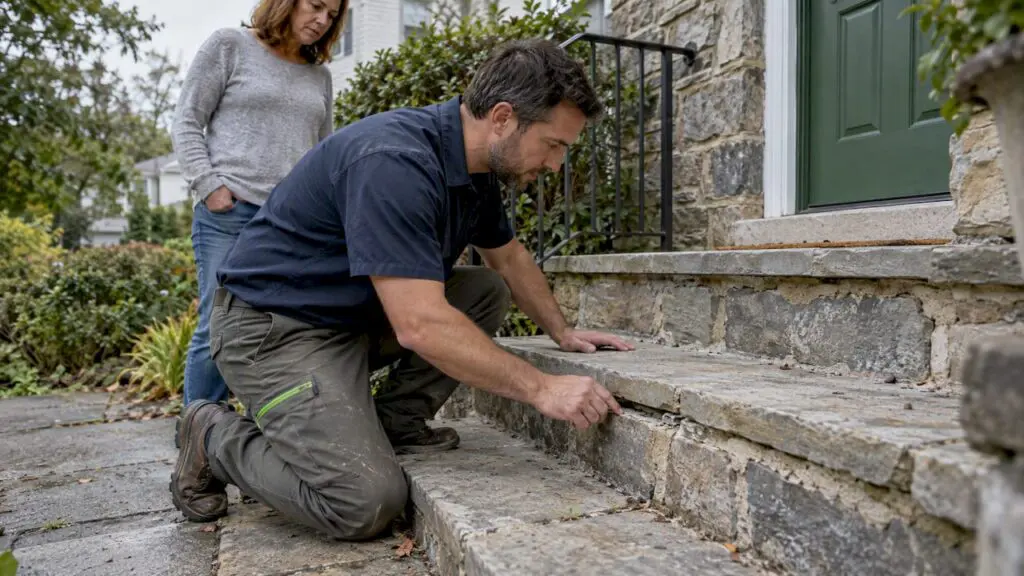
Hire a licensed New Jersey masonry contractor for stone step repair, and start with an on-site assessment and a written estimate that spells out permit needs and scope. Most stone step problems in New Jersey, from frost heave to crumbling mortar joints, call for professional evaluation rather than a quick patch. A local masonry contractor serving New Jersey offers free estimates for homeowners who want a clear picture of the work ahead.
What to Know
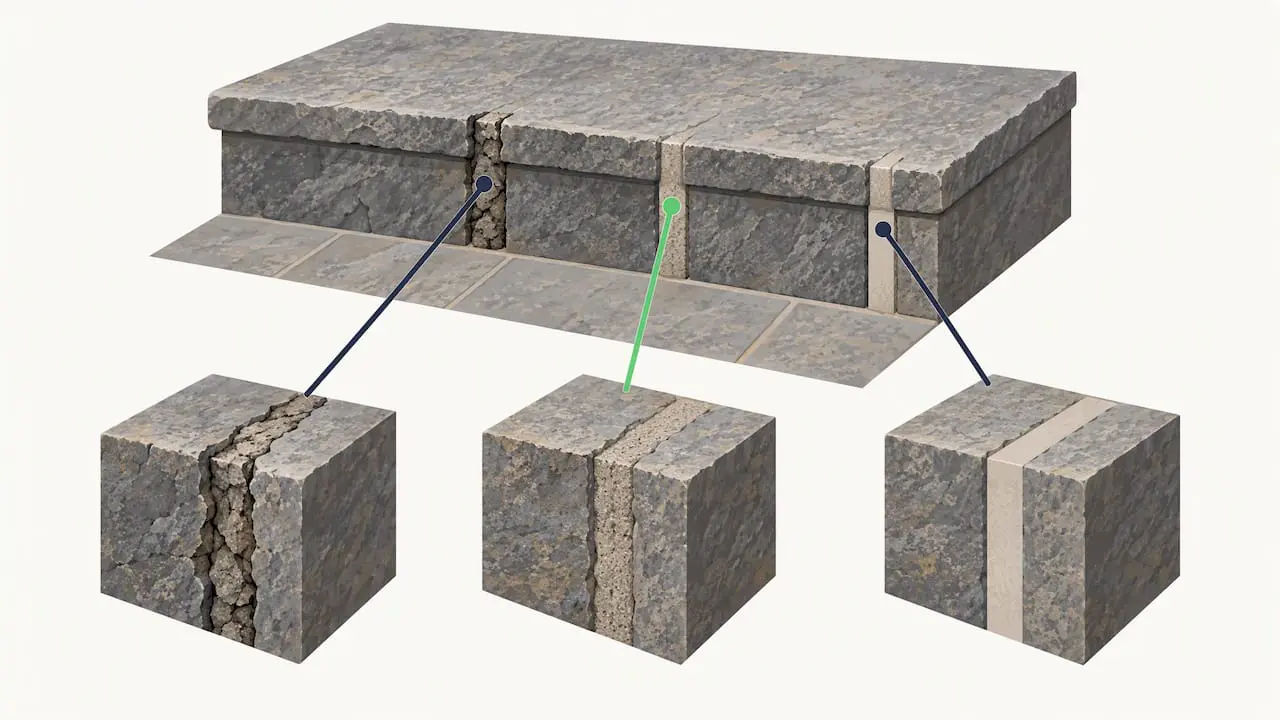
Repointing is suitable for joints that have washed out but the stones remain structurally sound, while resetting is needed for stones that have shifted or sunk.
Most exterior stone step repairs in New Jersey require permits and inspections, with fees often reaching around $300, plus additional costs for handrails and drainage corrections.
The cost of full stone step installation ranges from $1,400 to $5,525, with factors like material choice, scope of work, and permit fees significantly affecting the total.
Water pooling or large cracks signal urgent safety issues, and steps that rock or feel uneven should be immediately evaluated by a professional before further use.
Regular fall inspections and prompt mortar repairs help prevent freeze-thaw damage caused by New Jersey’s harsh winter cycles, saving significant repair costs over time.
Table of Contents
-
What kinds of stone steps and repair services NJ contractors provide
-
How to recognize urgent safety issues and early warning signs
-
New Jersey permit triggers and key stair and handrail code points
-
Checklist: vetting, questions to ask, and contract items for NJ stone step work
-
How to budget for repairs and what drives price in New Jersey
-
Typical schedule, seasonal considerations, and what to expect
-
Fernandez & Sons: local projects, guarantees, and what they handle
What kinds of stone steps and repair services NJ contractors provide
Stone steps across New Jersey come in a handful of common materials, and each one behaves differently under repair. Bluestone holds up well to foot traffic but can flake at the surface if water gets trapped beneath it. Fieldstone offers a rustic look and real durability, though its irregular shape makes resetting more labor-intensive. Limestone is porous and sensitive to harsh deicers, while cobblestone steps tend to shift more easily and need frequent repointing.
The right fix depends on how far the damage has spread.
-
Repointing replaces failed mortar joints without disturbing the stones themselves.
-
Resetting or re-bedding lifts and reseats stones that have shifted or settled.
-
Partial rebuild replaces a section of steps while keeping the rest intact.
-
Full replacement is reserved for steps with widespread structural failure.
-
Sealing protects finished stone from moisture and salt damage.
Cosmetic cracks and surface staining are usually a maintenance job. Rocking stones, sunken treads, or a step that has pulled away from the foundation point to structural repair.
How to recognize urgent safety issues and early warning signs
A step you can rock by hand or stand on unevenly is a safety hazard, not a cosmetic flaw. Watch for these signals and act accordingly:
-
Loose or rocking stones mean the bedding beneath has failed and the step can shift under weight.
-
Uneven treads change the rise between steps enough to trip someone who isn’t expecting it.
-
Large cracks running through a stone often signal the piece has lost its structural integrity.
-
Spalling, where the surface flakes or pops off in layers, points to trapped moisture that freezes and expands.
-
Hairline cracks, mortar washout, and efflorescence (the white, chalky residue on stone) are early warnings worth monitoring before they worsen.
-
Water pooling at the base of a staircase suggests a drainage problem that will keep damaging the steps until it’s corrected.
A simple rock test, pressing firmly on each tread by foot, and a level sightline down the staircase will reveal most of these problems. Stop using any step that rocks or feels uneven until a contractor has looked at it.
What professional repairs involve and why methods differ
Repointing sounds simple, but doing it right means removing the old, failed mortar to a sufficient depth and packing in a mortar mix that matches the stone’s hardness and breathability. Skipping that step and simply “buttering” fresh mortar over the old joint looks fine for a season or two, then fails again because moisture gets trapped behind it. Contractors who understand historic masonry know that Portland cement mixes that are too hard for older or softer stone accelerate spalling instead of preventing it.
Resetting stones involves pulling them up, rebuilding the base, and correcting any drainage issue that caused the original settling. For steps exposed to New Jersey’s freeze-thaw cycles, a properly graded and compacted aggregate base often outperforms a rigid concrete slab, which can transfer stress directly into the stone and crack it.
-
Repointing fits joints that have washed out but stones that remain sound.
-
Resetting or re-bedding fits stones that have shifted, sunk, or lost their base support.
-
Partial rebuild fits a staircase with isolated failure in one section.
-
Full replacement fits steps with widespread cracking, settlement, or decades of deferred maintenance.
A breathable, penetrating sealer helps protect finished stone from winter moisture without trapping vapor inside it, and using a stone-safe deicer instead of rock salt prevents new surface damage each winter.
Pro Tip: Ask your contractor whether they plan to match your existing mortar’s hardness, not just its color.
New Jersey permit triggers and key stair and handrail code points
Most exterior stair work tied to a structural repair or rebuild in New Jersey falls under the Uniform Construction Code, which commonly requires a permit and a follow-up inspection. Angi’s cost data notes that permit and inspection fees are a real line item homeowners should budget for rather than an afterthought.
Inspection fees often run around $300 in many New Jersey localities, according to Angi’s reporting on stone step costs, which also flags permit costs as one of the more overlooked drivers of total project price.
Code items worth confirming on any estimate:
-
Exterior stairs with four or more risers typically require a handrail, per New Jersey’s administrative code.
-
Handrail height generally falls between 30 and 38 inches, with wall clearance of at least 1.5 inches for a proper grip, as outlined in New Jersey stair guidance.
-
Landings are required at the top and bottom of exterior stairways under the same code.
-
Contractors performing this work must be registered through the NJ Division of Consumer Affairs, and financed contracts may fall under NJDOBI licensing rules.
Checklist: vetting, questions to ask, and contract items for NJ stone step work
Before signing anything, confirm the basics that separate a legitimate New Jersey contractor from a risky one.
-
Verify active registration with the NJ Division of Consumer Affairs and ask for the NJHIC number directly.
-
Request proof of workers’ compensation and general liability insurance in writing.
-
Ask whether the project requires DOBI licensing, which applies specifically to financed home repair contracts.
-
Get references from recent local jobs, ideally ones similar in scope to your own.
-
Compare at least two written estimates before making a decision.
A solid contract should spell out the scope of work, a payment schedule tied to project milestones, start and completion dates, who pulls the permit, warranty terms, and a written right-to-cancel statement for contracts signed at home, a protection the Federal Trade Commission specifically recommends homeowners insist on.
Good interview questions to ask during an estimate visit:
-
What caused the original damage, and how will you prevent it from recurring?
-
What mortar type do you plan to use, and why does it match my stone?
-
How will you correct drainage, if that’s part of the problem?
-
What’s the realistic timeline from start to finish?
-
Can you show me examples of similar step repairs you’ve completed locally?
For a second opinion on comparing quotes and avoiding scope creep, House A-Z’s contractor selection guidance offers a useful independent checklist. If handrail height is part of your project, this handrail code checklist breaks down the measurements inspectors look for.
How to budget for repairs and what drives price in New Jersey
Stone step costs vary by scope, material, and how much base work is needed. Angi reports that full stone step installation typically averages $1,400 to $5,525, with labor, stone type, and permit fees among the biggest cost drivers. Repair work on existing steps generally costs less than full replacement but climbs quickly once a job moves from simple repointing into base rebuilding or drainage correction.
Costs that can add up beyond the core repair:
-
Excavation and debris disposal when a step bed needs to be rebuilt from scratch.
-
Permit and inspection fees, which Angi notes can add several hundred dollars to a project.
-
Handrail installation or replacement to meet current code.
-
Stone matching, especially for older or less common materials like certain fieldstones.
A bid that comes in dramatically lower than others is worth a second look, particularly if it skips permits or glosses over drainage work. A fair payment schedule usually ties a deposit to material ordering, a midpoint payment to substantial completion, and the final balance to passed inspection and your sign-off.
Typical schedule, seasonal considerations, and what to expect
A straightforward repair moves through a few predictable phases: site assessment, permitting where required, demolition of failed stone or mortar, the repair itself, curing time, and final inspection.
-
Assessment and estimate, usually completed within a visit or two.
-
Permitting, which can take anywhere from a few days to a few weeks depending on your municipality.
-
Demolition and repair work, often the shortest phase for a minor repointing job.
-
Curing time, which mortar and concrete need before the steps see regular foot traffic.
-
Final inspection, confirming the work meets code before the project closes out.
New Jersey’s winters make deep-freeze months a poor time for major masonry work, since mortar needs stable temperatures to cure properly. Before your contractor arrives, clear access to the steps, take photos of the existing damage for your estimate, protect nearby plantings, and set up a temporary railing if the steps will be out of use for more than a day or two.
Fernandez & Sons: local projects, guarantees, and what they handle
Fernandez & Sons has worked on masonry and hardscaping projects across Morris and Somerset Counties for more than a decade, including stone step and stair repairs featured in their project gallery. Homeowners considering a repair can see completed work before requesting their own estimate.
-
Every estimate is free, with no obligation to move forward.
-
Projects are backed by a satisfaction guarantee.
-
Scope discussions include permit coordination and a review of New Jersey stair code requirements relevant to the job.
-
Crews handle everything from minor repointing to full masonry repair services, including base and drainage corrections.
Readers interested in material choices can also see examples of recent brick and stone masonry work completed for other New Jersey homes.
A local perspective on preventing costly step failures
New Jersey’s freeze-thaw cycle is unforgiving on stone steps. Water gets into a hairline crack in November, and by March that crack has doubled in size. The single most useful habit homeowners can build is inspecting steps each fall, before the first hard freeze, and addressing small mortar gaps while they’re still a small job.
— BG
How to request a free estimate from Fernandez & Sons
Getting a useful estimate starts with giving your contractor a clear picture before they arrive. Send a few photos of the damaged steps, your property address, and a short description of what’s wrong: loose stones, visible cracks, or water pooling at the base.

A proper estimate from Fernandez & Sons will walk through the scope of repair, flag any permit requirements, and give you a realistic timeline alongside a ballpark cost before any work begins. Reach out through the masonry repair services page to start that conversation and get a free, no-obligation estimate for your steps.
FAQ
How much does it cost to repair stone steps?
Costs depend on scope, but full stone step installation in New Jersey typically averages $1,400 to $5,525, according to Angi. Minor repointing costs less than a full rebuild, and permit fees can add several hundred dollars depending on your municipality.
How do I fix a broken stone step?
A broken stone step usually needs either resetting, if the base has failed, or a partial rebuild if the stone itself has cracked through. This is structural work best handled by a licensed mason who can correct the underlying drainage or base issue, not just patch the surface.
How can I repair flagstone steps?
Flagstone repairs typically involve repointing failed joints or resetting individual stones on a properly compacted base. A breathable, compatible mortar mix matters here, since a mix that’s too hard can trap moisture and cause the stone to flake.
Where can I find sidewalk repair services in Jersey City, NJ?
Fernandez & Sons focuses its masonry and landscaping work in Morris and Somerset Counties, so homeowners in Jersey City should look for a registered New Jersey contractor serving that area directly. Whoever you hire, confirm their NJ Division of Consumer Affairs registration before signing a contract.
Do I need a permit to repair stone steps in New Jersey?
Structural repairs or rebuilds often require a permit under New Jersey’s Uniform Construction Code, while minor repointing may not. Ask your contractor to confirm this during the estimate, since they should handle the permit application as part of the project.
Supporting Guidance
-
N.J.A.C. 5:10-7.7 (New Jersey regulation excerpt via Cornell)
-
Quick start guide — Home Improvement Contractor (NJ state BAC PDF)
-
How to avoid home improvement scam — Federal Trade Commission