
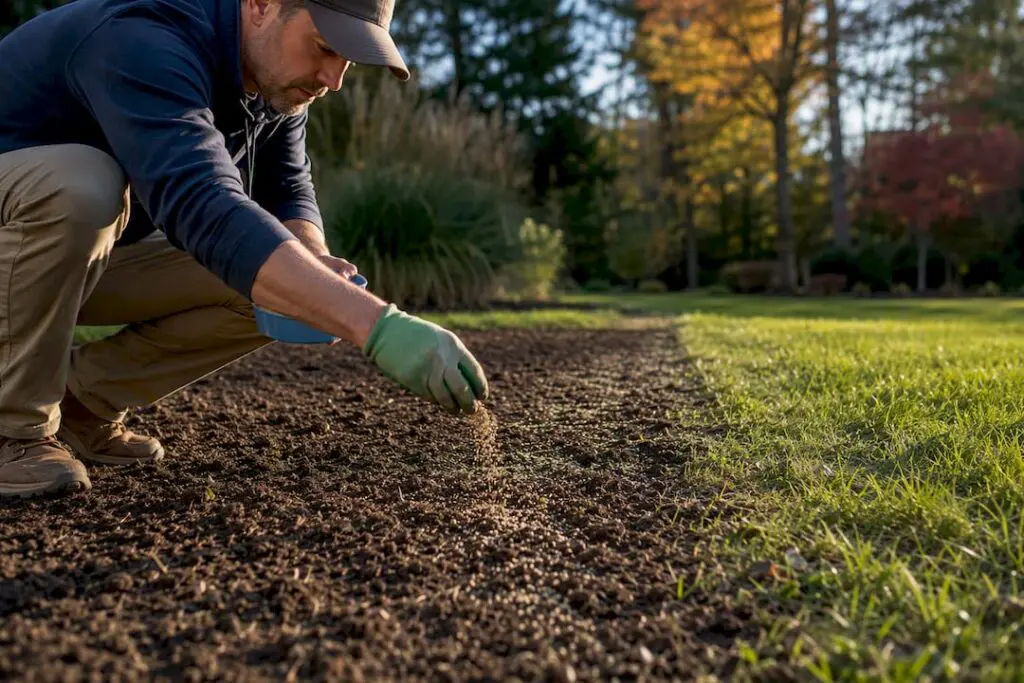
The strongest landscaping timeline in NJ builds around one rule: fall is when your lawn and beds do their most important work. Rutgers Cooperative Extension sets the late-summer to early-fall window as the anchor for seeding, fertilizing, and root development, and Fernandez & Sons schedules client renovations around that same calendar. Everything else, spring cleanup, summer watering, winter prep, supports that fall push. Here’s the season-by-season breakdown.
At a Glance
Fall from September to November is the key period for fertilizing, overseeding, and soil improvement to ensure lawn resilience through winter and into spring.
Proper timing for seeding is August 15 to October 10, depending on whether you are in northern or southern New Jersey, with soil testing and preparation recommended beforehand.
Summer watering should focus on deep, infrequent sessions to avoid drought stress, and fertilizer application is best avoided during hot months to prevent weed growth and stress.
Spring tasks should be limited to debris removal, early fertilization only if fall fertilization was missed, and lawn health checked before active growth begins.
Contractors are recommended for core aeration, overseeding, grading, and hardscape prep, especially during fall windows, with early booking necessary to secure optimal timing.
Table of Contents
-
Year-Round Checklist for a Landscaping Timeline NJ Homeowners Can Follow
-
Summer (June Through August): Protect Roots and Watch for Stress
-
Winter (December Through February): Protect, Store, and Plan
-
Late Summer/Early Fall Renovation Window: Exact Dates for North vs South NJ
Year-Round Checklist for a Landscaping Timeline NJ Homeowners Can Follow
A dependable landscaping timeline NJ properties can run on all year comes down to a handful of repeatable habits. Mow cool-season grass at 3 to 3.5 inches, cutting often enough that you never remove more than a third of the blade in one pass. Water deeply and infrequently rather than daily sprinkles, adjusting for rainfall instead of running on a fixed clock. Rutgers recommends re-testing your soil every three years so fertility decisions are based on data, not guesswork.
Run a monthly walk-through covering:
-
Drainage spots where water pools after rain
-
Early signs of pests or fungal disease on leaves and turf
-
Bed edges and mulch lines that need cleanup
-
Mower blades, irrigation heads, and hose connections for wear
Spring (March Through May): Tidy Up Without Overdoing It
Spring tempts every NJ homeowner to fertilize hard and mow low. Resist both urges. Clear winter debris once the ground firms up and frost risk fades, usually mid to late March in North Jersey and a week or two earlier down south. Rake gently around emerging perennials and bulbs; a heavy hand here snaps new shoots before they’ve had a chance.
Whether you fertilize at all depends on what happened last fall. If your lawn got a proper late-season feeding, Rutgers guidance advises minimizing spring nitrogen since it pushes soft, shallow top growth instead of the deep roots you actually want. Skip it, or apply only a light dose if the lawn looks pale.
Spring tasks worth prioritizing:
-
Apply pre-emergent crabgrass control before soil temperatures hit the mid-50s, typically early to mid-April
-
Refresh mulch to 2 to 3 inches, keeping it off trunks and stems
-
Set the first mower pass slightly higher than usual to ease turf out of dormancy
-
Check irrigation heads and timers before the growing season ramps up
Pro Tip: If you skipped fall fertilizer last year, spring is the one season where a light, balanced feeding makes sense. Otherwise, save your nitrogen budget for September.
For homeowners tackling turf damage after a rough winter, a step-by-step lawn revival plan can help you sequence the work correctly.
Summer (June Through August): Protect Roots and Watch for Stress
Summer isn’t the season to push growth. It’s the season to protect what’s already established. Water deeply, delivering 1 to 1.5 inches per week in one or two sessions rather than frequent light watering that keeps roots shallow. Raise your mower deck to around 3.5 inches; taller grass shades its own roots and resists drought stress better than a closely cropped lawn.
Watch for these signals of a struggling lawn:
-
Footprints that stay visible in the grass for more than a few seconds
-
Blue-gray or grayish patches, often the first visible sign of drought stress
-
Brown patch or dollar spot fungus, common in NJ’s humid July and August stretches
-
Chinch bugs or grubs showing up as irregular dead patches despite adequate watering
Hold off on any major renovation, seeding, or heavy fertilizing until temperatures drop. Summer heat and seed germination don’t mix well, and nitrogen applied now feeds weeds and stress more than the lawn itself. A partner guide on summer lawn care covers similar reasoning on why minimizing summer nitrogen protects turf through the hottest stretch.
Fall (September Through November): The Real Growing Season
Fall is where your landscaping timeline NJ plan earns its keep. Cooler nights, more consistent rainfall, and less weed competition make September through November the single best stretch for building a lawn that survives winter and bounces back strong in spring.
Fertilization matters most here. Somerset County RCE recommends fertilizing in September once daytime highs drop below roughly 90°F, using a slow- and quick-release nitrogen blend at about 1 pound of N per 1,000 square feet, followed by a second application in November near your last mowing. Across the full year, Rutgers recommends 4 to 5 pounds of nitrogen per 1,000 square feet for high-maintenance irrigated lawns, and 1 to 3 pounds for low-maintenance lawns, with the bulk of that total applied in fall.
Rutgers guidance is consistent on one point: minimizing spring nitrogen and shifting emphasis to fall builds deeper roots and better drought resilience the following summer.
Aeration and overseeding follow a specific sequence:
-
Core aerate first, pulling plugs to relieve compacted soil
-
Overseed immediately after, so seed falls into the aeration holes
-
Topdress lightly with compost if the lawn is thin
-
Water daily in light sessions until seedlings establish, then taper to deep, infrequent watering
Fall is also when post-emergent broadleaf herbicide works hardest, since weeds are actively pulling nutrients into their root systems ahead of winter, making them more susceptible to treatment than in spring.
Winter (December Through February): Protect, Store, and Plan
Winter isn’t dead time on a landscaping timeline NJ homeowners follow closely, it’s prep time. Drain and store hoses, sharpen and clean mower blades, and winterize irrigation lines before the first hard freeze to avoid burst pipes come spring.
For hardscapes, choose de-icers carefully. Rock salt corrodes pavers and concrete over time and harms nearby plant roots; a calcium magnesium acetate or pet-safe de-icer protects both. If you’re managing snow removal for a larger property, lining up a reliable snow plowing service before the season’s first storm beats scrambling after it.
Hold off on pruning most shrubs until late winter or very early spring, when plants are still dormant but the worst cold has passed. Use the quieter winter months to schedule your next soil test and order mulch, seed, or fertilizer ahead of spring price increases.
Late Summer/Early Fall Renovation Window: Exact Dates for North vs South NJ
Timing your renovation correctly matters more than almost any other decision in the whole calendar. Rutgers sets the primary seeding window at August 15 through October 5 for Northern NJ and August 20 through October 10 for Southern NJ, both roughly six to eight weeks before the first hard frost.
| Region | Seeding window | Prep priority |
|---|---|---|
| Northern NJ | August 15 to October 5 | Aerate first, seed by early October |
| Southern NJ | August 20 to October 10 | Slightly later frost, extra week of flexibility |
Before you seed, run a fresh soil test, dethatch or repair bare patches, and decide between slit seeding (better seed-to-soil contact) or sodding for instant coverage. Slit seeding into the soil, rather than broadcasting seed on top, meaningfully improves germination since surface-scattered seed often fails during a dry spell. Cover new seed lightly with straw mulch and water once or twice daily until germination, typically 7 to 14 days, then shift to deeper, less frequent watering once seedlings reach mowing height.
Contractor vs DIY: When to Hire a Pro
Some fall tasks reward professional equipment: core aeration with commercial-grade machines, full slit-seed renovations, grading corrections that fix drainage before they become bigger problems, and hardscape prep ahead of a patio or walkway install. Booking a contractor in late spring or early summer locks in your spot before the fall calendar fills up. Fernandez & Sons offers free estimates specifically to make that scheduling decision easy and fast for Morris and Somerset County homeowners.
Breaking Each Season Into Bi-Weekly Tasks
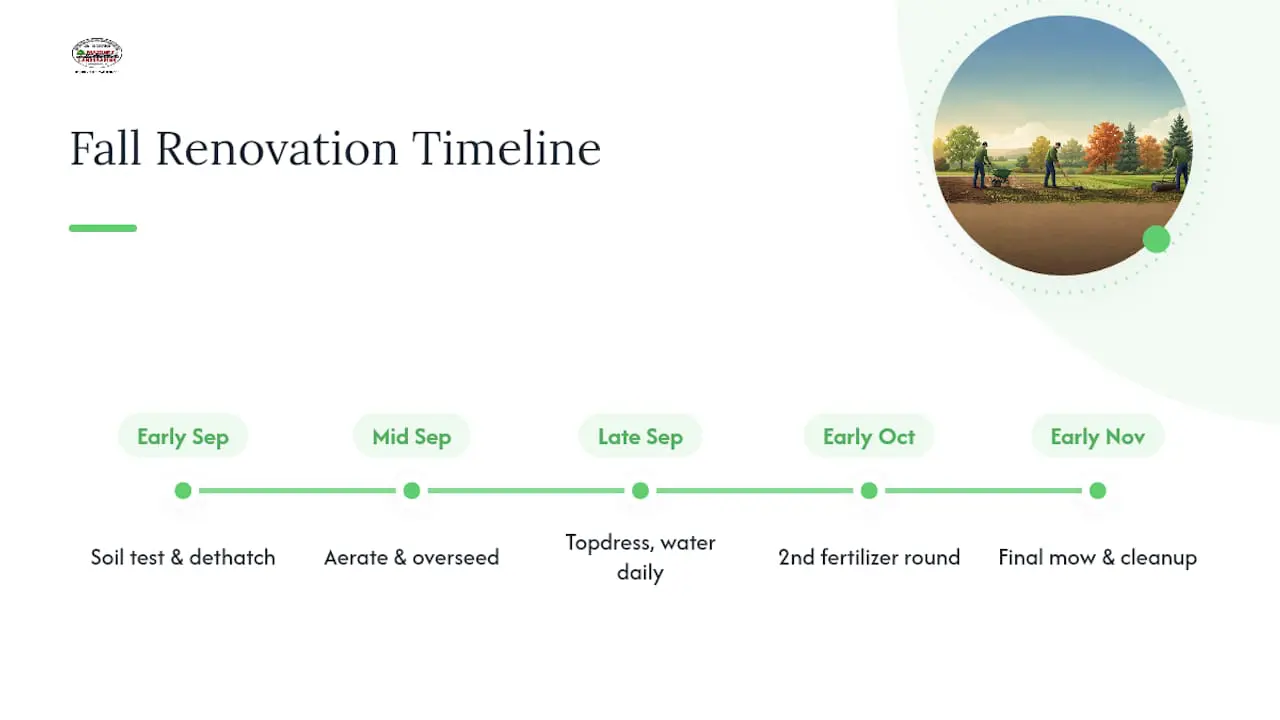
A season-long checklist is useful, but most homeowners do better with a shorter lens. Breaking fall into two-week blocks, for example, keeps the renovation sequence from becoming overwhelming. Early September: soil test and dethatch. Mid-September: aerate and overseed. Late September into early October: topdress, water daily, and apply your second fertilizer round. Early November: final mow and cleanup before dormancy.
Spring benefits from the same bi-weekly structure. Late March: debris removal and bed cleanup. Early April: pre-emergent application. Mid-April: first mower pass and irrigation check. Early May: mulch refresh and spot-seeding of any bare patches that survived winter.
Summer works better in monthly blocks since the goal is protection, not action. June: confirm irrigation depth and frequency. July: monitor for drought stress and disease as humidity peaks. August: hold steady, resist the urge to fertilize, and start planning September’s renovation.
Winter follows a similar monthly rhythm. December: winterize equipment and irrigation. January: order spring materials while suppliers have full stock. February: schedule your next soil test and book any contractor work for early spring, since slots fill quickly once the weather turns.
This kind of granular scheduling matters most for property managers juggling multiple sites, where a missed two-week window on one property can mean losing that section’s seeding cycle for the entire year.
Native Plant Selection for New Jersey Landscapes
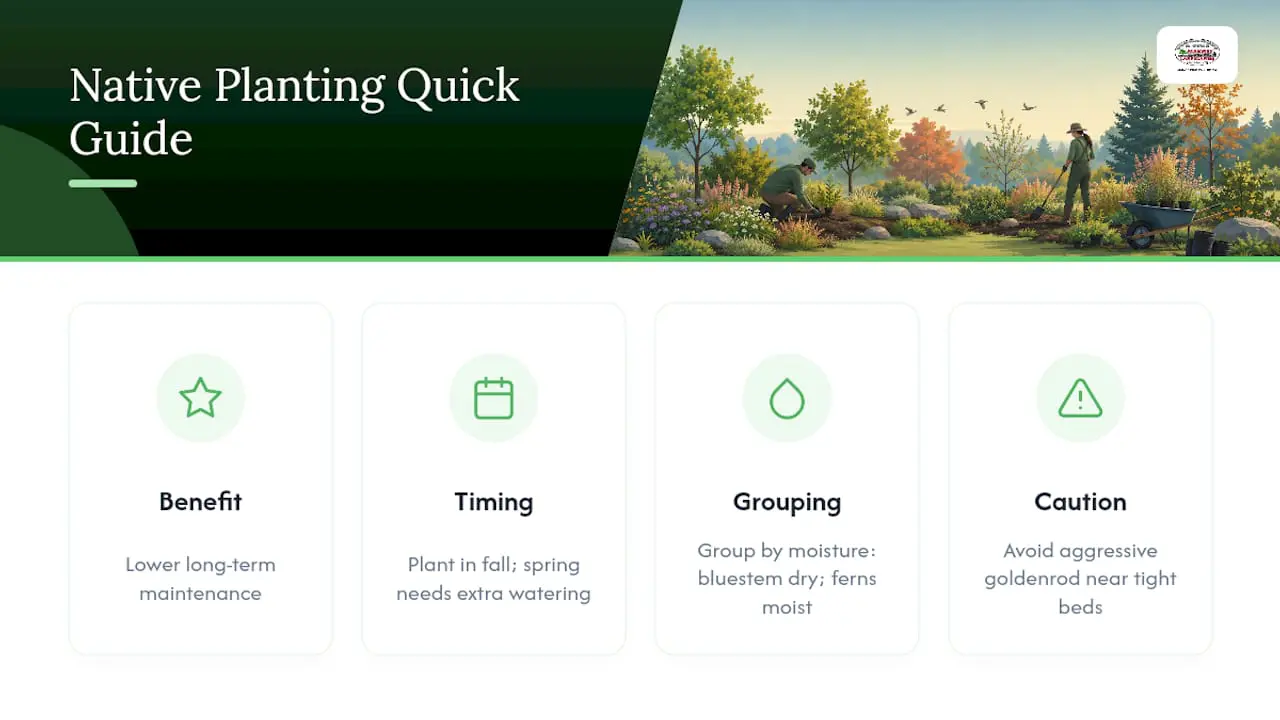
Working native species into your beds cuts long-term maintenance because these plants evolved for New Jersey’s soil and rainfall patterns rather than a nursery’s ideal conditions. Switchgrass, black-eyed Susan, and New England aster tolerate the clay-heavy soils common across Morris and Somerset Counties without the constant amending that non-native ornamentals demand.
Fall is the best planting window for most native perennials and shrubs, giving root systems a full season to establish before summer heat arrives. Spring planting works too, but expect more watering in the first year since roots have less time to develop before summer stress sets in.
Group plants by moisture need rather than mixing drought-tolerant species with thirstier ones in the same bed. Little bluestem and coneflower handle dry spells well, while native ferns and joe-pye weed want consistently moist soil, often near downspouts or low-lying areas where water naturally collects.
Native shrubs like winterberry and elderberry also feed local birds through winter, extending the value of your landscaping beyond curb appeal. Skip aggressive spreaders like native goldenrod near tighter beds unless you’re prepared to divide it every couple of years, since it competes hard with slower-growing neighbors.
How NJ’s Climate Shapes Your Landscaping Calendar
New Jersey’s frost dates drive nearly every deadline on this timeline. North Jersey typically sees its last spring frost in late April and first fall frost in early to mid October. South Jersey runs about one to two weeks ahead on both ends, which is exactly why Rutgers gives Southern NJ five extra days on the seeding window.
Precipitation matters just as much as temperature. New Jersey averages roughly 45 inches of rain annually, but it doesn’t fall evenly. Late summer often brings dry stretches right when new seed needs consistent moisture, which is why the fall renovation window leans on supplemental watering rather than rainfall alone. Spring tends to run wetter, another reason heavy spring fertilization is a mistake: excess nitrogen combined with saturated soil runs off into storm drains instead of feeding the lawn.
Humidity is the other local factor that changes the calendar. NJ’s sticky July and August air creates ideal conditions for fungal disease, which is part of why mowing height and morning watering (rather than evening) both matter more here than in drier climates.
Integrated Pest Management Timing for NJ Yards
Grubs, chinch bugs, and ticks all follow predictable seasonal patterns in New Jersey, and timing your response around their life cycle beats reacting after damage appears. Japanese beetle grubs feed heaviest in late summer and early fall, which makes August and September the window for targeted treatment if last year’s lawn showed grub damage.
Chinch bugs thrive in hot, dry conditions and show up as irregular brown patches in full-sun areas during July and August, often mistaken for drought stress. Check by parting the grass at the edge of a damaged patch. If you see small black insects moving quickly, that’s your answer.
Ticks peak in spring and again in fall, both times when temperatures sit in the 45 to 90 degree range. Keeping grass mowed to the recommended height and clearing leaf litter from bed edges removes the humid microhabitat ticks rely on, which does more for tick control than most spray treatments.
Rather than treating on a fixed calendar, inspect first and treat only where damage or pest presence is confirmed. This keeps chemical use targeted and avoids the water quality concerns Rutgers raises around over-application of both fertilizer and pesticide.
Irrigation Scheduling Around NJ’s Rainfall Patterns
New Jersey’s rain doesn’t arrive on a schedule, which means a fixed irrigation timer often wastes water or under-delivers depending on the month. Spring usually needs the least supplemental watering since rainfall runs heavier; a lawn getting an inch of rain a week from the sky doesn’t need the sprinklers running too.
Summer flips that equation. July and August often bring multi-week dry stretches, which is when the 1 to 1.5 inch weekly target becomes critical and best delivered in one or two deep sessions rather than daily light watering. Early morning irrigation, ideally before 10 a.m., reduces evaporation loss and gives grass blades time to dry before evening, cutting down on fungal disease risk.
Fall renovation projects need a different rhythm entirely: light, frequent watering during germination, then a taper to deep and infrequent once the new grass reaches mowing height. Smart irrigation controllers that adjust for rainfall automatically remove the guesswork here, particularly useful for property managers overseeing multiple sites where manual adjustment across each property isn’t realistic.
What Most Homeowners Get Wrong About Timing
Clients most often ask about two extremes: a small overseed job, which typically wraps in two to four weeks including germination, and a full renovation, which runs four to eight weeks once you count prep, seeding, establishment, and a follow-up check. The mistakes that derail both are almost always the same two: dumping fertilizer on in spring because the lawn “looks hungry,” and trying to seed in late October or November after the Rutgers window has already closed. Neither mistake is fatal, but both cost a full season of recovery.
Let Fernandez & Sons Handle the Timeline for You
Getting the fall window right takes coordination between soil testing, aeration equipment, seed selection, and watering schedules, and a missed week can cost you the entire season. Fernandez & Sons handles that coordination directly, offering landscaping and design services built around the same Rutgers timing windows covered above, along with seasonal maintenance and snow removal so your property stays covered every month of the year, not just during the fall push.

A site estimate typically takes 20 to 30 minutes and covers soil condition, drainage, existing turf health, and any hardscape work you’re considering alongside the renovation. Booking early matters most for late-summer renovation slots, since Rutgers’s six-week window fills fast once September arrives. Fernandez & Sons serves Morris and Somerset Counties with a free estimate and a satisfaction guarantee on every job. If your project also involves patios, walkways, or retaining walls alongside the planting work, the masonry services team can scope both at the same site visit. Reach out now to get on the fall calendar before the seeding window closes.