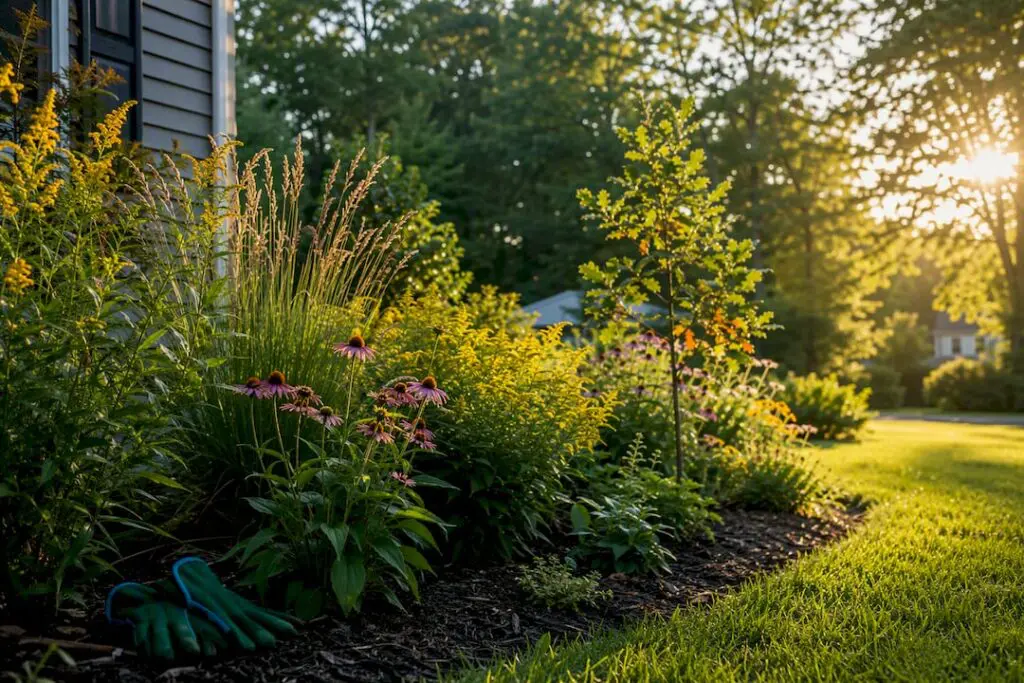
Yes, native plants in New Jersey support wildlife, cut down on watering and fertilizing, and help manage stormwater better than turf or ornamental beds. A native plant is one that grew in New Jersey’s ecoregions before European settlement, from the Pinelands to the Highlands. Start by assessing your yard’s sun, soil, and drainage, then plant two or three species suited to those conditions.
Things to Know
Native plants need to be selected based on specific site conditions such as light, soil type, and drainage to ensure successful establishment and ecological benefit.
Proper planting depth, minimal watering after initial establishment, and avoiding overfeeding are critical to native plant survival in New Jersey gardens.
Sourcing local, scientifically named native plants from trusted nurseries and avoiding pretreated or wild-collected plants improves long-term success and pollinator support.
Building layered habitats from trees to groundcovers with native species enhances wildlife, especially insectivorous birds, more than focusing on a single plant type.
Professional installation is recommended for grading, drainage correction, and integrating native beds with existing landscape features to prevent common failure points.
Table of Contents
Why Native Plants Matter for New Jersey Yards
New Jersey’s landscape spans strikingly different growing conditions. A yard in the sandy Pinelands has almost nothing in common with clay soil in the Highlands or a salt-sprayed lot along the Shore. Native plants evolved to handle whichever of these zones they call home, which is why they typically need less watering and fewer chemical inputs than nursery-standard ornamentals once established.
The wildlife case is even stronger than most homeowners realize. Research from Rutgers NJAES found that Carolina chickadees need their surrounding landscape to contain a high proportion of native plant biomass to successfully raise their young. Non-native plants, even leafy ones, often can’t host the insects those birds depend on for food.
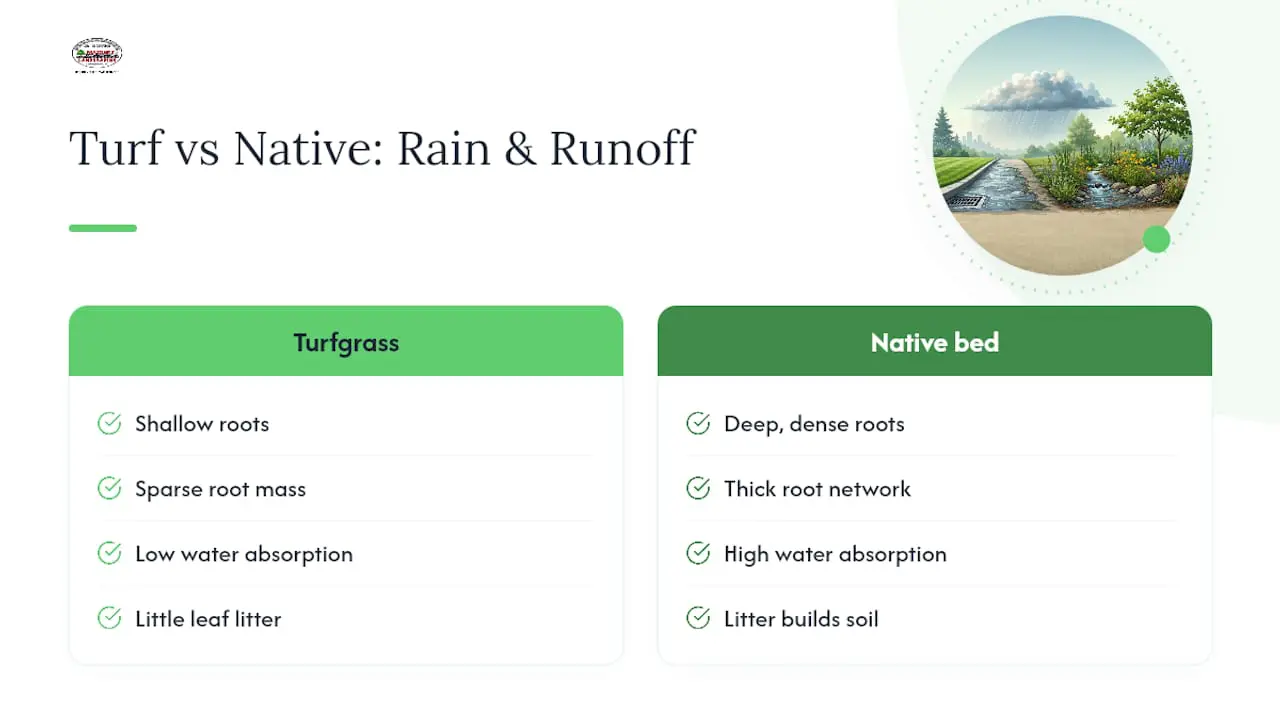
Native plants also do real infrastructure work. Their root systems run deeper and denser than turfgrass, and their leaf litter builds soil structure over time. Rutgers guidance on native plants and water shows this combination increases how much rainwater the ground absorbs, which means less runoff carrying fertilizer and sediment into local streams and the Barnegat Bay watershed. For homeowners dealing with a soggy backyard corner or runoff onto a neighbor’s property, that’s not a small side benefit. It’s often the fix.
How to Choose Native Plants for Your Yard
Skip the plant tags and start with your dirt. The NJ Green Building Manual recommends assessing site conditions first and matching plants to them, rather than amending soil broadly to suit whatever you already bought.
-
Map your light. Walk your yard at midday and again in late afternoon. Full sun means six or more hours of direct light; part shade is dappled or morning-only light; full shade sits under a tree canopy most of the day.
-
Test your soil before amending it. The Rutgers soil testing lab will tell you pH and nutrient levels for a modest fee, and many native species actually prefer the lower-fertility soil common across New Jersey. Don’t add compost or fertilizer just because that’s what garden centers push.
-
Check drainage. Dig a one-foot hole, fill it with water, and time how fast it drains. Standing water after an hour signals a spot for moisture-loving natives, not a spot to raise a bed and fight the site.
-
Note existing trees and structures. Established canopy limits light and competes for water, which narrows your understory choices before you plant anything.
-
Layer your plantings. Build from trees down to shrubs, then perennials and groundcovers, so you’re stacking habitat layers rather than scattering isolated plants.
-
Buy by scientific name. Ask for the Latin binomial (like Asclepias tuberosa, not just “butterfly weed”) since common names get slapped on cultivars that may not feed pollinators the way the straight species does.
For soil basics beyond what your local extension covers, this guide to gardening soil types is a useful primer before you dig.
Pro Tip: Clear invasive species like Japanese barberry or Norway maple seedlings before you plant natives. Established invasives will out-compete young natives for light and root space in the first two seasons, which is often why a new native bed struggles.
Best Native Plants for New Jersey Yards by Light and Role
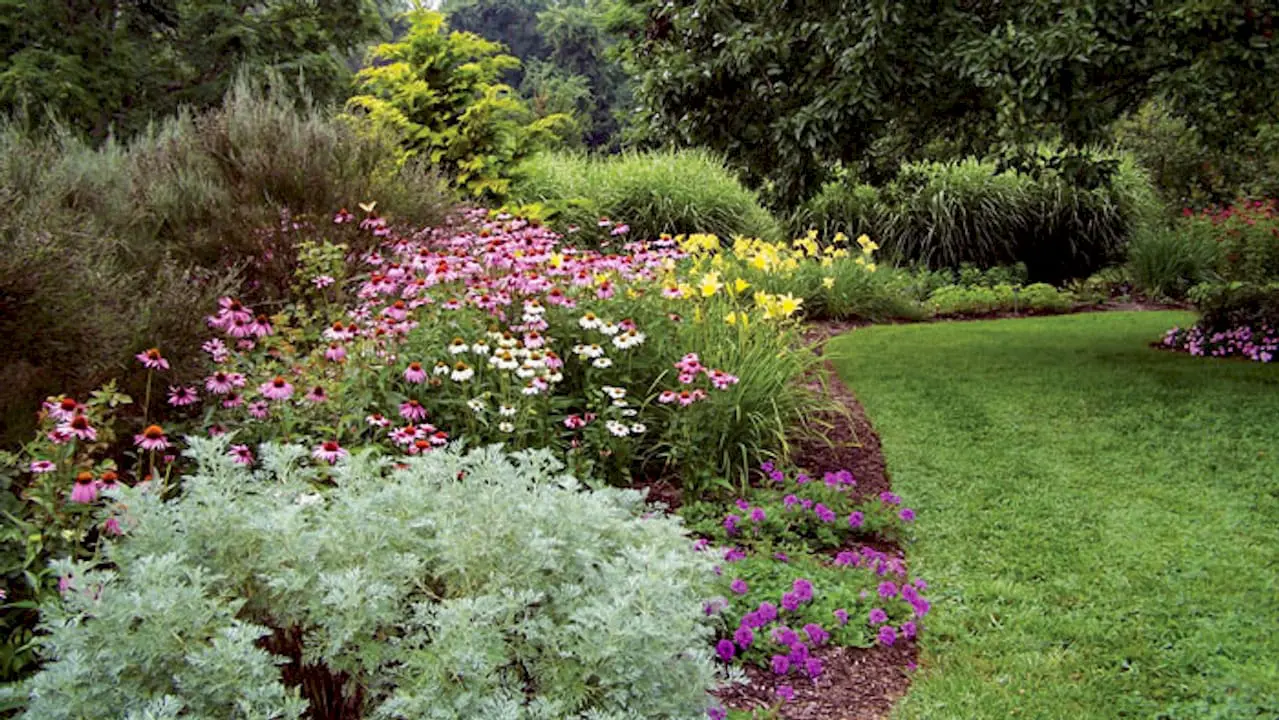
Layering matters more than any single plant pick, since insectivorous birds need continuous food and shelter through the season, from tree canopy down to groundcover, according to Rutgers NJAES. Here’s a starting toolkit organized by role and site condition.
Trees:
-
Quercus alba (white oak): the workhorse of NJ native landscaping, hosting hundreds of caterpillar species that feed breeding birds. Needs space for a mature large spread.
-
Amelanchier canadensis (shadblow serviceberry): a smaller understory tree with early spring blooms and June berries birds strip within days. Good for tighter suburban lots.
-
Cercis canadensis (eastern redbud): tolerates part shade and clay soil, with a compact form that fits foundation plantings.
Shrubs:
-
Clethra alnifolia (sweet pepperbush): thrives in moist to wet soil and part shade, with fragrant summer blooms pollinators swarm.
-
Ilex verticillata (winterberry holly): tolerates wet spots and produces red berries that persist into winter, feeding birds when little else is available.
-
Viburnum dentatum (arrowwood viburnum): adaptable to average soil and sun, with a dense habit that works well as a native hedge alternative.
Perennials and grasses, split by exposure:
-
Full sun: Asclepias tuberosa (butterfly weed), Rudbeckia fulgida (black-eyed Susan), Schizachyrium scoparium (little bluestem)
-
Part shade: Aquilegia canadensis (columbine), Heuchera americana (alumroot)
-
Full shade: Polystichum acrostichoides (Christmas fern), Tiarella cordifolia (foamflower)
-
Wet or rain garden sites: Iris versicolor (blue flag iris), Lobelia cardinalis (cardinal flower)
Coastal or sandy-lot homeowners should also know that dune grasses like American beachgrass function as erosion buffers along the Shore, per the NJ Green Building Manual. One caveat across nearly every list: “deer resistant” is relative. In heavy-pressure zones across Morris and Somerset counties, plan on temporary fencing for the first two seasons regardless of what the plant tag promises.
Where to Buy Native Plants in New Jersey
Big-box garden centers rarely stock true native stock, and mislabeling is common enough that verification matters more than convenience.
-
Check the Jersey-Friendly Yards plant database and its nursery directory before you shop, since it lists vendors carrying regionally sourced native stock.
-
Ask nurseries for scientific names on every tag, not just common names, and ask where seed originated. Local seed provenance matters because a “native” grown from Midwest seed may bloom on the wrong schedule for New Jersey pollinators.
-
Avoid vendors selling plants pretreated with systemic pesticides like neonicotinoids, which can persist in pollen and nectar.
-
Never dig plants from the wild. It’s both ecologically damaging and often illegal on public land.
-
Time your shopping around spring and fall native plant sales run by county park systems and conservation groups, when selection and pricing both tend to be better than retail.
Planting and Care Tips for NJ Native Plants
Most native plant failures trace back to two mistakes: planting too deep and overwatering or overfeeding afterward.
-
Find the root flare before you dig. The point where trunk meets root should sit at or slightly above grade. Burying it is a leading cause of early tree failure, according to Rutgers NJAES.
-
Water deeply but infrequently for the first two seasons: roughly one inch of water weekly, less once roots establish.
-
Mulch with shredded leaves rather than dyed bark. Leaf litter builds soil and shelters overwintering moth pupae and native bees.
-
Protect young plants from deer with temporary fencing or trunk tubes rather than relying on deer-resistant labeling alone, especially in Morris and Somerset counties where browsing pressure runs high.
-
Skip the fall cleanup. Leave perennial stems standing through winter for insect habitat, and cut back in early spring instead.
-
Go light on fertilizer. Most established natives don’t need it, and heavy feeding can push weak, floppy growth that flops in storms.
Pro Tip: If you’re planting on a slope or in heavy clay near Somerset County’s Piedmont soils, dig your planting hole wider than deep rather than deeper than wide. A too-deep hole in clay just creates a bathtub that drowns roots after rain.
Where to Find New Jersey Native Plant Information
Three resources cover most of what a home gardener needs. Rutgers NJAES publishes extension fact sheets, including FS1140 on residential native landscaping, plus soil testing services. Jersey-Friendly Yards, a project of the Barnegat Bay Partnership, offers a searchable plant database and vendor lists. The Native Plant Society of New Jersey runs county chapter events, plant sales, and identification help for gardeners who want hands-on guidance.
When to Bring in a Landscaping Contractor
Grading, drainage correction, and large-scale plantings around patios or walls usually call for a professional. Common fixes we make on native installs: root flares buried a foot too deep, planting holes over-amended with compost that traps water in clay soil, and layouts that ignore mature plant size. Fernandez & Sons offers free estimates and a satisfaction guarantee across Morris and Somerset counties.
Our Take: Skip the Perfection Trap
Homeowners researching native plants often get stuck chasing an all-or-nothing native yard, and that’s where most projects stall out before a single plant goes in the ground. The Rutgers research is clear that layered habitat, canopy to groundcover, matters more than hitting some purity threshold on every square foot. A yard with a white oak, a few viburnums, and a native perennial bed does real ecological work even with a lawn still in the mix.
The bigger gap in most advice online is sourcing. Plenty of guides list species without warning readers that a “native” cultivar bred for uniform bloom color can lose the nectar or leaf chemistry that pollinators actually need. Scientific names aren’t pedantry. They’re the only reliable way to know what you’re planting.
If you’re prioritizing anything first, make it site assessment and soil testing before you buy a single plant. Every failed native bed we’ve seen traces back to skipping that step, not to picking the wrong species.
Get Native-Friendly Landscaping Installed Right the First Time
Choosing the right species is half the project. Getting root flares set correctly, drainage graded properly, and native beds integrated with patios or walkways is the part that trips up DIY installs most often. Fernandez & Sons handles that install work across Morris and Somerset counties, backed by free estimates and a satisfaction guarantee on every job.

Whether you’re adding a native pollinator border around a new paver patio or fixing a drainage problem before you plant, our landscaping and design services cover the grading, soil work, and planting integration that make native beds actually thrive long-term. We also handle the masonry work that often goes hand in hand with a redesigned yard, from retaining walls to walkways framing new plant beds. Request a free estimate and we’ll walk your property to map out what your site actually needs before you spend a dollar on plants.
Recommended Sources to Explore
For deeper species lists and regional guidance: Rutgers NJAES native plant fact sheets, the Jersey-Friendly Yards database, and the Native Plant Society of New Jersey.