
Exterior Stone Maintenance: A Seasonal Care Guide
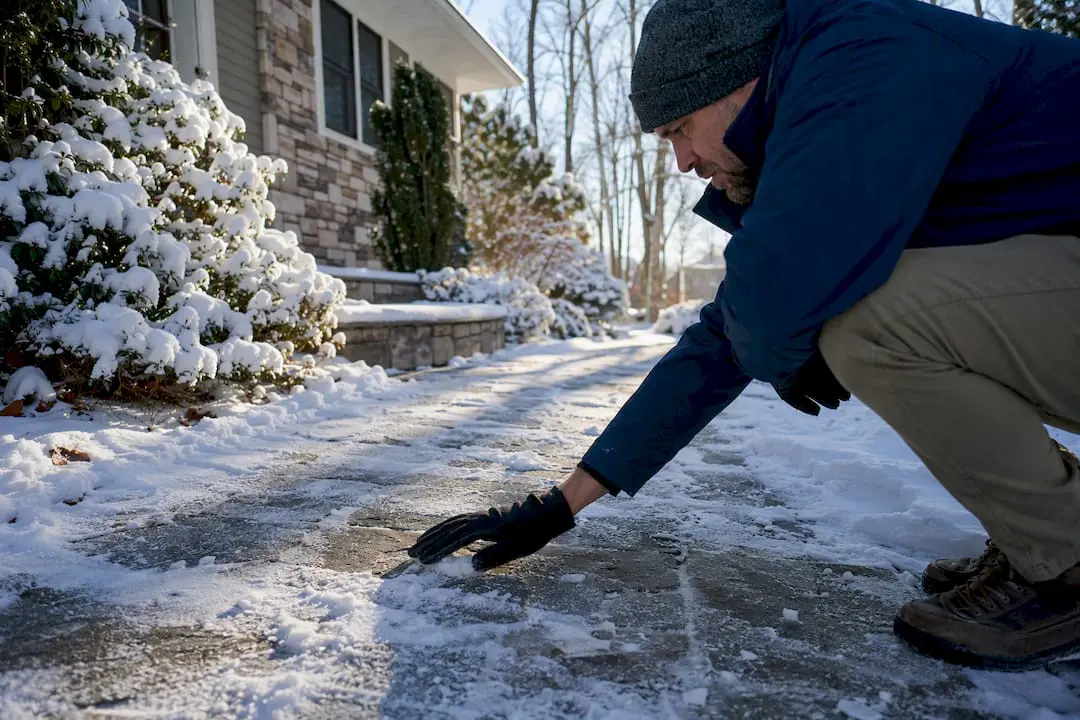
Protect exterior stone by preventing water intrusion: clean gently, inspect seasonally, and use breathable penetrating sealers only when the stone actually needs one. That single rule drives every good exterior stone maintenance program, and it’s the same principle laid out in ASTM C1515 and the Marble Institute of America’s cleaning guidance.
Three things to do right now:
- Sweep and rinse patios, walkways, and veneer with plain water or a pH-neutral cleaner.
- Skip vinegar, lemon juice, harsh acids, and rock salt near any natural stone.
- Never seal stone that’s still dirty or damp. It traps problems instead of solving them.
Fernandez & Sons sees the same pattern across Morris and Somerset County properties: the stone that lasts decades is the stone that never sat wet.
Key Takeaways
Exterior stone lasts longest when water is kept out, cleaning stays gentle and pH-neutral, and sealing relies on breathable penetrating products applied to clean, dry stone.
| Point | Details |
|---|---|
| Prevent water intrusion first | Fix drainage, grading, and flashing before addressing cosmetic stone issues. |
| Clean with pH-neutral products | Avoid vinegar, lemon, and harsh acids, which etch calcitic stone permanently. |
| Keep pressure washing conservative | Stay in the 800 to 1,200 PSI range with a fan tip and test patch first. |
| Choose breathable sealers | Penetrating silane or siloxane sealers resist trapped moisture better than topical coatings. |
| Skip rock salt in winter | Use sand or calcium magnesium acetate to protect stone from chloride damage. |
| Call in professional help | Fernandez & Sons offers free estimates and seasonal maintenance across Morris and Somerset Counties. |
Table of Contents
- Seasonal Stone Care Checklist For New Jersey Properties
- How Do You Clean Exterior Stone Without Damaging It?
- Should You Seal Your Exterior Stone, and With What?
- Common Stone Stains and How to Remove Them
- Spotting Damage Before It Becomes a Repair
- Winter Stone Care: Managing Snow and Ice Safely
- When Exterior Stone Maintenance Calls for a Professional
- Sources
Seasonal Stone Care Checklist For New Jersey Properties
Stone doesn’t fail overnight. It fails in cycles, and matching your maintenance to New Jersey’s seasons is what keeps small issues from becoming spring repairs.
- Spring: Inspect for winter cracks, clean surfaces, replace worn joint sand, and fix any hairline fractures before they widen.
- Summer: Treat organic staining, run the water-bead test on sealed areas, and pull vegetation growing near joints.
- Fall: Repoint loose or crumbling mortar, restore grading and drainage, and reseal if the forecast gives you a dry window.
- Winter: Clear snow with plastic tools, keep rock salt away from stone, and rinse deicer residue once temperatures allow.
Contractors who build seasonal maintenance calendars generally recommend inspecting hardscapes at least twice a year, since catching a problem in October is far cheaper than fixing it in March.
Pro Tip: Walk your stone surfaces after the first hard frost and again after the last one. Freeze-thaw damage almost always shows up at these two bookends of the cold season.
How Do You Clean Exterior Stone Without Damaging It?
Not all stone behaves the same way. Granite and quartzite shrug off most cleaners, while limestone, travertine, and other calcitic stones etch if you so much as splash them with something acidic. Honed finishes also show scratches and dulling faster than polished ones, so your cleaning method needs to match both the stone and the finish.
Stick with these tools:
- A pH-neutral stone soap or a dedicated stone cleaner labeled safe for exterior masonry.
- A soft-bristle broom for loose debris before you introduce any water.
- A garden hose or low-pressure washer for rinsing, never a jet-strength setting.
Avoid vinegar, lemon juice, bleach concentrate, and any cleaner not labeled stone-safe. These break down mortar joints and etch calcitic stone permanently.
If you’re pressure washing, keep the pressure conservative. Contractors generally hold pressure within a moderate PSI range for most natural stone (https://surfacecarepros.com/pro/beyond-stone-solutions/stone-hardscapes-care-guide.pdf), using a wide fan tip held 12 to 18 inches from the surface in a steady sweeping motion, never a fixed spot. Test any new cleaner or pressure setting on a hidden patch first. Rinse thoroughly afterward and let the stone air dry completely before sealing.
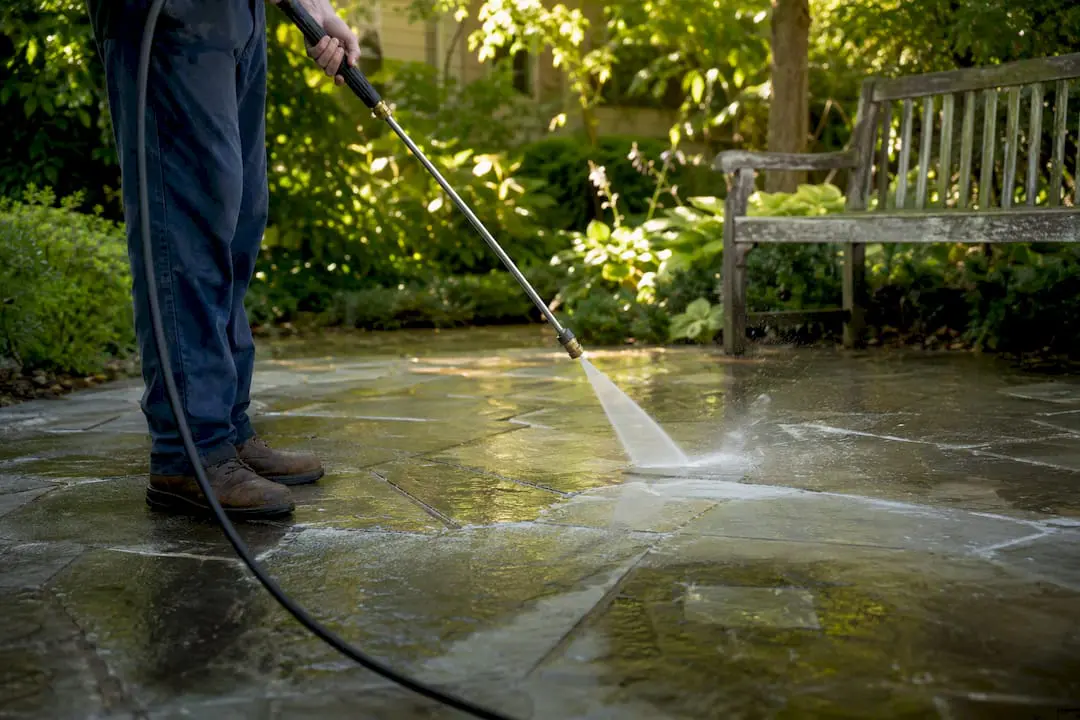
Walkways and patios that see foot traffic and mud generally need a full cleaning two to four times a year. Vertical veneer and facades, which shed rain naturally, can often go longer between cleanings unless you’re dealing with staining or shaded, damp spots that grow moss.
Should You Seal Your Exterior Stone, and With What?
Sealing is the step homeowners get wrong most often, usually by sealing the wrong stone, at the wrong time, with the wrong product. Topical sealers form a film on the surface and look great initially, but on exterior stone exposed to freeze-thaw cycles, they tend to trap moisture underneath. That trapped water freezes, expands, and pushes the sealer off in flakes, or worse, cracks the stone itself.
Breathable penetrating sealers, typically silane or siloxane based, work differently. They soak into the stone’s pores and repel water while still letting vapor escape, which is exactly why contractor guidance points to breathable impregnating sealers for outdoor freeze-thaw exposure. A sealant applied correctly also protects the substrate long term rather than just improving short-term appearance.
Here’s how to apply one correctly:
- Confirm the stone is fully clean and completely dry, ideally after 48 dry hours.
- Choose a mild day: moderate temperature, low humidity, no rain in the forecast for 24 hours.
- Apply an even, thin coat with a roller or sprayer, following the label’s coverage rate.
- Wipe away any excess before it dries to prevent a hazy film.
- Reapply periodically depending on surface orientation, traffic, and sun exposure.
Pro Tip: Spray a little water on the surface once it’s cured. If it beads up and rolls off, the sealer’s still working. If it soaks in, it’s time to reseal.
Common Stone Stains and How to Remove Them
Not every discoloration means damage, but knowing which is which saves you from scrubbing off the wrong thing or ignoring the wrong thing.
- Efflorescence shows up as a white, powdery haze. It’s mineral salt pushed to the surface by moisture, not dirt. Brush it off dry and address the moisture source underneath, or it keeps coming back.
- Rust and metal stains need a specialized poultice, and stubborn cases are worth handing to a professional rather than risking the surrounding stone.
- Oil and grease respond to an absorbent powder followed by a degreaser poultice, left to draw the stain out overnight, then rinsed.
- Moss and algae need mechanical scrubbing plus a mild oxygen-bleach treatment. Contractors generally favor oxygen bleach or a gentler biocide over concentrated chlorine around landscaping, since chlorine kills nearby plants and grass.
- Etching on limestone or travertine looks like a dull, cloudy spot where something acidic touched the surface. Minor etching can sometimes be honed out; deeper etching usually calls for a stone restoration specialist.
Efflorescence is a symptom, not the problem. If it keeps returning after cleaning, the real issue is moisture moving through the stone, not a dirty surface.
Spotting Damage Before It Becomes a Repair
A five-minute walk-through twice a year catches most of what turns into a costly repair later. Look for:
- Spalling or flaking on the stone’s surface, a classic sign of trapped moisture.
- Lippage, where paver edges sit unevenly and create trip hazards.
- Loose or wobbling stones, and voids in the mortar joints.
- Pooling water after rain, which signals a drainage problem, not just a cosmetic one.
Small jobs are fair game for a handy homeowner: raking out and repointing a short section of failed joint, filling hairline cracks, or replacing worn joint sand between pavers. But structural movement, spalling across a large area, or moisture that keeps reappearing after repairs are jobs for a contractor, not a weekend project. Minor repointing might run a few hundred dollars; a section of relaid patio or wall rebuild climbs into thousands depending on scope, so getting a second opinion before winter is worth the phone call.
Winter Stone Care: Managing Snow and Ice Safely
Sodium chloride, the salt in most bagged deicers, dissolves into the stone’s pores and accelerates the same freeze-thaw cracking you’re trying to prevent. Sand or calcium magnesium acetate gives you traction without the long-term chemistry problem.
- Clear snow with a plastic shovel or snow pusher. Metal blades chip and scratch stone edges.
- Skip rock salt entirely on stone patios, steps, and veneer.
- Before winter hits, repoint loose mortar, confirm drainage is clear, and reseal in one last dry stretch if conditions allow.
- Rinse off deicer residue on the next thaw day, once it’s safe to be outside.
Pro Tip: Keep a bag of sand by the door instead of ice melt. It’s less convenient than a scoop of salt, but your stone will outlast the inconvenience by decades.
Tools and Materials Worth Keeping on Hand
A basic kit covers most maintenance: a soft-bristle broom, garden hose, low-pressure washer, plastic snow shovel, and pointing tools for joint work. Stock a pH-neutral cleaner, a labeled breathable silane/siloxane sealer, kiln-dried or polymeric joint sand, and mortar mix for small repairs. Check sealer labels for “breathable” or “penetrating” language, keep pressure washers under 1,200 PSI, and wear gloves and eye protection whenever you’re handling cleaners or sealer chemicals.
When Exterior Stone Maintenance Calls for a Professional
Some jobs are better handed to a masonry contractor, particularly anything involving structural repointing, drainage correction, or full-surface sealing. Fernandez & Sons handles masonry repairs, repointing, sealing, restoration, and seasonal snow removal across Morris and Somerset Counties, often on the same properties year after year.
What sets an experienced crew apart is diagnosis, not just labor. On a site visit, a contractor should check for:
- Weep holes and flashing that direct water away from the stone.
- Grading and downspout placement that could be feeding moisture into the base.
- Whether existing sealer is topical (and trapping moisture) or a breathable penetrating type.
Fernandez & Sons brings over a decade of local experience, free estimates, and a satisfaction guarantee to every seasonal maintenance job, which matters when you’re trusting someone with a stone facade that took years to build correctly.
What I’ve Learned Watching Stone Fail and Survive
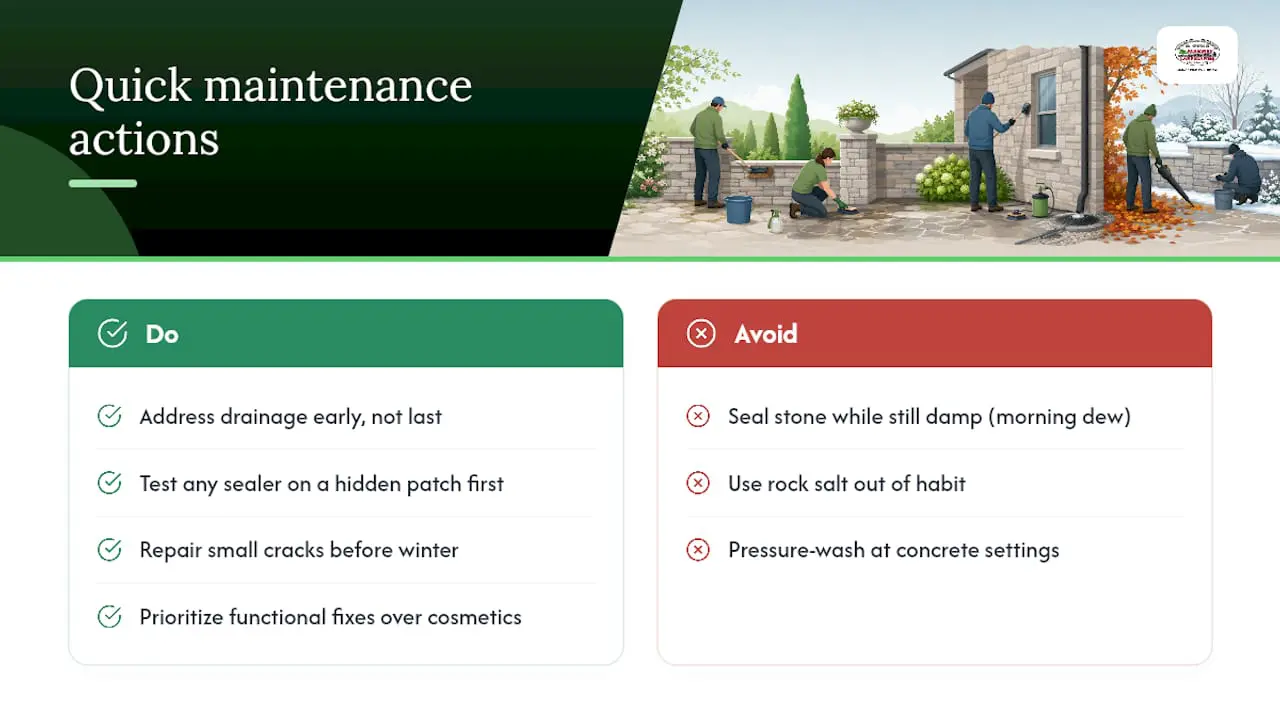
Drainage gets fixed last and blamed least, which is backward. Most of the “stone problems” homeowners call about start as water problems that had nowhere to go. Test any sealer on a hidden patch before committing to the whole patio, and if you only have time for one repair before winter, make it the small crack, not the big cosmetic fix.
The mistakes I see most: sealing stone that’s still damp from morning dew, reaching for rock salt out of habit, and pressure washing at settings meant for concrete instead of stone. None of these are dramatic mistakes. They’re just small ones, repeated every year, until the stone shows it.
Let Fernandez & Sons Handle the Maintenance You’d Rather Not
Fernandez & Sons is the local alternative to piecing together DIY stone care one YouTube video at a time. Instead of guessing at PSI settings or sealer chemistry, you get a crew that’s diagnosed drainage and freeze-thaw issues across Morris and Somerset County properties for over a decade.

That local, seasonal focus matters. The same team handling your spring stone inspection can handle fall repointing and winter snow removal, which means nobody’s guessing what happened to your patio between visits. Every project starts with a free estimate and comes backed by a satisfaction guarantee, whether you need a small repointing job or a full masonry restoration for your NJ home. If your stone is showing cracks, staining, or drainage trouble before winter sets in, request a free estimate and get ahead of the freeze-thaw season instead of repairing after it.
Sources
This guide draws on ASTM C1515 and MIA cleaning standards, contractor sealer guidance from Rose Restoration, pressure-washing PSI recommendations from SurfaceCarePros, and freeze-thaw prevention research from NTPavers.
- Outdoor stone care: protecting patios & pool decks | Rose Restoration
- Exterior stone hardscapes care guide | SurfaceCarePros