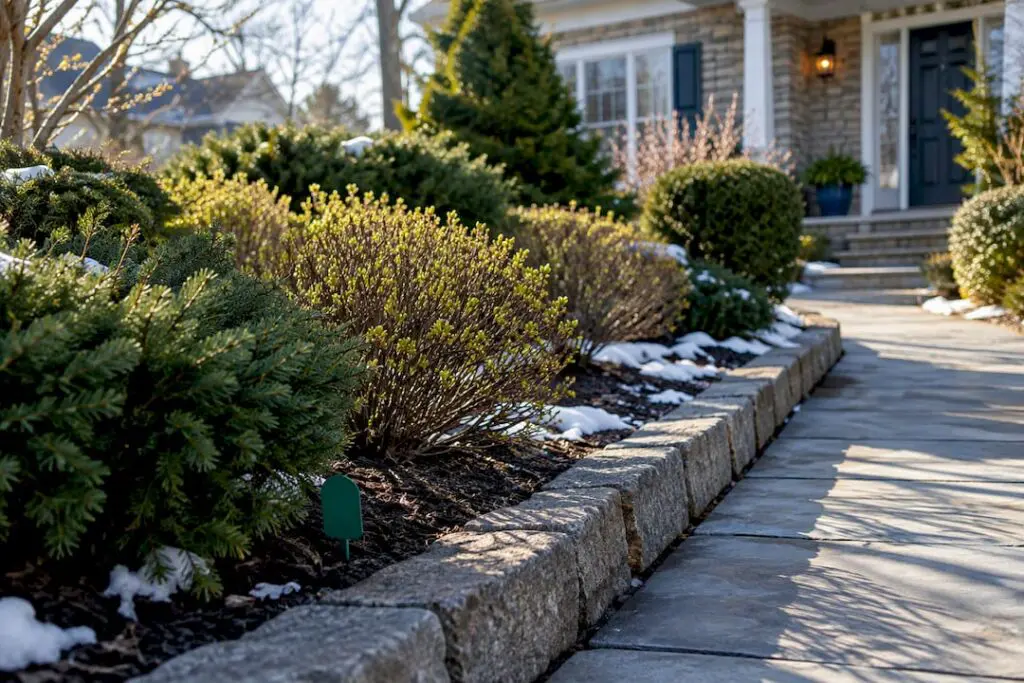
Landscaping generally pays off for New Jersey homeowners, though the size of the return depends heavily on the project. Lawn care and simple curb-appeal fixes deliver the strongest returns for the least money, while paver patios recover well when installed with proper grading and base preparation. Large luxury features tend to be mixed investments. Local durability and drainage conditions change these numbers more than most homeowners expect, which is why the details below matter as much as the headline figures.
TL;DR:
- Lawn care and turf upgrades have the highest cost recovery, with studies showing returns as high as 217 percent, making them the most financially efficient projects.
- Proper base preparation, drainage, and assessing site conditions are essential, as poor grading or unaddressed drainage can negate project benefits and cause costly repairs.
- Inexpensive projects like plantings, mulch, and shrub trimming provide quick visual improvements and high satisfaction, especially when combined with good drainage planning.
- Large luxury features, such as pools or ornate gardens, often underperform financially and carry high maintenance costs, limiting their resale value.
- Site-specific factors, including durability of materials and native plant choices, significantly influence the long-term return on investment in New Jersey landscaping projects.
Table of Contents
- What drives landscaping ROI in New Jersey
- Top landscaping projects with the best ROI for New Jersey homeowners
- Cost ranges and budgeting for NJ homeowners
- How to prioritize projects based on whether you plan to sell or stay
- New Jersey specific risks and best practices for drainage and native plants
- How to work with a local contractor in Morris and Somerset counties
- What New Jersey homeowners get wrong about landscaping ROI
- Fernandez & Sons: local services that help maximize landscaping ROI
- Sources
- FAQ
What drives landscaping ROI in New Jersey
Two forces shape whether a landscaping project pays off: how much it improves a home’s resale value, and how much daily enjoyment it adds for the family living there. The National Association of REALTORS® tracks this second factor as a “Joy Score,” and outdoor projects consistently score well on both fronts, which is part of why they attract national cost recovery data year after year.
Material choice matters just as much as design. New Jersey’s freeze-thaw cycles put real stress on hardscape, and a patio built without a frost-resistant base can heave and crack within a few winters, erasing any value it added. Site conditions carry similar risk:
- Poor grading that pools water near the foundation can undo the value of an otherwise attractive yard.
- Root conflicts from mature trees can crack new walkways or patios within a few seasons.
- Skipping a drainage plan is one of the most common reasons NJ landscaping projects underperform.
Curb appeal can add roughly 7% to 15% to a home’s value, according to academic research, which for a $299,000 home works out to about $20,000 to $24,000 in added value. Homeowners planning to sell soon should weigh that figure heavily; those staying put can lean more toward projects that maximize daily use.
Top landscaping projects with the best ROI for New Jersey homeowners
Some projects consistently outperform others, whether the goal is resale value or years of backyard use.
- Lawn care and turf upgrades. Basic lawn maintenance and seed or sod renewal remain the cheapest way to boost a home’s appearance, and Realtor cites lawn care ROI figures as high as 217%, with several studies showing strong recovery for seed and sod work.
- Front-yard plantings, mulch, and shrub trimming. Inexpensive and fast, these projects deliver an outsized visual return and are often the first thing a buyer or neighbor notices.
- Irrigation and sprinkler systems. The upfront cost is real, but efficient systems reduce water waste and keep lawns and beds looking healthy through NJ’s hot, humid summers, which supports resale appeal.
- Patios and decks. Midrange in cost, high in usability, with ROI that varies by material quality and the craftsmanship behind the build.
- Low-return items to watch. In-ground pools and highly specialized gardens tend to underperform because they narrow the pool of interested buyers and carry high upkeep costs that don’t always translate into resale value.
NAR and NALP survey data show lawn care and seed or sod upgrades often recover well above their cost, with high reported Joy Scores alongside strong cost recovery. That combination, low cost and high satisfaction, is rare among home improvement categories. For more on which upgrades New Jersey homeowners are prioritizing, see this guide to landscape upgrades that add value.
Cost ranges and budgeting for NJ homeowners
Setting a realistic budget starts with knowing what a project actually includes, not just the sticker price of materials.
- Lawn care and turf renewal costs the least of any project on this list and delivers fast visual results.
- Paver patios carry a wide cost range in New Jersey depending on square footage, pattern complexity, and site prep needs.
- Irrigation systems add an upfront investment but reduce manual watering and plant loss over time.
- Tree planting costs vary by species and size, with larger specimens costing more but delivering shade and privacy sooner.
Site prep is where budgets often go wrong. Grading corrections, drainage fixes, permits, and winterization steps rarely show up in a rough quote but can add meaningfully to the final cost. A simple planning exercise helps: define the scope, estimate a low and high cost range, then weigh that against expected resale recovery or years of personal use. Homeowners on tighter budgets can phase work, starting with lawn care and plantings, then adding hardscape in a later season, without losing much ROI along the way.
How to prioritize projects based on whether you plan to sell or stay
The right project depends less on what looks impressive and more on the homeowner’s timeline.
- Selling within 12 months: Focus on lawn care, front-yard plantings, and any minor hardscape repairs. These are quick, affordable, and directly influence a buyer’s first impression.
- Selling in one to three years: Add durable hardscape like paver walkways or a patio, plus irrigation. Skip highly customized features that may not match a future buyer’s taste.
- Staying three or more years: Prioritize outdoor living upgrades, a patio, an outdoor kitchen, that raise everyday enjoyment, but choose materials built for NJ winters so the investment lasts.
Before hiring anyone, ask how they handle grading and drainage, what warranty covers the installation, and how change orders are priced.
Pro Tip: Ask any contractor for photos of a similar project after at least one winter, not just the day it was finished, to judge how the materials actually hold up.
New Jersey specific risks and best practices for drainage and native plants
New Jersey’s climate rewards landscaping choices that account for water, not just appearance. The Rutgers NJ Green Building Manual recommends grouping plants by water needs, choosing native or adapted species, limiting turf area, and using efficient irrigation and mulch to retain soil moisture, all of which lower long-term maintenance costs.
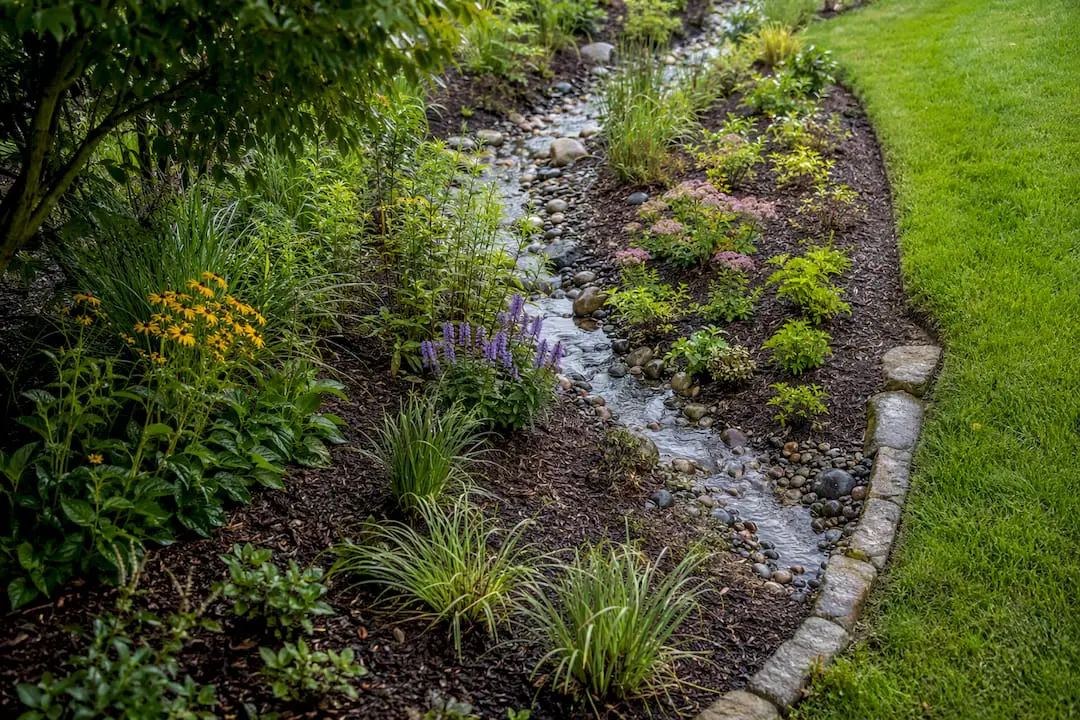
Drainage deserves particular attention. Rutgers continuing education coursework on water management stresses that site analysis and grading design come before any planting or hardscape decision, since poor drainage is a leading cause of landscape failure. A patio or walkway that channels water toward a foundation instead of away from it can cause moisture damage that costs far more to fix than the original project.
Before starting any major work, a resilient design should include:
- A soil test to understand drainage and fertility needs.
- A grading plan that directs water away from structures.
- A plant palette built around native or adapted species suited to NJ conditions.
- Hardscape materials rated for freeze-thaw durability.
Rutgers recommends limiting turf and using efficient irrigation to reduce long-term water use and cost, a practice that also appeals to buyers looking for lower-maintenance yards. For plant-specific guidance, this native plants resource covers species suited to New Jersey’s sun and soil conditions.
How to work with a local contractor in Morris and Somerset counties
A strong estimate should cover more than materials. Ask for site prep and grading details, drainage provisions, a materials list, warranty terms, and a cleanup plan before signing anything.
- Insist on a written scope of work, a realistic timeline, and a clear change-order process.
- Ask whether the estimate includes a satisfaction guarantee and what it covers.
- Bring in specialists for grading, drainage, or masonry when a project touches structural elements.
- Get more than one quote for larger hardscape work to compare pricing and approach.
Homeowners in Morris and Somerset counties can review examples of local landscape design and masonry work through Fernandez & Sons’ New Jersey landscaping services, which outlines how design, build, and outdoor living projects come together in practice. Readers who want to compare contractor credentials more broadly can also check a directory like PNV Leads.
What New Jersey homeowners get wrong about landscaping ROI
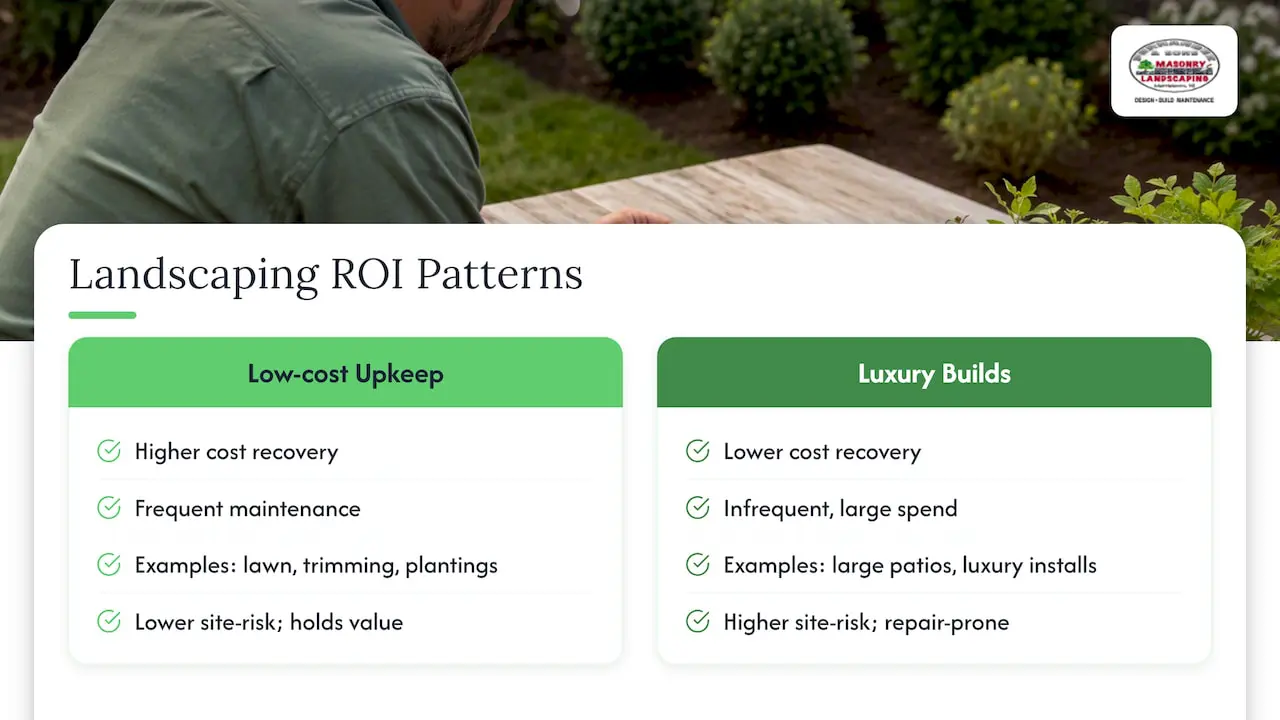
The conventional advice treats landscaping ROI as a single number, as if every patio or lawn upgrade returns the same percentage. It doesn’t. The research consistently shows that low-cost, high-frequency projects, lawn care, trimming, seasonal plantings, outperform expensive luxury builds on a pure cost recovery basis, yet homeowners often chase the bigger project first because it feels more transformative.
The bigger mistake is ignoring site conditions. A beautifully designed patio on poorly graded soil will cost more in repairs than it ever returns in value. Drainage and material durability aren’t exciting topics, but they determine whether a project holds its value through a New Jersey winter or needs to be redone in five years.
If there’s one place to start, it’s the cheap stuff: lawn care, mulch, and plantings, paired with an honest look at drainage before any bigger project begins. Everything else should build on that foundation, not replace it.
— BG
Fernandez & Sons: local services that help maximize landscaping ROI
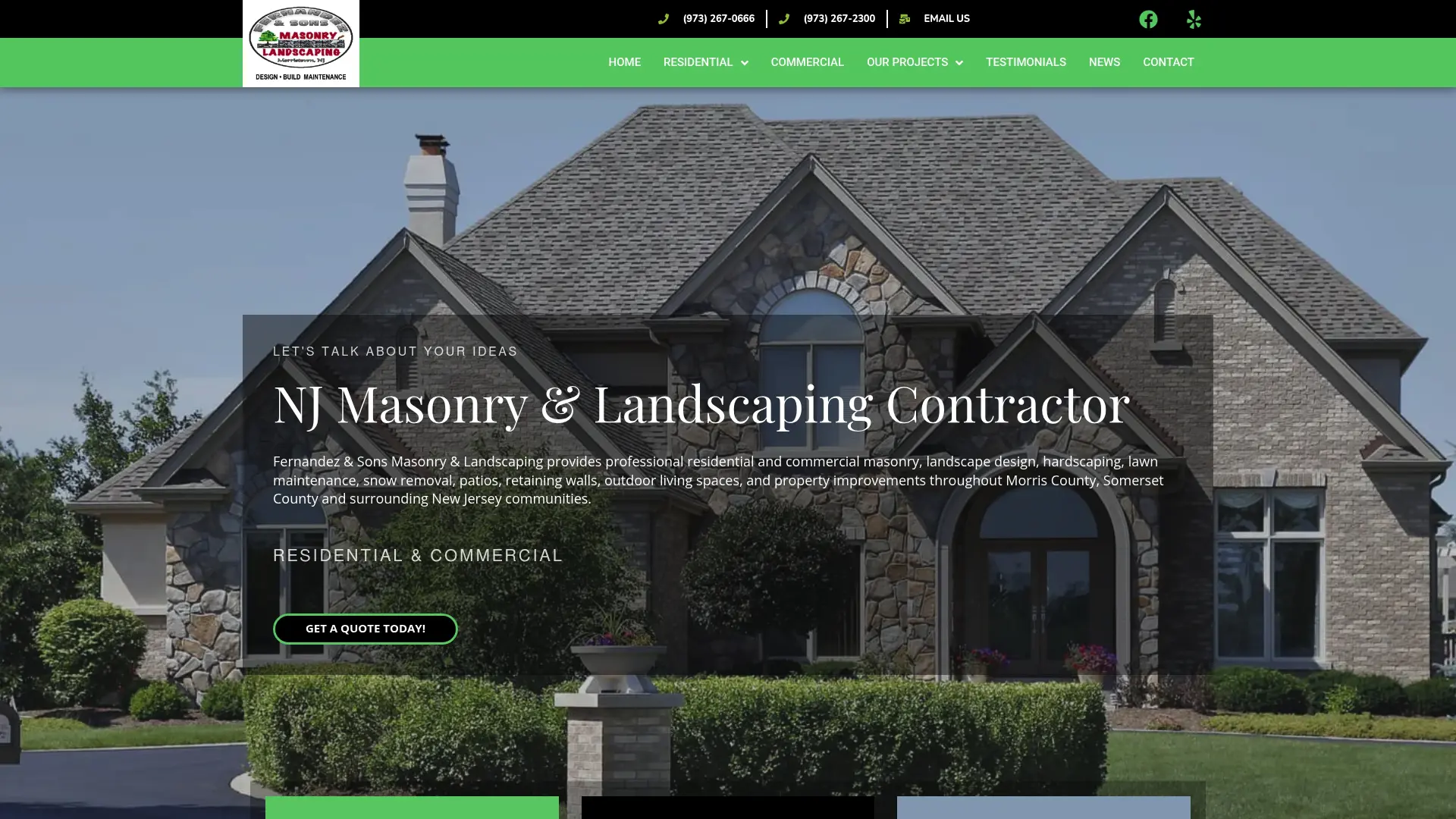
Homeowners across Morris and Somerset counties don’t have to guess which projects are worth the investment. The company offers services including patios, retaining walls, landscape design, grading, and seasonal maintenance, supported by customer satisfaction and estimates.
- Patios, walkways, and retaining walls built with frost-resistant bases suited to NJ winters.
- Landscape design and maintenance that accounts for drainage and native plant selection.
- Seasonal services including snow removal, so outdoor investments stay protected year-round.
| Service | Fits which priority |
|---|---|
| Landscape Design | Curb appeal and long-term Joy Score |
| Patios & Walkways | Resale value and daily use |
| Retaining Walls | Drainage and site stability |
| Landscape Maintenance | Lower long-term cost |
| Snow Removal Services | Year-round property protection |
A site visit typically starts with a look at grading, soil, and existing drainage before any design conversation. Homeowners ready to plan next season’s project can request a free estimate or review landscaping and design services to see what fits their timeline.
Sources
- 2023 Remodeling Impact Report: Outdoor Features (NAR)
- NR Water-Efficient Landscaping | NJ Green Building Manual
- Realtor
- UTA news release: curb appeal adds value
FAQ
What is the ROI for landscaping?
ROI varies widely by project, with simple maintenance like lawn care and shrub trimming showing very high cost recovery, while large luxury features often perform worse. Realtor cites lawn care ROI as high as 217% in some studies, well above most home improvement categories.
What is the average cost of landscaping in New Jersey?
Costs depend heavily on project type, with lawn care and plantings costing far less than paver patios or irrigation systems. Paver patios in New Jersey fall within a wide cost range depending on size, materials, and site preparation needs.
How profitable is landscaping?
Landscaping tends to be one of the more reliable home improvement categories for both resale value and personal enjoyment. High-quality curb appeal alone can add roughly 7% to 15% to a home’s value, according to academic research, making it one of the more consistent returns among home projects.
What trees grow best in NJ?
Native and adapted species tend to perform best in New Jersey because they’re suited to local soil, rainfall, and freeze-thaw conditions, which lowers long-term maintenance. The Rutgers NJ Green Building Manual recommends choosing native or adapted plants as part of a broader water-efficient design strategy.