
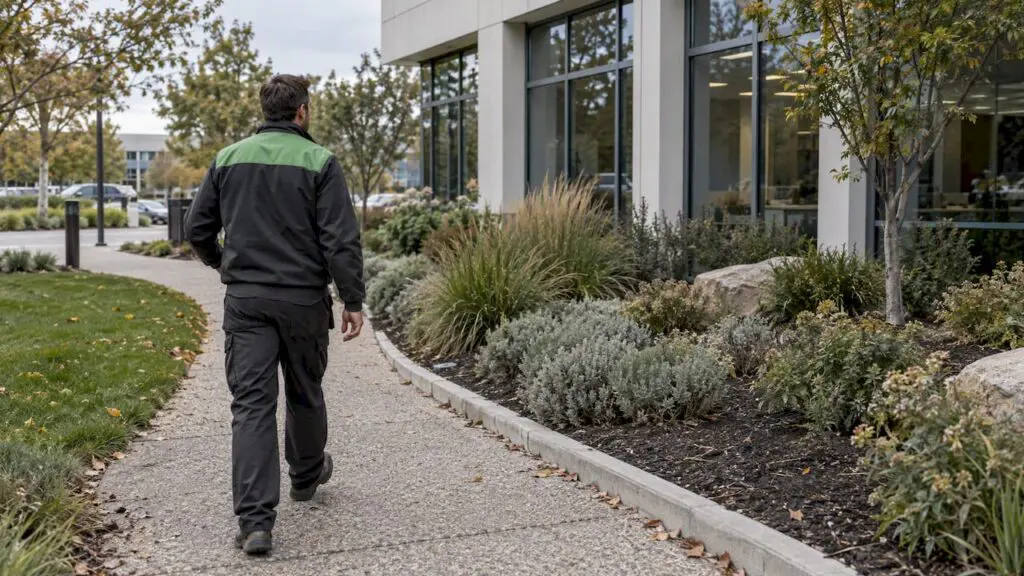
Cut routine upkeep and water costs fastest by reducing turf, switching to climate-adapted plant palettes, simplifying irrigation with hydrozones and efficient controllers, and replacing high-maintenance patches with durable hardscape. Expect meaningful water and labor savings once plantings establish over two to three years. Start with an irrigation audit or a consultation with a landscaping contractor to find where your current layout wastes the most money.
TL;DR:
- Reducing turf and switching to climate-adapted plants can lower water use by 18 to 50 percent, but turf reduction shifts labor to weed control and irrigation repairs.
- Proper site preparation, such as soil testing, protecting existing roots, and mapping hydrozones, is essential to ensure long-term savings and reduce maintenance needs.
- Choosing native, salt-tolerant trees, shrubs, and groundcovers limits chemical inputs and supports local pollinators, enhancing resilience with minimal upkeep.
- Upgrading to efficient irrigation technology and scheduling audits every three years can cut water bills and prevent waste, often saving 15 to 50 percent on water use.
- A realistic low maintenance landscape requires active management during the first two to three years, including irrigation adjustments, plant replacements, and matching maintenance tasks to seasonal needs.
Table of Contents
- Why low maintenance landscaping pays off for commercial properties
- Design moves that cut upkeep before a single plant goes in
- Plant palette picks for low maintenance commercial sites
- Hardscape and material choices that cut recurring labor
- Irrigation efficiency: the fastest lever for lower bills
- Building a realistic maintenance plan and budget
- Our take: “low maintenance” still means managed, not neglected
- How we support low maintenance commercial landscaping projects
- FAQ
- Sources
Why low maintenance landscaping pays off for commercial properties
A low maintenance landscape is not a one-time swap, it is a redesigned system that trades constant mowing, feeding, and watering for smarter plant choices and infrastructure that needs less attention once established.
The payoff shows up in three places: water bills, labor hours, and how the property looks to tenants and visitors. Converting to climate-appropriate plants and improving soil conditions can reduce outdoor water use by roughly 18 to 50 percent depending on the climate and scope of the project. That range reflects how much of a site switches to lower-water plantings and how well the soil is prepared before installation.
Curb appeal matters too. A well-kept entrance signals a well-run building, which influences leasing decisions and tenant satisfaction even when nobody can name exactly why a property feels more trustworthy.
What a realistic plan accounts for:
- Water use often drops substantially once adapted plants replace high-water turf and ornamentals.
- Labor shifts rather than disappears, moving from mowing and chemical treatments toward targeted pruning and weed control.
- Full maturity and lower upkeep typically take two to three years after installation, not immediately.
- Upfront design and soil work determine whether the long-term savings actually materialize.
Design moves that cut upkeep before a single plant goes in
The biggest maintenance reductions come from decisions made before installation, not from swapping plants after the fact.
Start with the site itself:
- Test the soil. Know your pH, drainage, and compaction before specifying plants or amendments.
- Protect existing tree roots. Avoid grade changes or heavy equipment within the root zone during construction.
- Set proper topsoil and compost depth. A few inches of quality compost worked into the top layer improves water retention and reduces the need for fertilizer later.
- Map hydrozones. Group plants by water need, light exposure, and soil type so irrigation never overwaters drought-tolerant areas just to keep thirstier ones alive, a core recommendation in EPA WaterSense landscaping guidance.
- Reduce turf strategically. Keep grass where people actually walk or gather; replace decorative turf panels, slopes, and narrow strips with beds or groundcover.
Turf reduction deserves a second look before you commit. Reducing mowed turf area can lower water use, but much of that saved mowing labor often shifts into weed control and drip irrigation repairs rather than disappearing, according to turf reduction case studies from the USGA. Budget for that shift instead of expecting a clean labor reduction.
Green infrastructure, including rain gardens, bioswales, and permeable pavement, handles stormwater while needing less routine attention than conventional turf once established, according to Rutgers stormwater management guidance.
Pro Tip: Map hydrozones on paper before your irrigation contractor quotes the job. It is far cheaper to adjust zone boundaries on a drawing than to re-trench pipe after installation.
Plant palette picks for low maintenance commercial sites
The right plant list does more work than any amount of maintenance labor. Specify these categories in your landscape design or RFP, with placement notes attached.
Trees for shade and screening:
- Shade trees sited away from pavement and underground utilities reduce long-term root-related repairs and sidewalk heaving.
- Evergreen screening trees like eastern red cedar tolerate salt exposure, making them a dependable choice near parking lots and walkways that get winter deicer, according to Penn State Extension’s salt-tolerant plant guidance.
Shrubs for structure and salt tolerance:
- Northern bayberry handles salt-affected soil near roads and walkways and needs little pruning once established.
- Deer-resistant, drought-tolerant shrub varieties reduce both replacement costs and the need for repeated treatments.
Grasses and perennials for seasonal interest:
- Ornamental grasses provide movement and texture through most of the year with a single annual cutback instead of weekly maintenance.
- Drought-tolerant perennials chosen for your region fill beds without demanding supplemental irrigation past the establishment period.
Groundcovers and turf alternatives:
- Spreading groundcovers planted at tight spacing close gaps faster, which shortens the window when weeds can take hold.
- Expect one to three years of supplemental watering during establishment, per Rutgers native and adapted plant guidance, after which many groundcovers need little beyond occasional edging.
Native and regionally adapted species across every category reduce long-term water and chemical inputs while supporting local pollinators, a benefit extension programs consistently point to when comparing native palettes against conventional ornamental plantings. For additional plant-selection framing, this overview of low-input landscaping starting points covers similar territory from a residential angle worth adapting to commercial scale.
Hardscape and material choices that cut recurring labor
Mulch, rock, and paving decisions determine how many hours your crew spends weeding, edging, and replacing material every season.
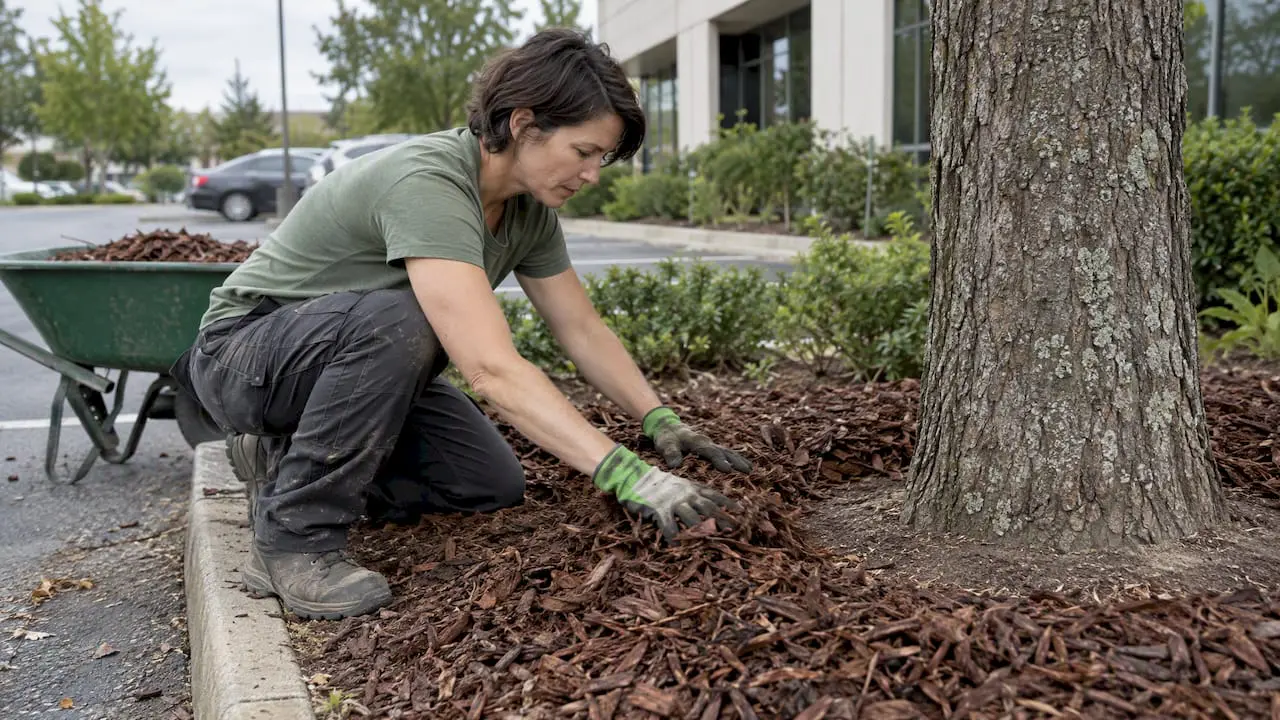
Organic mulch works best when applied correctly. Use slow-decomposing types like shredded hardwood bark, keep a few inches of depth, and never pile mulch against tree trunks or shrub stems, a mistake that traps moisture and invites rot, per Iowa State Extension’s mulch guidance. Plan to replenish organic mulch roughly once a year as it breaks down.
Rock and gravel mulch trade a higher upfront cost for lower replenishment needs, since they do not decompose. They suit dry beds and areas without heavy leaf litter but can trap debris in high-traffic zones, so weigh placement carefully against the plant list and foot traffic.
A few more material notes worth specifying:
- Permeable pavers handle parking and walkway loads while letting stormwater infiltrate, which supports green infrastructure goals with periodic vacuuming or sweeping instead of resurfacing.
- Durable metal or concrete edging holds bed lines cleanly and cuts the trimming labor that soft edges demand.
- Landscape fabric belongs only in short-term weed suppression under rock mulch, never long-term, since it degrades and restricts root growth over time.
Synthetic turf is another option some managers weigh against plant-based groundcover, trading water use for a different maintenance profile; this comparison of synthetic grass and pavers walks through those trade-offs in more depth.
Pro Tip: Specify mulch depth and clearance distance from trunks directly in your maintenance contract. Vague language like “mulch as needed” is how trunk rot problems start.
Irrigation efficiency: the fastest lever for lower bills
Irrigation is usually the single biggest controllable cost on a commercial landscape, and it is also the easiest system to audit and fix.
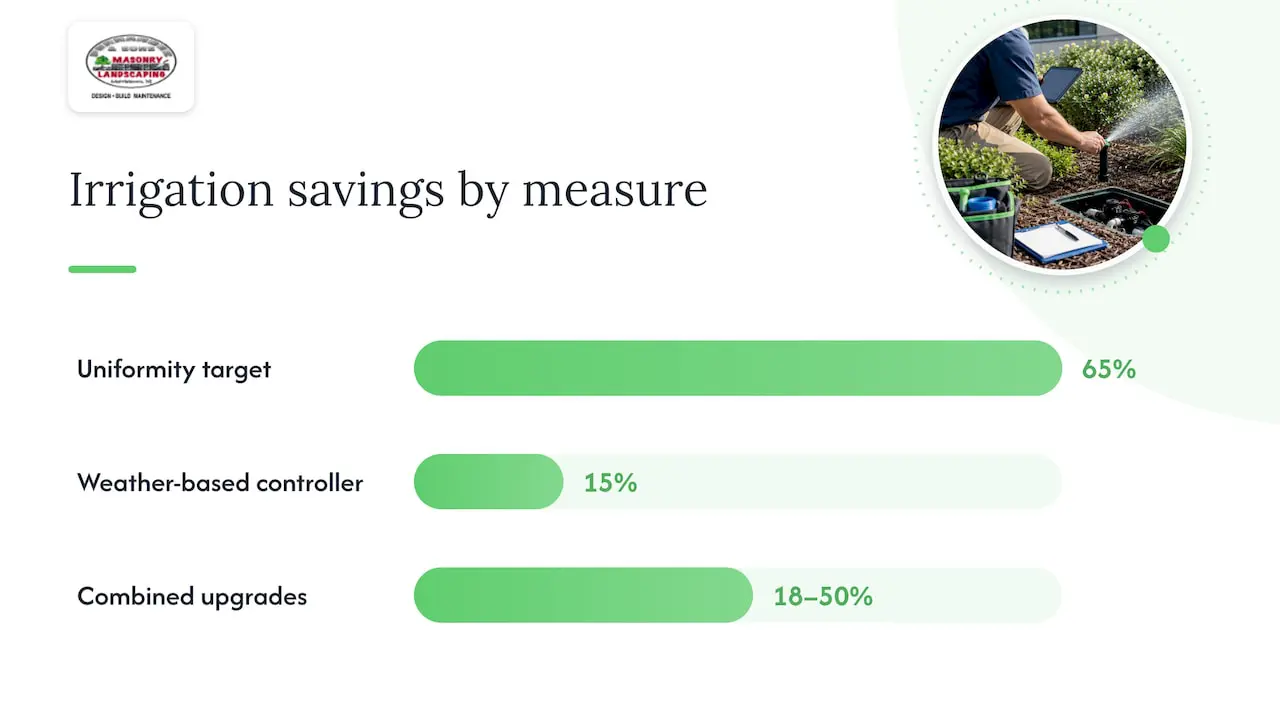
Schedule a full irrigation audit roughly every three years to check distribution uniformity and system performance, aiming for a uniformity rating around 65 percent or higher. A system running well below that wastes water on overspray, clogged heads, or mismatched zones regardless of how drought-tolerant the plants are.
Technology choices that move the needle:
- Drip irrigation in planting beds delivers water to roots directly, cutting evaporation loss compared to overhead spray.
- WaterSense-labeled weather-based irrigation controllers adjust run times to actual conditions and can reduce irrigation use by about 15 percent on their own.
- Pressure regulation and matched-precipitation sprinkler heads reduce misting and runoff on sloped or uneven turf areas.
Operationally, install a dedicated irrigation meter so leaks and coverage problems show up on the water bill before they show up as dead plants, and adjust watering schedules seasonally rather than running a fixed program year-round. Combined plant-palette and irrigation-technology upgrades can cut outdoor water use by the 18 to 50 percent range cited earlier, with the wider end reserved for sites making both changes at once rather than one in isolation.
Building a realistic maintenance plan and budget
A maintenance plan only works when tasks, frequency, and ownership are written down and assigned, not left to assumption.
Seasonal task breakdown:
- Spring: Inspect irrigation after winter shutdown, apply gypsum to salt-affected soil near walkways at about 40 pounds per 1,000 square feet, refresh mulch, and prune winter damage.
- Summer: Monitor irrigation performance, spot-treat weeds, and mow turf areas that remain.
- Fall: Aerate and overseed any retained turf, clean out bioswales and rain gardens, and winterize irrigation lines.
- Winter: Handle snow and ice management with salt-tolerant plantings in mind near treated surfaces, and hold off on major pruning until late winter dormancy.
Who typically handles what:
- Contractors usually run irrigation audits, major pruning, and bioretention or bioswale maintenance that requires specialized equipment or training.
- In-house staff often manage routine trash pickup, light weeding, and day-to-day site checks between scheduled contractor visits.
Budget for adaptive management in the first two to three years. Some plants will underperform and need replacement, irrigation zones will need adjusting as root systems establish, and labor allocation will shift as turf area shrinks and bed area grows. A commercial landscape maintenance checklist built around these seasonal tasks makes it easier to hold contractors accountable to a defined scope.
Our take: “low maintenance” still means managed, not neglected
The phrase “low maintenance” gets misread as “no maintenance,” and that misunderstanding causes more failed commercial landscapes than any plant choice ever does. A xeriscaped entrance planted and then ignored for a season looks worse than an unglamorous lawn that gets mowed on schedule.
The properties that actually see lower long-term costs are the ones that treat the first two to three years as an active investment period: watching irrigation performance, swapping underperforming plants, and adjusting the maintenance contract as the landscape matures. Skipping that phase to save on a consultation or a second-year site visit is the most common reason a low-maintenance redesign ends up costing more than the turf it replaced.
— BG
How we support low maintenance commercial landscaping projects
We design and install commercial landscapes with the establishment period built into the plan, not treated as an afterthought. Our commercial property services cover landscape design, ongoing maintenance contracts, and commercial snow plowing, so the same team that selects your salt-tolerant shrubs is also the one managing winter deicer exposure near them.

Hiring a contractor for the installation and audit phase means someone is tracking irrigation uniformity, mulch cadence, and plant establishment on a schedule, supported by guarantees and free estimates rather than left to whoever has time between other property duties. If you manage a commercial site that needs a lower-upkeep landscape plan or a maintenance contract that actually accounts for the first few seasons, get a free estimate on our commercial services.
FAQ
How long does it take for a low maintenance landscape to mature?
Most commercial plantings need one to three years of supplemental irrigation and care before reaching their lower-upkeep state, according to Rutgers native and adapted plant guidance. Budget for active management during that window rather than expecting immediate savings.
Does reducing turf actually lower maintenance costs?
Turf reduction typically lowers water use and mowing time, but turf-reduction case studies show that labor often shifts toward weed control and drip irrigation repair instead of disappearing entirely. Plan your staffing around that shift rather than assuming a flat reduction.
How often should a commercial irrigation system be audited?
An irrigation audit is recommended roughly every three years to check distribution uniformity and catch inefficiencies, per EPA WaterSense guidance. Aim for a distribution uniformity rating around 65 percent or higher.
What plants hold up best near parking lots and walkways with winter salt exposure?
Eastern red cedar and northern bayberry are commonly recommended salt-tolerant choices for areas exposed to deicing products, according to Penn State Extension. Gypsum applied at about 40 pounds per 1,000 square feet in spring also helps remediate salt buildup in affected soil.
Does Fernandez & Sons handle both the landscaping and the snow removal for commercial properties?
Yes, our commercial services include landscape design and maintenance alongside commercial snow plowing, so winter deicer exposure can be factored into plant selection from the start. Details and estimates are available through our commercial services page.
Sources
- WaterSense at Work: Section 5.2 Landscaping (EPA)
- Minimize deicer damage with salt-tolerant plants (Penn State Extension)
- Mulch guidance and ground cover lessons (Iowa State Extension)