
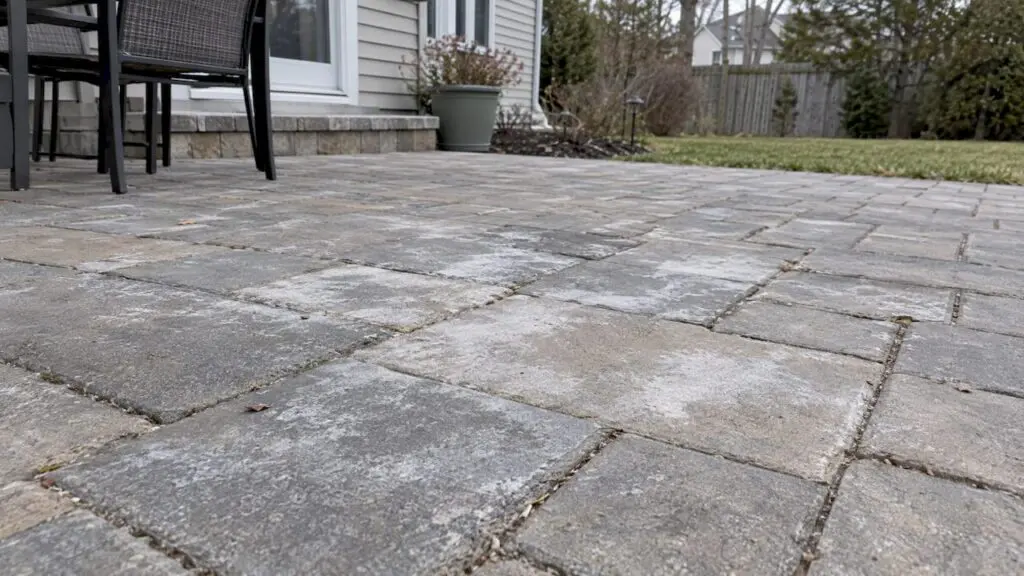
The white, chalky film on your pavers is efflorescence, and you can remove it with a cleaner made for concrete pavers, a stiff brush and plenty of rinsing. It is also temporary. On new pavers it often fades by itself, and if it keeps coming back, the real fix is finding where the water is coming from. This guide covers both paths, so you know when to clean, when to wait and when to call a mason.
Quick answer: getting white haze off pavers
- What it is: a natural mineral deposit, not a defect. Industry guidance describes it as a white haze caused by a chemical reaction in cement-based products.
- How long it lasts: the same guide says it can take anywhere from 90 days to 24 months to subside, depending on conditions.
- How to remove it: use a buffered, paver-specific efflorescence cleaner, test a small area first, keep the surface wet, and rinse thoroughly. Skip undiluted muriatic acid.
- When it returns: persistent or heavy efflorescence usually points to drainage, grading or moisture problems that cleaning alone will not solve.
- Before sealing: clean it off completely first, or the sealer can lock the haze in.
Table of Contents
- What efflorescence is, and why it shows up on pavers
- Wait it out or clean it now?
- The safest way to remove efflorescence from pavers
- Why efflorescence keeps coming back
- Efflorescence before sealing pavers
- Our perspective: treat the cause, not just the haze
- Seasonal care that helps pavers stay clean
- When to call a mason
- Common questions about efflorescence on pavers
- References and manufacturer guidance
What efflorescence is, and why it shows up on pavers
Concrete pavers are made with cement, and cement contains lime. When water moves through the paver, it can carry soluble salts to the surface. Once the water evaporates, the salts stay behind as a white film. The Concrete Masonry & Hardscapes Association (CMHA) explains that the haze forms through a natural reaction involving the lime in the cement.
Two things matter for homeowners:
- It does not mean the pavers are faulty. Cambridge Pavingstones notes that it can appear weeks or months after installation, randomly or in certain areas, and is more pronounced in some conditions than others.
- It is not limited to one brand. Techo-Bloc’s care guide calls it normal and common in concrete and clay brick products.
People often find it a few weeks after a new patio goes in and assume the installer made a mistake. Usually the installer did nothing wrong. The pavers are simply going through a normal early-life process.
How to tell it apart from other stains
Efflorescence is easy to mistake for fading, mildew or sealer problems. A few quick checks help:
- Splash a little water on it. Efflorescence often darkens or seems to disappear when wet, then comes back as the paver dries. Fading does not do that.
- Feel it. It is typically a dry, powdery film. Algae and mildew look green, gray or black and feel slick.
- Look at the pattern. It tends to appear in patches, often where water collects or drains through, or near edges and joints.
If the discoloration is rust-colored, oily or dark, you are likely dealing with a different stain and a different treatment.
Wait it out or clean it now?
Both are reasonable choices. The right one depends on how the patio looks and what you plan to do next.
| Situation | Best approach |
|---|---|
| New patio, light haze, no rush | Let weather and time work. Rain and regular exposure wash away soluble salts gradually. |
| New patio, you are hosting soon | Clean gently with a paver-specific cleaner. Expect it may return lightly. |
| You plan to seal the pavers | Clean fully first, rinse, and let the surface dry before sealing. |
| Heavy haze that keeps coming back after cleaning | Investigate drainage, grading and water sources before cleaning again. |
| Older patio, haze appeared suddenly | Look for a new water source: a clogged downspout, irrigation overspray or a leak. |
The CMHA guide cited above puts the natural fade-out window at 90 days to 24 months. The wide range depends on climate, moisture and how the pavers were made and installed. In practice, a patio finished in late fall may look worse in spring than one finished in summer, because freeze-thaw and wet weather keep moisture moving.
There is one frustration worth knowing about. Cambridge Pavingstones explains that rain can wash salts away, yet the haze may reappear as the pavers dry, until the internal supply is used up. Many homeowners clean once, see the haze return and decide the cleaning failed. It did not. Salts were still working their way out.
The safest way to remove efflorescence from pavers
The goal is to dissolve the mineral deposit without damaging the paver surface. That means choosing the right product and not rushing.
Choose a buffered cleaner made for concrete pavers
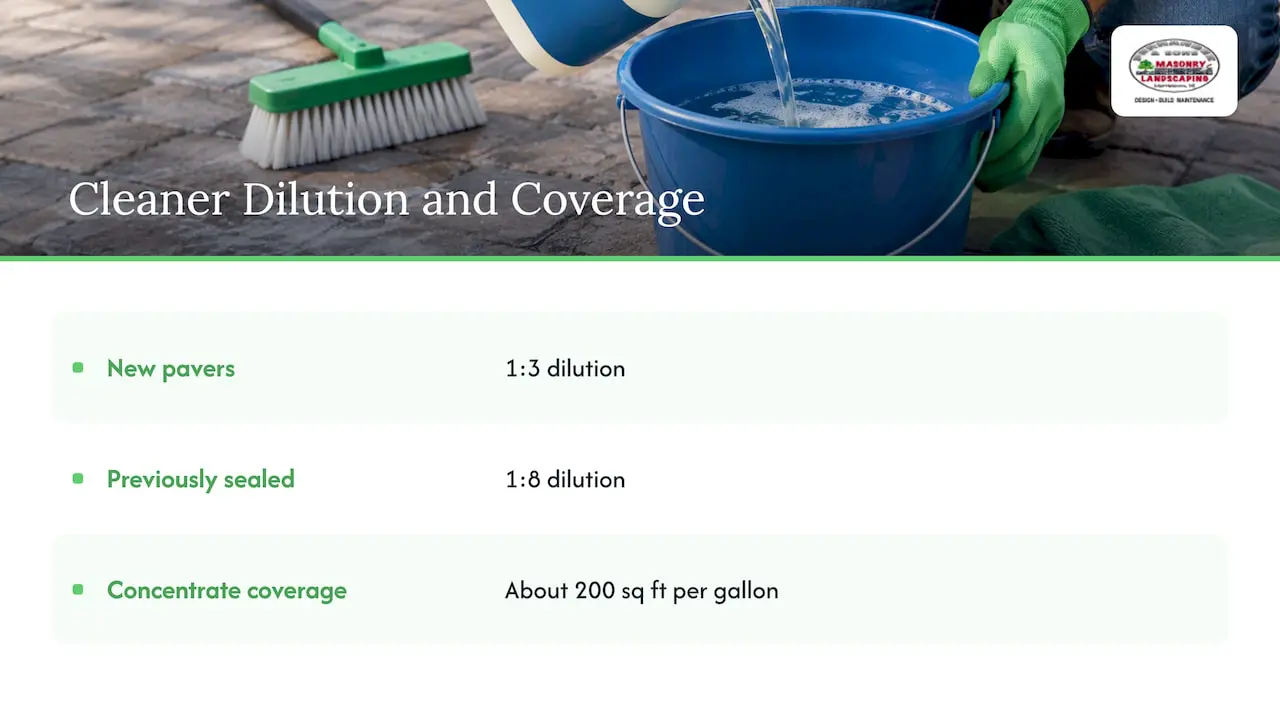
Professionals typically use proprietary cleaners with buffered acids. Techniseal’s efflorescence brochure lists dilution ratios from 1:3 for new pavers to 1:8 for previously sealed surfaces, with one gallon of concentrate covering roughly 200 square feet. Coverage varies with porosity and how heavy the deposits are, so treat that as a planning figure, not a promise.
What about muriatic acid? It is cheap and common at hardware stores, which is why it is so tempting. But LATICRETE’s technical datasheet is among the sources that advise against harsh, undiluted acids, because they can etch the surface, change its color and expose the coarse aggregate underneath. Once a paver is etched, you cannot undo it. A product made for the job is a small cost compared with replacing pavers.
A gentler first step for light haze: mild dish soap, water and a stiff plastic brush. Never use a wire brush, which can scratch the surface and leave metal particles that rust.
Step-by-step process
The steps below follow the guidance from CMHA’s paving cleaning and sealing technical bulletin and the manufacturer instructions linked in this article. Always follow the label on the specific product you buy.
- Remove other stains first. CMHA advises treating specific stains before cleaning the whole surface for efflorescence and dirt.
- Test a small, hidden area. Check how the cleaner reacts with your paver type. Wrong concentration or dwell time can change the texture or expose aggregate.
- Gear up. Wear chemical-resistant gloves, boots and eye protection. When diluting, pour the concentrate into water, never water into the concentrate, to avoid splashing.
- Wet the pavers first. A damp surface helps the cleaner work evenly and keeps it from soaking in too fast.
- Work in sections. About 200 square feet at a time is a common size. Start at the bottom of the slope so the product covers evenly with no dry gaps.
- Scrub gently and keep it wet. Do not let the solution dry on the paver, which can cause streaks and uneven color.
- Rinse thoroughly. Rinse from the highest point to the lowest so cleaner and dissolved salts flow off the patio, not across clean sections.
- Let it dry for at least 24 hours. Nicolock’s FAQ recommends this before judging results or applying anything else.
If some haze remains, a second light pass is better than one aggressive one. Rinse well between passes.
Pressure washing: handle with care
Power washing can help with loose surface dirt, but too much pressure can open the pores of concrete or brick, which invites more moisture and more staining. If you use a pressure washer, keep the pressure moderate and the nozzle at a distance. Pressure alone also does not dissolve mineral deposits as well as a proper cleaner.
Protect plants, metal and nearby surfaces
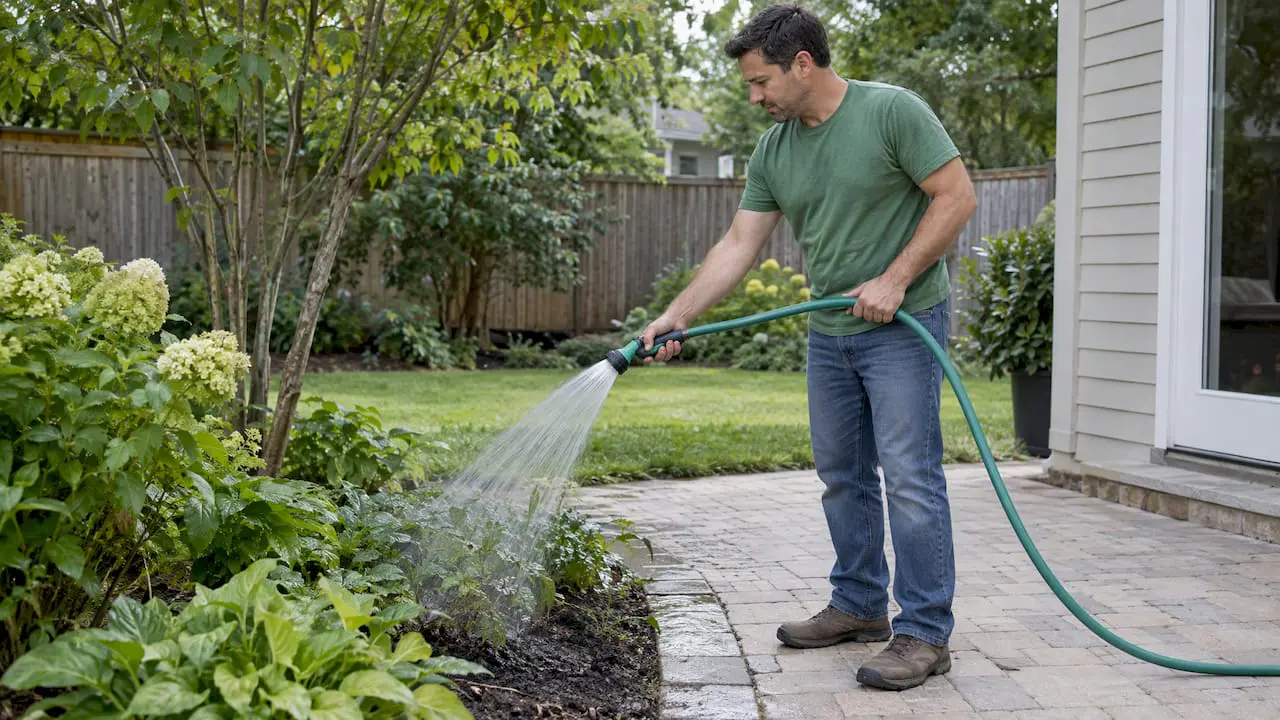
Cleaners are acidic. Wet down nearby plants and lawn before and after, keep runoff away from garden beds, and cover or rinse metal furniture, railings and fixtures. One well-known rule from paving guides: avoid applying acid-based products near galvanized metal. Read the product label for what it says about the materials around your patio.
Why efflorescence keeps coming back
This is the part most guides skip. If the white film returns again and again, cleaning is treating a symptom.
The CMHA technical note on controlling efflorescence says that when efflorescence is heavy or persistent, you should look at outside moisture sources such as poor grading, blocked drainage or water leaking in from above. The process is driven by water carrying salts to the surface. If water keeps moving through the pavers, the deposits keep forming.
On a residential patio, check these first:
- Downspouts and gutters. Are they dumping water onto or beside the patio?
- Grading. Does the surface or the lawn next to it slope toward the pavers, so water pools or flows under them?
- Irrigation. Do sprinklers hit the patio edge or soak the base?
- Retaining walls and planters. Water may seep from a wall or bed behind or above the paved area.
- Bedding sand. A technical digest from the Brick Industry Association notes that the coarse sand used to bed pavers can contain soluble salts, and that it should be washed with potable water to remove them. That is an installation detail worth asking about before a patio goes in.
- Poor base drainage. A base that holds water gives salts a constant delivery system. Our guide to base preparation for freeze-thaw pavers explains why drainage below the surface matters so much in New Jersey winters.
Water problems on other masonry surfaces behave the same way. For a look at how a moisture source gets tracked down, this article on pool efflorescence walks through identifying the cause before treating the deposits, and the same logic applies to patios.
Efflorescence before sealing pavers
If you plan to seal your pavers, efflorescence needs to be dealt with first. Any white deposits left on the surface can get trapped under the sealer, which leaves a cloudy finish that is hard to fix. Nicolock’s guidance, cited above, calls for cleaning the whole surface with a compatible remover, rinsing from high to low and allowing at least 24 hours to dry before sealing.
CMHA notes that a freshly cleaned pavement is a good time to apply joint sand stabilizer or sealer. This homeowner checklist on the drying window before sealing covers the timing question in more detail.
Two more points before you seal:
- New pavers need patience. If efflorescence is still developing, sealing too early can trap moisture and salts. Many manufacturers suggest waiting until the haze has stopped appearing. Check your paver manufacturer’s guidance.
- Sealing does not fix a wet patio. It will not cure a drainage problem. Fix the water first, then clean, then seal.
We cover the prep work in more depth in our paver sealing guide for homeowners.
Our perspective: treat the cause, not just the haze
We build and repair paver patios, walkways and driveways across Morris and Somerset Counties, and efflorescence is one of the most common questions we hear from homeowners after a project. Here is how we see it.
Most of the time, it is cosmetic. A light haze on a new patio is normal for cement-based products, and we tell homeowners that up front so it does not come as a surprise. Reputable paver manufacturers say the same.
Heavy, recurring efflorescence deserves a closer look. When a patio keeps showing it, we look at the surrounding site: where the downspouts discharge, how the lawn slopes, how the base was built. Cleaning a patio over and over without changing the water path is money spent on the same problem.
Good installation reduces the odds. A well-compacted, properly draining base, correct grading away from the house and careful materials selection all help keep water from moving through the system. A patio is a family space for dinners, firepits and long summer evenings, and we want it to look good for years, not weeks.
Cleaning should protect the investment. We favor cleaners made for concrete pavers over improvised acid mixes, always tested in a small area first, because a worn or etched surface cannot be restored.
If you are not sure what you are looking at, we are happy to take a look. Our estimates are free, and our work comes with a satisfaction guarantee.
Seasonal care that helps pavers stay clean
Once the patio is clear, simple habits keep it that way:
- Keep water moving away. Clear gutters in fall and make sure downspout extensions carry water well beyond the patio edge.
- Rinse and sweep regularly. Regular rinsing removes dust and light salts before they build up.
- Mind winter products. De-icing salts can leave their own white residue and stress the surface. Our ice melt rules for pavers explain what to use and why shoveling first helps.
- Refresh joint sand as needed. Stable joints help shed water properly and keep weeds out.
If you are planning a patio, walkway or driveway and want to compare materials, our paver patio installation service page explains how we approach the project, and our pavers and patios gallery shows finished work.
When to call a mason
DIY cleaning works for light haze. A professional visit makes sense when:
- Heavy efflorescence returns within weeks of cleaning.
- You see white deposits along with sinking, shifting or standing water.
- Pavers show spalling, flaking or cracking.
- The haze appears near a retaining wall, steps or foundation.
- You are preparing a large patio or driveway for sealing and do not want to risk the surface.
Fernandez & Sons handles masonry, hardscaping and repair for homes and commercial properties in Morris and Somerset Counties. If you want a second opinion on your pavers or help correcting the cause, see our masonry repair services or request a free estimate through our site.
Common questions about efflorescence on pavers
Will paver efflorescence go away on its own?
Usually, yes. Research from CMHA indicates it can fade within 90 days to 24 months as the soluble salts are used up. Rain helps, though the haze can reappear as pavers dry until the supply runs out. If it never seems to fade, check for a steady water source.
Can efflorescence be removed permanently?
Cleaning removes what is on the surface, but it does not stop new salts from reaching it. Efflorescence stops for good when the salt supply is depleted and moisture is controlled. If water continues to move through the pavers, it can return.
What is the best efflorescence remover for pavers?
Choose a buffered cleaner made specifically for concrete pavers, and follow the label for dilution and dwell time. Manufacturers such as Techniseal give ratios from 1:3 to 1:8 depending on whether the surface is new or sealed. Avoid undiluted muriatic acid, which can etch the surface.
How do I get white efflorescence off pavers without damaging them?
Test a hidden spot, wet the surface, apply the diluted cleaner in sections, scrub with a plastic brush, and rinse thoroughly from top to bottom. Let the pavers dry at least 24 hours before judging the result. Never use a wire brush.
References and manufacturer guidance
- CMHA: Peak Performance from Concrete Pavers
- Cambridge Pavingstones: Managing Efflorescence
- Techo-Bloc: Care & Maintenance
- Techniseal: Control and Removal of Efflorescence
- LATICRETE technical datasheet TDS159
- CMHA: Cleaning, Sealing and Joint Sand Stabilization of Interlocking Concrete Pavement
- Nicolock: FAQs
- CMHA: Control and Removal of Efflorescence
- Brick Industry Association: Technical Service Digest