
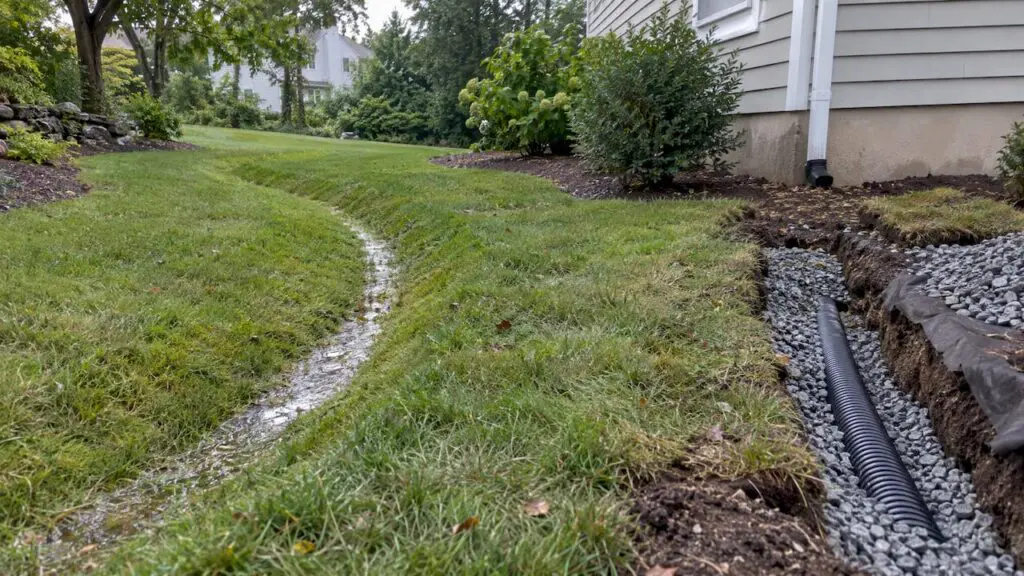
A swale is the better fix when water runs across the surface of a yard that has room for a wide, shallow, grassed channel. A French drain is the better fix when the soil stays saturated, water seeps in near a foundation, or there is no space for a channel. The deciding question is simple: is the water on top of the ground or in it? For homeowners in Morris and Somerset Counties, New Jersey, the answer also depends on your slope, your soil, and where the water can legally go.
Quick Answers
-
A swale is a shallow, vegetated surface channel. A French drain is a buried, perforated pipe in a gravel-filled trench.
-
Choose a swale for visible surface runoff when you have open space and soil that drains. Choose a French drain for saturated soil, shallow seepage or tight spaces.
-
Both need a safe outlet. Moving water onto a neighbor’s lot or into the sanitary sewer creates a bigger problem than the one you started with.
-
Slopes, compacted or clay-heavy soil and nearby utilities or septic fields can rule either option out, so a site visit matters more than a rule of thumb.
-
Check with your municipal building or engineering office before you dig, especially near property lines or any sewer connection.
The Core Difference Between a Swale and a French Drain
The two systems solve different problems, and that is why comparing them head to head can mislead you.
A swale is a wide, shallow, vegetated channel that carries surface water to an outlet. According to Fairfax County’s soil and water conservation guidance, a French drain is a buried perforated pipe surrounded by gravel and landscape fabric that conveys runoff underground, and deeper versions can also pick up groundwater.
The U.S. Environmental Protection Agency treats a grassed swale as more than a ditch. Its grassed swale fact sheet describes a vegetated, open channel that slows stormwater so that sediment settles out and some water filters or soaks into the ground. Think of it as a landscape feature that happens to move water.
Here is the comparison at a glance.
| Factor | Swale | French Drain |
|---|---|---|
| Where it works | Above ground, across lawns and open areas | Below ground, along a narrow path |
| What it handles | Visible surface runoff | Saturated soil, shallow seepage, runoff routed underground |
| Space needed | A wide, shallow strip of pervious ground | A narrow trench |
| Appearance | A gently sloped, grassed or planted swale | Mostly hidden once covered |
| Main upkeep | Keep vegetation healthy and the channel clear | Keep the outlet clear and keep silt out of the gravel |
| Typical weak point | Steep slopes, compacted soil, big storms | Clogging, no outlet, poor slope |
How Each System Moves Water
Swales Guide Water Across the Surface
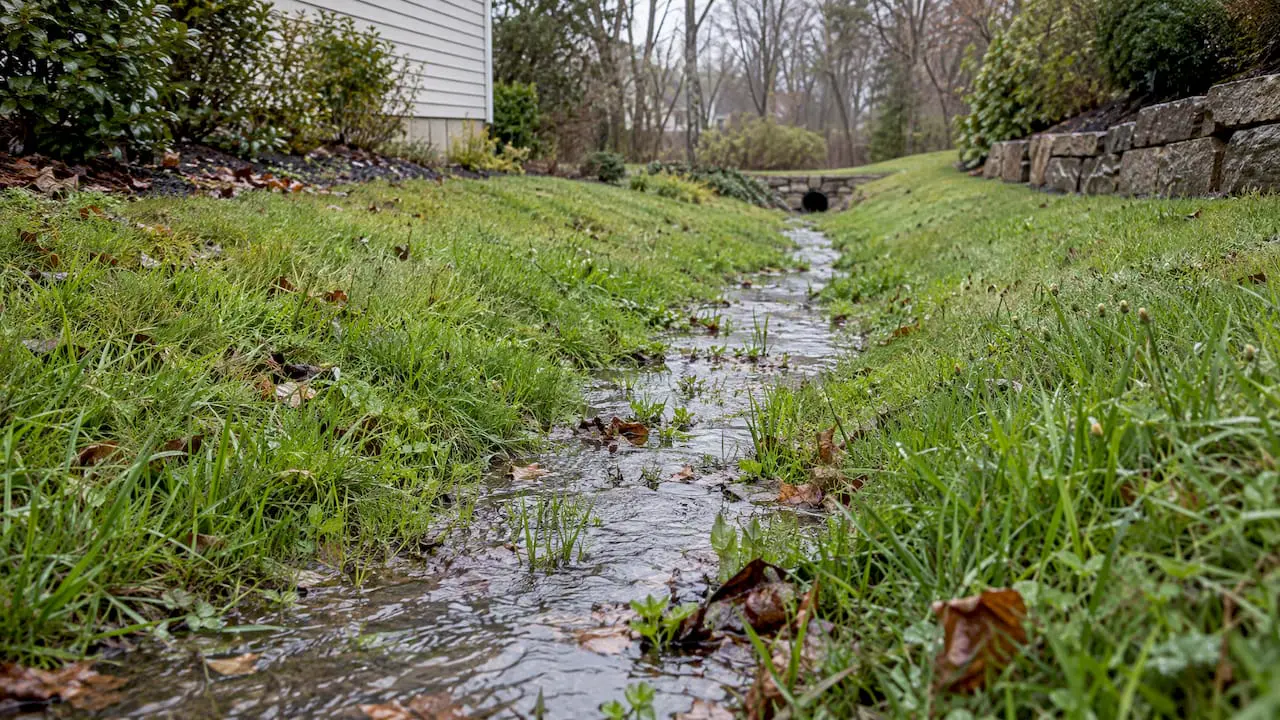
A swale works through shape. Water follows a contoured channel toward an outlet, and along the way some of it filters through grass and infiltrates the soil. The Pacific Northwest National Laboratory’s building science guide notes that the EPA recommends a 3-to-1 width-to-height ratio and a longitudinal slope of 2% to 4%. That range is a balance: flatter and water sits, steeper and it scours the channel.
French Drains Intercept Water Below Grade
A French drain collects water in a gravel-filled trench and uses a perforated pipe to carry it to a safe outlet. The same guide says the drain should sit at least 18 inches below ground with a positive slope toward an outlet such as a drywell, storm sewer or designated drainage area.
Washington State University Extension adds that French drains are a type of gravel-trench system. The Extension publication on managing surface water drainage explains that stone voids store stormwater temporarily while it infiltrates into surrounding soil, and some French drains intercept shallow groundwater near foundations.
One mistake shows up repeatedly: a trench filled with gravel and no pipe. The City of Rockville’s homeowner guide, Go With the Flow, names that as a common error. Gravel alone slows down and clogs. The pipe is what carries the water out.
Start by Finding Out Where the Water Is
Before comparing options, watch the yard during and after a heavy rain. Two simple observations narrow the choice quickly.
-
Water visibly sheets or streams across the lawn. That is surface runoff. It points toward regrading or a swale.
-
The ground stays soggy for days with no obvious flow. That points toward saturated soil or shallow seepage, which is French drain territory.
Drainage Helper makes the same point in its French drain and swale comparison: French drains are typically used for saturated soil, shallow seepage or a narrow subsurface flow path, while swales manage and route visible surface runoff across lawns or open areas. Decide which situation you have before you weigh price or looks.
Many yards have both. A lawn that slopes toward a patio can shed rainwater across the surface and also hold water at the low corner where the soil stays wet. In that case the fix may combine regrading with a short buried drain at the problem spot.
When a Swale Is the Right Choice
A swale makes sense when four conditions line up.
-
You have space. The EPA says grassed swales suit residential roads and other relatively open areas, but they can be a poor fit for dense urban sites because they need substantial pervious surface.
-
The slope is gentle. Virginia Cooperative Extension’s homeowner fact sheet on grass swales advises against swales on slopes steeper than 4 percent.
-
The soil can drain and grow grass. The same fact sheet cautions against compacted or highly clayey soils and against sites with inadequate separation from the seasonal high water table.
-
The outlet is clear. The channel must end somewhere that can take the water: a storm inlet, a rain garden, a lower area of your own property or a community drainage swale.
The EPA also describes the plain grassed channel as the least expensive and least engineering-intensive swale variation. That is a real advantage on a large, open lot, and a swale can blend into the lawn so well that guests never notice it.
Where Swales Struggle
Swales can be less effective with compacted soil, short grass, steep slopes, high runoff velocities or large storms, according to the PNNL guide, which also advises you to avoid compacting the soil in the swale. In practice that means no driving a mower or a utility cart down the same line every week, and no parking a trailer in it.
Homeowners also tend to undo a swale without meaning to. Filling it with soil, mulch or sod, or planting a bed across the flow, can cause localized flooding. Because swales are often part of a neighborhood’s engineered stormwater system, Florida Homeowners Guide notes that altering one without checking with municipal authorities can create liability for downstream owners. The guide is written for Florida, but the principle holds anywhere shared drainage exists. If a swale already runs along your property line in a Morris County subdivision, ask your township before you change it.
When a French Drain Is the Right Choice
A French drain fits when space is limited or when the problem is underground. The PNNL guide says to choose one when you need to carry water to a drywell, sewer, community swale, retention pond or downslope location and cannot spare the room for an open channel.
Typical situations include:
-
A narrow side yard between two houses where there is no room for a wide channel.
-
A soggy strip along a foundation wall or at the base of a slope.
-
A low spot where surface water collects and has to be piped to a better outlet.
-
The uphill side of a retaining wall, where water pressure builds behind the wall. Our guide to retaining wall drainage covers how that works.
Where French Drains Fail or Do Not Belong
A drain without a downhill outlet is only a buried pond. It needs positive slope all the way to a discharge point, and it should follow local stormwater ordinances.
There are also places you should not put one. Guidance from Johns Creek, Georgia says a modified French drain should not go under paved surfaces, over utility lines or septic fields, or where the water table or bedrock is less than two feet below the trench bottom. That booklet also suggests siting such drains at least 5 feet from foundations, 10 feet from basements and 10 feet from property lines. Those distances come from one Georgia city, so treat them as a reference point and confirm New Jersey requirements with your own municipality.
If your home already has a drain tile or sump system around the foundation, indoor air is part of the picture too. How that system is vented can affect radon, so read about drain tile depressurization before you tie any new drain into an existing foundation system.
Which Is More Effective for a Yard That Slopes Toward the House?
For a yard that pitches toward the foundation, start with grading. The goal is to move water away from the house, and the right tool depends on how much room you have.
PNNL’s guide says a swale can convey surface water away when space is available, and that where space is limited, drains can collect water and direct it underground. A common layout on a sloped lot is a shallow swale uphill of the house to intercept runoff and send it around the sides, paired with a piped drain at the lowest corner where the water still pools.
Steeper lots call for a different approach. On slopes above the 4 percent mark that Virginia Cooperative Extension flags, a grassed swale loses its footing, and terracing, planting beds or a retaining wall may do more of the work. Our article on slope landscaping ideas shows how those pieces hold up over time.
Match the Fix to Your Yard
| Your situation | Likely best fit |
|---|---|
| Wide, gently sloped lawn with water running across it | Swale |
| Soggy ground along a foundation or fence line | French drain |
| Narrow side yard with no room for a channel | French drain |
| Low corner where surface water collects | French drain piped to an outlet, often with regrading |
| Water pushing against a retaining wall | French drain behind the wall |
| Heavy clay, compacted soil, or slope above 4 percent | Neither alone; site review needed |
| Pavers or a patio sit in the water’s path | Grading and a drain planned with the hardscape |
Use the table as a starting point. Soil type, the depth of the water table and what lies underground can change the answer on your lot.
The Outlet Decides Whether the Project Is Allowed
The Fairfax County guidance puts it plainly: redirected runoff must go to a suitable outlet, or you risk moving the problem downhill or onto neighboring properties. That applies to both systems.
A few New Jersey realities to keep in mind:
-
In Millburn, according to a local summary, sump pump and drainage discharge rules prohibit connecting to the sanitary sewer and prohibit directing water onto neighboring properties. The same source notes that New Jersey municipalities often reference the NJDEP Stormwater Best Management Practices Manual when judging residential infiltration features. Your township’s rules may differ, so ask.
-
Permits vary by town. In Evesham Township, for example, the construction FAQ says exterior-only French drain work needs no construction permit, while interior work involving a sump pump system or French drain does.
-
Across the U.S., permits are often required for storm or sanitary sewer connections, for moving soil above local thresholds (typically 50 to 200 cubic yards) and for some drains near property-line setbacks, according to DoINeedAPermit. Their advisors recommend a short call to the local building department before starting, which is a quick way to avoid a stop-work order.
If the drainage work is part of a bigger project, other approvals may apply. Our guides to the retaining wall permit process in New Jersey and patio permits in NJ explain how those rules work in Morris and Somerset Counties.
Our Perspective on Drainage in Morris and Somerset Counties
We build and maintain outdoor spaces in Morris and Somerset Counties, and water is the first thing we look at on any property, before stone, plants or layout. A beautiful patio or retaining wall fails early if water has nowhere to go.
Here is how we think about the swale versus French drain decision:
-
Treat drainage as part of the design, not an add-on. Where water travels shapes where a patio, walkway or planting bed can sit. Planning it together avoids tearing up finished work later.
-
Pick the least invasive system that solves the actual problem. If gentle regrading and a shallow swale handle surface runoff, there is no reason to bury pipe. If the soil stays saturated, a swale will not fix that.
-
Respect the neighbors and the rules. A solution that sends water onto the next lot is not a solution. We want the outlet identified before the first shovel goes in.
-
Plan for maintenance. Swales need clear flow lines and healthy grass. Drains need an outlet that stays open. We would rather explain upkeep up front than have you discover it after a storm.
-
Expect a site visit. Soil, slope and underground utilities vary from one Morris County street to the next, and no article can substitute for walking the property.
Fernandez & Sons Masonry & Landscaping
Planning Drainage Alongside Your Landscape or Masonry Project
If you are already considering a patio, walkway, retaining wall or a full yard redesign, that is the most efficient time to address water. Our landscape design and masonry team works with homeowners and property managers across Morris and Somerset Counties, and we offer free estimates and a satisfaction guarantee. Tell us where water collects, how it behaves in a storm and what you want the space to become, and we will walk the property with you.

You can see the full range of what we build, from hardscaping to outdoor living spaces, on our main site. For a broader view of how we approach yards in the region, see our New Jersey landscaping services guide.
What to Do Before You Hire Anyone
Whether you work with us or someone else, these steps protect you.
-
Document the problem. Take photos and short videos during a heavy rain, noting where water enters, pools and leaves.
-
Locate what is underground. Call 811 before any digging, and ask about septic fields, utility lines and existing drains.
-
Call your township. Ask whether grading, drains or discharge to the street need a permit or approval, and where runoff may legally go.
-
Ask about the outlet. Any proposal should name where the water ends up and why that location is acceptable.
-
Ask about upkeep. Find out who maintains the channel or drain, and what it needs each season.
Plan the work so it does not collide with winter. Frozen ground, plowed snow piles and de-icing runoff all affect drainage in New Jersey, and our notes on snow removal rules in New Jersey can help you think about where meltwater goes.
Frequently Asked Questions About Swales and French Drains
Is a Swale Better Than a French Drain?
Neither is better in general. A swale is the stronger choice for surface runoff across open ground with gentle slopes and soil that can support grass. A French drain is the stronger choice for saturated soil, shallow seepage or a narrow space. Matching the system to where the water actually is matters more than the system itself.
What Are Common Problems With Swale Drains?
Swales struggle on compacted soil, steep slopes, short grass and in large storms. They also fail when people fill them with mulch, soil or sod, or plant across the flow. Keep the channel clear, avoid compacting it and confirm with your township before modifying a shared swale.
When Should You Not Use a French Drain?
Avoid installing one beneath paved surfaces, over utility lines or septic fields, or where the water table or bedrock sits less than two feet below the trench bottom. Skip it too if you have no legal outlet for the water. A drain that discharges onto a neighbor’s property or into the sanitary sewer creates new problems.
Do I Need a Permit for a French Drain or Swale in New Jersey?
It depends on your town and the scope of work. Some municipalities, such as Evesham Township, do not require a construction permit for exterior-only French drain work but do for interior systems. Sewer connections, large soil movement and work near property lines often trigger permits elsewhere. Call your local building department before you start.
Can a Swale and a French Drain Work Together?
Yes. On a sloped lot, a swale can intercept surface runoff uphill while a piped drain handles a wet low corner. Both must lead to the same kind of safe, approved outlet.
Talk to Us About Drainage Before You Build in Morris or Somerset County
If water is pooling in your yard in Parsippany-Troy Hills, Morris Plains, East Hanover, Dover or elsewhere in Morris and Somerset Counties, contact Fernandez & Sons for a free estimate. We will look at your slope, your soil and your plans, and help you choose a drainage approach that protects your home and fits the outdoor space you want to enjoy. Start at fernandeznsons.com.