
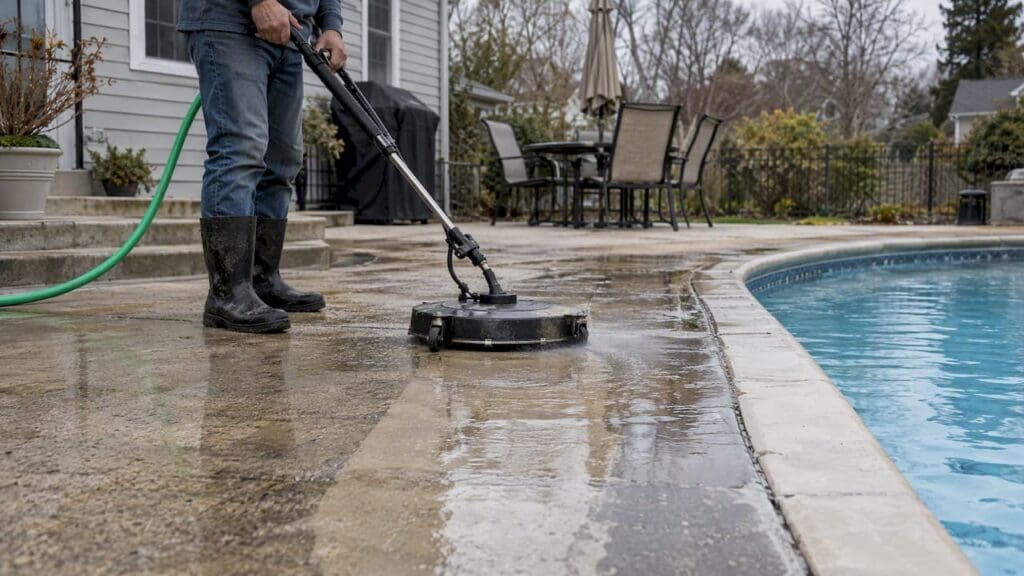
Pool deck maintenance comes down to four habits: sweep debris away from the water, wash with the right pressure for your material, seal on the right schedule, and inspect joints and surfaces every spring and fall. In New Jersey, freeze-thaw winters and de-icing salt make the inspection and sealing steps the ones that decide how long a deck lasts. This guide walks Morris and Somerset County homeowners through each step, material by material, and explains when a problem is a weekend task and when it needs a mason.
Quick Answers
-
Sweep or blow debris away from the pool, then wash from the highest point down and away from the water. Never push cleaner toward the pool.
-
Match pressure to the surface: concrete tolerates far more than pavers, and cool deck coatings should not be pressure washed at all.
-
Seal concrete every 2 to 5 years and travertine every 2 to 3 years, and recheck coping joints each spring and fall.
-
In winter, use de-icer sparingly and keep downspouts and low spots from sending water onto the deck.
-
Sunken pavers, wide cracks, flaking surfaces and failing joints are base or structural problems. Call a pro rather than patching the top.
What Pool Deck Maintenance Includes
A pool deck is the hardscape surface around the water: poured concrete, pavers, natural stone, tile, or concrete with a coating. Maintenance has three jobs. It keeps the surface slip-resistant, it keeps water moving away from the pool and house, and it protects the material from the freeze-thaw cycle.
Here is the rhythm most NJ homeowners can follow:
| Frequency | Task |
|---|---|
| Weekly in season | Sweep or blow off leaves, dirt and debris, working away from the pool |
| Monthly in season | Rinse with a hose, spot-treat stains and early algae |
| Each spring | Inspect surface, joints and coping, wash, repair small issues |
| Each fall | Clean before closing the pool, recheck joints, reseal if due |
| Every 2 to 5 years | Reseal, depending on material |
| After winter | Look for heaving, cracks, salt residue and pooling water |
The weekly sweep matters more than it looks. Organic matter such as dirt can also reduce the amount of disinfectant available in the water, according to an Environmental Health Perspectives review of pool water quality. A deck that sheds less debris into the pool is easier on your chemistry as well.
How to Clean a Pool Deck Without Fouling the Pool
The most common worry is dirty water running into the pool. The fix is sequence and direction.
-
Dry cleanup first. Sweep with a stiff broom or use a leaf blower. University guidance on power washing recommends dry cleanup before any washing, because it keeps solids out of the runoff.
-
Work away from the water. Start at the edge nearest the pool and push rinse water toward the lawn or a drain designed for it. Pool-supply guidance also says to sweep debris away from the pool and rinse with a hose, using a manufacturer-approved cleaner at mild pressure.
-
Control runoff when you use soap. The same university guidance says to block drains, contain runoff and screen out solids. Detergent water should not flow into storm drains.
-
Rinse thoroughly. Leftover cleaner makes the surface slick and can stain.
-
Let it dry fully before sealing, furniture or foot traffic.
For a smaller deck, a hose attachment or a bucket and brush is enough. For a large deck, professionals typically combine soft-wash systems with surface cleaners, which a trade publication describes as the best equipment pairing for pool decks. A surface cleaner also avoids the streaking that a bare wand leaves on concrete.
If you plan to pressure wash near the pool, a simple precaution helps: cover or lower the skimmer, keep the pool cover on if you have one, and run the wash pattern away from the water line.
Cleaning by Material: Concrete, Pavers, Stone and Coated Decks
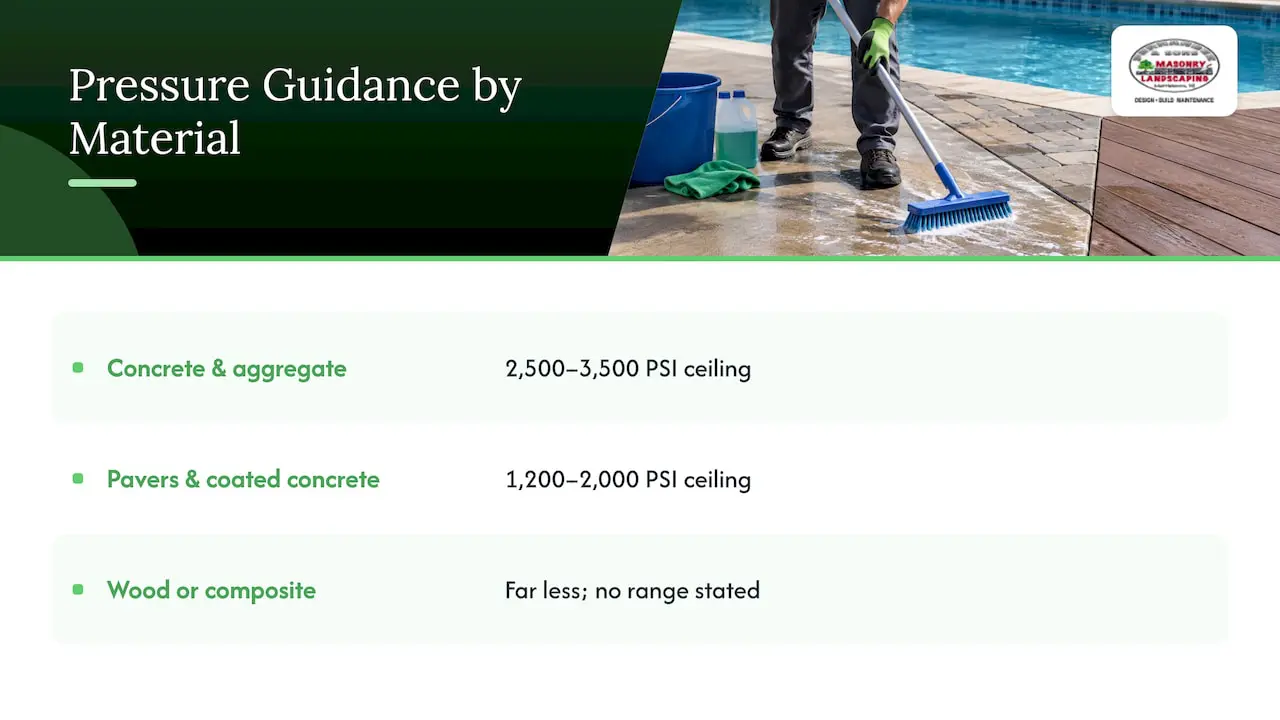
Each surface fails in a different way when it is cleaned wrong. Pressure is the main variable. One industry guide lists typical ranges of 2,500 to 3,500 PSI for concrete and aggregate, 1,200 to 2,000 PSI for pavers and coated concrete, and far less for wood or composite. Treat these as ceilings, not targets. Start lower and test a hidden corner.
Poured Concrete
Concrete handles the most pressure and is the easiest to restore, but it is porous. Dirt and algae settle into the surface, and unsealed concrete absorbs water that expands when it freezes. Clean it, let it dry, and reseal on schedule. If you see flaking, read the section on damage below.
Concrete Pavers and Natural Stone
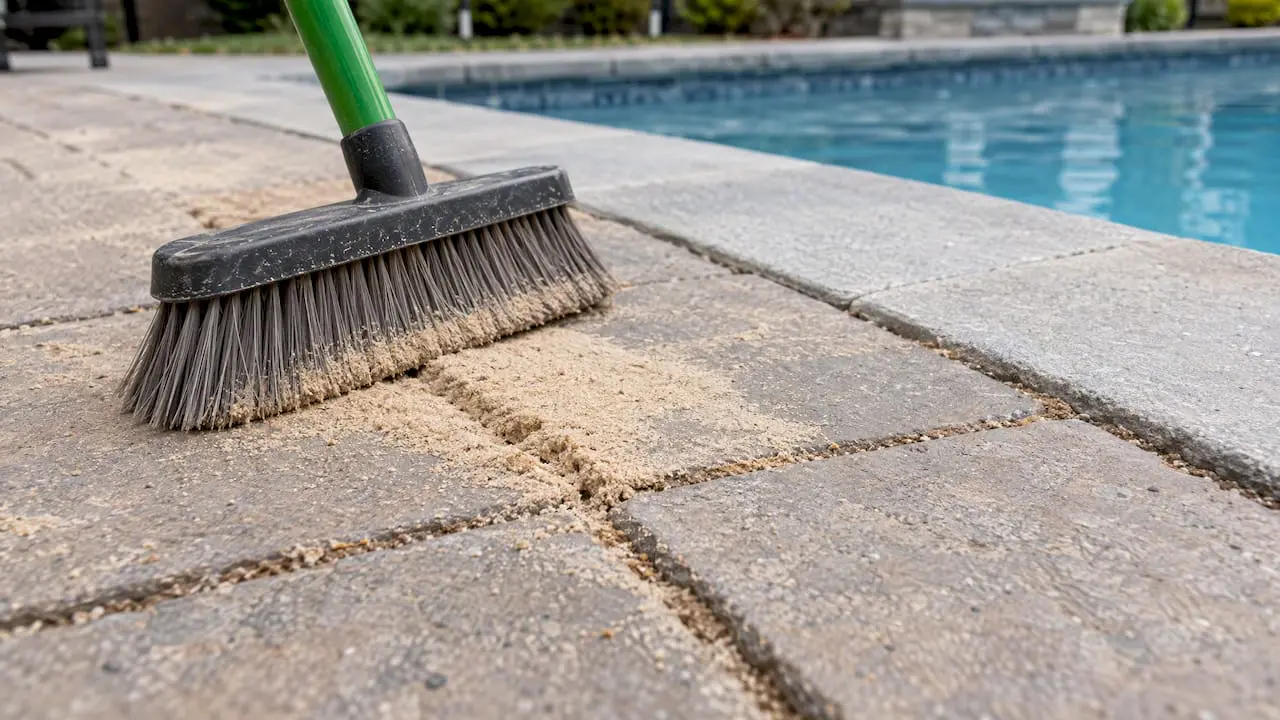
Pavers need gentler washing, because high pressure strips the joint sand and can etch the face. After washing, refill joints with polymeric or the sand your installer specified, then seal if the paver is a sealed type. Our guide on contractor prep that makes paver seals last 3 to 5 years covers surface prep in detail. Travertine is softer than concrete and is sensitive to acidic cleaners, so use a stone-safe, pH-neutral product.
Cool Deck and Coated Surfaces
Coatings are the exception to the pressure rule. One maintenance guide advises that cool deck coatings should not be pressure washed; use soft washing at low pressure with a specialized cleaner instead. Check your coating manufacturer’s care sheet before using anything stronger than mild soap and a soft brush.
Tile and Coping
Tile and coping trim need a soft brush and a mild, non-abrasive cleaner. Keep harsh acids off grout lines, and inspect the joint between the deck and coping closely. That joint is where water gets in.
Removing Algae, Stains and Rust Safely
Algae grows on shaded, damp areas, usually near planters, steps and the north side of the deck. Rust stains come from metal furniture, ladders and fasteners. Leaf tannins leave brown marks, and sunscreen and tanning oils leave grey film near loungers.
A measured approach works best:
-
Start with the mildest option. A pH-neutral deck cleaner or a vinegar and water mix applied by hose sprayer handles light algae on many surfaces. One how-to guide suggests a cup of white vinegar per gallon of water is a typical starting point, but test first, since vinegar can dull some natural stone.
-
Use a soft brush, not a wire brush. Wire bristles leave steel fragments that rust and stain.
-
Treat rust separately. Rust removers can contain oxalic acid, which is effective but needs caution, gloves and thorough rinsing. Keep it off stone and colored surfaces unless the product label says it is safe.
-
Keep chemicals out of the pool. Contain rinse water and work away from the edge, as above. Do not mix cleaners, especially anything containing chlorine with acids.
-
Fix the cause. Algae returns where water lingers. Trim overhanging plants, redirect sprinklers and correct low spots.
If stains persist after two gentle rounds, stop. Repeated stronger treatments often do more harm than the stain.
Sealing Schedules and Weather Windows
Sealing is the step that most directly extends the life of a deck. A professional pool deck guide puts the typical interval at 2 to 5 years for concrete and 2 to 3 years for travertine. Heavy sun, salt-water pools and frequent de-icing shorten that range.
Timing matters as much as the product. Manufacturer data for one widely used paver protector calls for a porous, clean, dry surface and temperatures between 55°F and 85°F during application and for the following 24 hours. In New Jersey, that points to a May to June or September window. Midsummer afternoons can be too hot, and late October nights are often too cold.
Before sealing, confirm three things:
-
The deck is fully clean, with no algae, efflorescence or old failing sealer.
-
The surface has been dry for at least a day or two, with no rain in the forecast.
-
The product suits your material and is rated for wet, slip-sensitive areas. Some sealers become slick, so ask about a grip additive or a matte finish.
Always follow the label on your specific product, since drying times differ.
Inspecting Joints, Cracks and Drainage
Twice a year, walk the deck slowly with a bucket of water and look at these points.
-
Coping and expansion joints. The same pool deck guide advises checking coping joints each spring and fall and using backer rod with a flexible pool deck joint sealant. Do not fill these joints with rigid mortar or standard caulk, which cracks as the deck moves.
-
Drainage. Pour water on the deck. It should travel away from the pool and the house, not puddle. Standing water is the main cause of winter damage.
-
Cracks. Hairline cracks are cosmetic and can be sealed. Cracks wider than a credit card edge, or those with one side higher than the other, point to base movement.
-
Pavers. Look for rocking, dips, missing joint sand and weeds.
-
Traction. Wet the surface and walk it barefoot. If it feels slick, clean and consider a slip-resistant treatment. For reference, the ADA calls for a minimum coefficient of friction of 0.60 on accessible routes of commercial pool decks, a useful benchmark for property managers.
Surviving New Jersey Winters
Morris and Somerset County decks go through many freeze-thaw cycles each winter. Water enters pores and joints, freezes, expands and pushes the surface apart. The preventive steps are straightforward:
-
Clean and seal in fall so less water enters the surface.
-
Clear drains and downspouts so they do not discharge onto the deck.
-
Use de-icer sparingly. The Concrete Masonry & Hardscapes Association says the key with concrete pavers is to use only as much de-icer as needed. Shovel first, and avoid piles of salt on one spot. Do not use fertilizer-based or ammonium-based products on pavers.
-
Use plastic shovels rather than metal blades near coping and pavers.
-
Cover or move furniture so it does not trap moisture or leave rust rings.
Base construction is the other half of freeze-thaw resilience. Our article on ASTM-backed rules for freeze-thaw pavers explains why a properly compacted base matters more than the paver itself, and our guide to building the base for a 30-year paver lifespan goes deeper.
Common Pool Deck Damage and When to Repair It
| Symptom | Likely cause | Typical response |
|---|---|---|
| Algae and dark film | Shade, moisture, organic debris | Clean and improve drainage |
| White haze on pavers or concrete | Efflorescence from moisture and salts | Clean, dry, seal |
| Flaking or pitted concrete surface | Freeze-thaw and de-icer on unsealed concrete | Evaluate depth, resurface or repair |
| Cracked or pulled-away coping joint | Failed sealant, movement | Remove old sealant, backer rod, new flexible sealant |
| Sunken or rocking pavers | Base erosion or poor compaction | Lift and rebuild base |
| Heaving or settled slab | Frost, drainage or soil issues | Professional assessment |
Surface flaking, often called spalling, is a common one. Our partners in surface repair explain concrete spalling repair for shallow damage and where homeowners tend to go wrong. Anything deeper than a surface issue, or any damage near the pool shell, needs an on-site look.
For pavers, small dips can sometimes be corrected by lifting and re-bedding a few units, which we describe in our sunken paver repair guide. When dips are widespread or return after repair, the base is the problem, and resetting it is contractor work.
Our Perspective: Maintenance Starts at Installation
We build and repair pool decks across Morris and Somerset Counties, and what we see most often is a maintenance problem that began as a construction problem. A deck with poor drainage slope will grow algae no matter how often it is cleaned. A paver patio with an under-compacted base will settle, however well it is sealed.
Our advice to homeowners comes down to a few points:
-
Ask how water leaves the deck before asking which material looks best.
-
Choose a surface you are willing to maintain. Pavers are repairable unit by unit, while poured concrete is lower maintenance on joints but harder to blend after repair.
-
Plan the sealing calendar when the deck is installed, so the first reseal is not a surprise.
-
Keep small repairs small. Fixing a joint in spring costs far less than rebuilding a section after winter.
You can see examples of our work on our pool decking project page and our paver patio projects.
— The Fernandez & Sons Team
Pool Deck Repair and Masonry Help in Morris and Somerset Counties
Routine washing and sealing are tasks many homeowners handle on their own. Resetting pavers, repairing concrete, rebuilding a base or correcting drainage is where an experienced crew saves time and avoids repeat work. Fernandez & Sons provides pool deck installation, masonry repair, concrete work and paver installation for homes and commercial properties, with free estimates and a satisfaction guarantee. See our masonry repair services or our concrete work page to learn what we handle.
If you are also planning the landscape around the water, our ideas for poolside landscaping in NJ show how plantings and drainage can work together. For decks that need winter attention, our residential services page also lists snow plowing.
Pool Deck Maintenance FAQs
How often should I clean my pool deck?
Sweep or blow off debris weekly during swim season, and rinse monthly. Do a full wash in spring and fall. Shaded, damp or tree-covered decks may need washing more often to control algae.
What is the best way to clean a pool deck?
Sweep first, then wash with a cleaner and pressure suited to your material, working from the pool edge outward so rinse water drains away from the water. Use low-pressure soft washing on coated surfaces and pavers, and rinse everything thoroughly.
How long should a pool deck last?
It depends on material, base and care. Pavers on a properly built base can last decades, and our paver lifespan guide explains the base details. Concrete lasts longest when it is sealed on schedule, drains well and sees limited de-icer.
Can I pressure wash a pool deck myself?
On concrete, yes, with a surface cleaner and attention to runoff. On pavers, use lower pressure to protect the joint sand. Do not pressure wash cool deck coatings. If you are unsure of your surface, test a hidden spot or ask a contractor first.
When should I call a mason instead of fixing it myself?
Call a pro for sunken or rocking pavers across a wide area, heaving slabs, cracks that are offset or widening, flaking over large areas, or any damage near the pool shell. These point to base, drainage or structural causes that surface patches do not solve.
Get a Free Pool Deck Estimate in Morris and Somerset Counties
If your deck is cracking, sinking or showing winter damage, we can assess it and give you a clear scope. Contact Fernandez & Sons for a free estimate on pool deck repair, paver resets and masonry work in Parsippany, Morris Plains, East Hanover, Dover and throughout Morris and Somerset Counties.