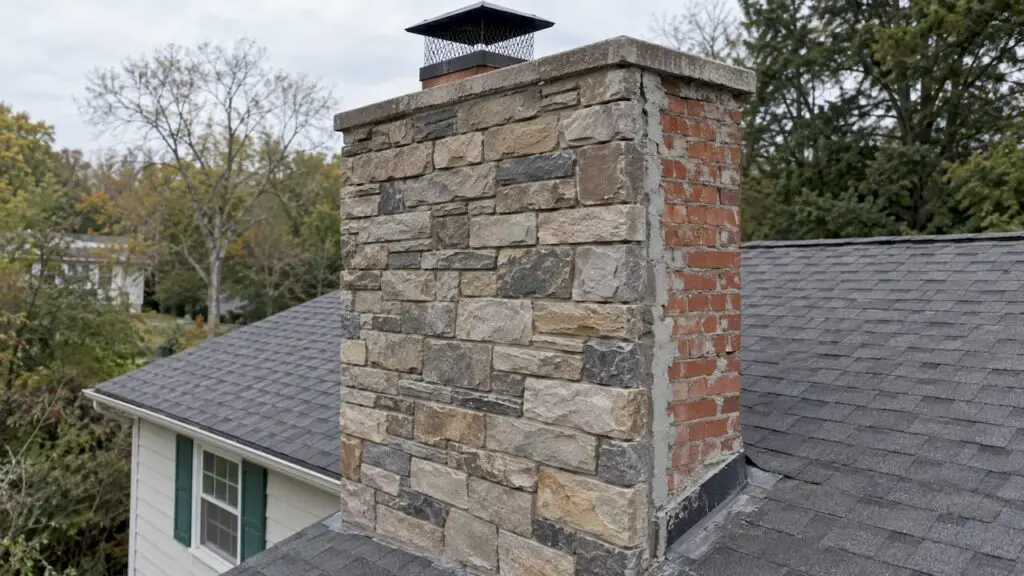
Yes, you can put stone veneer on a chimney, including over an existing brick chimney, as long as the brick is sound and the veneer is installed with the right bonding, flashing and moisture system. For homeowners in Morris and Somerset Counties, the freeze-thaw winters make those hidden details the difference between a chimney that looks great for decades and one that sheds stones after a few seasons. This guide explains what the veneer is, how it goes over brick, what to ask a contractor, and what affects the price.
Quick Answer
-
Stone veneer is a nonstructural facing, so the chimney behind it must be sound, clean and properly prepared before any stone goes on.
-
Brick that is smooth or painted needs wire mesh and a scratch coat so the veneer can bond.
-
Flashing, a water-resistive barrier, and a cap or crown are what protect an exterior chimney through New Jersey freeze-thaw cycles.
-
Most veneer problems trace back to field workmanship, so who installs it matters as much as which stone you pick.
-
We offer free estimates on stone veneer for homes across Morris and Somerset Counties.
Quick Answers: Stone Veneer on a Chimney
-
Can stone veneer go over brick? Yes, if the brick is sound, clean and prepared with proper bonding and moisture protection.
-
Is it structural? No. Veneer is a facing and adds no load-bearing strength.
-
Natural or manufactured? Both work on chimneys. Manufactured stone is lighter and more uniform in shape.
-
What fails most often? Poor field workmanship, especially around flashing, water barriers and the cap.
-
What does it cost? It depends on chimney size, height, access and stone choice, so we price each chimney after a free on-site estimate.
What Stone Veneer Is and How It Differs From Brick Veneer
A stone veneer chimney is a facing attached to a brick, block or framed structure behind it. According to a U.S. product submittal from Quality Stone Veneer, veneer is a nonstructural, lightweight facing for interior or exterior masonry, metal or framed construction, and that includes an exterior chimney finish. It does not add strength. The chimney underneath still does the structural work.
There are two broad families:
-
Natural stone veneer is cut from real stone, so every piece carries its own variation in color and texture.
-
Manufactured stone veneer is cast in molds from Portland cement, lightweight aggregate and pigments, as This Old House explains. It gives a stone look without the structural demands of full-stone masonry.
Both can be used on chimneys, and manufactured stone tends to be lighter and more uniform in shape.
Thin Veneer Versus Full Veneer
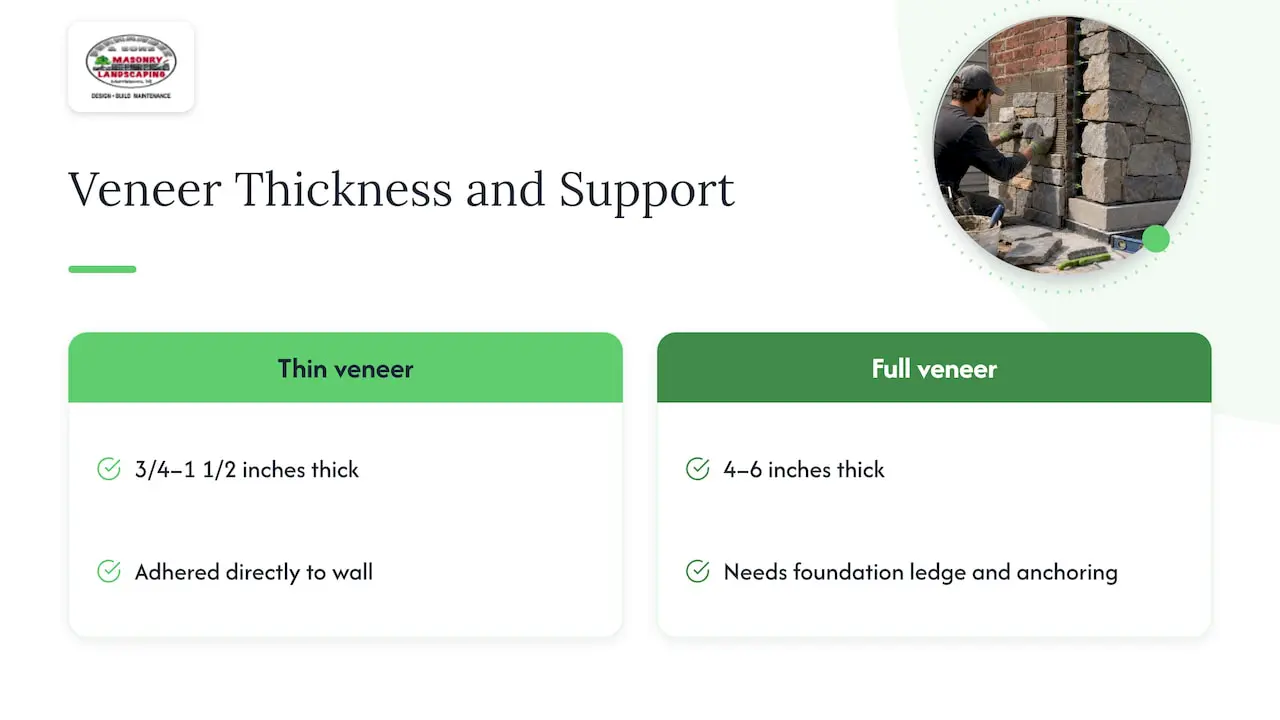
Thickness matters for how the job is built. DFL Stones notes that thin natural-stone veneer is typically 3/4 to 1 1/2 inches thick, while thick veneer is generally 4 to 6 inches thick. Thin veneer reduces the support, handling and installation demands. Masonry Magazine draws the installation line this way: thin veneer is adhered directly to the wall, while full veneer needs a foundation ledge and anchoring. On most existing chimneys, thin veneer is the practical choice because there is no footing built to carry thick stone.
Stone Versus Brick as a Chimney Finish
Brick is more uniform and can cost less, while stone offers greater variation in texture, color and visual character. That variation is why many homeowners choose stone to create a stronger visual focal point on the front or side of the house. A veneered chimney can change how the whole elevation reads, especially on colonial and split-level homes common in Parsippany, Morris Plains and East Hanover.
Can You Put Stone Veneer Over an Existing Brick Chimney?
Yes. Applying stone veneer over a brick chimney works when the brick is sound and prepared with the right bonding and moisture system. The key word is sound. Veneer hides a chimney, it does not repair one.
Before stone goes on, a mason should check for:
-
Loose or crumbling brick and failed mortar joints
-
Cracks that suggest movement or settling
-
Efflorescence or staining that points to water getting in
-
A leaning or separating chimney stack
-
Paint, sealer or soot that would keep the bond coat from gripping
Repairs come first. Tuckpointing, rebuilding a deteriorated top section, and fixing leaks are all done before cladding, because once the stone is on, those problems are expensive to reach.
When Brick Needs Mesh and a Scratch Coat
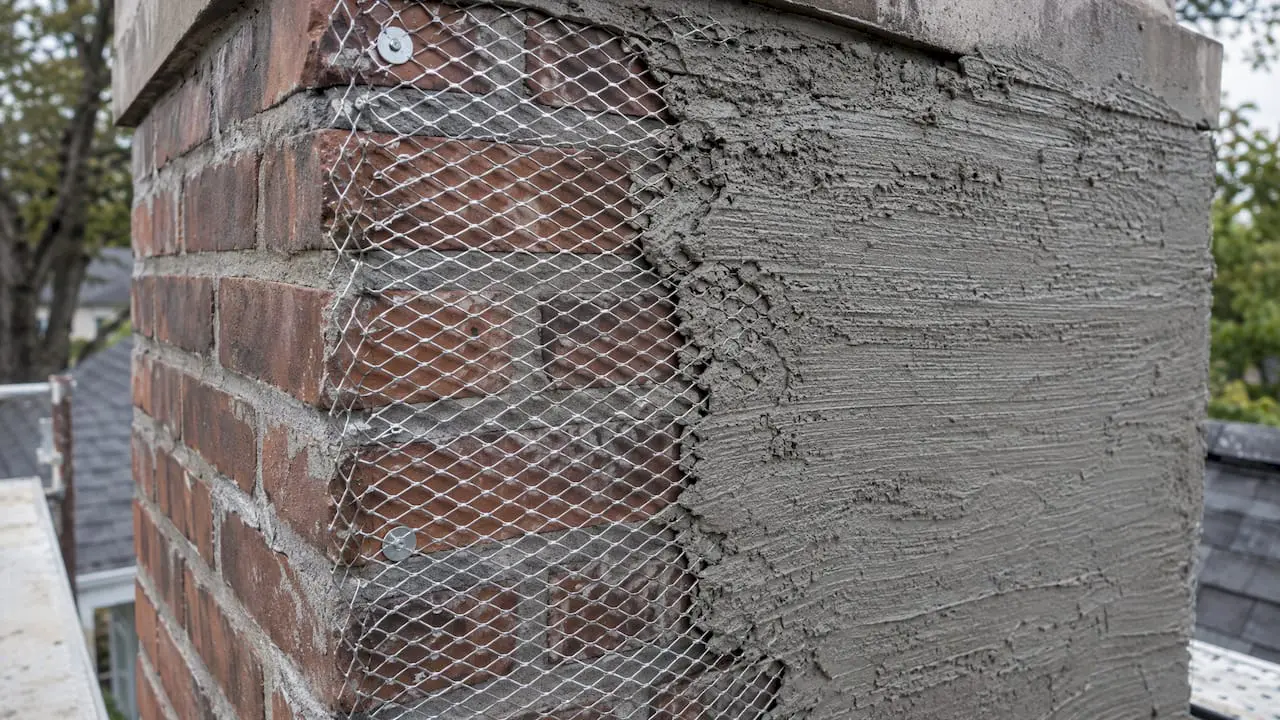
If the brick surface is too smooth or painted, the Cambridge installation guide calls for wire mesh and a scratch coat. The mesh gives the mortar something to grip, and the scratch coat creates a textured, uniform surface for the stone. For clay masonry in good condition, the Concrete Masonry & Hardscapes Association installation guide says to prepare a clean, sound surface, with lath and a scratch coat used when needed for bonding, following ASTM C1780 and the manufacturer’s instructions.
How Stone Veneer Is Installed on a Chimney
The exact sequence depends on what is behind the stone. Per the same CMHA guide, exterior framed assemblies use a water-resistive barrier (WRB), lath and a scratch coat, while suitable masonry may be directly bonded. A brick chimney and a framed chimney chase are different jobs, and a good contractor will tell you which one you have.
Here is the general order of work on an existing brick chimney:
-
Inspect and repair. Check brick, mortar, cap and flashing. Fix what is failing.
-
Clean the surface. Remove dirt, soot, efflorescence, loose paint and anything that blocks bonding.
-
Install flashing and moisture protection. Set corrosion-resistant flashing at the roof line and lower boundaries, integrated with the WRB where one is used.
-
Attach lath and apply a scratch coat where the surface calls for it.
-
Set the stone in a planned pattern, mixing pieces from several boxes so color and size distribute evenly.
-
Finish the top. Install or rebuild the cap or crown, and detail the transition to the roof.
-
Strike joints and clean up, then seal if the product or the design calls for it.
Wood-Framed Chimney Chases
Many homes have a framed chase clad in siding rather than a masonry chimney. Masonry Magazine flags wood-framed chimney chases as needing particular attention to insulation and material movement. The wood moves differently from stone and mortar, so the assembly has to allow for that. In an outdoor chimney in cold climates, moisture protection, flashing and drainage matter most because of freeze-thaw cycles.
Weight and Material Standards
For adhered manufactured stone, the CMHA guide says units should meet ASTM C1670, which covers material properties and freeze-thaw durability and sets a maximum weight of 15 lb/ft². When you compare quotes, ask which standard the stone meets and whether the installer follows ASTM C1780 for installation.
Moisture Management: Flashing, Drainage Gaps and Rainscreens
This is the part that homeowners rarely see and that decides how the chimney ages. Stone is porous and wicks moisture, and flashing is especially difficult at stone chimney exteriors. A chimney also sticks up into wind, rain, snow and temperature swings that walls lower on the house never see.
Flashing
The CMHA guide states that exterior applications need corrosion-resistant flashing at through-wall penetrations and lower boundaries, integrated with the WRB if present. WRB requirements vary by the backup assembly. On a chimney, that means the roof intersection, the base of the veneer and any ledge or shoulder get dedicated detailing, not just a bead of caulk.
Rainscreen and Drainage Gap
A rainscreen creates an air gap between the cladding and the WRB. The CMHA guide describes rainscreens as optional but effective for improving drainage and reducing drying time behind the veneer. Where a drainage space is mandated, codes such as the 2021 IBC call for a space of at least 3/16 inch. Whether your chimney needs one depends on the backup wall, the product system and your local building department. We follow the manufacturer’s system and local code rather than guessing.
Cap, Crown and Water Shedding
Cap, crown and flashing details matter on a chimney, because the top of the stack takes the most direct weather. A properly sloped crown that overhangs the veneer keeps water from running down behind the stone. If you want to understand how freeze-thaw drives masonry design more broadly, our guide to base preparation for freeze-thaw conditions covers the same principle for ground-level work.
Fire Safety and Code Considerations
Thin stone veneer is non-combustible, but that does not mean you can ignore clearances. Keep the required clearance between the veneer and the flue liner, and follow local codes and the fireplace manufacturer’s specifications. Adding veneer should never block the flue, the cleanout, or access that a chimney sweep needs.
Before work starts, confirm with your municipal building department whether your town requires a permit for exterior chimney work. Requirements differ from one New Jersey municipality to the next, so ask your contractor to check for your specific address rather than assuming.
Natural Stone or Manufactured Stone for Your Chimney
Choose based on your house, your budget and the look you want.
| Factor | Natural Thin Stone | Manufactured Stone |
|---|---|---|
| Appearance | Real variation in color and texture | More uniform, consistent color |
| Weight | Heavier per square foot | Lighter, easier to handle |
| Origin | Cut from actual stone | Cast from cement, lightweight aggregate and pigment |
| Standards | Follow the supplier’s product data | Should meet ASTM C1670 |
| Best fit | Homes where authentic character is the goal | Projects that need lighter weight and predictable shapes |
Popular patterns for chimneys include ledgestone and stacked stone for a layered, linear look, and fieldstone for a rustic, cottage feel. If you are also thinking about the interior, our stone veneer fireplace ideas page covers styles and materials for the living room side of the same chimney.
What Affects the Cost of Veneering a Chimney
We do not publish fixed prices, because two chimneys that look similar from the street can be very different jobs. These are the factors that move a quote:
-
Chimney size and height. More surface area means more stone, mortar and labor.
-
Natural or manufactured veneer, and the thickness of the product.
-
Access. A tall chimney on a steep roof may need scaffolding or special staging.
-
Surface preparation. Repairs, paint removal or demolition of damaged material add time.
-
Flashing and moisture details. Proper flashing and WRB work is labor, but it protects the job.
-
Cap or crown. Rebuilding or adding one changes the scope.
-
Permits and disposal, which vary by municipality.
When you compare estimates, compare scope, not just the bottom line. A quote that does not mention flashing, a water barrier or the cap is leaving out the part that keeps the stone on the chimney.
Perspective: Why We Build the Hidden Layers First
We see the same pattern on chimney jobs across Morris and Somerset Counties. Homeowners pick the stone, then ask how long the install will take. We start with a different question: what is going on behind the stone?
The finished face is the part you will enjoy at the first snowfall and every summer cookout. But the flashing, the barrier, the bonding surface and the cap are what let that face last. Industry guidance points to field workmanship as the dominant source of problems with adhered veneer, and that matches how we approach every project: prepare properly, follow the manufacturer’s system and ASTM guidance, and detail the roof intersection as carefully as the visible stone.
Masonry is our core work, not an add-on. We install stone veneer, build patios, walls, fire pits, fireplaces and outdoor kitchens, and we treat a chimney as part of the same outdoor living picture. A veneered chimney can anchor a patio, frame a seating area, and give a home a stronger visual focal point from the street. That is the result we design for.
Fernandez & Sons Masonry & Landscaping
Durability and Maintenance After Installation
The CMHA guide identifies field workmanship as the dominant source of performance problems in adhered manufactured stone veneer. That is good news in one sense: a well-prepared, well-detailed job avoids most of them. A manufactured stone system also depends on its backing and water barrier.
A simple yearly routine keeps a veneered chimney in good shape:
-
Look at the stone from the ground each spring. Check for cracks, missing pieces and stained joints.
-
Tap lightly on accessible areas. A hollow or different sound can point to voids behind the facing.
-
Watch for bulging. Bulging stones can signal water behind the facing, and that calls for a professional.
-
Check the cap and flashing after major storms and at the end of winter.
-
Keep gutters and roof valleys clear so water is not directed at the chimney.
If a repair involves mortar, matching matters. The National Park Service, in its guide to historic structure maintenance, warns that overly hard Portland-cement mortar can expand and contract differently from brick or stone and accelerate cracking. That principle applies to any older brick chimney we are working on, and it is one reason we assess the existing masonry before choosing materials. For care across the seasons, see our exterior stone maintenance guide.
Hiring a Mason for Chimney Stone Veneer in Morris and Somerset Counties
The point of this guide is to help you hire well. Whether you work with us or someone else, ask these questions:
-
Will you inspect the chimney and tell me what repairs are needed first?
-
What is behind the stone, and how will you bond to it: direct bond, or lath and scratch coat?
-
How will you flash the roof intersection and the base of the veneer?
-
Will there be a water-resistive barrier or drainage gap, and does it follow the manufacturer’s system and local code?
-
Which ASTM standards does the stone and installation follow?
-
How will you finish the cap or crown?
-
Who handles permits, and what is the cleanup plan?
If you want to see how our masonry work looks on the ground, browse our stone veneer projects. For related work, our masonry services page lists what we handle, from concrete to repairs, and our guide to brick and stone masonry for New Jersey homes shows how it fits into a larger exterior update.
Pair the Chimney With the Rest of Your Outdoor Space
An exterior chimney often sits beside a patio, and a matching stone face ties the two together. Homeowners often ask us about adding a fire pit, a fireplace or an outdoor kitchen in the same stone family so the whole space feels planned. If you are heading that direction, our guides to outdoor kitchen cladding materials and masonry projects for outdoor entertaining show how stone choices carry across projects. Planning them together also avoids tearing up finished work later.
Get a Free Chimney Veneer Estimate
Fernandez & Sons Masonry & Landscaping serves homeowners across Morris and Somerset Counties, New Jersey, with stone veneer, patios, retaining walls, fireplaces, outdoor kitchens and year-round property care. We offer free estimates and back our work with a satisfaction guarantee. Tell us about your chimney and we will look at what is behind the surface before we recommend a stone.
Start on our Fernandez & Sons home page to request your free estimate.
Frequently Asked Questions About Chimney Stone Veneer
Is Stone Veneer the Same as Brick Veneer?
No. Both are facings attached to a structure behind them, but they are different materials. Brick is more uniform in appearance and can cost less, while stone veneer offers more variation in texture and color. Stone veneer is nonstructural, so the chimney behind it still carries the load.
Can You Put Stone Veneer Over Painted Brick?
Often yes, but it needs extra prep. If the brick is too smooth or painted, installation guidance calls for wire mesh and a scratch coat so the stone can bond. The brick itself must be sound, and any leaks or failing mortar should be repaired first.
Do You Need a Rainscreen Behind Stone Veneer on a Chimney?
Not always, but a drainage gap helps water escape and shortens drying time behind the stone. Where codes require a drainage space, the 2021 IBC specifies at least 3/16 inch. Your backup wall, the veneer system and your local building department decide what applies.
How Much Does It Cost to Resurface a Chimney With Stone Veneer?
It depends on chimney size and height, the type of stone, access, surface preparation, flashing details and whether a cap or crown is included. Because those vary so much from house to house, we give a written price after a free on-site estimate rather than a generic number.
Is Stone Veneer Safe Around a Flue?
Thin stone veneer is non-combustible, but you still need the required clearance between the veneer and the flue liner. Follow local codes and the fireplace manufacturer’s specifications, and keep sweep access clear.