
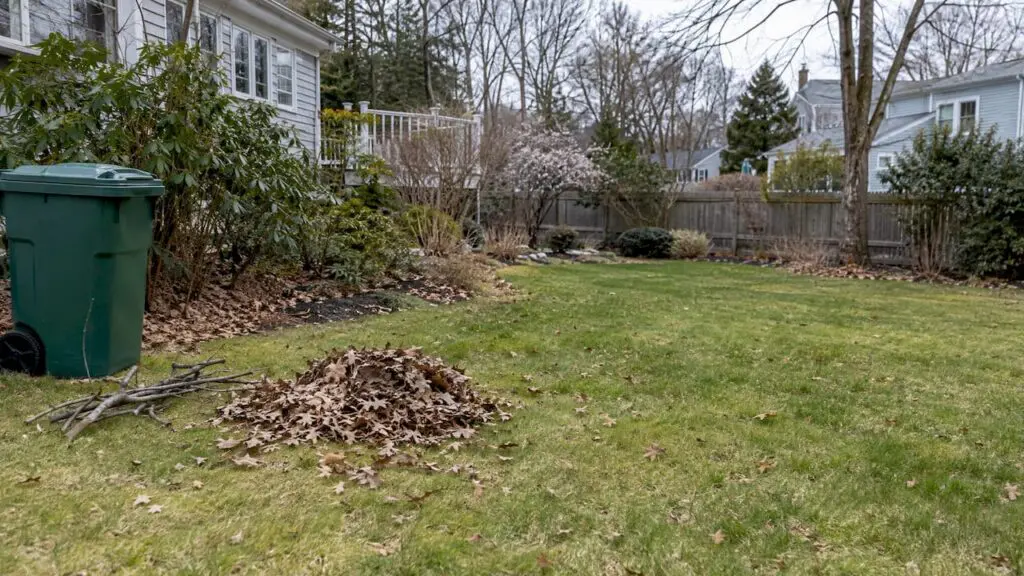
A good spring cleanup checklist for a New Jersey yard follows one order: clear debris, wait for dry soil, cut back beds, prune, edge, mulch, then feed the lawn once the fertilizer blackout ends on March 1. Do the gentle work first and the heavy work after the ground firms up. A fall cleanup mirrors it in reverse, so the spring job stays small. Below you will find both checklists, built for Morris and Somerset County weather.
Quick Answers: Spring Cleanup Checklist
-
What goes on a spring yard cleanup checklist? Remove litter and dead debris from the lawn and beds, cut back dead perennial growth, prune damaged wood, refresh mulch, then handle lawn care and weed prevention. The Spruce’s yard checklist covers the same core steps.
-
When should you start in New Jersey? Usually in March into April, once soil is dry and temperatures are consistently mild. Your exact timing depends on the weather that year.
-
What about fall? Clear leaves, make a last mow, cut back beds, mulch, and prepare for snow before the ground freezes.
-
Who can do it for you? Our crews provide spring and fall yard cleanup in Morris and Somerset Counties.
When to Start Your Spring Cleanup in New Jersey
The calendar matters less than the conditions. Wait until the ground is dry enough to walk on without leaving deep footprints, then lightly rake and dethatch the dead layer that blocks sunlight and air, as Redfin’s post-winter guidance describes. Working soggy soil compacts it and tears up turf that is already stressed from winter.
There is a second reason to wait. Many beneficial insects overwinter in leaf litter and hollow plant stems. Iowa State Extension recommends holding off on removing spent plant material until temperatures are consistently around 50°F, and UMN Extension notes that cleanup is easiest when new growth is just emerging. In northern New Jersey that often means the second half of March through April, but a cold snap can push it back.
A simple rule: trash and fallen branches can go any dry day, while perennial beds and leaf litter wait for steady mild weather.
The Spring Yard Cleanup Checklist
Work through these in order. Each step sets up the next one.
1. Walk the Property and Clear Debris
Start with a slow lap of the whole yard, front and back. Note winter damage before you pick up a rake.
-
Pick up litter, fallen sticks, pinecones and pet waste. Wear heavy work gloves, since litter that blew in over winter can include broken glass.
-
Check walkways, patios, steps and retaining walls for heaved pavers, new cracks or settled joints. Freeze and thaw cycles are hard on hardscape, and small problems are cheaper to address early. Our masonry repair services cover this kind of winter damage.
-
Look at fences, gates, lighting and drainage outlets for storm damage.
-
Clear gutters and downspouts so spring rain moves away from the foundation.
Winter can also leave patios, walkways, driveways, and other exterior surfaces covered with dirt, algae, and staining. Once debris is removed, homeowners can consider professional exterior cleaning to restore these areas before outdoor entertaining season. New Jersey companies such as A Brilliant Solution Power Washing provide exterior cleaning services that complement seasonal landscaping and property maintenance.
2. Rake the Lawn Lightly
Once the soil is firm, use a flexible rake to lift matted dead grass and leaves. Rutgers’ NJ Green Building Manual advises dethatching when thatch is thicker than half an inch. If it is thinner, a light rake is enough. Skip raking wet ground entirely.
3. Clean Up Perennial Beds
-
Cut back dead stalks and old leaves that were not removed in fall.
-
Pull weeds while they are small and the soil is moist.
-
For established beds that did well last year, work a layer of compost around the plants to loosen soil and feed it, a step The Spruce lists for perennial beds.
-
Pull old mulch away from crowns as perennials emerge, and put it back if a hard cold night is forecast.
Leave a little leaf litter in out-of-the-way beds. A thin layer helps pollinators and wildlife, while thick, wet piles invite mold and decay, according to the Almanac.
4. Prune Trees and Shrubs
Timing depends on what the plant does.
| Plant type | When to prune |
|---|---|
| Dead, damaged or winter-killed wood | As soon as you spot it |
| Deciduous hedges and shrubs without flowers | Late winter to early spring |
| Spring-blooming shrubs (forsythia, lilac) | Right after they flower |
| Summer-flowering shrubs | Late winter to early spring, before new growth |
| Most trees | Late winter to early spring, so wounds seal as growth emerges |
The shrub timing comes from the Almanac’s spring guide and the tree timing from its complete cleanup checklist. For large limbs, anything near power lines, or work above ground level, hire a professional tree service rather than climbing a ladder with a saw.
5. Edge Beds and Refresh Mulch
Cut a clean edge along beds, walks and patios. Then spread fresh mulch once the soil has warmed and weeds are cleared. A tidy edge against a paver walkway or stone border is one of the fastest ways to lift curb appeal. If you want a more permanent border, see our ideas on hardscaping updates that boost curb appeal.
6. Test the Soil Before You Feed
Rutgers’ manual recommends soil testing to learn pH and nutrient availability, including testing for lead near highways and old buildings. Test results tell you whether you need lime, nutrients or nothing at all, which prevents wasted product and runoff.
7. Handle Weed Prevention and Seeding in the Right Order
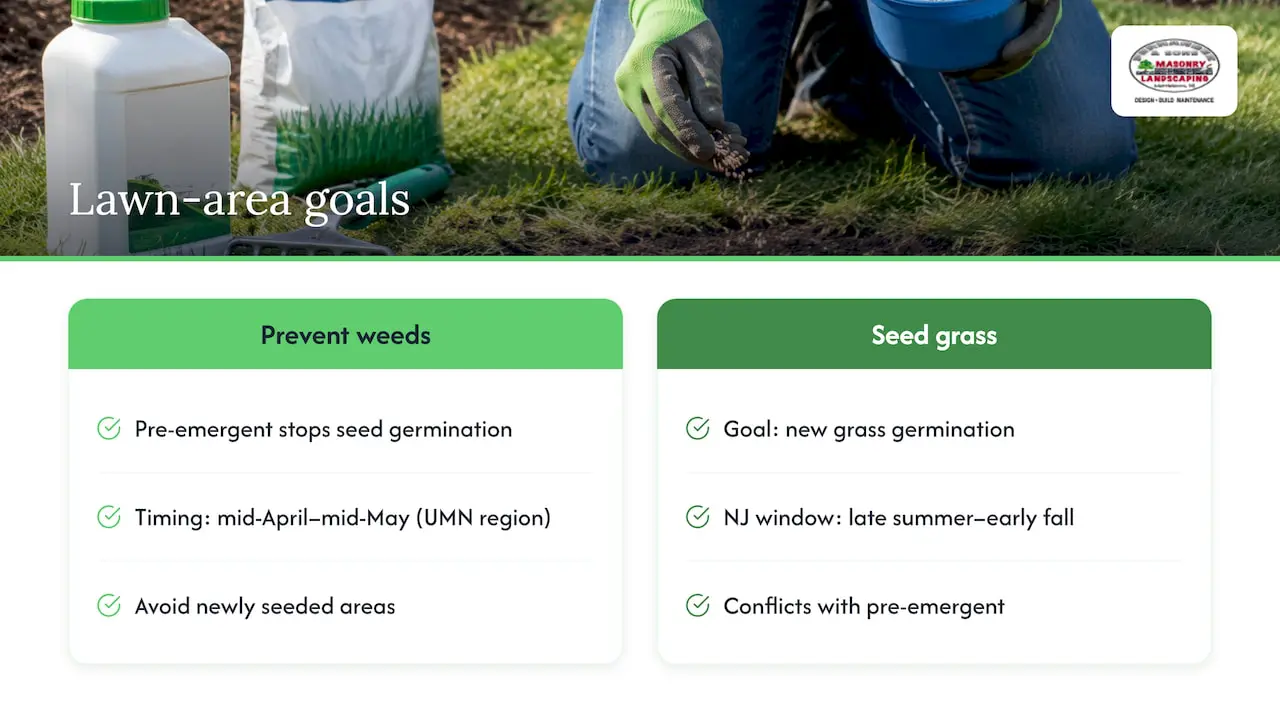
Pre-emergent products stop seeds from germinating, which is the point for crabgrass and exactly the problem for new grass. UMN Extension places pre-emergent timing between mid-April and mid-May for its region and warns not to apply it to newly seeded areas. Pick one goal per area: prevent weeds or seed. For New Jersey seeding, our landscaping timeline explains why late summer into early fall is the strongest window.
8. Set the Mower and Service It
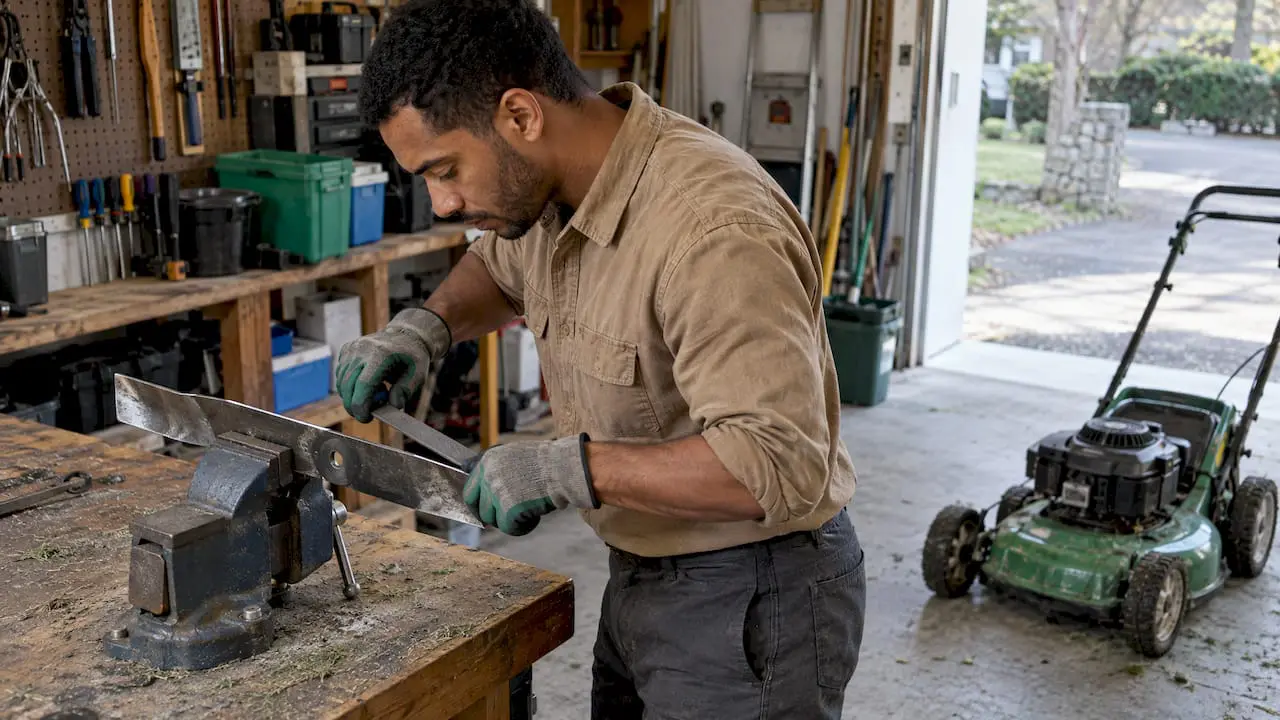
Sharpen blades and change the oil before the first cut. Rutgers recommends keeping the mower at 2½ inches and recycling clippings. Mow when the grass is dry. Our short guide to lawn mower maintenance covers the basics.
9. Plant at the Right Time
Hardy perennials can go in during early spring. Annuals and tender perennials wait until after the last frost, per The Spruce. In Morris County, many homeowners wait until mid-May to be safe.
New Jersey Fertilizer Rules to Know
New Jersey law restricts when turf fertilizer can go down. Under Chapter 112, nitrogen or phosphorus fertilizer cannot be applied to turf before March 1 or after November 15. It also cannot be applied during heavy rain, when heavy rain is predicted, or when soils are saturated and product could wash off site. Professional applicators have a different end date in the statute.
Products with only potassium, plus lime and compost, are still allowed during the blackout, according to the Ocean County Soil Conservation District and Rutgers. So early March is the earliest legal feeding date, and soil that is still cold or soggy is often a reason to wait longer.
Match Your Cleanup to Your Grass and Your Yard
Lawn timing depends on grass type. The University of Maryland Extension advises basing care on the dominant grass in a mixed lawn, and cool-season grasses such as tall fescue, bluegrass and ryegrass are common in our region. Cool-season lawns are typically mowed taller than warm-season ones, which is why the 2½ inch Rutgers height is a safe default here.
Cleanup also protects the neighborhood. Rutgers frames lawn and landscape care as a way to improve water quality and habitat by reducing stormwater runoff and unneeded fertilizer and pesticides. If you want to go further, these tips for lower-impact habits fit well with a cleanup routine.
When bagging debris, choose bags that match where they will go. Some towns collect yard waste in paper bags or loose, and some programs accept certified compostable liners. This guide to matching yard bags to disposal explains the differences, and your township’s rules decide which one applies. Morris Township, for example, runs a rotating seasonal leaf, grass and brush program, so check your own municipality’s page before you set anything at the curb.
Fall Cleanup Checklist for New Jersey Yards
Fall cleanup is the other half of the job, and it shapes how much work spring needs. Do it before the ground freezes and before the first snow.
-
Remove leaves from the lawn and beds. A thick mat smothers turf and holds moisture against plants. Mulch a light layer with the mower, and compost or bag the rest.
-
Make the final mow. Keep the 2½ inch height through the season, then lower slightly for the last cuts if your lawn tends to mat.
-
Cut back perennials selectively. Remove diseased foliage. Leaving some hollow stems and seed heads helps overwintering insects and birds.
-
Feed the lawn before November 15. Fall is a good time for turf feeding, but the legal cutoff is November 15 for homeowners.
-
Overseed on time. Seeding is strongest in late summer to early fall, which is why we recommend planning it early.
-
Mulch beds and protect young plantings. A layer of mulch insulates roots from temperature swings.
-
Prune only what is dead or hazardous. Save routine pruning for late winter.
-
Clean gutters, drains and window wells.
-
Prepare hardscape and equipment. Sweep debris from patios and walks, drain hoses and irrigation lines, and service the mower and blower.
-
Mark edges for snow. Stakes along driveways, curbs and beds help a plow crew avoid damaging plantings and pavers.
For more detail, see our fall lawn and landscape preparation tips and our list of fall landscaping tips for New Jersey yards. Many New Jersey towns run leaf collection in fall, often on a rotating schedule through the late months, so check your municipal calendar.
Spring Versus Fall Cleanup at a Glance
| Task | Spring | Fall |
|---|---|---|
| Debris | Winter litter, branches, matted leaves | Fallen leaves, spent annuals |
| Beds | Cut back remaining dead growth, compost, mulch | Remove diseased foliage, mulch for insulation |
| Lawn | Light rake, mow, feed on or after March 1 | Final mow, overseed, feed by November 15 |
| Pruning | Dead wood, winter-timed pruning, post-bloom | Dead or hazardous only |
| Hardscape | Check for frost heave and cracks | Sweep, seal-ready, prepare for plow season |
| Water | Check irrigation for leaks and broken heads | Drain lines and hoses |
Irrigation deserves its own spring check. Look for leaks and broken sprinkler heads after winter, a step highlighted in a Minneapolis-area checklist only in spirit; for our region, run each zone briefly and watch for pooling or misaligned heads.
Our Perspective on Seasonal Cleanups
We see the same pattern every year across Morris and Somerset Counties. Yards that get a thorough fall cleanup need a lighter spring one, and yards that skip fall arrive in April with matted turf, buried beds and hardscape that needs attention.
Our approach is to treat cleanup as the first step of a year-round plan rather than a one-day chore. A crew that is already walking your property can spot a settling paver, a failing edge or a drainage issue while it is still small, and can match that to your landscape maintenance schedule.
For families who want their patio, fire pit and lawn ready for gathering as soon as the weather turns, we think that is the right order: clean, repair, refresh, then enjoy. Our free estimates and satisfaction guarantee are there so you can plan the season with confidence.
Fernandez & Sons Masonry & Landscaping
Let Us Handle the Heavy Lifting
If you would rather spend your first warm weekend relaxing outside than hauling debris, we provide seasonal cleanup and ongoing landscape maintenance for homes and commercial properties in Morris and Somerset Counties. We offer free estimates and a satisfaction guarantee, and our team also handles patios, walkways, retaining walls and the hardscape repairs that often turn up during cleanup.

Property managers can pair cleanup with a commercial landscape maintenance checklist and the same crews can plan winter snow plowing. Start at our home page to see everything we do.
Spring and Fall Cleanup FAQ
When Is the Best Time for Spring Cleanup in New Jersey?
Usually late March through April, once the soil is dry and temperatures stay mild. Start with trash and branches on any dry day, and leave beds and leaf litter until steady warmth returns so overwintering insects can emerge.
Can I Fertilize My Lawn Right Away in Spring?
Not before March 1. New Jersey law bars homeowners from applying nitrogen or phosphorus fertilizer to turf before that date, and also during heavy or predicted rain or on saturated soil. Potassium-only products and lime are allowed during the blackout.
What Should a Fall Yard Cleanup Include?
Leaf removal, a final mow, selective cutback of perennials, mulching, gutter cleaning, and preparing for snow. Feed turf before November 15 if you plan to, because that is the legal cutoff for homeowners in New Jersey.
Should I Remove All the Leaves in Spring?
Remove thick, wet layers that smother grass and invite mold. A thin amount in out-of-the-way beds helps pollinators and wildlife, so rake with a light hand once temperatures are in the 50s.
Do You Offer Spring Cleanup in Morris County?
Yes. We provide spring and fall yard cleanup across Morris and Somerset Counties, including towns such as Parsippany-Troy Hills, Morris Plains, Dover Township and East Hanover. Contact us for a free estimate.
Book Your Morris County Yard Cleanup
If your yard in Parsippany, Morris Plains, East Hanover, Dover or anywhere in Morris and Somerset Counties needs a fresh start this season, call Fernandez & Sons for a free estimate. We will walk the property, build the cleanup list with you, and get your outdoor space ready for the months ahead. See our landscape maintenance in Morris County to get started.