
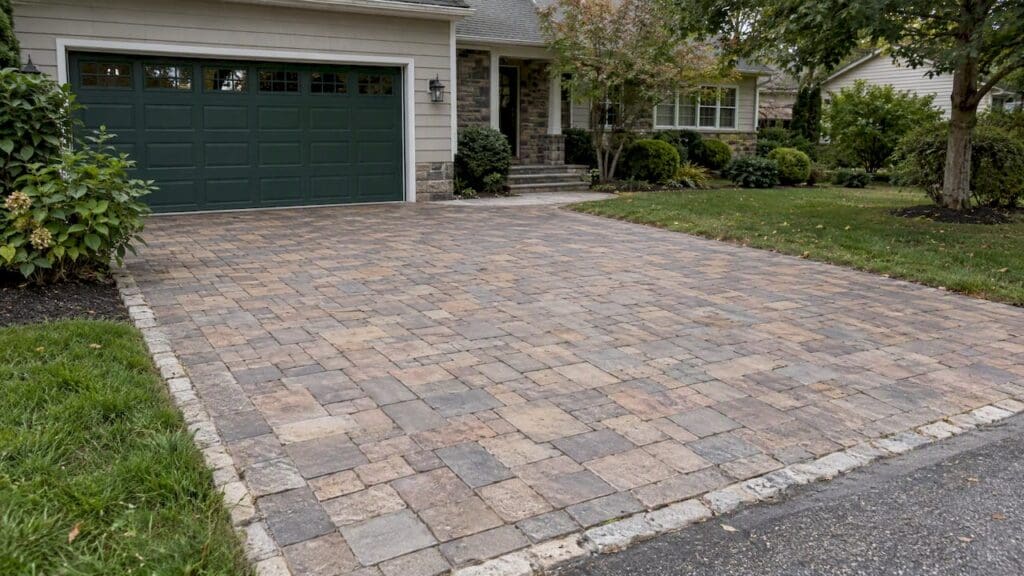
The best paver color is one that sits a shade or two away from your roof, siding and trim, suits how much sun the area gets, and still looks good after a New Jersey winter of snow, sand and deicing products. For most homes in Morris and Somerset Counties, that points to a gray, charcoal or warm brown field, sometimes with a contrasting border, chosen from physical samples viewed outdoors rather than from a catalog photo.
This guide walks through popular colors, combinations that work, the practical factors that should shape your decision, and what to do if your existing pavers no longer suit the house. It is written for homeowners and property managers who plan to hire a contractor and want to walk into the estimate knowing what to ask for.
Quick Answer to Paver Color Choices
-
Gray remains the safest paver color, and warm browns, tans and taupes are gaining ground, so both families are easy to resell and easy to pair with other materials.
-
Aim for a tonal match to your roof, trim and brick or stone, not an exact one. Pavers a couple of shades lighter than the house keep the patio from competing with it.
-
Lighter pavers stay cooler underfoot in full sun, while darker or blended tones hide dirt, spills and water spots better.
-
Use two colors, a border or blended units to define zones and avoid a flat, monotonous look.
-
Always view full-size samples outside, in morning and afternoon light, before you sign off.
Which Paver Colors Are Most Popular Right Now
Paver colors fall into a few broad families: grays and neutrals, warm earth tones, and blends that mix several shades in one unit. Belgard groups its colors into warm earth tones and grays and neutrals, offered as solids, tone-on-tone colors and blended colors, and it suggests warm tones for inviting spaces and cool tones for modern, tranquil designs.
Gray still leads. In a 2025 trade report, a Belgard executive said gray represented about 70% of Belgard sales, while the same article noted that darker browns and grays were especially attractive to clients and warmer tones were gaining interest. A spring 2026 trade report described outdoor palettes shifting from cool gray and white toward mocha brown, sandy beige, soft taupe and warm white with tan undertones.
In plain terms, here is how the main options behave:
| Color Family | Typical Look | Pairs Well With | Best For |
|---|---|---|---|
| Light gray | Clean, bright, contemporary | White or gray siding, black trim, modern architecture | Sunny patios, pool surrounds |
| Charcoal and dark gray | Bold, dramatic, high contrast | Light siding, stone veneer, bright plantings | Borders, driveways, modern outdoor kitchens |
| Warm brown and mocha | Cozy, earthy, inviting | Wood fences, cedar pergolas, tan or cream siding | Gathering areas, fire pit patios |
| Tan and sandy beige | Soft, traditional, sun-washed | Brick, fieldstone, warm roof shingles | Walkways, front entries |
| Blended multi-tone | Natural, varied, forgiving | Almost anything, especially mixed exteriors | Large patios, driveways |
| Red and brick tones | Classic, warm, colonial | Gray roofs, white trim, green landscaping | Historic or colonial-style homes |
There is no wrong family. The right choice depends on the house, the light and how you want the space to feel, which the next sections cover.
Paver Color Ideas by Outdoor Style
It helps to start from the feeling you want, then narrow to a color.
Modern and Clean-Lined Homes
Cool grays and charcoals suit contemporary homes with large windows, flat or low-pitched rooflines and black or white trim. Large-format pavers in a single tone read as calm and uncluttered. If the design feels too cold, a warm wood fence or planting bed softens it without changing the paving.
Traditional Colonial and Tudor Homes
Much of Morris County is built around brick, clapboard and stone. Tan, warm gray, brown-toned blends and classic red-brown tones tend to look at home against those materials. Gray also works with brick, while brick-toned pavers add warmth next to wood or stone, a pairing noted in Iowa State University Extension guidance.
Entertaining Spaces With Outdoor Kitchens and Fire Pits
Warm tones make a gathering area feel welcoming, especially in the evening when the fire pit is lit. Pair a mocha or tan field with a darker border around the kitchen island or fireplace so the cooking and seating zones read as separate rooms. If you are planning a full outdoor living space, our outdoor living spaces in NJ page shows how seating, fire features and paving fit together.
Pool Decks
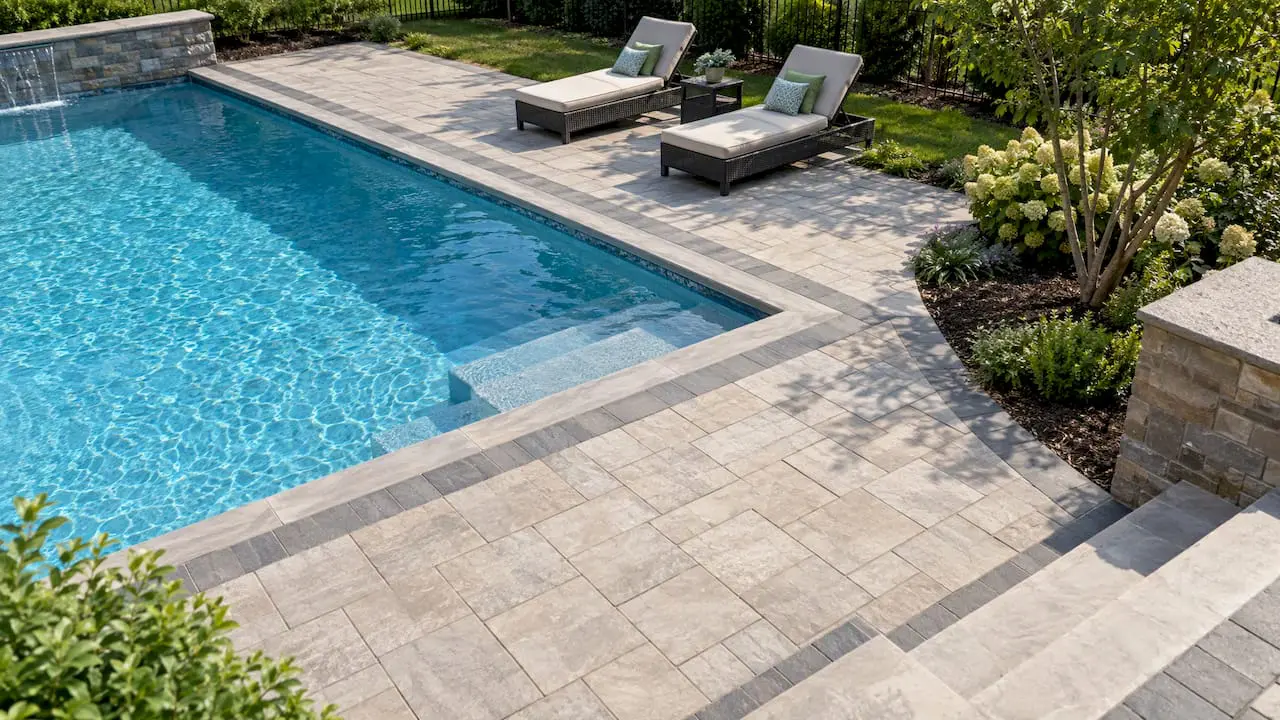
Pool decks put color and temperature together. Lighter pavers reflect more sunlight and stay cooler for bare feet, so they are the usual starting point near the water. Mixing tones can also define the swim area, lounge area and walkway; these pool deck paver color ideas show how several colors can add interest and mark out zones.
Paver Color Combinations That Work
A single flat color across a large patio can feel monotonous. Iowa State Extension suggests combining two colors or using blended-color pavers to avoid that look. Manufacturer design guidance agrees: a contrasting border around a main field or blended multi-tone units adds visual texture and helps define zones such as dining areas or walkways.
These combinations are reliable starting points:
-
Light gray field with a charcoal border. Crisp and modern. The border frames the patio and hides edge wear.
-
Warm tan field with a brown border. Traditional and soft, good beside brick or fieldstone.
-
Blended gray and tan field with a solid gray border. Forgiving, and it bridges a gray roof and a tan siding.
-
Monochromatic border, one shade darker than the field. Subtle definition when you want calm rather than contrast.
-
Contrasting inlay or band. A stripe or medallion in a second color breaks up a long walkway or marks the entry to a patio. A contractor-focused design guide notes that contrasting or monochromatic borders define edges, while contrasting-color and texture inlays add visual interest.
Keep the total to two or three colors. More than that competes with the landscaping, furniture and house, and it becomes harder to repair or extend later. Pattern matters too: a running bond or herringbone laid in one color looks quite different from the same layout in two. Our paver walkway ideas page shows how pattern and color work together on entries and paths.
How to Match Pavers to Your House and Landscape
Start with the elements you cannot change: roof, siding, trim, brick or stone, and any visible retaining walls. Design guidance recommends coordinating with these and aiming for a tonal rather than exact match, because an exact match often looks like a mistake when materials differ in texture and sheen. Iowa State’s guidance adds that pavers a couple of shades lighter than the house avoid competing with it.
A simple process works well:
-
Identify the fixed colors. Note the roof, the siding and trim, and any stone or brick, including their undertones (warm or cool).
-
Choose one anchor. Usually the roof or the stone veneer. Pick a paver that shares its undertone.
-
Decide on the mood. Warm for cozy and inviting, cool for crisp and modern.
-
Add an accent. A border, inlay or planting color that echoes the trim or front door.
-
Test samples outside. Set full-size pieces on the actual site and check them in morning sun, afternoon sun and shade.
If your roof is due for replacement, choose shingles and pavers together so the two work as a pair. This guide on choosing roof shingles covers the exterior side of that decision.
One more caution: manufacturers rename and retire colors over time. Landscape guidelines from Duke University point out that proprietary color names change over time, so the safer approach is to judge the sample against the colors already on your property rather than relying on a product name. That matters if you plan to add a section to an existing patio years from now.
Sun, Heat, Shade and Winter: Practical Factors
Color is not only about looks. It changes how the surface feels and how it ages.
Heat and Sunlight
Lighter pavers reflect sunlight and stay cooler for bare feet, which matters around a pool or on a south-facing patio. Darker pavers absorb more heat, so they suit shaded areas, front walkways or spaces used mostly in the evening. In a shaded garden, a medium-value field with a bright accent keeps the area from feeling gloomy, as this color guide points out.
Dirt, Spills and Water Spots
A solid light color shows everything: leaves, mulch stains, grill grease. Darker or variegated tones hide footprints, spills and road dust, while textured surfaces and blends hide water spotting. If your patio sits under trees or beside the grill, a blended mid-tone is the low-maintenance choice.
Snow, Sand and Deicing Products
New Jersey winters are hard on pavers. In snowy regions, choose colors that harmonize with sand and deicing products, since residue lightens and dulls darker surfaces. A sealer helps; our paver sealing guide explains what contractors do so the seal lasts. Color will not save a poorly built base, though. Freeze-thaw cycles move pavers when the base is wrong, which is covered in our freeze-thaw paver guide.
Driveways Versus Patios
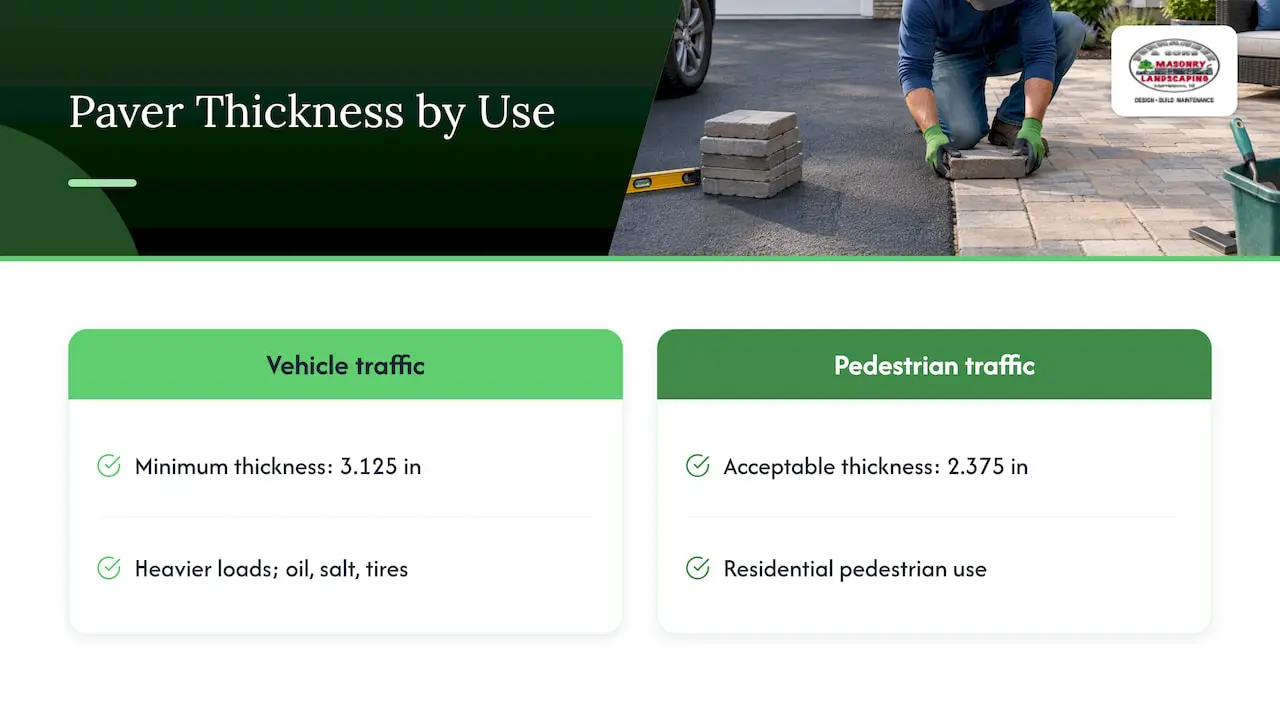
Driveways take heavier loads and more staining from oil, salt and tires, so darker or blended tones are usually the practical pick. Thickness matters more than color here: Iowa State Extension says pavers should be at least 3.125 inches thick for regular, repeat vehicle traffic, while 2.375-inch units are acceptable for residential pedestrian traffic. Ask your contractor to confirm thickness before you fall in love with a color in a thinner unit.
Our Perspective: Choose the Color You Will Still Like in Ten Years
We build patios, walkways, pool decks and outdoor living spaces across Morris and Somerset Counties, and the color conversation almost always starts with a trend. We understand the pull. Gray is popular, warm tones are rising, and both look great in photos.
Our advice is to treat the trend as a starting point and let the house make the final call. The roof and the siding are not going anywhere, so the paving should work with them. We would rather you pick a quiet, well-matched blend that disappears into a beautiful yard than a bold color that dominates it.
We also encourage homeowners to think about the full space, not just the paver. Color has to work alongside walls, steps, planting beds, furniture and lighting. When the base is built correctly, a paver patio can last for decades, as we explain in our paver lifespan guide. That is a long time to live with a color, so we always recommend looking at real samples on site before the order is placed.
— Fernandez & Sons Masonry & Landscaping
Can You Stain or Recolor Existing Pavers?
Yes, concrete pavers can be stained, and it is a reasonable option when the structure is sound but the color has faded or no longer suits the house. Keep these points in mind:
-
Cure time. Newly installed pavers should cure for at least 28 days before staining.
-
Preparation. The surface must be clean and repaired, and old sealers removed. Dense or polished pavers may absorb stain poorly.
-
Joints. Architectural Digest reported that stain must not pool in the joints, and that sunlight, heavy foot traffic and deicing salt can affect the final appearance.
-
Sealing. Exterior stained surfaces should be sealed, and Sherwin-Williams recommends reapplying sealer every 2 to 3 years, more often in high-traffic areas.
-
Limits. Staining is cosmetic. It does not fix settling, cracking or drainage problems.
If pavers are sinking, shifting or heaving, recoloring is the wrong first step. Those are base problems, and a repair or reset comes first. For property owners weighing a repair against a rebuild, our masonry repair services team can assess what the surface needs.
How to Test Samples Before You Decide
Catalog photos and showroom lighting rarely match your yard. Before committing, do this:
-
Ask for full-size pavers or large sample boards, not just small chips.
-
Place them on the actual site, next to the foundation, steps and siding.
-
Check them wet and dry. Many colors deepen when wet, and rain is common in New Jersey.
-
View them at different times of day, and keep in mind the seasonal changes, shadows and light that design guides suggest considering before final selection.
-
Look at the blend across several pieces, since multi-tone units vary from one paver to the next.
If you want to see finished work before choosing, our paver patio project gallery shows real installations, and our 2026 landscape trends for NJ article covers where outdoor design is heading.
Planning Your Paver Project With Fernandez & Sons
We design and install paver patios, walkways, driveways and pool decks for homeowners and property managers in Morris and Somerset Counties, including Parsippany-Troy Hills, Dover, Morris Plains and East Hanover. Color selection is part of the design conversation, alongside layout, base preparation, drainage and the landscaping around the space.
Estimates are free, and our work is backed by a satisfaction guarantee. If you are comparing options, start with our paver patio installation service page, or review the landscape design work we do to tie the paving into the whole yard.
Frequently Asked Questions About Paver Colors
What Is the Most Popular Paver Color?
Gray is still the most popular. A Belgard executive told Landscape Management in 2025 that gray made up roughly 70% of the company’s sales. Warm browns, tans and taupes are gaining interest, so many homeowners now choose a blend of gray and tan to cover both.
Should Pavers Match the House?
They should coordinate with the house, not match it exactly. Pick a tone that shares the undertone of your roof, brick or stone, and keep it a couple of shades lighter than the house so the patio does not compete with it.
Do Light or Dark Pavers Show More Dirt?
Light solid colors tend to show leaf stains, grease and spills most clearly. Darker or blended tones hide footprints and road dust better, though dark pavers can show salt residue and water spots in winter. A mid-tone blend is usually the easiest to maintain.
Can Concrete Pavers Be Stained a Different Color?
Yes. Wait until new pavers have cured for at least 28 days, clean the surface thoroughly, remove old sealer and apply a stain that suits the paver. Plan to reseal every few years. Staining changes color only and does not repair structural problems.
Which Paver Colors Work Best in New Jersey?
There is no single answer, but gray, charcoal, warm brown and tan blends all perform well in the Northeast. Choose a color that hides winter salt and sand, matches your home’s materials and holds up under the freeze-thaw cycle once the base is properly built.
Get a Free Paver Estimate in Morris and Somerset Counties
If you are ready to pick a color and build the patio, walkway or driveway behind it, contact Fernandez & Sons for a free estimate. We will bring samples to your property in Morris or Somerset County, talk through the options in your own light and give you a clear plan for the project.