
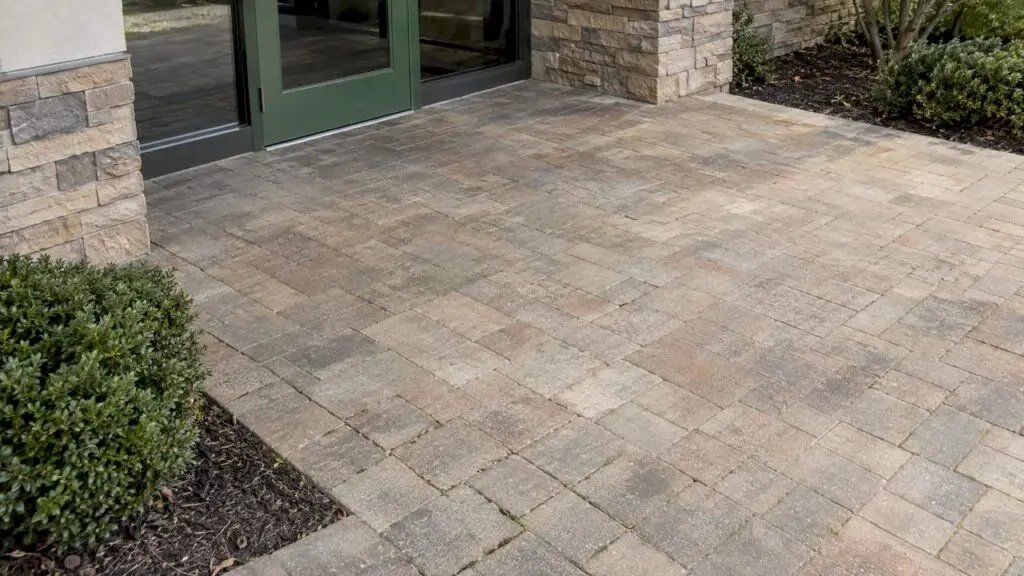
Faded pavers usually do not need replacing. Paver color fades because sun, weather, and traffic slowly wear away the pigment and cement at the surface. In most cases the color comes back through a thorough cleaning, followed by a color-enhancing sealer or a semitransparent stain. The first step is making sure you are looking at fading and not a white mineral haze or embedded dirt, because each has a different fix. If you own a patio, walkway, or driveway in Morris or Somerset County, this guide walks you through what is happening to your pavers and how to restore paver color the right way.
What to Know: Quick Answer
-
Pavers fade as UV light, weather, and traffic wear away the pigment and cement paste at the surface, so the change is gradual and uneven.
-
White, chalky haze is often efflorescence, not fading, and it needs a different treatment than a color restoration.
-
Clean first, let the surface dry fully (at least 24 hours), then apply a color-enhancing sealer or semitransparent stain in the right temperature window.
-
Sealing too soon, over-applying, or sealing over trapped moisture are the most common reasons restoration goes wrong.
-
If your patio, walkway, or driveway is large or the base also needs attention, a free estimate from a local mason is the practical next step.
Why Pavers Lose Their Color
Concrete pavers get their color from pigment mixed into the concrete, and cement holds that pigment in place. The Interlocking Concrete Pavement Institute (ICPI), the trade body for paver installers and manufacturers, explains in its Peak Performance from Concrete Pavers guide that traffic and weather gradually erode cement and pigment particles, and the color slowly changes. Dirt carried in by feet and tires adds to the effect by dulling the surface.
The usual contributors are:
-
Sunlight. This Old House names prolonged UV exposure that breaks down pigments as the main cause.
-
Weather. Rain, freeze-thaw cycles, and humidity all work on the surface year after year. New Jersey sees plenty of each.
-
Chemicals. Harsh cleaners, fertilizer, and some de-icing products can alter the surface. Our guide on ice melt and pavers covers what to use on winter walkways.
-
Traffic. Driveways and heavily used walkways wear faster than a quiet back patio.
-
Missing or worn sealer. Without a protective coat, the surface takes the full force of everything above.
Because sun exposure is rarely even, fading is often patchy. The side of a patio that gets afternoon sun can look noticeably lighter than the part under a tree or an overhang.
Fading, Efflorescence, or Dirt: What Are You Looking At?
Before buying any product, work out what is actually wrong. Three problems look similar from the kitchen window.
True Fading
The color looks washed out across the whole surface, or lighter in sun-exposed areas, and the surface feels clean. Wetting a small spot with water often brings back some depth of color for a moment. That temporary darkening is a good hint that a color-enhancing sealer will help.
Efflorescence
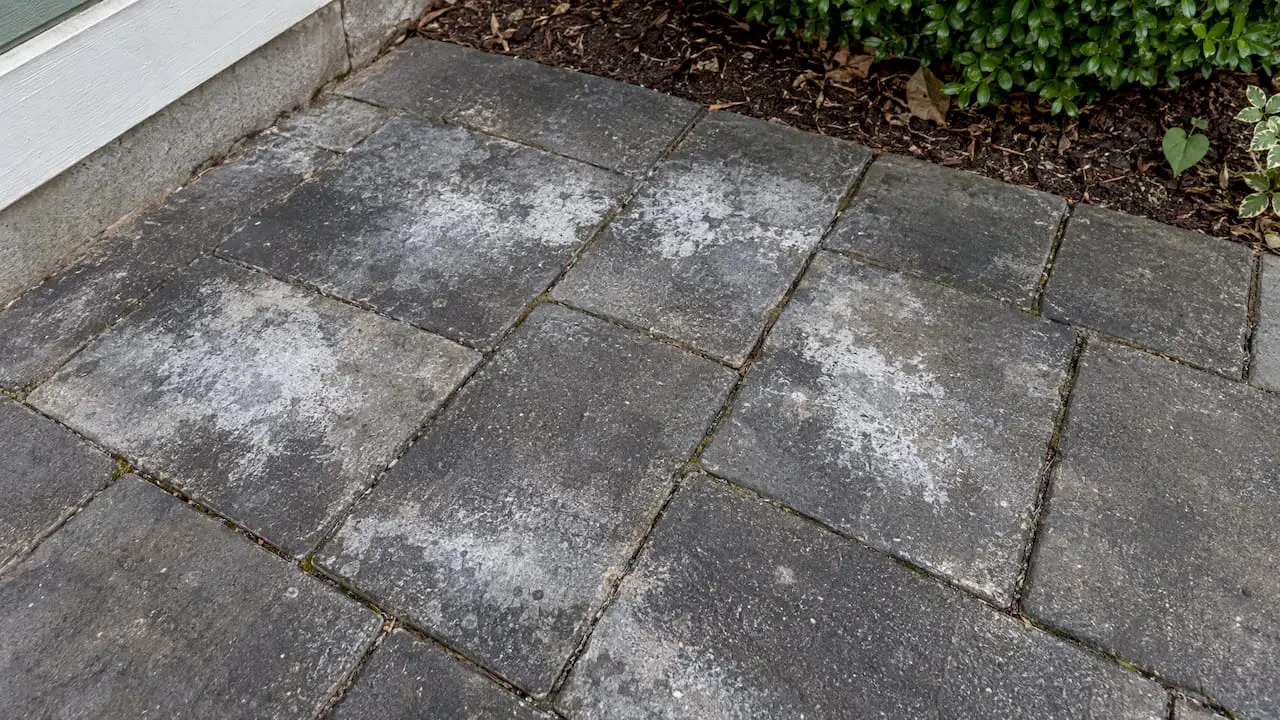
Efflorescence is a white, chalky haze that appears when water carries lime to the surface. According to the ICPI, it forms when calcium oxide from the cement reacts with water and then with carbon dioxide in the air. It does not damage pavers but can look like fading, may last several months until the supply of calcium hydroxide runs out, and shows up more on dark pavers. If your haze is white and patchy, especially on newer pavers, read our guide to paver efflorescence removal first.
Surface Dirt and Stains
Grime, algae, oil drips, and leaf tannins can darken or dull a paver without any loss of pigment. A proper cleaning can make a patio look years younger before any color product goes on. Treat localized stains first, then clean the whole surface.
Quick Answers: Paver Color Fading
-
What causes paver color fading? UV exposure, weather, traffic, chemicals, and missing sealer wear away surface pigment and cement.
-
Can you restore paver color? Often yes, with deep cleaning plus a color-enhancing sealer or semitransparent stain.
-
Is white haze the same as fading? No. White haze is usually efflorescence and is removed with a different method.
-
How long must pavers dry before sealing? The ICPI sealing specification calls for a completely dry surface, at least 24 hours without moisture, before most sealers go on.
-
How often should you reseal? This Old House suggests every two to three years for a high-quality concrete sealer.
How To Clean Old Pavers Before Restoring Color
Cleaning is where most restorations are won or lost. Color products applied over dirt, oil, or efflorescence will look blotchy and will not last.
-
Remove localized stains first. Oil, rust, and organic stains need targeted treatment before the whole-surface wash. The ICPI technical specification, published by Uni-Group USA, sets out this order.
-
Wash the full surface. Professionals typically use a pressure washer in the 600 to 2,000 psi range with a wide-spray, low-angle nozzle, which protects the joint sand. Water volume matters more than raw pressure, per the same specification.
-
Treat efflorescence separately. Efflorescence cleaner is applied at low pressure (30 to 100 psi with a shower-type nozzle), left to sit, then rinsed with plenty of water.
-
Use hand tools only on small areas. For a small spot, scrub with cleaner and rinse with a garden hose. Steel-bristle brushes are not recommended, because they shed particles that rust and stain the paver.
-
Be careful with acid. The CMHA version of the ICPI specification notes that many effective cleaners combine detergent and acid, and that strong acids can slightly change paver color. Always test on a small area first, wear protective clothing and goggles around acidic solutions, and shut off automatic sprinklers while cleaning and drying.
Pressure that is too high can scar the surface and blow out joint sand, which creates a new problem on top of the old one. Large driveways and patios are where this gets difficult, and where having an experienced crew do the washing and re-sanding saves a lot of rework.
Your Options To Restore Faded Paver Color
There are three broad approaches. They differ in how much color change you get and how much risk you take on.
| Approach | What it does | Best for | Watch out for |
|---|---|---|---|
| Cleaning only | Removes dirt and haze to reveal the existing color | Pavers that look dull but are not truly faded | Will not bring back lost pigment |
| Color-enhancing sealer | Deepens existing color and adds a protective layer, from satin to high gloss | Moderate fading, an overall refresh | Needs dry pavers and the right temperature |
| Semitransparent stain or tinted sealer | Adds color back to the surface | Heavy or uneven fading | Over-application can look like paint |
Color-Enhancing Sealers
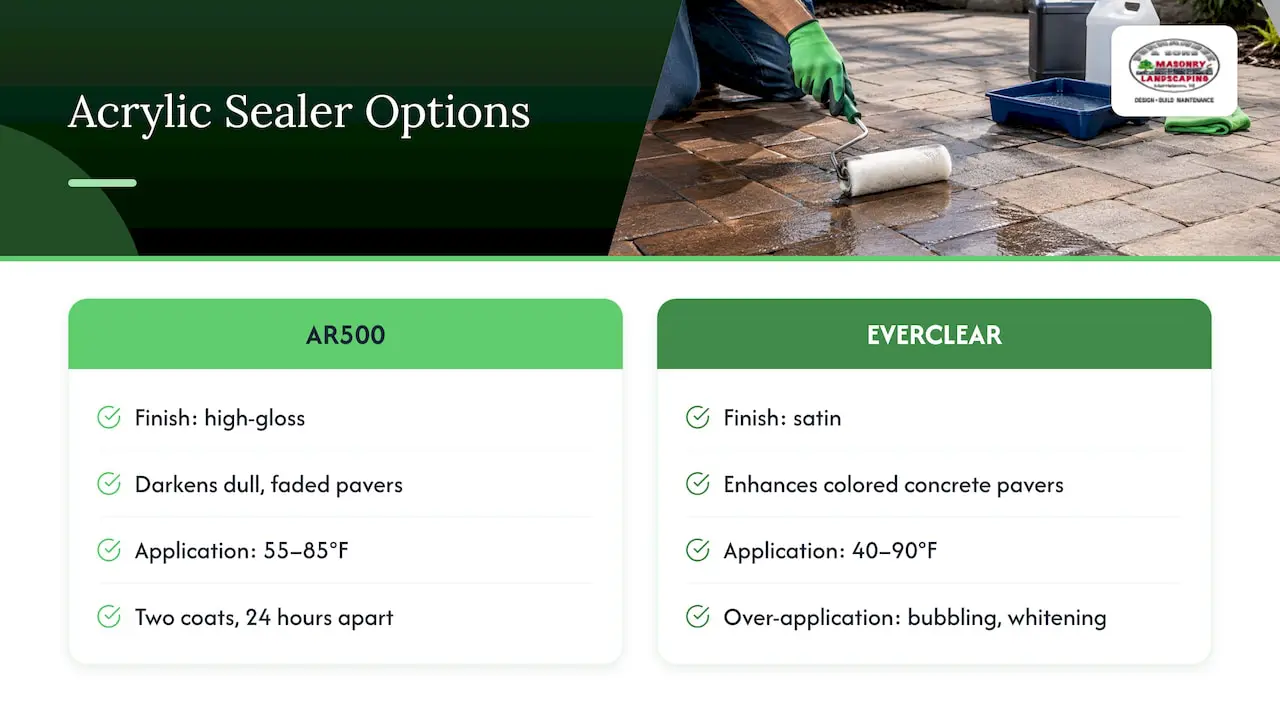
An acrylic sealer is the most common route. One example is Foundation Armor’s AR500 technical data sheet, which describes a high-gloss acrylic that darkens dull, faded concrete pavers. It is applied in two coats 24 hours apart at 55 to 85°F. Euclid Chemical’s EVERCLEAR data sheet describes a satin acrylic that enhances the color of colored concrete pavers, with a 40 to 90°F application window. It also warns that over-application can cause bubbling, whitening, peeling, and flaking.
The finish matters as much as the color. Satin looks natural. High gloss looks wet and dramatic, and shows wear sooner on a driveway.
Stains and Tinted Sealers
When fading is heavy, This Old House recommends an acrylic-based semitransparent concrete stain: clean and dry the pavers thoroughly, apply evenly following the manufacturer’s instructions, allow drying time between coats, and consider a sealer once the stain has fully cured. Some stains leave a shiny coating that changes the texture underfoot.
Tinted sealers work the same way in one step, but restraint is important. Foundation Armor’s LV15 data sheet caps tint at 6 ounces of color per gallon of sealer, and says that going beyond that covers like paint, leaving an opaque finish instead of a transparent enhancement.
Choosing a Color Direction
If you are going to recolor, pick a tone that suits your house, trim, and the other hardscape around it. Our paver color choices guide for NJ patios, walkways, and driveways helps you match tones to brick, siding, and stone veneer.
Step-By-Step: Restoring Paver Color From Prep to Cure
Here is the full sequence a careful restoration follows.
-
Inspect the surface. Identify fading, efflorescence, stains, and weak joints. Make note of low spots or movement, because color products do nothing for a settled base. Our sunken paver repair guide explains when dips are a base problem.
-
Treat stains and efflorescence. Handle each problem on its own, using the cleaning steps above.
-
Wash the whole surface. Use controlled pressure with a wide fan, and rinse thoroughly.
-
Let it dry. The ICPI specification calls for a completely dry surface, at least 24 hours without moisture, before most sealers. Western Interlock’s Hardscape Care Guide calls moisture the number-one enemy of sealer and advises a moisture test to confirm there is no trapped moisture in the joint sand.
-
Refill joints if needed. Fresh joint sand, and in some cases a joint-stabilizing product, keeps the surface tight. Our paver sealing guide explains the contractor prep that helps a seal last 3 to 5 years.
-
Pick the day. Western Interlock advises sealing in the morning at 60 to 70°F. Follow the temperature window printed on your product’s data sheet, and avoid days when rain or heavy dew is likely.
-
Apply thin, even coats. Roll or spray in thin layers, and do not let product pool in low spots. Thick coats are a leading cause of cloudiness and peeling.
-
Respect cure times. Product data sheets spell out foot and vehicle traffic delays. One acrylic sheet lists 24 hours for foot traffic and 48 hours for wheels, but always follow the label for your product.
What Goes Wrong
The ICPI sealing specification lists the main causes of whitened sealer: wet surface or joints, an efflorescence source under the pavers, or a sealer that is not breathable. It also stresses that sealers add no structural strength. They improve appearance and ease of cleaning, but they do not make a failing base hold up better. That is why we look at drainage and base condition before we talk about color.
Why Color Restoration Is Often Worth Handing to a Mason
The steps look simple on paper. In practice, the details decide the outcome: pressure that does not displace joint sand, a dry-time judgment after a wet New Jersey week, a sealer that is breathable, and even coverage across a large patio with no lap marks. A mistake in any one of them shows up as cloudiness or blotches, and fixing that usually means stripping and starting again.
A masonry contractor also sees what a bottle of sealer cannot: whether the fading is cosmetic, or whether the patio is also telling you about drainage, a settling base, or failing joints. If you are not sure, a free estimate costs nothing and gives you a clear picture of the whole surface.
Promo: Paver Care From Fernandez & Sons in Morris and Somerset Counties
Fernandez & Sons Masonry & Landscaping serves homeowners and commercial properties across Morris and Somerset Counties, including Parsippany-Troy Hills, Dover, Morris Plains, and East Hanover. Our work covers patios and walkways, driveways, pool decks, retaining walls, outdoor kitchens, and masonry repair. We offer free estimates and a satisfaction guarantee. If your pavers look tired, see our paver patio installation service or our masonry repair services and request an estimate.

Keeping Restored Pavers From Fading Again
Once the color is back, a few habits protect it.
-
Reseal on a schedule. This Old House recommends a high-quality concrete sealer every two to three years, always after a thorough cleaning. The ICPI also notes that cleaning and sealing is one way to moderate the rate of color change, and that sealers help keep dirt from lodging in the surface.
-
Clean with mild soap and water. Avoid harsh chemicals and abrasive methods.
-
Deal with spills fast. Oil, grease, and wine set quickly.
-
Add shade where it makes sense. A pergola, umbrella, or tree reduces UV on the most exposed areas.
-
Be thoughtful in winter. Shovel first and choose de-icers carefully, using our ice melt rules for NJ homeowners. Our freeze-thaw paver guide explains why the base matters in New Jersey winters.
-
Follow a seasonal routine. Our exterior stone maintenance guide lays out what to do each season, and our pool deck maintenance plan covers pool surrounds.
Property managers with walkways and plazas can build these steps into a yearly maintenance schedule, which keeps entrances looking consistent for tenants and visitors.
When Replacement Makes More Sense Than Restoration
Color restoration is for pavers that are structurally fine. If you see widespread cracking, deep spalling, rocking pavers, or large sunken areas, the problem is below the surface. Our paver lifespan guide explains how base construction drives a 30-year life. In those cases, repairing or rebuilding the affected section first, then refreshing the color across the whole area, gives the most even result.
Paver Color Fading FAQ
Can You Restore the Color of Faded Pavers?
Often, yes. A deep cleaning followed by a color-enhancing sealer or a semitransparent stain brings back most of the depth lost to sun and wear. Results depend on how much pigment remains and how well the surface is prepared. A free on-site estimate shows what is realistic for your patio.
How Do I Tell Efflorescence From Faded Pavers?
Efflorescence is a white, chalky haze that sits on the surface, often on newer pavers and more visible on dark colors. Fading is an overall loss of depth with no powdery film. Splashing a little water on the paver can help: haze often darkens briefly, as does faded color, so look for the chalky texture too.
How Long Should Pavers Dry Before Sealing?
The ICPI sealing specification calls for a completely dry surface, at least 24 hours without moisture, after cleaning. Joints hold water longer than the paver faces, so wait longer after rain. Sealing over damp joints is a common cause of cloudy, whitened sealer.
How Often Do Pavers Need Resealing?
This Old House suggests every two to three years for a high-quality concrete sealer. Driveways and sun-exposed patios may need attention sooner. Always clean the surface thoroughly before resealing.
Is a Pressure Washer Safe for Pavers?
It is, with the right settings. Professionals typically work at roughly 600 to 2,000 psi with a wide-spray, low-angle nozzle to protect the joint sand. Too much pressure or a narrow tip can etch the surface and wash out the sand.
Get a Free Estimate for Your Morris County Patio
If your patio, walkway, or driveway in Parsippany-Troy Hills, Dover, Morris Plains, East Hanover, or anywhere in Morris and Somerset Counties has lost its color, contact Fernandez & Sons for a free estimate and let us take a look at it.